Dolpo Trek: Nepal's Wild Trans-Himalayan Frontier
A guide to the Dolpo trek in far-west Nepal: Upper vs Lower Dolpo, Phoksundo Lake, restricted-area permits, the 2026 rules, best season and access.
Beyond the rain shadow, past the last road, Dolpo keeps a Tibetan world that the rest of the Himalaya forgot.
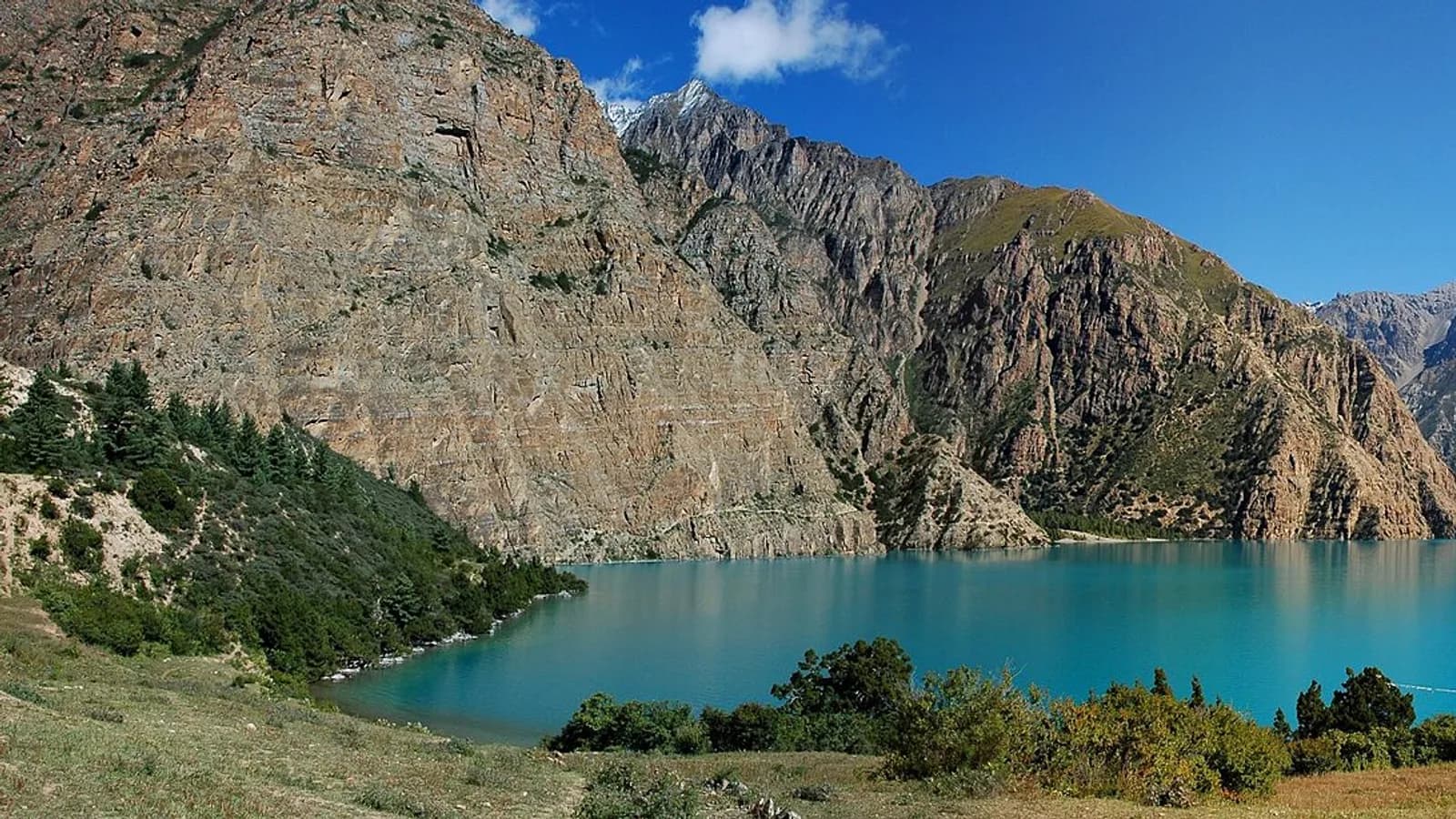
In the far northwest of Nepal, wedged between the Dhaulagiri massif and the Tibetan Plateau, lies one of the most remote and least-visited corners of the entire Himalaya. The Dolpo trek leads into a high desert of ochre cliffs, walled villages, ancient monasteries and a turquoise lake so deep it is widely called the deepest in the country. This is the land that inspired Peter Matthiessen's The Snow Leopard and Eric Valli's 1999 film Caravan (released internationally as Himalaya), and for serious trekkers it remains a frontier — expensive, demanding, and unlike anywhere else you can legally walk in Nepal. This guide covers what the Dolpo trek involves, the difference between Upper and Lower Dolpo, the permits and the important 2026 rule change, how to get there, and when to go.
If your idea of Nepal runs to the wild and the logistically serious rather than the easy day trip, Dolpo sits alongside the country's other great remote journeys — see our overview of Nepal's national parks and our guide to far-western Rara Lake for the wider context.
Key takeaways
- Dolpo is in Dolpa district, Karnali Province, in the trans-Himalayan rain shadow of far-west Nepal, opened to foreign trekkers only in 1989.
- The region splits into Lower Dolpo (cheaper permit, Phoksundo Lake and Tarap) and Upper Dolpo (USD 500 permit, Shey Gompa and the Tibetan border).
- Phoksundo Lake, at about 3,612 m, is famed for its turquoise water and is widely regarded as Nepal's deepest lake at around 145 m.
- A major rule change on 22 March 2026 ended the old two-person minimum for restricted areas, but a licensed guide and registered agency remain mandatory.
- Access is by air — Kathmandu to Nepalgunj, then a short flight to Juphal — with a rough road as a weather backup.
- Spring and autumn are the prime seasons; much of inner Dolpo stays dry even in the monsoon thanks to the rain shadow.
Where Dolpo is and why it matters
Dolpo lies in Dolpa district, Karnali Province, in the rugged northwest of Nepal, hard against the Tibetan border and shielded from the monsoon by the Dhaulagiri range. Geographically and culturally it belongs more to the Tibetan Plateau than to the rest of Nepal: barley terraces, yak caravans, mani walls and gompas sit under bare brown mountains, and the people speak Tibetan dialects and farm at some of the highest permanently inhabited altitudes on earth.
The region remained closed to outsiders until 1989, and that long isolation preserved a way of life that has largely vanished elsewhere in the Himalaya. Dolpa is one of the last strongholds of Bon, Tibet's pre-Buddhist faith, practised here alongside Tibetan Buddhism. At the sacred sites you can see the difference in action — Buddhist pilgrims circle clockwise, Bon practitioners anti-clockwise. This depth of living culture, as much as the scenery, is what draws travellers to make the long, costly journey.
Upper Dolpo vs Lower Dolpo
The single most important planning decision is Upper or Lower Dolpo. They share a district but differ sharply in cost, length and difficulty.
| Feature | Lower Dolpo | Upper Dolpo | |---|---|---| | Highlights | Phoksundo Lake, Tarap valley, Dunai | Shey Gompa, Crystal Mountain, Tibetan-border villages | | Typical length | Roughly 14–18 days | Roughly 22–28 days | | Restricted-area permit | About USD 20 per week (as of mid-2026) | USD 500 for 10 days (as of mid-2026) | | Highest passes | High passes, but fewer | Several passes above 5,000 m | | Style | Some teahouses plus camping | Almost entirely camping |
Lower Dolpo
Lower Dolpo is the more accessible half and the one most first-time visitors choose. Its centrepiece is Phoksundo Lake, reached in a few days' walk from Juphal via Dunai, the district headquarters, and the village of Ringmo on the lakeshore. Routes often loop on through the Tarap valley and high passes before returning. It is still a remote, high and basic trek, but the permit is far cheaper and the logistics simpler than going deep into Upper Dolpo.
Upper Dolpo
Upper Dolpo is the serious undertaking — three weeks or more across a string of passes above 5,000 m, pushing north to the spiritual heart of the region at Shey Gompa and Crystal Mountain (Shelri), close to the Tibetan frontier. Shey Gompa, the "Crystal Monastery," was founded around the 11th century and is the focus of a sacred circuit revered by both Buddhists and Bon followers. This is camping country with a full crew, and the permit alone costs as much as some entire treks elsewhere.
Phoksundo Lake: the turquoise jewel
For many trekkers, Phoksundo Lake is the image that sells the whole trip. It sits at about 3,612 m in Shey Phoksundo National Park, fed by glaciers and ringed by cliffs, and glows an extraordinary turquoise-blue — a colour usually attributed to its mineral content and the absence of much aquatic life.
It is widely described as the deepest lake in Nepal. A 2004 survey by the Department of Hydrology and Meteorology recorded a maximum depth of about 145 m (476 ft), while a later remeasurement reported a somewhat shallower figure; either way it ranks among the deepest freshwater bodies in the country and outranks Rara Lake for depth. The lake covers roughly 494 hectares and was declared a Ramsar wetland of international importance in September 2007. Just below it tumbles one of Nepal's highest waterfalls, and the small Tibetan-style village of Ringmo sits beside the shore.
Shey Phoksundo National Park and its wildlife
The lake is the showpiece of Shey Phoksundo National Park, established in 1984 and, at about 3,555 km², the largest national park in Nepal and its only trans-Himalayan one. It spans an immense elevation range, from around 2,130 m in the southeast up to roughly 6,883 m at the summit of Kanjiroba Himal, taking in forest, alpine meadow and high desert.
This is prime habitat for the snow leopard, the elusive cat that gave Matthiessen's book its title, along with Himalayan blue sheep (bharal), goral, Himalayan tahr and black bear. Sightings of the snow leopard are rare and a matter of luck, but the blue sheep that are its main prey are often seen on the slopes above Shey. For more on Nepal's high-altitude wildlife and protected areas, see our national parks overview.
Permits and the 2026 rule change
Dolpo is a restricted area, which means the paperwork is more involved and more expensive than a standard trek, and you cannot simply arrange it yourself at a counter.
What you need to pay
- Upper Dolpo restricted-area permit — USD 500 per person for the first 10 days, then USD 50 per day (as of mid-2026), the same headline rate as Upper Mustang.
- Lower Dolpo restricted-area permit — far cheaper, around USD 20 per person per week, plus roughly USD 5 per extra day (as of mid-2026).
- Shey Phoksundo National Park entry fee — a separate national-park charge on top of the restricted-area permit; foreign-national rates apply and are set by the park authority.
All of these are set by the government and can change, so treat the figures as a guide and confirm the current rates through your operator close to departure. Restricted-area permits must be paid in cash and processed through a registered Nepali trekking agency, which submits your documents to the Department of Immigration on your behalf.
The March 2026 change explained
For years, restricted areas like Dolpo required a minimum of two trekkers on a single permit, which made solo trips effectively impossible. On 22 March 2026, Nepal ended that two-person rule, so a single trekker can now hold a Dolpo restricted-area permit.
What has not changed is just as important:
- A licensed trekking guide is mandatory — this is non-negotiable for restricted areas.
- All permits must still go through a registered Nepali agency.
- A single guide may lead a maximum of seven trekkers per group.
So while Dolpo is now technically open to solo travellers on paper, in practice you will always walk with a guide and a support arrangement. Given the remoteness, that is sensible regardless of the rules.
Getting to Dolpo
The journey in is part of the adventure — and a part that demands flexibility.
Flying via Juphal
The standard route uses two flights:
- Kathmandu to Nepalgunj — a short flight to the lowland gateway in the far west.
- Nepalgunj to Juphal — a roughly 35-minute mountain flight to the airstrip in Dolpa, where the trek begins.
From Juphal it is a short walk down to Dunai and on toward Phoksundo or the higher routes. These mountain flights are small, weather-dependent and frequently delayed or cancelled, especially in cloud and rain, so build buffer days into any plan that relies on them. Our guide to domestic flights in Nepal explains how this works and how to plan around disruption.
The road backup
Road construction now reaches Juphal and Dunai from Nepalgunj, providing an overland alternative when flights are grounded. It is slow and rough, typically two to three days of driving, and is mostly used as a fallback rather than a first choice — but it can save a trip when the weather closes Juphal for days.
Best time to trek Dolpo
Dolpo has two prime windows, with a useful quirk thanks to the rain shadow.
- Spring (roughly April to May) brings stable weather, warming days and a lower risk of flight cancellations into Juphal — a real advantage on a trek this dependent on aviation.
- Autumn (roughly September to November) offers the classic Himalayan combination of clear skies and crisp air after the monsoon, with sharp mountain views.
- Summer monsoon (roughly June to August) floods most of Nepal, but much of inner Dolpo lies in the rain shadow and stays relatively dry, making it one of the few regions walkable in summer — the catch is that the lowland flights into Nepalgunj and Juphal are then unreliable.
- Winter (roughly December to February) is bitterly cold at altitude, with snow closing high passes and many camps; it is generally avoided for the higher routes.
For the bigger national picture of seasons and weather, see our guide to the best time to visit Nepal.
Difficulty, fitness and acclimatisation
Make no mistake: Dolpo is a hard trek. Upper Dolpo runs three weeks or more, crosses several passes above 5,000 m, and involves long days of four to nine hours on rough trails, much of it camping with no quick way out. Lower Dolpo is shorter and gentler but still remote and high, with serious altitude around Phoksundo and the Tarap valley.
Because you spend extended time above 3,000–5,000 m, acclimatisation is critical. Ascend gradually, build in rest days, and learn to recognise the signs of altitude sickness — our guide to altitude sickness in Nepal covers the symptoms and the golden rules. Combine that with the right kit from our Nepal trekking packing list: warm layers for cold high-desert nights, strong sun protection for the thin air, and sturdy boots for long, rocky days.
Practical tips for a Dolpo expedition
A few things set Dolpo apart from the popular trails and are worth planning for in advance.
Food, lodging and money
Outside Lower Dolpo's growing handful of teahouses near Phoksundo, this is camping country. Most expeditions travel with a full crew — guide, cook and porters or pack animals — carrying tents, food and fuel, since resupply is minimal. Our overview of teahouse trekking in Nepal sets expectations for the simple food and lodging you find where teahouses do exist; beyond that, your agency provisions the trip. Carry enough cash from the lowlands, as there are no reliable ATMs in the mountains.
Insurance and safety
Dolpo's combination of high passes, deep remoteness and weather-dependent flights makes proper cover essential. Take out comprehensive travel insurance that explicitly covers trekking at the altitude you will reach and helicopter evacuation — see our guide to Nepal trekking insurance and helicopter evacuation. Confirm the policy names your maximum altitude, because a rescue from inner Dolpo is a serious, expensive operation.
Culture and a few words
You will pass monasteries, mani walls and chortens that are sacred to local people. Walk clockwise around Buddhist shrines, ask before photographing people or interiors, and tread lightly in villages that see very few outsiders. A handful of Nepali phrases goes a long way in building goodwill on the trail — our list of Nepali phrases every trekker should know is a good place to start, and you will hear plenty of Tibetan greetings in Dolpo too.
Is the Dolpo trek worth it?
For the right trekker, Dolpo is one of the great remaining adventures in Nepal. It is not a casual add-on to a Kathmandu-and-Pokhara holiday: it costs more, takes longer and asks for real fitness, flexibility and a tolerance for basic conditions and flight delays. But in return it offers a turquoise lake at the foot of the Tibetan Plateau, a living Bon and Buddhist culture preserved by decades of isolation, and the chance — however slim — of a snow leopard's tracks in the snow.
If you have already walked the classic trails and want something genuinely wild and rare, Dolpo rewards the effort like few places left. To see how a remote leg like this might sit alongside the cities and the better-known treks, browse our wider Nepal trekking guides — and then decide whether the deepest lake in the country deserves a journey all of its own.
Sources
- Phoksundo Lake — Wikipedia
- Shey Phoksundo National Park — Wikipedia
- Nepal trekking permits and fees (2026) — Follow Alice
- Solo Trekking in Nepal's Restricted Areas Is Now Allowed: March 2026 Rule Change — Sherpa Expedition & Trekking
- Upper Dolpo Trek Permit Cost (Updated 2026) — Mount Mania
- Permits Required for the Dolpo Trek — Magical Nepal
- Upper Dolpo Trek Itinerary, Cost & Best Time — Ascend Hikes
- Beyond Everest and Annapurna: Dolpo, the land of Bon and the snow leopard — Explore Dolpo Trekking
Frequently asked questions
- What is the difference between Upper Dolpo and Lower Dolpo?
- Both lie in Dolpa district, but they carry different permits and difficulty. Lower Dolpo centres on Phoksundo Lake and the Tarap valley and uses a cheaper restricted-area permit. Upper Dolpo pushes north toward Shey Gompa, Crystal Mountain and the Tibetan border on a longer, higher and far more expensive route.
- How much does the Dolpo trek permit cost?
- As of mid-2026, the Upper Dolpo restricted-area permit is USD 500 per person for the first 10 days, then USD 50 per day. Lower Dolpo is much cheaper at about USD 20 per person per week, plus around USD 5 for each extra day. On top of either you pay the Shey Phoksundo National Park entry fee.
- Can you trek Dolpo solo in 2026?
- Since a rule change on 22 March 2026, Nepal no longer enforces the old two-person minimum for restricted areas, so a single trekker can hold a Dolpo permit. A licensed guide and a registered Nepali agency are still mandatory, and a guide may lead up to seven trekkers, so Dolpo is not a truly independent solo trek.
- How do you get to Dolpo?
- Most trekkers fly from Kathmandu to Nepalgunj in the lowlands, then take a short mountain flight of roughly 35 minutes to Juphal airstrip in Dolpa, where the walk begins. A rough road now reaches Juphal and Dunai from Nepalgunj as a backup, but it takes two to three days and is mainly used when flights are cancelled.
- What is Phoksundo Lake and why is it famous?
- Phoksundo is a glacier-fed lake in Shey Phoksundo National Park at about 3,612 metres, famed for its intense turquoise colour. It is widely regarded as the deepest lake in Nepal, with surveys recording a maximum depth of around 145 metres, and it was declared a Ramsar wetland of international importance in 2007.
- When is the best time to trek Dolpo?
- Spring (roughly April to May) and autumn (roughly September to November) are the prime windows, with stable weather and fewer flight cancellations into Juphal. Because much of inner Dolpo sits in the Himalayan rain shadow, the high country stays relatively dry even in the summer monsoon, though lowland flights are then unreliable.
- How hard is the Dolpo trek?
- It is one of Nepal's tougher long treks. Upper Dolpo runs three weeks or more, crosses several passes above 5,000 metres, involves long daily walks and basic camping, and demands good fitness and acclimatisation. Lower Dolpo is shorter and gentler but still remote, with simple facilities and serious altitude around Phoksundo and Tarap.
- Do you need insurance for the Dolpo trek?
- Yes. Dolpo is extremely remote, crosses high passes and depends on weather-dependent flights, so comprehensive travel insurance that covers trekking at high altitude and helicopter evacuation is strongly advised. Confirm your policy states the maximum trekking altitude you will reach and that rescue is included.
Spotted an error in this post? Tell us or suggest a correction.
Related posts
Mount Everest Climbing Permit Cost (2026 Guide)
The Mount Everest climbing permit cost in 2026 — the US$15,000 spring royalty, every season's rate, the garbage deposit, liaison fee, and what's not included.
Read postABC Trek: A Plain-English Guide to Annapurna Base Camp
The ABC trek (Annapurna Base Camp) explained — the route, how many days it takes, difficulty, the best seasons, and what daily trail life is really like.
Read postAma Dablam Climb: 2026 Expedition Guide (6,812m)
An Ama Dablam climb and expedition guide for 2026 — height, the Southwest Ridge route, camps, fixed ropes, difficulty, permits, cost and the best seasons.
Read postAnnapurna vs Manaslu: Which Trek Should You Choose?
An Annapurna vs Manaslu decision guide for trekkers — compare permits, crowds, difficulty, infrastructure and cost to pick the right Himalayan route.
Read postHow to Choose the Best Trekking Agency in Nepal (2026)
A practical buyer's guide to choosing a trekking agency in Nepal: TAAN registration, the licences to check, fair pricing, and the red flags to avoid.
Read postEBC Trek by Road: Reach Everest Base Camp Without Flying
How to do the EBC trek by road — driving Kathmandu to Salleri, Phaplu or Surke by jeep, then walking to Everest Base Camp. Routes, costs, days and seasons.
Read post