Nepal National Parks: A Visitor's Overview (2026)
A plain-English guide to Nepal's national parks — which to visit for tigers, rhinos or Everest, entry fees, best seasons and how the system works.
Nepal protects almost a quarter of its land. The hard part isn't finding a park — it's choosing which one fits your trip.
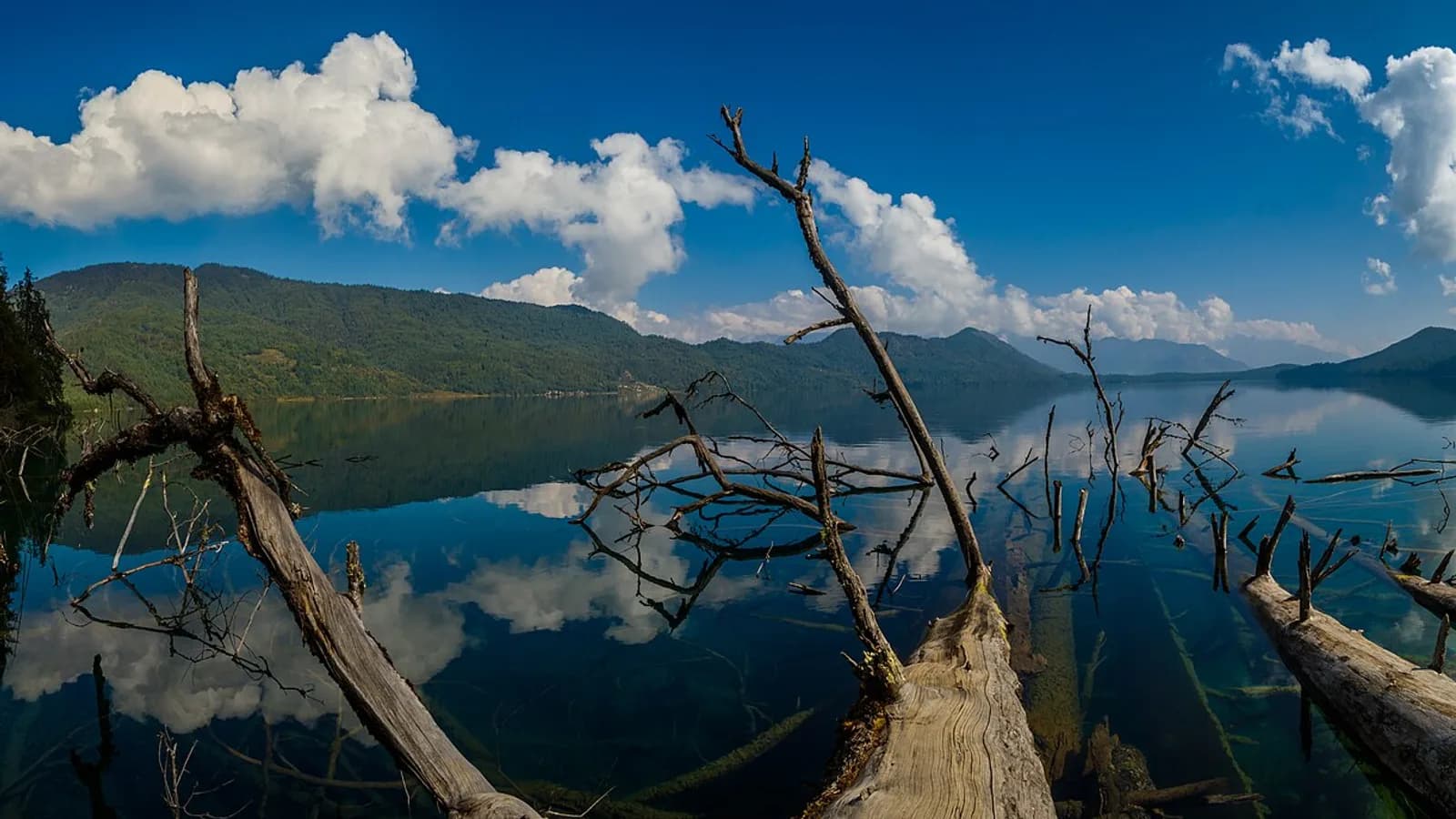
Nepal packs an astonishing range of landscapes into a country smaller than many people expect, and its network of Nepal national parks is the clearest window onto that variety. In a single trip you can go from steamy lowland jungle where one-horned rhinos wade through elephant grass to glacier-carved valleys beneath the highest mountain on Earth. The country protects nearly a quarter of its total land area, and most of the wildlife and scenery travellers come for sits inside that protected estate.
This guide is the orientation piece: what the system looks like, which parks suit which kind of traveller, what you pay to get in, and when to go. For the two flagship parks most visitors actually plan around, see our dedicated guides to Sagarmatha National Park and Bardia National Park.
Key takeaways
- Nepal officially runs 12 national parks inside a broader system of 20 protected areas covering about 23.39% of the country's land (DNPWC).
- The parks split cleanly into two worlds: lowland Terai jungle parks for tigers, rhinos and birds, and mountain parks for trekking and high-altitude scenery.
- Chitwan and Sagarmatha are Nepal's two UNESCO World Heritage national parks (inscribed 1984 and 1979).
- Foreigner entry fees run from NPR 1,500 to NPR 3,000 per entry depending on the park (Nepal Tourism Board, as of June 2026).
- Best seasons differ by zone: October–March for jungle, spring and autumn for the mountains.
How Nepal's protected-area system works
Nepal's protected areas are administered by the Department of National Parks and Wildlife Conservation (DNPWC), which sits under the federal forestry ministry. The system is broader than just national parks — it also includes conservation areas, a wildlife reserve and a hunting reserve. According to DNPWC figures, the network comprises 12 national parks, 6 conservation areas, 1 wildlife reserve and 1 hunting reserve, together with a series of buffer zones, protecting roughly 23.39% of Nepal's territory.
The first parks were gazetted in the early 1970s, with Chitwan leading the way in 1973. Most carry a surrounding buffer zone where local communities share in tourism revenue and manage forest resources — a model that has made Nepal one of the more cited conservation success stories in Asia, particularly for tigers and rhinos.
One point of mild confusion: you will see the park count listed as 12, 13 or even higher across different websites. The official DNPWC figure has long been 12 national parks, but a new park — Chhayanath Rara — was declared in 2025 and is still being formalised. Treat any "13th park" reference as recent and not yet reflected everywhere.
The two kinds of park
The single most useful thing to understand before you plan is that Nepal's parks come in two very different flavours.
Lowland Terai jungle parks
These sit along the flat, subtropical southern belt bordering India. They are about wildlife — Bengal tigers, greater one-horned rhinoceros, wild elephants, crocodiles, deer and hundreds of bird species — explored by jeep, on foot with a guide, or by dugout canoe. The headline parks here are Chitwan, Bardia, Parsa, Banke and Shuklaphanta.
Mountain and high-Himalaya parks
These protect the trekking country: alpine valleys, glaciers, rhododendron forest and peaks. Wildlife is shyer and harder to spot — snow leopard, red panda, Himalayan tahr — and the draw is the landscape and the trails. The big names are Sagarmatha (the Everest region), Langtang, Makalu Barun, Shey Phoksundo and Rara.
A quick park-by-park snapshot
Here is an at-a-glance comparison of the parks most travellers consider, drawn from DNPWC and Wikipedia data:
| Park | Region | Area (km²) | Established | Best for | |---|---|---|---|---| | Chitwan | Central Terai | 953 | 1973 | Rhinos, first-time safari, easy access | | Bardia | Western Terai | 968 | 1988 | Tigers, fewer crowds, wild feel | | Sagarmatha | Khumbu (Everest) | 1,148 | 1976 | Everest trekking, Sherpa culture | | Langtang | Central hills/Himalaya | 1,710 | 1976 | Accessible trekking near Kathmandu | | Shey Phoksundo | Dolpo (far west) | 2,712 | 1984 | Remote trekking, turquoise lake | | Rara | Northwest | 106 | 1976 | Nepal's largest lake, solitude | | Shivapuri Nagarjun | Kathmandu Valley rim | 159 | 2002 | Day hikes from the capital |
Note that area does not equal popularity. The vast Dolpo and Rara parks see a tiny fraction of the visitors that compact, road-accessible Chitwan or trail-famous Sagarmatha do.
Which park should you visit?
A simple way to decide:
- You want to see big wildlife and have 2–3 days. Go to a Terai park. Choose Chitwan for convenience and near-guaranteed rhinos, or Bardia if you have an extra travel day and want tigers, grasslands and far fewer tourists.
- You want mountains and you're trekking. The park is usually baked into your trek choice. The Everest routes sit inside Sagarmatha; the Langtang Valley sits inside Langtang National Park; and so on. You rarely "visit a mountain park" as a standalone — you visit it because your trek passes through it.
- You want lakes and solitude. Rara and Shey Phoksundo deliver Nepal's most spectacular high lakes with almost no crowds, at the cost of long, complicated travel to reach them.
- You're short on time near Kathmandu. Shivapuri Nagarjun on the valley rim gives you a forest day hike without leaving the capital region.
For a two-park itinerary that pairs jungle and mountains, our two-week Nepal itinerary shows how the pieces fit together.
Entry fees: what you actually pay
Park fees in Nepal are charged per entry (not per day), and they are collected either at the park headquarters or at checkpoints on trekking routes. The figures below come from the Nepal Tourism Board schedule and are the rates you should plan around.
| Park | Foreigner | SAARC national | Nepali | |---|---|---|---| | Chitwan | NPR 2,000 | NPR 1,000 | NPR 150 | | Bardia | NPR 1,500 | NPR 750 | NPR 100 | | Sagarmatha | NPR 3,000 | NPR 1,500 | NPR 100 | | Langtang | NPR 3,000 | NPR 1,500 | NPR 100 |
All figures are per person per entry, in Nepali rupees (NPR), as of June 2026 per the Nepal Tourism Board. Children under 10 enter free. Confirm at the entry point, as fees are revised periodically.
A few things to know:
- Mountain parks charge their fee on top of other permits. For the Everest region you also pay a local rural-municipality permit; the old TIMS card has been scrapped there. See our Everest Base Camp permits guide for the full breakdown.
- You generally pay in cash, in NPR, INR or sometimes USD at the gate. Exchange rates at remote checkpoints are usually worse than in Kathmandu, so carry rupees.
- Keep your receipt. You will be asked to show it at secondary checkpoints, especially on trekking routes.
The park fee is rarely the expensive part of a visit — guides, jeeps, transport and lodging cost far more. Budgeting all of that is covered in our Nepal travel budget guide.
When to visit
Timing depends entirely on which zone you choose.
Lowland jungle parks (Chitwan, Bardia, Parsa, Shuklaphanta):
- October–March is prime: cool, dry, thinner vegetation, animals active in daylight. This is the wildlife sweet spot.
- April–May is hot pre-monsoon — uncomfortable but sometimes better for tigers, which gravitate to shrinking water sources.
- June–September is monsoon: muddy trails, more mosquitoes, lush but harder viewing.
Mountain parks (Sagarmatha, Langtang, etc.):
- Spring (March–May) and autumn (late September–November) are the trekking seasons — clear skies, stable weather, the best mountain views.
- Winter is cold and quiet but doable on lower routes; monsoon brings cloud, leeches and obscured peaks.
Our month-by-month breakdown in the best time to visit Nepal goes deeper if you're juggling jungle and mountains in one trip.
The conservation story worth knowing
Nepal's parks are not just scenery — they are a genuine conservation achievement. The country became the first to meet the global "TX2" goal of doubling its wild tiger population, reaching an estimated 355 tigers in the 2022 national census, up from 121 in 2009. Greater one-horned rhino numbers have likewise climbed under the buffer-zone and anti-poaching model. A new national tiger census began in December 2025, with updated figures expected to follow.
When you pay your entry fee and hire a local guide, a share of that money flows back into the buffer-zone communities and the conservation programmes that made this possible. It's one of the rare cases where the tourist transaction and the conservation outcome genuinely line up.
Practical tips for park visits
- Hire the local guide. On jungle walking safaris it is mandatory and it is what keeps you safe around rhinos and elephants. In mountain parks a licensed guide is required on most trekking routes since 2023.
- Dress for the habitat. Earth tones, long sleeves and closed shoes for the jungle; layers and proper boots for the mountains.
- Pack insect protection for the Terai. Mosquitoes are real; Japanese encephalitis is a lowland consideration. See our vaccinations for Nepal guide.
- Carry cash. Park gates and remote checkpoints don't take cards.
- Respect wildlife distance. No feeding, no chasing for photos, and follow your guide's instructions without argument.
The bottom line
Nepal's national parks give you two completely different holidays inside one country. Pick a Terai park if you want tigers, rhinos and birds at relatively low cost and effort; pick a mountain park if you're here to trek and want the Himalaya as your backdrop. Most travellers with two weeks do one of each — a few jungle days in the south bookended with a Himalayan trek — and come away having seen the full spread of what makes Nepal one of the most biodiverse and dramatic countries on the planet.
Sources
- Department of National Parks and Wildlife Conservation (DNPWC)
- Map of Protected Areas — DNPWC
- List of protected areas of Nepal — Wikipedia
- National Park Entry Fees — Nepal Tourism Board
- Nepal's tiger population reaches 355 — The Kathmandu Post
- Nepal begins national tiger census — The Kathmandu Post
- Sagarmatha National Park — UNESCO World Heritage Centre
Frequently asked questions
- How many national parks does Nepal have?
- Nepal officially manages 12 national parks under its Department of National Parks and Wildlife Conservation, part of a wider system of 20 protected areas. A 13th park, Chhayanath Rara, was declared in 2025 and is still being formalised (as of June 2026).
- Which Nepal national park is best for seeing tigers and rhinos?
- Chitwan in the central Terai is the most accessible and reliable for one-horned rhinos, while Bardia in the far west is the quieter choice with one of Nepal's densest Bengal tiger populations. Both are lowland jungle parks rather than mountain reserves.
- How much do national park entry fees cost in Nepal?
- For foreigners the Nepal Tourism Board lists NPR 2,000 per entry for Chitwan, NPR 1,500 for Bardia, and NPR 3,000 for Sagarmatha and Langtang. SAARC nationals pay less and Nepali citizens pay a small fee. Children under 10 enter free (as of June 2026).
- Do I need a permit to trek in Nepal's mountain national parks?
- Yes. Mountain parks such as Sagarmatha and Langtang charge an entry permit at checkpoints along the trail, and most trekking routes also require a licensed guide and a local municipality or conservation permit on top of the park fee.
- What is the best time to visit Nepal's national parks?
- October to March is the sweet spot for the lowland jungle parks: cool, dry and ideal for wildlife viewing. For the high-altitude parks, the trekking seasons of spring (March to May) and autumn (late September to November) give the clearest mountain weather.
- Are Nepal's national parks safe for tourists?
- Generally yes. Jungle parks require a licensed guide for safaris on foot, which manages the real risks from rhinos and elephants. Mountain parks carry the usual trekking hazards of altitude and weather rather than wildlife danger.
Spotted an error in this post? Tell us or suggest a correction.
Related posts
ABC Trek: A Plain-English Guide to Annapurna Base Camp
The ABC trek (Annapurna Base Camp) explained — the route, how many days it takes, difficulty, the best seasons, and what daily trail life is really like.
Read postAma Dablam Climb: 2026 Expedition Guide (6,812m)
An Ama Dablam climb and expedition guide for 2026 — height, the Southwest Ridge route, camps, fixed ropes, difficulty, permits, cost and the best seasons.
Read postAnnapurna vs Manaslu: Which Trek Should You Choose?
An Annapurna vs Manaslu decision guide for trekkers — compare permits, crowds, difficulty, infrastructure and cost to pick the right Himalayan route.
Read postAsan Bazaar Kathmandu: Old Town Market Guide
A visitor guide to Asan bazaar, Kathmandu's oldest market — its six-road square, Annapurna Temple, what to buy, when to go, and how to get there.
Read postAyurveda Nepal: A Traveller's Guide to Healing
Ayurveda Nepal explained for tourists — the history, the doshas, treatments like Panchakarma and Shirodhara, where to go and how to choose a centre safely.
Read postBest Restaurants Pokhara Lakeside: Where to Eat
The best restaurants in Pokhara Lakeside — lakeside trout, wood-fired pizza, Tibetan momos and healthy cafes, with what to order and rough 2026 prices.
Read post