ABC Trek: A Plain-English Guide to Annapurna Base Camp
The ABC trek (Annapurna Base Camp) explained — the route, how many days it takes, difficulty, the best seasons, and what daily trail life is really like.
Walk into a ring of 7,000-metre peaks and stand where the mountains close in around you.
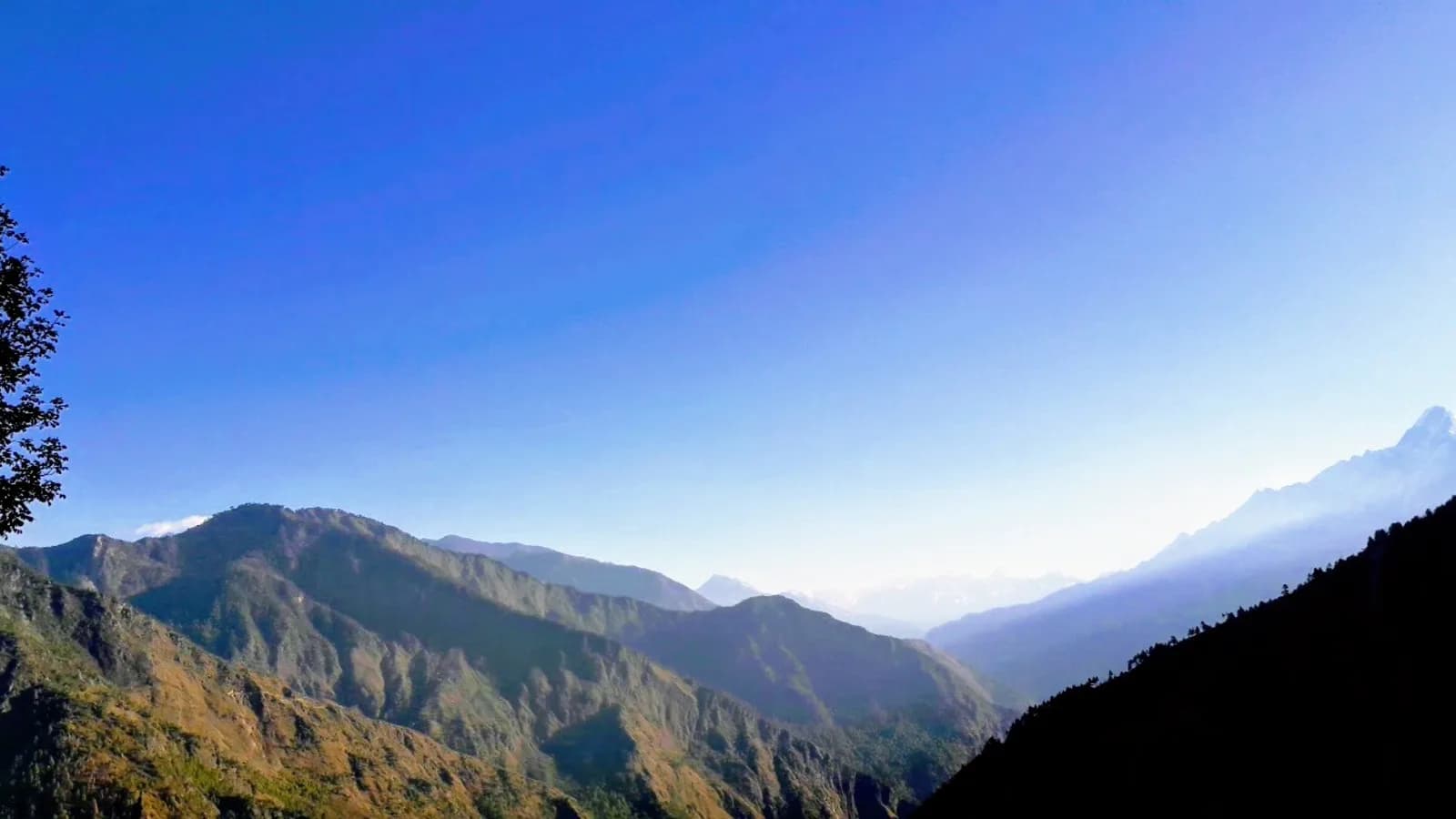
The ABC trek — short for Annapurna Base Camp — is one of Nepal's most loved walks, and for good reason. In a single week or so you climb out of warm river valleys and terraced farmland into a high glacial bowl ringed by some of the planet's tallest mountains. The finish line is a cluster of stone lodges at 4,130 metres, encircled by peaks that seem close enough to touch. This guide explains the ABC trek in plain English: where it goes, how long it takes, how hard it really is, when to go, and what a day on the trail actually feels like. For the money side of things, we point you to a dedicated breakdown rather than repeat numbers here.
If your first question is "what will this cost me?", start with our honest Annapurna Base Camp trek cost breakdown, which stamps every permit and daily figure to mid-2026. This post is the companion piece: the experience, the route and the planning around it.
Key takeaways
- ABC means Annapurna Base Camp, a high amphitheatre of peaks at 4,130 metres reached through the Annapurna Sanctuary, north of Pokhara.
- Most people walk it in 7 to 12 days, with longer versions adding the Ghorepani and Poon Hill sunrise loop.
- It is moderately hard, not technical — no ropes or climbing, but long days and brutal stone staircases.
- The best windows are autumn and spring; deep winter carries a serious avalanche risk on the upper trail.
- There is no high-altitude flight — you start by road from Pokhara, which keeps logistics simple.
- Trekking rules have tightened since 2023, so confirm the current guide and permit requirements with an official source before booking.
What and where is the ABC trek
The trek's full name is the Annapurna Base Camp trek, and it threads up the Annapurna Sanctuary — a deep glacial basin guarded by steep ridges. You reach a viewpoint where Annapurna I (8,091 metres, the tenth-highest mountain on Earth), Annapurna South, Gangapurna, Hiunchuli and the unmistakable fishtail of Machhapuchhre form a near-complete circle around you. Because the surrounding walls are so high and close, sunrise and sunset light the peaks in sequence, which is why the final morning at base camp is the moment most trekkers remember.
The trailhead lies a few hours by road from Pokhara, Nepal's lakeside adventure hub. That single fact shapes the whole trip: unlike the Everest region, there is no flight to a remote mountain airstrip. You drive to a road-head, lace up and start walking, which makes the ABC trek one of the more accessible big Himalayan routes to organise.
How it compares to other treks
ABC is frequently weighed against its famous cousins. If you are torn between the two giants of Nepali trekking, our Everest Base Camp vs Annapurna Base Camp comparison lays out the trade-offs in time, cost and scenery. And if you have the Annapurna region itself in mind but are unsure which walk to pick, Annapurna Circuit vs Base Camp covers which suits your days and fitness.
The route, stage by stage
There is no single fixed itinerary — the total distance ranges roughly from the high 50s to the mid 80s of kilometres depending on where you begin, and the round trip is often quoted at around 110 kilometres for the fuller versions. What stays constant is the sequence of valleys and villages as you climb the Modi Khola river toward the Sanctuary.
| Stage | Rough elevation | What it is like | |---|---|---| | Lower valleys (Nayapul / Jhinu area) | ~1,100–1,600 m | Warm, green, terraced farmland and waterfalls | | Chhomrong | ~2,170 m | The last big permanent Gurung village before the Sanctuary | | Sinuwa, Bamboo, Dovan | ~2,300–2,600 m | Forested gorge, humid, dense rhododendron | | Deurali | ~3,200 m | The valley narrows; the high country begins | | Machhapuchhre Base Camp (MBC) | ~3,700 m | First grand open views; a key acclimatisation night | | Annapurna Base Camp (ABC) | 4,130 m | The amphitheatre of peaks — the goal |
Chhomrong is the pivot of the whole trek. It is the last sizeable settlement, a sprawling Gurung village clinging to a hillside, and from here the trail commits to the narrowing gorge of the Modi Khola. Above it the famous stone staircases begin — endless steps down to a river and back up the other side that punish the knees on the return more than the climb itself.
Adding Ghorepani and Poon Hill
Many trekkers tack on the Ghorepani and Poon Hill loop at the start. The dawn climb to Poon Hill (3,210 metres) delivers a wide sunrise panorama over Dhaulagiri, the Annapurnas, Nilgiri and Machhapuchhre before you have even entered the Sanctuary. It adds days but also adds gentler altitude gain and one of the most photographed sunrises in Nepal. If you would rather understand the villages you pass through, our guides to Ghandruk village, a classic Gurung settlement on this route, add useful colour.
How long it takes and a sample shape
The honest answer to "how many days?" is 7 to 12 trekking days, plus travel at each end. The right number depends on your fitness, how many side trips you want, and how cautious you are about altitude.
| Style | Trekking days | Best for | |---|---|---| | Direct ABC | ~7 days | Limited time, decent fitness, willing to push the pace | | ABC with extra acclimatisation | ~9–10 days | A safer altitude profile and more breathing room | | ABC via Ghorepani and Poon Hill | ~10–12 days | First-timers who want the sunrise loop and easier days |
A typical rhythm is several days of steady climbing up the valley to base camp, one early morning at ABC for sunrise, then a faster descent back down — the return is quicker but harder on tired legs because of those staircases. Building in even one spare day pays off if weather closes the high trail or you simply want a slower ascent.
How hard is it, really
The ABC trek is best described as moderately strenuous but non-technical. There is no mountaineering, no ropes, no crampons in normal conditions, and no need for prior high-altitude experience. What it does demand is stamina: most days involve 5 to 7 hours of walking, often on uneven stone steps, with sustained ascents and long descents.
Two things catch people out. The first is the staircases around Chhomrong and Sinuwa, which are relentless and tougher coming down. The second is altitude. ABC's 4,130 metres is high enough that altitude sickness is a genuine risk if you climb too fast, and the highest nights are spent above 3,500 metres. Reading our altitude sickness guide before you go, and building acclimatisation into your plan, matters more than raw fitness. Beginners absolutely do this trek — the trick is choosing a longer, gentler itinerary rather than the fastest one.
When to go
Season makes or breaks this trek, and not only for the views.
| Season | Months (approx.) | What to expect | |---|---|---| | Autumn | Late Sept – Nov | Prime time: stable weather, clear skies, busy trails | | Spring | March – May | Warm, rhododendrons in bloom, generally clear; some afternoon haze | | Monsoon | June – early Sept | Rain, leeches, cloud-hidden peaks, slippery trails | | Winter | Dec – Feb | Cold, fewer crowds, but heavy snow and avalanche danger up high |
Autumn and spring are the two prime windows. October in particular is prized for crisp, settled conditions. Winter brings a quieter trail and a different beauty, but the upper Sanctuary accumulates deep snow, and that introduces the trek's most serious natural hazard. To line your trip up with the clearest mountain views across the country, see our overview of the best time to visit Nepal.
Safety and altitude
The ABC trek is popular and well-supported, with teahouses the whole way and a steady flow of trekkers and guides. But it is not without risk, and the headline concern is avalanches on the upper trail. The stretch between Hinku Cave and Deurali is a recognised avalanche zone, where the shape of the valley funnels snow and debris directly across the path. The danger spikes after heavy snowfall and during late winter and early spring, and slides can cross the trail in seconds.
Sensible practice reduces the risk markedly: trek in the prime seasons, cross known danger sections early in the morning when the snowpack is firmest and before the sun loosens the slopes, and listen to local guides who read conditions daily. Hinku Cave itself, at roughly 3,100 metres, has historically served as an emergency shelter rather than a planned overnight stop. None of this should put off a well-prepared trekker — it simply argues for going in season and not cutting corners.
Permits and the guide question
The Annapurna Sanctuary sits inside a protected conservation area, so you need a permit to enter. The core document is the Annapurna Conservation Area Permit (ACAP), set at NPR 3,000 for foreign nationals and NPR 1,000 for SAARC nationals (as of June 2026), with children under ten generally exempt. Beyond ACAP, Nepal's trekking rules have changed more than once in recent years: the old TIMS card requirement was revised in 2023, and rules around trekking with a licensed guide in the Annapurna region have also shifted and are reported inconsistently across operators. Because the picture keeps moving, confirm the current requirements directly with the Nepal Tourism Board or a government-registered agency before you commit. Our guide to choosing a reputable trekking agency in Nepal explains what a trustworthy operator should sort out for you, including permits.
For the full, dated cost picture — permits, daily teahouse spend, guide and porter fees and the line items quotes tend to skip — defer to our Annapurna Base Camp trek cost breakdown rather than the rough figures here.
What daily life on the trail is like
Trekking the ABC route is teahouse trekking, which is part of its charm. You sleep in family-run lodges, eat in their dining rooms, and rarely carry more than a daypack if you hire a porter. The unspoken arrangement is that a cheap room comes with the expectation that you eat dinner and breakfast where you sleep. The undisputed best-value meal is dal bhat — lentils, rice and vegetables — because refills are typically free, which matters when you are burning energy all day.
A few realities of trail life worth planning for:
- Cash is king. Higher villages, generally above Chhomrong, are cash-only, and there are no ATMs once you leave the lowlands — draw enough rupees in Pokhara first.
- Comforts cost more with altitude. Hot showers, device charging and wifi usually carry a small fee that climbs the higher you go, because everything must be carried or muled up.
- Pack for cold nights. Days can be mild, but base-camp nights are genuinely cold; a warm sleeping bag and a down layer are non-negotiable, and both can be rented in Pokhara.
- A few words go a long way. A handful of Nepali phrases earns warmer service in the lodges — see our phrases every trekker should know.
The social side is a highlight. Evenings in a packed teahouse dining room, swapping stories with trekkers from around the world over a hot lemon, are as memorable as the mountains for many people. If you would rather a quieter, shorter walk on the same permit system, the Mardi Himal trek is a lower-key alternative that shares this region.
Is the ABC trek right for you
Choose the ABC trek if you want a genuine high-mountain experience without the price tag or logistics of a flight-in route, if you have a week to twelve days, and if you are willing to train your legs for long days on stone steps. It rewards trekkers who go in season, allow time to acclimatise, and treat the upper-valley avalanche risk seriously. Get those right and you finish standing in one of the most spectacular natural amphitheatres anywhere on Earth — which is exactly why the ABC trek stays at the top of so many Nepal wish lists.
Sources
- Annapurna Base Camp Trek Difficulty and Elevation — Nepal Hiking Team
- Annapurna Base Camp Trek Distance Guide — Nepal Hiking Team
- Daily Distances on the Annapurna Base Camp Trek — Ian Taylor Trekking
- Annapurna Circuit Trek Permits: Guide, Costs and Rules — Magical Nepal
- Annapurna Trek Permits (2025): TIMS and ACAP Explained — Shikhar Adventure
- Hinku Cave: High Avalanche Risk Zone on the ABC Trail
- Avalanche on the Annapurna Base Camp Trek — Crystal Mountain Treks
- Annapurna Base Camp Weather: Best Months and Trek — Seven Peak Expedition
Frequently asked questions
- What does ABC trek stand for?
- ABC stands for Annapurna Base Camp, the natural amphitheatre of high peaks at 4,130 metres reached through the Annapurna Sanctuary north of Pokhara. The route is also sometimes called the Annapurna Sanctuary trek.
- How many days does the ABC trek take?
- Most itineraries run 7 to 12 trekking days, not counting travel to and from Pokhara. Direct routes finish in about a week, while longer versions add the Ghorepani and Poon Hill loop for sunrise views and gentler acclimatisation.
- How high is Annapurna Base Camp?
- Annapurna Base Camp sits at 4,130 metres (13,550 feet). Machhapuchhre Base Camp, the last stop before it, is around 3,700 metres, so the highest nights are spent above 3,500 metres where altitude needs respect.
- Is the ABC trek hard?
- It is moderately demanding rather than technical. There is no climbing or special equipment, but expect 5 to 7 hours of walking a day and long stone staircases, especially the climbs around Chhomrong. Reasonable fitness and a sensible pace make it achievable for most healthy adults.
- When is the best time to do the ABC trek?
- Autumn (roughly late September to November) and spring (roughly March to May) are the prime windows for clear skies and stable weather. Winter brings heavy snow and a real avalanche risk on the upper trail, so many trekkers avoid the deepest cold months.
- Do I need a guide for the ABC trek?
- Rules have tightened since 2023 and many operators now arrange a licensed guide as standard for the Annapurna region. Requirements have shifted in recent years, so confirm the current rule with the Nepal Tourism Board or a government-registered agency before you book.
- Is the ABC trek safe?
- It is a popular, well-served route, but the section between Hinku Cave and Deurali is a known avalanche zone, especially after heavy snow. Crossing risky stretches early when the snowpack is firm, trekking in season, and going with a knowledgeable guide all reduce the hazard.
- Can beginners do the ABC trek?
- Yes, fit beginners regularly complete it. The keys are training your legs for long descents, allowing enough days to acclimatise, and choosing a calmer season. It is often suggested as a first Himalayan trek because there is no high-altitude flight and teahouses are plentiful.
Spotted an error in this post? Tell us or suggest a correction.
Related posts
Annapurna vs Manaslu: Which Trek Should You Choose?
An Annapurna vs Manaslu decision guide for trekkers — compare permits, crowds, difficulty, infrastructure and cost to pick the right Himalayan route.
Read postEverest Base Camp Helicopter Return: 2026 Guide
Everest Base Camp helicopter return — how it works, real costs, weight limits, the shifting landing rules, and who it suits. A factual 2026 guide.
Read postAma Dablam Climb: 2026 Expedition Guide (6,812m)
An Ama Dablam climb and expedition guide for 2026 — height, the Southwest Ridge route, camps, fixed ropes, difficulty, permits, cost and the best seasons.
Read postHow to Choose the Best Trekking Agency in Nepal (2026)
A practical buyer's guide to choosing a trekking agency in Nepal: TAAN registration, the licences to check, fair pricing, and the red flags to avoid.
Read postEBC Trek by Road: Reach Everest Base Camp Without Flying
How to do the EBC trek by road — driving Kathmandu to Salleri, Phaplu or Surke by jeep, then walking to Everest Base Camp. Routes, costs, days and seasons.
Read postIs Lukla Airport Dangerous? An Honest Pilot's-Eye View
Is Lukla airport dangerous? A clear, factual look at the runway, weather cancellations, safety record and how Everest trekkers fly in and out safely.
Read post