Everest Base Camp vs Annapurna Base Camp: Which to Trek
Everest Base Camp vs Annapurna Base Camp compared — altitude, days, difficulty, cost, permits, scenery, and which Himalayan trek fits you best.
One trek is the highest you can comfortably walk. The other is the most mountain you can see in the fewest days. Pick the trade you actually want.
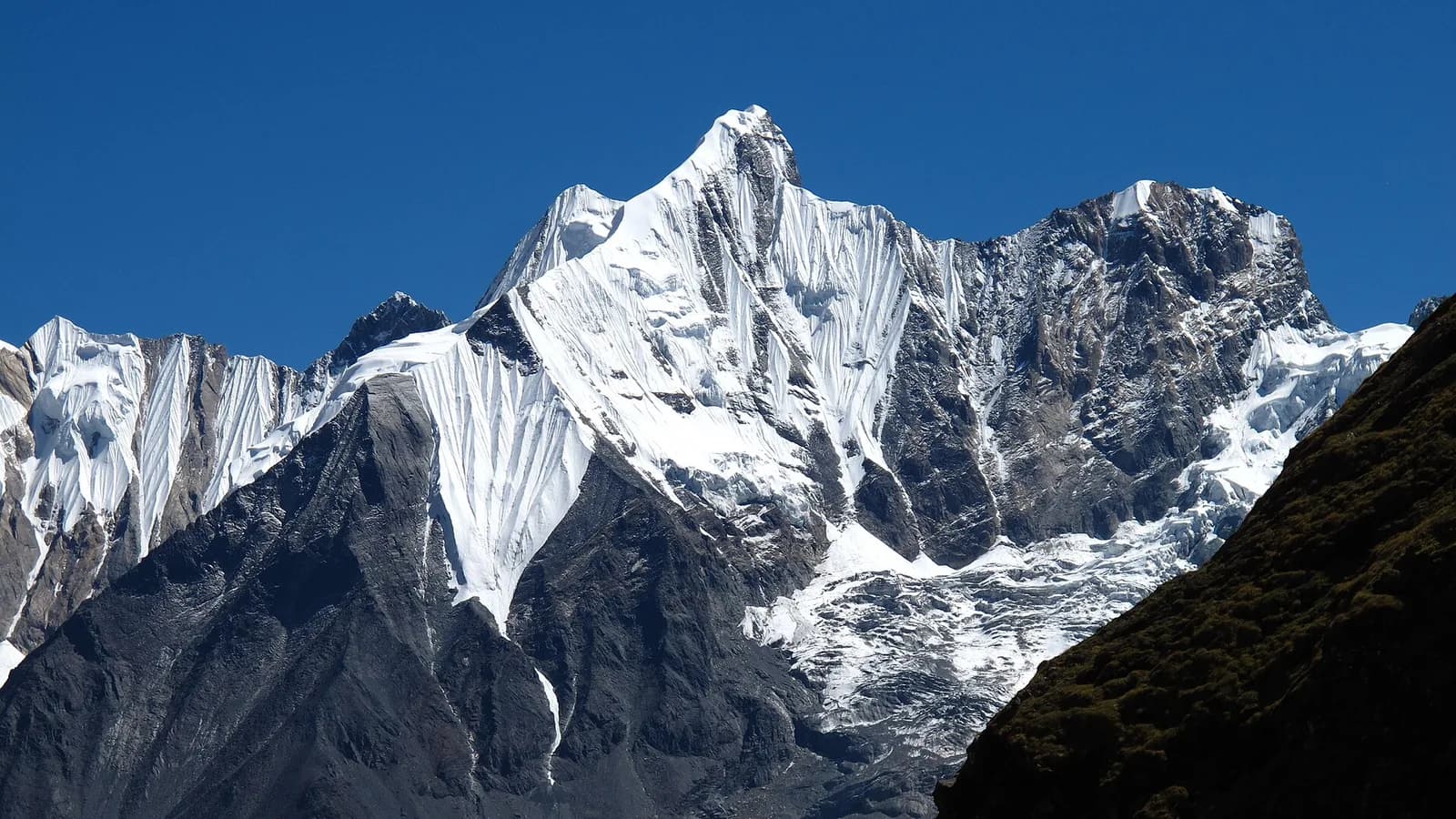
Choosing between Everest Base Camp and Annapurna Base Camp is the classic Nepal trekking dilemma, and it is rarely about which mountain is more famous. Both are teahouse treks that fit reasonably fit, non-technical walkers. Both reward the effort. They simply ask for different amounts of time, budget, and altitude tolerance, and they hand back two very different kinds of mountain experience.
This guide lays the two side by side on the factors that actually decide it for you: how high they climb, how long they take, what they cost, how hard they feel underfoot, and what you actually see along the way.
Key takeaways
- Everest Base Camp (EBC) climbs higher (about 5,364 m, with Kala Patthar near 5,545 m) and takes longer (roughly 12 to 16 days), so altitude is the central challenge.
- Annapurna Base Camp (ABC) tops out lower (about 4,130 m) and is shorter (about 7 to 12 days), making it the gentler, cheaper, more time-friendly option.
- EBC is usually more expensive, largely because of the round-trip flight to Lukla and higher-altitude food and lodging prices.
- ABC is reachable by road from Pokhara, with no mountain flight required, which removes a major cost and a common source of delays.
- Scenery differs in character: ABC is a concentrated 360-degree amphitheatre of peaks, while EBC is a longer, more remote high-alpine journey to the foot of the world's highest mountain.
- For a first Himalayan trek on limited time, ABC tends to win; for the bigger-name, higher-altitude expedition feel, EBC is the draw.
The 30-second decision
Choose Annapurna Base Camp if you have around 7 to 12 days, want lower altitude and lower cost, prefer to skip a mountain flight, and want maximum mountain scenery for the time invested. It is the stronger pick for a first Himalayan trek.
Choose Everest Base Camp if you have closer to two weeks, want to stand at the foot of the world's tallest mountain, are comfortable budgeting and acclimatizing for serious altitude, and value the remote, high-alpine, expedition atmosphere of the Khumbu.
If you still cannot decide, ask one question: is the altitude the point, or the obstacle? If it is the point, go to Everest. If it is the obstacle, go to Annapurna.
Altitude and difficulty
This is the single biggest practical difference between the two treks.
| Factor | Everest Base Camp | Annapurna Base Camp | |---|---|---| | Maximum altitude | ~5,364 m (Kala Patthar ~5,545 m) | ~4,130 m | | Typical duration | ~12–16 days | ~7–12 days | | Daily walking | ~5–7 hours | ~4–6 hours | | Altitude-sickness risk | Higher (sustained time above 4,000–5,000 m) | Lower (less time at extreme altitude) | | Trek shape | Out-and-back from Lukla | Out-and-back from the Pokhara side | | Hardest element | Thin air and long high-altitude days | Long, relentless stone staircases |
Everest is generally considered the more demanding trek because you spend more days higher up, where the air holds far less oxygen and acute mountain sickness becomes a real planning concern. Annapurna is not a soft option, though. Its lower sections climb endless stone steps that punish the legs, even if the altitude never reaches Everest's extremes.
Crucially, fitness alone does not protect you from altitude. On EBC especially, the people who turn back are usually the ones who climbed too fast or skipped rest days, not the ones who were unfit. Our guide to altitude sickness on Nepal treks explains the warning signs and the slow-ascent strategy that keeps success rates high.
What the daily reality feels like
On EBC, expect cold nights, sleeping as high as Gorak Shep (around 5,170 m), and the strange sensation of being out of breath simply walking to dinner. On ABC, the nights are warmer, the villages are closer together, and the air never thins to the same degree, so the dominant memory is usually tired legs rather than a pounding altitude headache.
Cost comparison
ABC is the more budget-friendly trek, and the gap is driven by two things: length and the Lukla flight.
A budget-conscious independent trekker can often complete the Nepal-ground portion of ABC for roughly USD 700 to 900 over about 9 to 10 days (excluding international flights and the Nepal visa), as of 2025/2026. EBC typically runs higher, because the round-trip flight to Lukla is a significant fixed cost and food and lodging get markedly more expensive the higher you climb.
A few cost drivers to keep in mind:
- The Lukla flight is the big EBC swing factor. ABC has no equivalent: you can reach the trailhead by road and jeep from Pokhara.
- Food and lodging inflate with altitude on both treks, but EBC spends more days in the most expensive zone.
- Guide and porter wages are similar on both routes — roughly USD 30–35 per day for a guide and around USD 15–25 per day for a porter (as of 2025/2026).
For the full breakdown logic, see our dedicated Everest Base Camp trek cost guide and the Annapurna Base Camp trek cost page. The frameworks line up, so you can compare like for like.
Scenery: what you actually see
The two treks deliver almost opposite visual experiences, and this is where personal taste matters most.
Annapurna Base Camp
ABC is a study in concentration. You walk up through terraced farmland, then lush rhododendron and bamboo forest, then past traditional Gurung and Magar villages, before the valley narrows and finally opens into the Annapurna Sanctuary. There, you are encircled by a near-continuous wall of peaks — Annapurna I (8,091 m), Annapurna South, Hiunchuli, Machhapuchhre, and more — in a 360-degree ring. The arrival, especially at sunrise, is one of the most intense single mountain moments in the Himalayas. In spring, the rhododendron forests on the lower trail bloom red and pink, adding a second, gentler kind of beauty.
Everest Base Camp
EBC trades intimacy for grandeur and remoteness. The trail climbs through Sherpa heartland — Namche Bazaar, Tengboche monastery, the high settlements of the Khumbu — into an increasingly stark, glaciated, high-alpine world. The reward is standing at the foot of Mount Everest itself and, from Kala Patthar, watching the highest mountain on Earth catch the morning light. The scenery is less of a single enclosed amphitheatre and more of an epic, expanding landscape that takes a week of walking to fully reveal.
In short: ABC gives you the most mountain per day; EBC gives you the most mountain, full stop, if you can give it the time.
Permits and rules
Both treks require permits, but the systems are different.
For Everest Base Camp, foreign trekkers generally need the Sagarmatha National Park Entry Permit (NPR 3,000) and the Khumbu Pasang Lhamu Rural Municipality Entry Permit (NPR 2,000), totalling about NPR 5,000 (as of 2025). The old TIMS card is no longer used for the Everest region. See our detailed Everest Base Camp permits guide for where and how to buy them.
For Annapurna Base Camp, the core requirement is the Annapurna Conservation Area Project (ACAP) permit (NPR 3,000 for foreigners). Sources differ on whether the TIMS card is still mandatory for Annapurna; some report it was dropped, while others still list it at around NPR 2,000, so confirm the current position when you arrive (as of 2025/2026). Either way, bring your passport, passport-size photos, and enough cash.
The guide question
Nepal's 2023 rule requires solo trekkers in many protected areas to hire a licensed guide. In practice:
- Annapurna generally enforces this for solo trekkers, though foreigners trekking in a group may have more flexibility.
- The Khumbu (Everest) region opted out and has allowed guide-free trekking, but reports indicate checkpoints are increasingly verifying credentials, so the situation is tightening.
The safe approach for both treks is to budget for at least a porter-guide, confirm the latest rule with a registered agency, and treat a guide as the default. Our explainer on whether you need a guide for Everest Base Camp goes deeper on the Khumbu situation specifically.
Best season for each
Both treks share the same prime windows, with small differences in tolerance:
- Autumn (late September to November) is the most reliable season for both, offering the clearest post-monsoon skies. It is also the busiest.
- Spring (March to May) brings warmer days and, on ABC, blooming rhododendrons. On EBC, spring carries the buzz of the Everest climbing season.
- Winter is doable on ABC with proper gear because it never reaches extreme altitude; on EBC, winter is cold and harsh but possible for the well-prepared.
- Monsoon (June to August) is best avoided on both — cloud blocks the views and flight delays spike, which hits EBC harder because of the Lukla flight.
For a month-by-month view, our best time to visit Nepal guide breaks down the trade-offs across the whole year.
Who each trek suits
Annapurna Base Camp fits you if you:
- Have roughly 7 to 12 days
- Are doing your first Himalayan trek
- Want to avoid the highest altitudes and the Lukla flight
- Prefer a lower total cost
- Want the most concentrated mountain payoff for your time
Everest Base Camp fits you if you:
- Have around two weeks to spare
- Specifically want to reach the foot of Mount Everest
- Are comfortable preparing and acclimatizing for serious altitude
- Have the budget for the flight and higher on-trail prices
- Value remoteness and the expedition atmosphere
A note on the wider comparison
If your real question is broader than just these two base camps, it is worth widening the lens. The Annapurna region in particular offers several routes, and the Annapurna Circuit vs Annapurna Base Camp comparison covers the high-pass classic against the sanctuary day-hike-on-steroids. For raw difficulty, the Manaslu Circuit vs Annapurna difficulty breakdown is a useful next read once you have the EBC-versus-ABC decision settled.
Whatever you choose, the eight trail phrases in our Nepali phrases every trekker should know guide will smooth your teahouse and porter interactions on either trail.
The honest bottom line
Neither trek is objectively better — they are built for different travellers and different calendars. If you are time-poor, budget-conscious, altitude-wary, or trekking in the Himalayas for the first time, Annapurna Base Camp is almost always the smarter pick, and it does not feel like a consolation prize. If you have two weeks, the budget, and a specific pull toward the world's highest mountain, Everest Base Camp earns every extra dollar and day it asks for.
Pick the one that matches the time you genuinely have and the altitude you are honestly comfortable with. Both reward the trekker who chooses well, and both punish the one who picks for the postcard instead of the plan.
Sources
- Annapurna Base Camp trek vs Everest Base Camp trek — Discovery World Trekking
- Everest Base Camp Trek vs Annapurna Base Camp Trek — Nepal Hiking Adventure
- Everest Base Camp Trek Permit: 2025 Guide — Magical Nepal
- Annapurna Trek Permits (2025): TIMS & ACAP Explained — Shikhar Adventure
- How Much Does Annapurna Base Camp Trek Cost — Nepal Base Camp Treks
- New Requirements for Use of Trekking Guides/Porters (April 1, 2023) — U.S. Embassy in Nepal
- Current Nepal Trekking Rules 2025 — Places Nepal
Frequently asked questions
- Is Everest Base Camp or Annapurna Base Camp harder?
- Everest Base Camp is the harder of the two for most trekkers, mainly because it is longer and climbs much higher, which raises the altitude risk. Annapurna Base Camp is shorter and tops out lower, but its relentless stone staircases make it physically demanding in a different way.
- How high is each base camp?
- Everest Base Camp sits at roughly 5,364 m, and trekkers usually climb a little higher to the Kala Patthar viewpoint at about 5,545 m. Annapurna Base Camp is around 4,130 m, which is over 1,200 m lower and meaningfully easier on the body.
- How many days does each trek take?
- Annapurna Base Camp is commonly done in about 7 to 12 days, while the classic Everest Base Camp route runs roughly 12 to 16 days including acclimatization stops. If your holiday is short, ABC is the more realistic choice.
- Which trek is cheaper?
- Annapurna Base Camp is usually the cheaper trek because it is shorter, lower, and reachable by road from Pokhara without a mountain flight. Everest typically costs more, largely because of the round-trip Lukla flight and higher prices for food and lodging at altitude.
- Do I need a guide for either trek?
- Under Nepal's 2023 rule, the Annapurna Conservation Area generally requires solo trekkers to hire a licensed guide. The Khumbu region opted out and has allowed guide-free trekking, but enforcement is tightening, so treat a guide as the safe default and confirm the current rule before you go.
- Which has better mountain views?
- It depends on what you want. Annapurna Base Camp puts you inside a 360-degree amphitheatre of peaks for a very concentrated payoff, while Everest delivers the world's highest mountain and a grander, more remote high-alpine landscape that takes longer to reach.
- Which trek is better for a first-timer?
- Annapurna Base Camp is the friendlier first Himalayan trek for most people because of the lower altitude, shorter length, and gentler logistics. Everest is achievable for fit beginners too, but it asks for more time, more budget, and more respect for altitude.
- When is the best time to do these treks?
- Spring (March to May) and autumn (late September to November) are the prime windows for both, with autumn offering the clearest skies. Both trails are best avoided during the June to August monsoon, when cloud, rain, and flight delays peak.
Spotted an error in this post? Tell us or suggest a correction.
Related posts
ABC Trek: A Plain-English Guide to Annapurna Base Camp
The ABC trek (Annapurna Base Camp) explained — the route, how many days it takes, difficulty, the best seasons, and what daily trail life is really like.
Read postAma Dablam Climb: 2026 Expedition Guide (6,812m)
An Ama Dablam climb and expedition guide for 2026 — height, the Southwest Ridge route, camps, fixed ropes, difficulty, permits, cost and the best seasons.
Read postAnnapurna vs Manaslu: Which Trek Should You Choose?
An Annapurna vs Manaslu decision guide for trekkers — compare permits, crowds, difficulty, infrastructure and cost to pick the right Himalayan route.
Read postAsan Bazaar Kathmandu: Old Town Market Guide
A visitor guide to Asan bazaar, Kathmandu's oldest market — its six-road square, Annapurna Temple, what to buy, when to go, and how to get there.
Read postAyurveda Nepal: A Traveller's Guide to Healing
Ayurveda Nepal explained for tourists — the history, the doshas, treatments like Panchakarma and Shirodhara, where to go and how to choose a centre safely.
Read postBest Restaurants Pokhara Lakeside: Where to Eat
The best restaurants in Pokhara Lakeside — lakeside trout, wood-fired pizza, Tibetan momos and healthy cafes, with what to order and rough 2026 prices.
Read post