Annapurna Circuit vs Annapurna Base Camp — Which Trek Is Right for You?
AC is the high-pass classic. ABC is the amphitheater day-hike-on-steroids. The real differences in length, altitude, scenery, and who each one fits.
AC asks the question — can you do this? ABC asks a different one — do you want to?
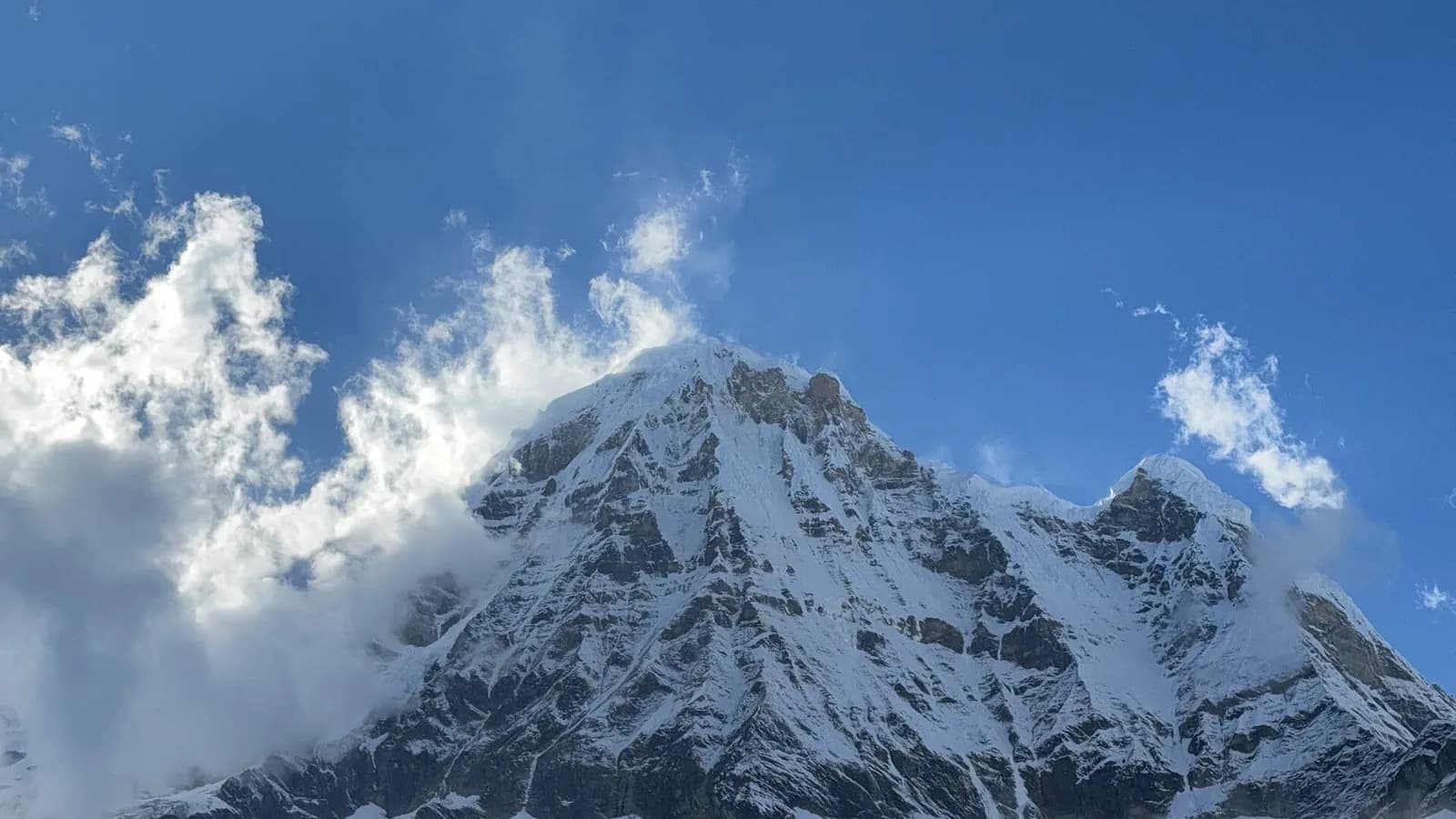
Both treks live in the same massif. Both are iconic. Both are reasonable for fit but non-expert trekkers. They also feel almost nothing alike.
Here's how to choose.
The 30-second decider
Choose Annapurna Circuit (AC) if you want a 12–18 day point-to-point trek that goes through five climate zones, crosses a 5,416m pass, and gives you a long meditative walk through changing landscapes.
Choose Annapurna Base Camp (ABC) if you want a 7–10 day out-and-back to a glacial amphitheater, capped by sunrise on a 360° wall of mountains, with less altitude risk and no pass to cross.
If you have less than 10 days, ABC. If you can give 14+, AC offers more variety per day on the trail. If altitude makes you nervous, ABC tops out at 4,130m. If altitude is the point, AC's Thorong La crossing is the centerpiece.
Length, altitude, difficulty
| Factor | Annapurna Circuit | Annapurna Base Camp | |---|---|---| | Standard duration | 12–18 days | 7–10 days | | Max altitude | 5,416m (Thorong La pass) | 4,130m (Base Camp) | | Daily distance | 12–22 km | 10–18 km | | Pass crossing | Yes — Thorong La, weather-dependent | No | | AMS risk | High above Manang | Moderate, manageable | | Climate zones crossed | 5 (subtropical → high alpine) | 2 (subtropical → alpine) | | Trek shape | Linear point-to-point | Out-and-back | | Most demanding day | Pass crossing (10+ hours) | Steep stair sections to MBC/ABC |
AC is a longer effort with one genuinely hard day (the pass). ABC is a shorter effort with steady steep climbing throughout — there's no single hardest day, just a lot of stairs.
Scenery: what you actually see
Annapurna Circuit gives you change. Day one is rice paddies and waterfalls. By day five you're in pine forest. By day seven you're in stark high-desert that looks like Tibet. The pass crossing is white snow and rock. The descent into Mustang region is otherworldly — wind-carved cliffs and the green Kali Gandaki valley below.
The trade-off: until day seven you're not in the mountains in the way an Instagram feed shows you. There's a lot of walking through villages and lower valleys before the high country opens up.
Annapurna Base Camp is the opposite. From day three the mountains are dominant — Machhapuchhre filling the southern sky, then opening into the sanctuary where Annapurna I (8,091m), Hiunchuli, Annapurna South, and Gangapurna form a continuous ring around you. The arrival at ABC, especially at sunrise, is one of the most concentrated mountain experiences in the Himalayas.
The trade-off: less variety. The lower-altitude days through Ghandruk and Chhomrong are pleasant but don't change much.
Cost difference
For a self-organized trek with a porter:
- ABC: ~$600–900 total (7 days, fewer flights, lower altitude = cheaper food)
- AC: ~$1,000–1,500 total (12 days, more food at high altitude, optional flights from Jomsom)
The AC's extra days plus high-altitude food markups push the total ~50% above ABC. If budget is the deciding factor, ABC.
For the breakdown logic, see the EBC cost guide — the framework is the same.
Guide and porter situation
The 2023 guide-rule change applies to both. In practice:
- AC: Solo trekking is genuinely difficult to do these days. The Thorong La pass involves real risk in bad weather, and lodge owners on the upper sections will sometimes refuse rooms to obviously unguided foreigners. Hire at least a porter-guide.
- ABC: Easier to do solo or with just a porter. The trail is well-marked, lodges are denser, and the altitude doesn't make AMS-related decisions critical.
Permits
Both routes are inside the Annapurna Conservation Area Project (ACAP):
- ACAP entry: NPR 3,000 (~$22) — paid in Pokhara or at the trailhead
- TIMS: NPR 2,000 (~$15) — for ACAP routes, TIMS is still required (unlike Khumbu)
Total: ~$37, payable in cash. Bring passport-size photos.
For Annapurna Circuit specifically, you may also need a Restricted Area Permit if you side-trip to Tilicho Lake or Upper Mustang — those are extra and significantly pricier.
Best season for each
- AC: October–November (clear skies, cold but manageable on the pass). March–April is the second-best window with rhododendrons in bloom. Avoid June–September monsoon — the pass becomes dangerous.
- ABC: Same windows, but ABC is more forgiving in shoulder seasons (March, late November) because there's no pass. February is doable with proper gear if you don't mind snow on the trail.
Who tends to prefer which
AC fits trekkers who:
- Have done multi-day trekking before
- Want variety and a longer mental decompression
- Are comfortable with altitude or have time to acclimatize properly
- Care about the sense of a journey from one place to another
- Have 14+ days
ABC fits trekkers who:
- Want maximum mountain reward per day of vacation time
- Are first-time Himalayan trekkers
- Worry about altitude
- Have 7–10 days
- Want the iconic photo (the sunrise at ABC is the one)
The hybrid option nobody talks about
If you have ~10 days but want a taste of AC: trek Jomsom to Pokhara — the lower half of the Circuit, from Jomsom (3,000m, fly in) down through Marpha, Tatopani, and Ghorepani to Pokhara. You get the high-desert Mustang scenery, the apple orchards, the changing climate zones, and Poon Hill at the end for the panoramic view. No pass crossing, no extreme altitude, half the length, full variety.
The Nepali phrases that help either way
Whichever you pick, the eight trail phrases cover most lodge and porter interactions. The teahouse scenario script handles dinner ordering. The medical scenario covers AMS-related conversations you hope you don't need.
Pick the one that fits the time you have and the trekker you actually are — not the one you wish you were. Both treks reward effort. The wrong one for you punishes it.
Spotted an error in this post? Tell us or suggest a correction.
Related posts
ABC Trek: A Plain-English Guide to Annapurna Base Camp
The ABC trek (Annapurna Base Camp) explained — the route, how many days it takes, difficulty, the best seasons, and what daily trail life is really like.
Read postAma Dablam Climb: 2026 Expedition Guide (6,812m)
An Ama Dablam climb and expedition guide for 2026 — height, the Southwest Ridge route, camps, fixed ropes, difficulty, permits, cost and the best seasons.
Read postAnnapurna vs Manaslu: Which Trek Should You Choose?
An Annapurna vs Manaslu decision guide for trekkers — compare permits, crowds, difficulty, infrastructure and cost to pick the right Himalayan route.
Read postAsan Bazaar Kathmandu: Old Town Market Guide
A visitor guide to Asan bazaar, Kathmandu's oldest market — its six-road square, Annapurna Temple, what to buy, when to go, and how to get there.
Read postAyurveda Nepal: A Traveller's Guide to Healing
Ayurveda Nepal explained for tourists — the history, the doshas, treatments like Panchakarma and Shirodhara, where to go and how to choose a centre safely.
Read postBest Restaurants Pokhara Lakeside: Where to Eat
The best restaurants in Pokhara Lakeside — lakeside trout, wood-fired pizza, Tibetan momos and healthy cafes, with what to order and rough 2026 prices.
Read post