Everest Base Camp Helicopter Return: 2026 Guide
Everest Base Camp helicopter return — how it works, real costs, weight limits, the shifting landing rules, and who it suits. A factual 2026 guide.
Walk up the hard way, fly down the fast way — and trade three days of knee-pounding descent for twenty minutes over the Khumbu.
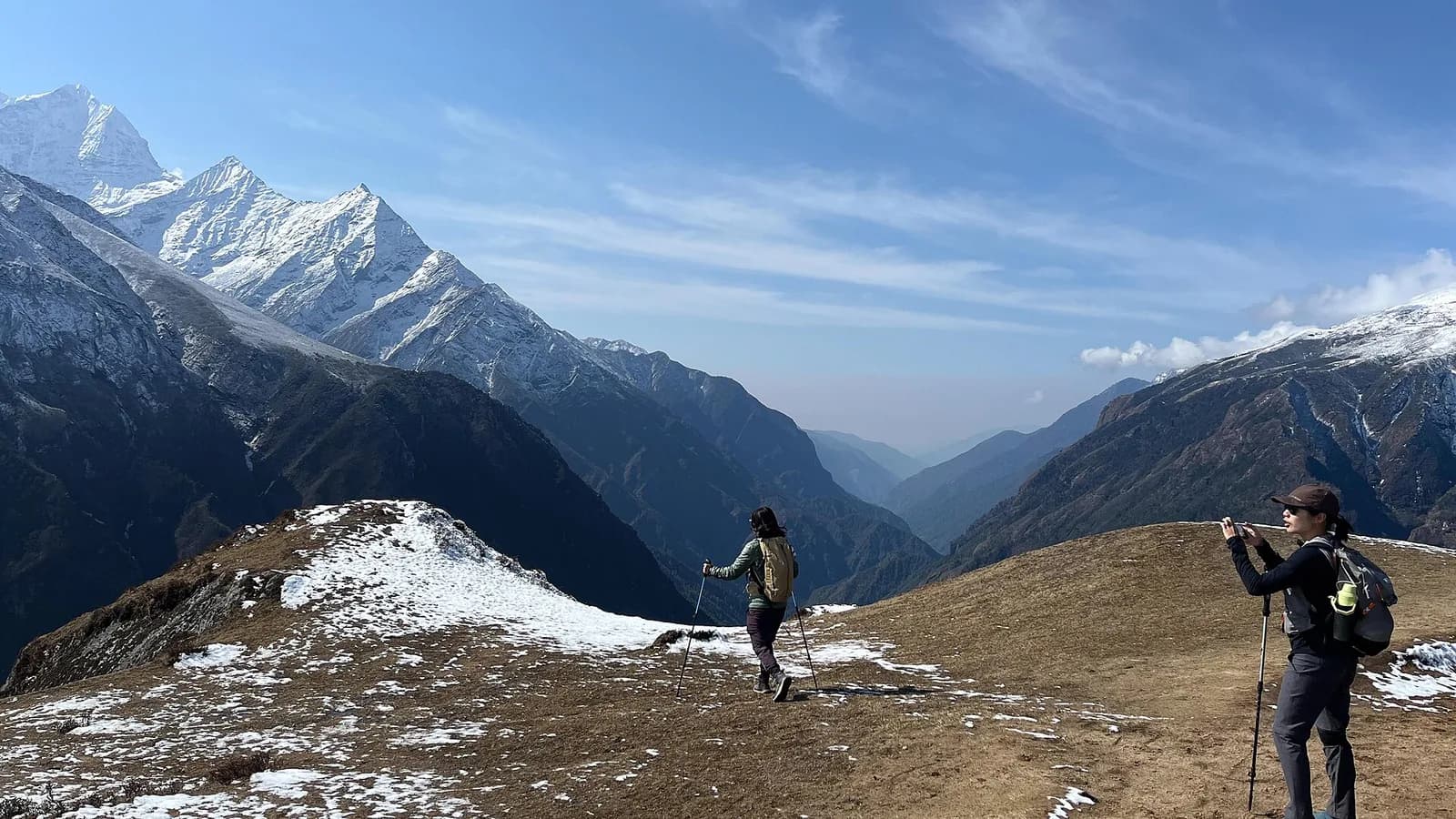
The Everest Base Camp helicopter return has become one of the most talked-about ways to finish the classic trek to the foot of the world's highest mountain. The idea is simple: you walk up to Everest Base Camp and the Kala Patthar viewpoint on foot, just as trekkers always have, but instead of retracing your steps over three long days back to Lukla you lift off by helicopter and watch the Khumbu valley fall away beneath you. For travellers short on time, nursing tired knees, or who simply want one unforgettable flight, it is an appealing finish — but it is also more expensive, weather-dependent, and bound up in regulations that have shifted more than once since late 2024.
This guide explains how the helicopter return actually works, what it costs as of mid-2026, the weight rules that govern high-altitude flying, the contested landing situation, and who the option genuinely suits. Prices and rules move, so treat every figure as a guide, note the date it was current, and confirm with a licensed operator before you book.
Key takeaways
- The Everest Base Camp helicopter return is a normal EBC trek on the way up, with a helicopter flight replacing the multi-day walk back to Lukla — typically lifting off from Gorak Shep or Pheriche.
- Flying out instead of walking cuts roughly three days off the descent, which appeals to time-pressed or fatigued trekkers.
- As of mid-2026, local operators commonly advertise shared-basis packages in the region of USD 2,000–2,600 per person; international agencies often quote more.
- Above about 4,500 m the thin air limits a helicopter to two or three passengers, so larger groups are flown out in shuttles, often via Pheriche.
- Tourist landings at Kala Patthar and Base Camp have been restricted since a late-2024 directive, and the rules keep changing — always confirm the exact pickup point.
- The flight eases the descent but does nothing for the climb up, so standard acclimatisation still applies all the way to Base Camp.
What "helicopter return" actually means
It helps to be precise, because the marketing can blur two very different products.
A helicopter return trek is a full trek on the way up. You fly to Lukla, walk for roughly a week and a half through Namche Bazaar, Tengboche, Dingboche and Lobuche, reach Base Camp and climb Kala Patthar for the classic Everest panorama — exactly the same effort and acclimatisation as the standard route. The only change is at the top: rather than turning around and walking three days back down, you board a helicopter and fly out.
This is different from an Everest helicopter tour, which is a half-day scenic flight from Kathmandu with no trekking at all. If you want the no-walking option, see our separate guide to the Everest helicopter tour. The return version is for people who still want to earn the summit views on foot but prefer to skip the descent.
Where the flight starts and ends
Return flights generally lift off from Gorak Shep (about 5,180 m), the last settlement before Base Camp, or from Pheriche (about 4,370 m) a little lower down. From there a short hop carries you to Lukla (about 2,840 m), and many packages continue by air to Kathmandu or, in peak season, to Ramechhap (Manthali) with an onward road transfer. The Gorak Shep to Lukla leg is short — typically cited at around 15 to 20 minutes — but it replaces what would otherwise be days of downhill walking.
How the weight and shuttle rules work
The single most important thing to understand about high-altitude helicopter flying is that thin air robs the aircraft of lift. The higher you go, the less weight a helicopter can safely carry.
At lower elevations around Lukla and Pheriche, a helicopter can manage a combined passenger load of roughly 450 kg — broadly four or five people with light gear. Above about 4,500 metres, that safe payload drops sharply, to the order of 240–250 kg, which in practice means only two or three passengers on the highest legs. This is a physics limit, not an operator's whim.
Operators manage it with a shuttle system. If your group is three or fewer, the aircraft can often fly you straight out. If there are four or five of you, the pilot will usually carry two or three at a time, frequently landing some passengers lower down — commonly at the village of Pheriche — and running a second flight. Being split across shuttles is normal practice and not a sign that anything is wrong. It does, however, mean your departure can take longer than a single neat lift-off, so build patience into the morning.
| Stage | Approx. altitude | Typical safe payload | Practical passenger limit | | --- | --- | --- | --- | | Lukla / Pheriche area | Up to ~4,400 m | ~450 kg combined | 4–5 with light gear | | Above the high villages | Over ~4,500 m | ~240–250 kg combined | 2–3 passengers |
Figures are widely reported operating guidelines, not fixed legal limits; actual loads depend on the aircraft, fuel, temperature and the pilot's judgement on the day.
The landing rules: a moving target
This is the area travellers most often get wrong, so it is worth setting out carefully and neutrally.
In December 2024, the Khumbu Pasang Lhamu Rural Municipality and Sagarmatha National Park jointly issued a directive restricting helicopter flights in the Everest region, due to take effect on 1 January 2025. The reasons cited were a mix of environmental concerns — the park reported well over 6,000 chopper movements in a single spring-and-autumn period, with noise said to disturb wildlife — and local economic concerns, with community groups arguing that helicopter pickups on the return leg were displacing porters, guides and teahouses.
The national park then partially reversed its position on 6 January 2025, allowing flights to operate with park permission and prescribed fees, while landings remained tightly controlled. Reporting from the period describes ongoing negotiation between local and federal authorities, with the situation unresolved at the time.
The practical upshot for a return-trek traveller:
- Scenic tourist landings at Kala Patthar (about 5,640 m) have been restricted, and where permitted at all have been associated with small private flights rather than shared seats.
- Return flights typically pick up from Gorak Shep or Pheriche, below the most sensitive points, rather than from Kala Patthar itself.
- Because the rules have changed more than once and may change again, the only reliable answer to "where exactly will the helicopter collect me?" comes from your operator at the time of booking.
None of this stops a legitimate helicopter return from operating — it simply shapes where the aircraft sets down. Treat any package that promises a guaranteed Kala Patthar landing with healthy caution and ask to see how it complies with current rules.
What it costs (as of mid-2026)
Pricing varies widely by operator, group size, season and fuel, so the honest answer is a range rather than a single number.
As of mid-2026, local Nepali operators commonly advertise complete helicopter-return packages — flights, permits, guide, porter, lodging and meals on the trek, plus the return helicopter on a shared basis — in the region of USD 2,000 to 2,600 per person. International agencies frequently quote higher, sometimes USD 2,500 to 3,200 or more, reflecting different service levels and overheads. The helicopter leg is the main reason the price sits above a standard walking trek.
A few cost notes worth knowing:
- Shared vs private. A shared seat is far cheaper but less flexible on timing. A private charter of the whole aircraft costs several times more and is quoted per flight, not per person.
- Lukla flights. Reaching the trailhead is its own expense. For broader context on getting in and out of the mountains, see domestic flights in Nepal. In peak season, scheduled Lukla flights often shift from Kathmandu to Ramechhap (Manthali), adding a road transfer.
- Permits. Your package should cover the Sagarmatha National Park entry and local permits; check our Everest Base Camp permits guide so you know what you are paying for.
| Cost element | What it covers | Notes | | --- | --- | --- | | Core trek package | Guide, porter, lodging, meals, permits on the trail | Same as a standard EBC trek | | Lukla flights | Kathmandu/Ramechhap to Lukla and the return air leg | Peak season may route via Ramechhap | | Helicopter return | Gorak Shep/Pheriche out to Lukla and onward | Shared basis keeps the price down |
Always ask for a written breakdown of what is and is not included, and confirm the figure is current — fuel surcharges in particular move quickly.
Does flying out help with altitude or safety?
Partly, and it is worth being clear about which way the benefit runs.
On the way up, the helicopter changes nothing. You still walk from Lukla to Base Camp over many days, gaining altitude gradually, with the usual acclimatisation stops around Namche and Dingboche. The same precautions apply: ascend steadily, hydrate, and watch for symptoms. Our altitude sickness guide covers the warning signs and the golden rule of descending if they worsen.
On the way down, there is a real benefit. By flying out you spend fewer days at high altitude and avoid the cumulative fatigue, joint strain and minor injury risk of a long descent on tired legs. For some trekkers that is the deciding factor. The one caveat is that a very rapid drop in altitude can itself cause brief dizziness or nausea in a minority of people.
It is important not to confuse a planned scenic return with a medical evacuation. A genuine emergency helicopter rescue is a separate, insurance-backed service; if you are choosing it as a backstop, make sure your policy genuinely covers high-altitude helicopter evacuation, as explained in our guide to trekking insurance and helicopter evacuation. Never arrange a "rescue" flight you do not medically need.
Who the helicopter return suits — and who should skip it
It is a good fit if you:
- Are short on time and cannot spare the extra three days the walk-out demands.
- Have knee, hip or joint concerns that make a long, steep descent harder than the climb.
- Simply want one spectacular flight over the Khumbu as the finale to your trek.
It is probably not for you if you:
- Are on a tight budget — the standard descent on foot is far cheaper.
- Care most about a low-impact, low-footprint trip, given the noise and emissions concerns behind recent restrictions.
- Enjoy the journey down itself, revisiting villages and unwinding at a gentler pace.
Whatever you choose, plan your trek for the right window — clear skies make all the difference to whether the helicopter actually flies. Our guide to the best time for the Everest Base Camp trek explains the spring and autumn seasons and what to expect from the weather.
Practical tips before you book
- Build in spare days. Mountain weather grounds helicopters regularly; a buffer of a day or two saves a missed onward flight home.
- Get the pickup point in writing. Confirm whether you fly from Gorak Shep or Pheriche and how shuttles will be handled for your group size.
- Check the weather policy. Ask what happens, and what is refunded, if the flight cannot operate and you walk out instead.
- Use a licensed operator. Verify the trekking and aviation arrangements, and that permits and park fees are genuinely included.
- Pack light for the flight day. Strict weight limits mean every kilo counts on the highest legs.
The Everest Base Camp helicopter return is neither a shortcut to the summit views nor a luxury gimmick — you still walk every step up. What it changes is the ending, trading a long descent for a short, memorable flight. Weigh the cost, the weather risk and the environmental footprint against the time you save, confirm the current rules with a reputable operator, and you will know whether it belongs on your trip.
Sources
- Kathmandu Post — Local and federal governments lock horns over Everest chopper ban (Jan 2025)
- Everest Assistance — Why helicopter landings at Kala Patthar are now restricted
- Ace the Himalaya — Everest Base Camp Trek with Helicopter Return (itinerary and altitudes)
- Luxury Holiday Nepal — Everest Base Camp helicopter weight limit and shuttle rules
- Nepal Trek Adventures — Everest Base Camp Trek with Helicopter Return (cost and logistics)
- Green Valley Nepal Treks — Everest Base Camp helicopter return cost 2026/2027
- Nepal Gateway Trekking — EBC to Lukla flight cost 2026 (heli and plane)
Frequently asked questions
- What is an Everest Base Camp trek with helicopter return?
- It is a standard Everest Base Camp trek where you walk up to Base Camp and Kala Patthar as normal, but instead of trekking back down for three days you fly out by helicopter — usually from Gorak Shep or Pheriche to Lukla, and often onward to Kathmandu or Ramechhap. You still earn the views on foot; you simply skip the repetitive descent.
- How much does the helicopter return version cost?
- As of mid-2026, local Nepali operators commonly advertise full packages in the region of USD 2,000 to 2,600 per person on a shared-helicopter basis, while international agencies often quote more. The helicopter leg alone is the main extra cost over a normal trek. Fuel surcharges, group size and season all move the figure, so confirm exactly what is included before paying.
- Why is the helicopter flown on a sharing basis instead of just for me?
- Sharing splits the cost of the aircraft across several passengers, which is why package prices stay far below a private charter. The trade-off is less flexibility on timing — you may wait for a full load or fly when the operator pools passengers. A private charter is available at a much higher price if you want a fixed slot.
- Can the helicopter land right at Everest Base Camp or Kala Patthar?
- Tourist landings deep in the Khumbu have been tightened on safety and environmental grounds, and the rules have shifted between local and federal authorities since late 2024. Return flights typically lift off from Gorak Shep or lower at Pheriche rather than from Kala Patthar itself. Because the position keeps changing, ask your operator exactly where the aircraft will pick you up.
- Does flying out reduce the risk of altitude sickness?
- It can help on the descent because you spend fewer days at high altitude and avoid the fatigue of a long walk down, but it does nothing for the climb up. You still ascend on foot over many days, so the same acclimatisation rules apply on the way to Base Camp. A very rapid drop in altitude can briefly cause dizziness or nausea in some people.
- Why might more than three passengers be split into shuttles?
- Thin air above roughly 4,500 metres sharply reduces a helicopter's lift, so it can safely carry only two or three people on the highest legs. Operators manage this by flying smaller groups in batches, often landing some passengers lower down at a village such as Pheriche and running a second shuttle. This is routine practice, not a fault.
- What happens if bad weather grounds the helicopter?
- Mountain weather can delay or cancel flights at short notice, especially in cloud or the summer monsoon. Reputable operators either rebook you on the next clear slot or put you on the standard descent on foot. Build at least a spare day or two into your trip and check what the operator's policy is on weather refunds or alternatives.
- Is the helicopter return worth it compared with walking down?
- It suits trekkers short on time, those carrying knee or joint strain, or anyone who simply prefers the descent by air. Walking down is cheaper, lighter on the environment and lets you revisit villages at a relaxed pace. Neither is right or wrong — it depends on your budget, schedule and how your body handles the long downhill.
Spotted an error in this post? Tell us or suggest a correction.
Related posts
ABC Trek: A Plain-English Guide to Annapurna Base Camp
The ABC trek (Annapurna Base Camp) explained — the route, how many days it takes, difficulty, the best seasons, and what daily trail life is really like.
Read postEverest Helicopter Tour: Cost, Landing & 2026 Guide
Everest helicopter tour from Kathmandu — cost, the Kala Patthar landing rules, Hotel Everest View breakfast, weight limits, best season and safety.
Read postAma Dablam Climb: 2026 Expedition Guide (6,812m)
An Ama Dablam climb and expedition guide for 2026 — height, the Southwest Ridge route, camps, fixed ropes, difficulty, permits, cost and the best seasons.
Read postAnnapurna vs Manaslu: Which Trek Should You Choose?
An Annapurna vs Manaslu decision guide for trekkers — compare permits, crowds, difficulty, infrastructure and cost to pick the right Himalayan route.
Read postEBC Trek by Road: Reach Everest Base Camp Without Flying
How to do the EBC trek by road — driving Kathmandu to Salleri, Phaplu or Surke by jeep, then walking to Everest Base Camp. Routes, costs, days and seasons.
Read postIs Lukla Airport Dangerous? An Honest Pilot's-Eye View
Is Lukla airport dangerous? A clear, factual look at the runway, weather cancellations, safety record and how Everest trekkers fly in and out safely.
Read post