Everest Base Camp Trek Itinerary: Day-by-Day (2026)
A day-by-day Everest Base Camp trek itinerary — the classic 12-day route with elevations, acclimatization days, permits, costs, and the best seasons to go.
The route is the easy part. It's the altitude that decides who stands at Base Camp — and the itinerary is how you beat it.
Everest Base Camp is one of the few bucket-list adventures that an ordinary, reasonably fit person can actually complete — no ropes, no crampons, no climbing skill required. What makes or breaks the trek isn't the trail. It's the altitude, and the only tool that reliably beats altitude is a sensible itinerary with the rest days built in.
This is the classic day-by-day route to Base Camp and back: where you sleep each night, how high you climb, how long you walk, and where the schedule deliberately slows down to let your body catch up. Numbers here are drawn from official and established trekking sources (linked at the end), but mountain logistics change — treat costs and rules as a starting point and confirm the current position before you book.
Key takeaways
- The standard trek is 12 days from Lukla (10–11 walking days), or 14 days door-to-door with Kathmandu buffer days.
- You climb from Lukla at 2,840 m to Kala Patthar at ~5,545 m — the highest point you stand on. Base Camp itself is ~5,364 m.
- Two acclimatization days (Namche and Dingboche) are non-negotiable. They are why people summit, not wasted days.
- Best seasons are March–May and September–November, with October the most reliable.
- Budget independently from roughly US$800–1,200 on the trail; all-inclusive packages run about US$1,200–1,500 (as of 2025).
The classic route at a glance
| Day | Route | Hours | Sleep elevation | |---|---|---|---| | 1 | Fly Lukla → Phakding | ~3–4 | 2,640 m | | 2 | Phakding → Namche Bazaar | ~5–6 | 3,440 m | | 3 | Acclimatization — Namche | hike | 3,440 m | | 4 | Namche → Tengboche | ~5–6 | 3,867 m | | 5 | Tengboche → Dingboche | ~5–6 | 4,410 m | | 6 | Acclimatization — Dingboche | hike | 4,410 m | | 7 | Dingboche → Lobuche | ~5–7 | 4,940 m | | 8 | Lobuche → Gorak Shep → EBC | ~7–8 | 5,170 m | | 9 | Kala Patthar → Pheriche | ~6–7 | 4,240 m | | 10 | Pheriche → Namche | ~7–8 | 3,440 m | | 11 | Namche → Lukla | ~7–8 | 2,840 m | | 12 | Fly Lukla → Kathmandu | — | — |
Round-trip walking distance is roughly 130 km (about 65 km each way), depending on the exact lodges you use.
Day-by-day breakdown
Days 1–3: Lukla to Namche, then rest
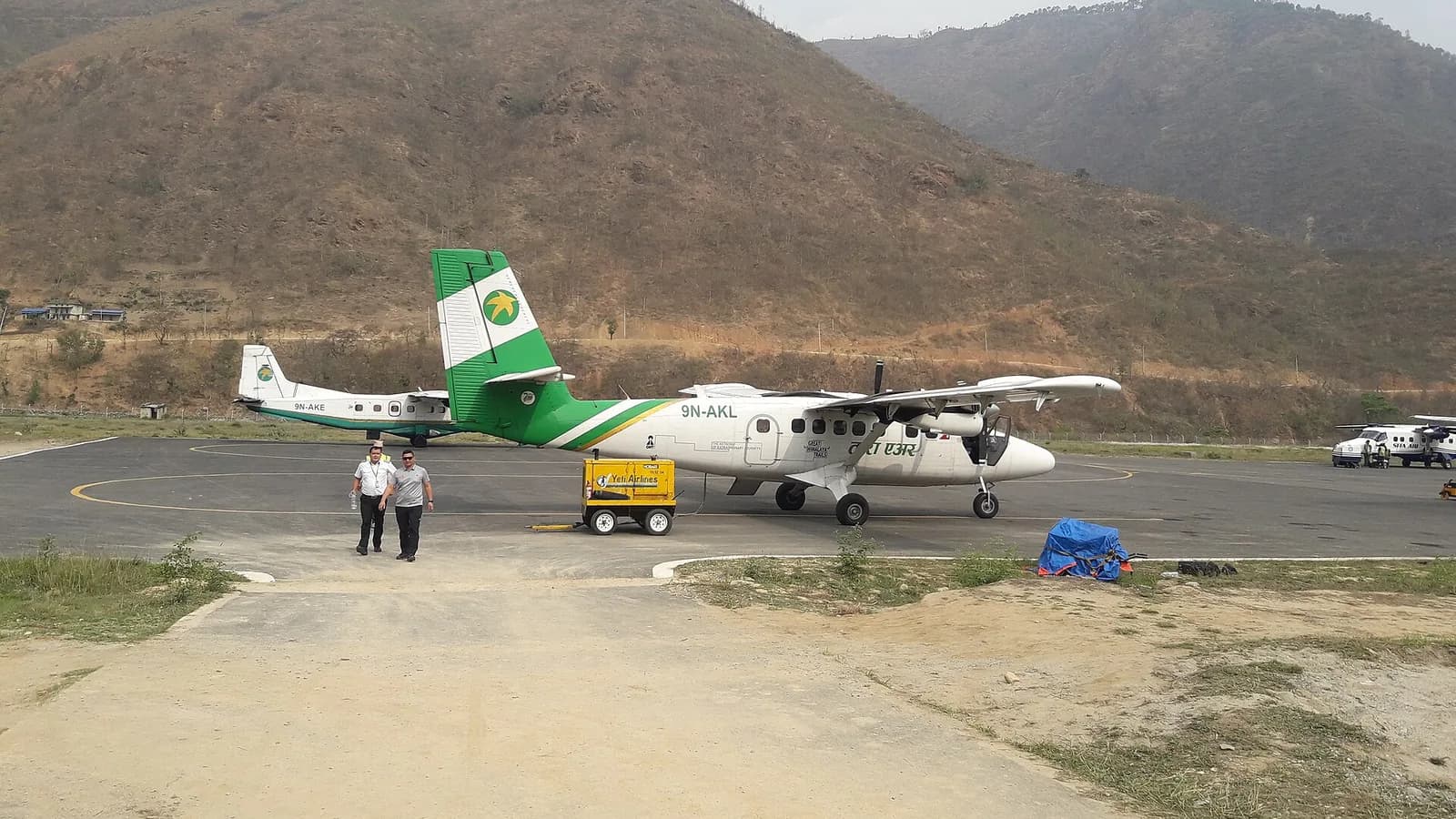
The adventure opens with the famous flight into Lukla — about 35 minutes from Kathmandu onto a short hillside runway. Flights go in the morning only, because cloud and crosswinds build by afternoon, and cancellations are common enough that you should never schedule a tight onward connection. In peak months the government sometimes routes these flights from Ramechhap (a 4–5 hour drive from Kathmandu) to ease air traffic, which changes your Day 1 logistics — check which airport your flight actually uses.
From Lukla the first day is a gentle downhill walk to Phakding. Day 2 is the trek's first real test: a steep climb over the high suspension bridges to Namche Bazaar (3,440 m), the bustling Sherpa capital with bakeries, gear shops, and ATMs. Day 3 you do not move on — you take an acclimatization day, hiking a few hundred metres higher (toward Syangboche or the Everest View Hotel) and returning to sleep at Namche. This "climb high, sleep low" rhythm is the single biggest reason people reach Base Camp.
Days 4–7: Into the high valley
Day 4 brings the first jaw-dropping views — Everest, Lhotse, and the spire of Ama Dablam — on the way to Tengboche and its hillside monastery. Day 5 climbs to Dingboche (4,410 m) in the Imja Valley, where Day 6 is your second acclimatization day. By now you are above 4,000 m and the air is noticeably thin; the rest hike toward Nangkartshang ridge pays off later. Day 7 pushes up past Thukla pass, where stone memorials remember climbers lost on Everest, to Lobuche (4,940 m).
Days 8–9: Base Camp and Kala Patthar
Day 8 is the big one. You trek to Gorak Shep (~5,170 m), drop your pack, and continue across the Khumbu Glacier moraine to Everest Base Camp (5,364 m) — 7 to 8 hours all told — then return to Gorak Shep to sleep. Base Camp has no permanent view of Everest's summit, which is why Day 9 starts before dawn with the climb to Kala Patthar (5,545 m), the iconic viewpoint where the sunrise lights up the whole massif. From there you begin descending, dropping to Pheriche to recover.
Days 10–12: The descent and the flight home
The way down is faster and far kinder on your lungs: Pheriche to Namche (Day 10), Namche back to Lukla (Day 11), and the morning flight to Kathmandu (Day 12). Always keep a spare day in Kathmandu — if Lukla is weathered in, you'll be grateful for the buffer.
Why the acclimatization days matter
It is tempting to look at Days 3 and 6 and think you could skip them and shave the trip. Don't. Around 40–50% of trekkers feel some altitude symptoms, and the people who get into real trouble are overwhelmingly those who climbed too fast. Fitness does not protect you — acclimatization does. If you read nothing else before you go, read our altitude sickness guide for Nepal treks and learn the warning signs.
Shorter and longer variations
- 14-day version: the same backbone with a Kathmandu arrival/prep day and an extra buffer day near the end — the most common commercial format.
- Helicopter return (9–10 days): trek in, then fly out from Gorak Shep to Lukla, cutting several descent days. Convenient, but you trade away gentle descent time.
- Gokyo Lakes via Cho La Pass (17–18 days): a tougher loop that adds the turquoise Gokyo Lakes and a glaciated 5,420 m pass. Only for trekkers comfortable with high passes.
Permits and fees for 2026
You no longer need a TIMS card for the Khumbu. What you do need:
| Permit | Fee (foreigners) | Where you pay | |---|---|---| | Sagarmatha National Park entry | NPR 3,000 (~US$22) | Monjo checkpoint | | Khumbu Pasang Lhamu Rural Municipality | NPR 2,000–3,000 (~US$15–22) | Lukla |
The national park fee is confirmed on the Nepal Tourism Board's official fee page (as of 2025). The municipal fee is quoted as NPR 2,000 by most operators, though at least one source reports an increase to NPR 3,000 — verify on arrival. For the full picture see our Everest Base Camp permits guide, and on the guide question, our do-I-need-a-guide breakdown.
How hard is it, really?
If you can comfortably hike 5–7 hours on consecutive days, you have the fitness. Train with cardio and back-to-back hill walks for two to three months and you'll arrive ready. The mental challenge — cold nights, thin air, basic lodges — is real but manageable. For what those lodges are actually like, see our teahouse food and accommodation guide.
What it costs
A budget-conscious independent trekker spends roughly US$800–1,200 on the trail (food, lodging, guide, porter), not counting the Lukla flight at around US$200–217 one way (as of 2024–2025). All-inclusive packages booked from abroad run about US$1,200–1,500 for the standard trek, while helicopter-return packages climb to US$2,250–3,150+. For a line-by-line breakdown including the hidden costs, read our honest EBC cost guide.
Before you go
- Build in a buffer day in Kathmandu for Lukla flight delays.
- Buy insurance that covers helicopter evacuation, not just medical bills.
- Carry 30,000–40,000 NPR in cash from a Kathmandu ATM — card machines on the trail are scarce and unreliable.
- Learn the trail phrases every trekker should know — a little Nepali changes how you're treated in every lodge.
The mountain rewards patience. Walk slowly, take the rest days seriously, and the standard itinerary will carry you all the way to the foot of the highest mountain on earth.
Sources
Frequently asked questions
- How many days does the Everest Base Camp trek take?
- The classic itinerary is 12 days from Lukla and back, of which 10–11 are actual walking days and two are dedicated acclimatization stops. With a buffer day at each end in Kathmandu, most commercial packages run 14 days door to door. A helicopter return can shorten it to 9–10 days, but you lose acclimatization time on the way down.
- How hard is the Everest Base Camp trek — can a beginner do it?
- It is rated moderate to strenuous. There is no climbing, rope work, or technical terrain — if you can walk 5 to 7 hours a day on uneven trails, you can physically do it. The real difficulty is altitude, not the path. Beginners who train with cardio and back-to-back hill walks for 8–12 weeks complete it regularly.
- What is the highest point on the trek?
- Kala Patthar, at about 5,545 m, is the highest point trekkers actually stand on and the best viewpoint for Mount Everest. Everest Base Camp itself sits slightly lower at about 5,364 m. You sleep no higher than Gorak Shep (around 5,170 m).
- Do I need a licensed guide for the Everest Base Camp trek?
- Since April 2023, Nepal's national rules require a licensed guide on the country's designated trekking routes, hired through a registered agency. Enforcement in the Everest region has been inconsistent because the local association did not fully adopt the rule, and reports differ on whether solo trekkers are turned back at checkpoints. Treat a guide as required, budget for one, and confirm the current position with a registered agency before you fly.
- What are the chances of reaching Base Camp?
- Trekking operators commonly estimate that 80–90% of people who start the trek reach Base Camp, rising toward 95% on itineraries with two proper acclimatization days. These are operator estimates rather than official statistics, but the pattern is clear: the people who turn back are almost always the ones who skipped rest days or climbed too fast.
- Can you get altitude sickness even if you are fit?
- Yes. Fitness does not protect you from acute mountain sickness — it depends on how your individual body adjusts to less oxygen, not your cardio level. Around 40–50% of trekkers feel mild symptoms at some point. The defences are slow ascent, the scheduled acclimatization days, hydration, and descending if symptoms get worse.
- What is the best month for the Everest Base Camp trek?
- October is the most reliable month for clear skies and stable weather, which is why it is the busiest. March to May is the spring window, with warmer days and the Everest climbing season in the air. Avoid the June–August monsoon, when cloud, rain, and flight cancellations peak.
Spotted an error in this post? Tell us or suggest a correction.
Related posts
ABC Trek: A Plain-English Guide to Annapurna Base Camp
The ABC trek (Annapurna Base Camp) explained — the route, how many days it takes, difficulty, the best seasons, and what daily trail life is really like.
Read postAma Dablam Climb: 2026 Expedition Guide (6,812m)
An Ama Dablam climb and expedition guide for 2026 — height, the Southwest Ridge route, camps, fixed ropes, difficulty, permits, cost and the best seasons.
Read postAnnapurna vs Manaslu: Which Trek Should You Choose?
An Annapurna vs Manaslu decision guide for trekkers — compare permits, crowds, difficulty, infrastructure and cost to pick the right Himalayan route.
Read postAsan Bazaar Kathmandu: Old Town Market Guide
A visitor guide to Asan bazaar, Kathmandu's oldest market — its six-road square, Annapurna Temple, what to buy, when to go, and how to get there.
Read postAyurveda Nepal: A Traveller's Guide to Healing
Ayurveda Nepal explained for tourists — the history, the doshas, treatments like Panchakarma and Shirodhara, where to go and how to choose a centre safely.
Read postBest Restaurants Pokhara Lakeside: Where to Eat
The best restaurants in Pokhara Lakeside — lakeside trout, wood-fired pizza, Tibetan momos and healthy cafes, with what to order and rough 2026 prices.
Read post