How to Choose the Best Trekking Agency in Nepal (2026)
A practical buyer's guide to choosing a trekking agency in Nepal: TAAN registration, the licences to check, fair pricing, and the red flags to avoid.
The best agency is not the cheapest quote in your inbox — it is the one whose paperwork you can verify before you ever leave home.
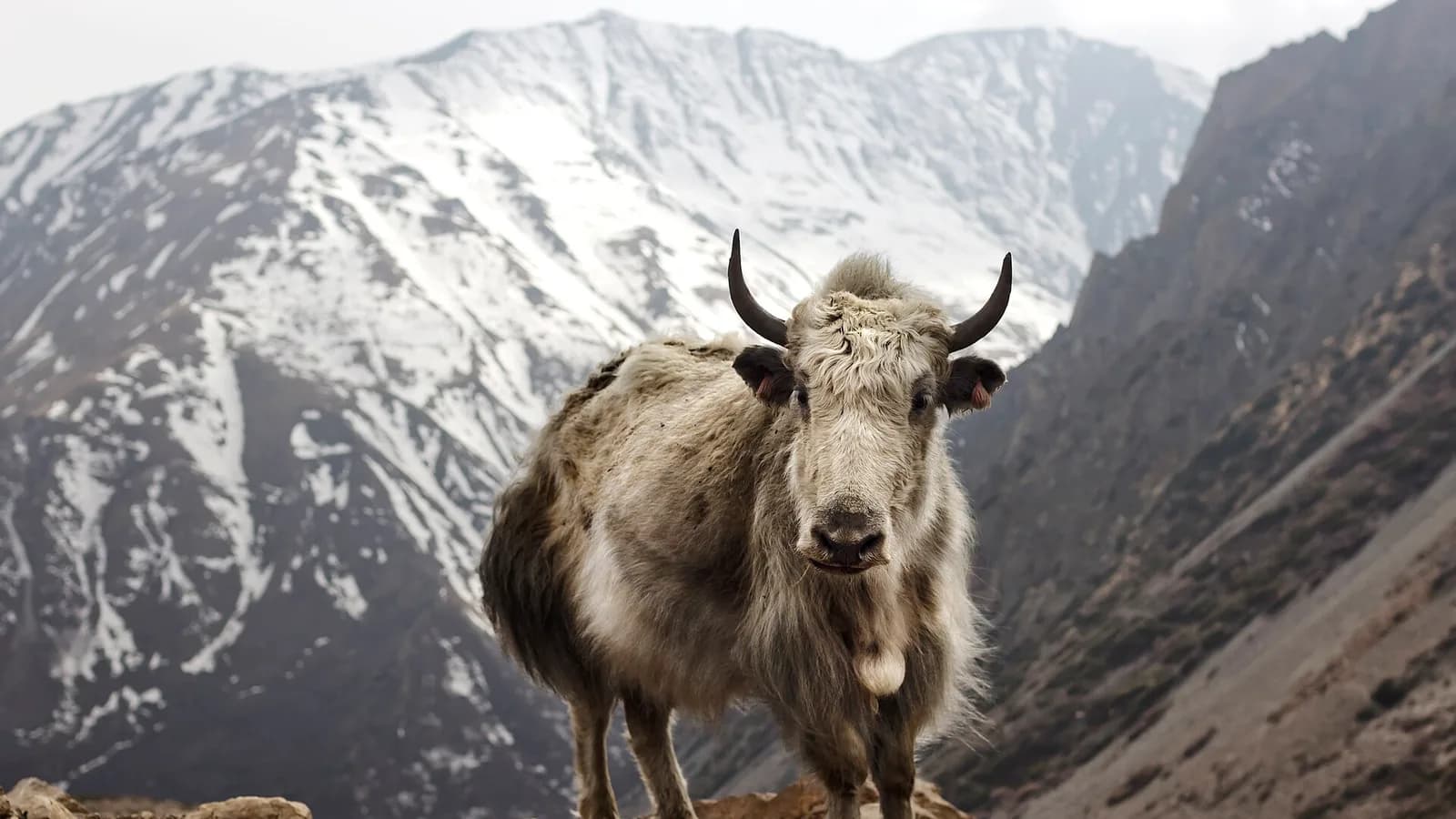
Choosing the best trekking agency in Nepal is less about finding a famous brand and more about doing a handful of checks that separate a professional, properly licensed operator from a fly-by-night reseller. Hundreds of companies in Kathmandu and Pokhara will happily sell you an Everest or Annapurna trek, and most are perfectly good. But the gap between the best and the worst is wide — it is the difference between a salaried, insured guide who notices altitude sickness early and a stranger with no qualifications who vanishes when something goes wrong. This guide walks through exactly what to verify, what to ask, and the warning signs that should make you close the tab.
This is a buyer's guide, not an advertisement. We do not recommend any single company. Instead we give you the questions that let you judge any agency for yourself.
Key takeaways
- A legitimate Nepal trekking agency holds a Department of Tourism trekking licence, company registration, Nepal Tourism Board affiliation and TAAN membership — and will share all four on request.
- Since 1 April 2023, foreign trekkers must use a licensed guide booked through a government-registered agency for most parks, conservation areas and restricted zones.
- Price is a signal, not a target. A licensed guide runs roughly USD 25–50 per day (as of 2026); a quote far below that usually means a corner is being cut.
- The single most important question is how the guide is paid — a fair salary, not commission, predicts honest behaviour on the trail.
- Be alert to the fake helicopter rescue scam: in 2026 Nepalese authorities charged dozens of people in a multi-million-dollar insurance-fraud racket targeting trekkers.
- Get the itinerary, inclusions and exclusions in writing before you pay a deposit.
Why the agency you pick matters more than ever
For years, many visitors trekked Nepal's trails alone or with a freelance guide found on arrival. That changed in 2023. Citing rising search-and-rescue costs and a push to channel tourism income through local companies, Nepal's authorities made it mandatory for foreign trekkers to hire a licensed guide through a registered trekking agency in national parks, conservation areas and restricted areas. The rule took effect on 1 April 2023 and is now broadly enforced, and the practical effect is that your choice of agency is no longer optional — it is the entity that issues your permits, assigns your guide, and stands behind you if something goes wrong.
We cover the nuance of how this plays out on a specific route in our explainer on whether you need a guide for the Everest Base Camp trek. The headline, though, is simple: a good agency is now a structural part of trekking in Nepal, so it pays to choose well.
What "registered" actually means: the four documents
The word "registered" gets thrown around loosely. Concretely, a real trekking company in Nepal should be able to show you four things.
1. A Department of Tourism trekking licence
This is the operating licence issued by the government department that oversees tourism. It is what legally permits a company to run trekking trips and to employ licensed guides. No licence, no business.
2. Company registration
Every legitimate operator is incorporated through the Office of the Company Registrar and holds a certificate of registration. This proves the company is a real legal entity rather than an individual collecting deposits through a website.
3. Nepal Tourism Board affiliation
The Nepal Tourism Board (NTB) is the national tourism authority. Reputable operators carry an NTB affiliation, and the board maintains records of licensed agencies and certified guides.
4. TAAN membership
The Trekking Agencies' Association of Nepal (TAAN) is the industry association that registered trekking companies join. A genuine agency can give you a membership number. For context, TAAN charges general members a joining fee of around Rs 12,000 with an annual renewal of about Rs 5,000 (as of recent figures published by the association), so membership is a modest but meaningful commitment that fly-by-night sellers rarely bother with. Because the 2023 guide rule routes hiring through registered, TAAN-affiliated companies, this membership is one of the quickest sanity checks you can do.
A trustworthy agency hands over these details in minutes. If a company gets defensive, changes the subject, or sends only a chat message promising "everything is included," treat that as your answer.
The guide question: licences and the 2023 rule
Your trek is only as good as your guide, and Nepal now regulates who may legally guide. By law, trekking guides must be Nepali nationals who have completed a formal training course — typically a multi-week program run by the Nepal Academy of Tourism and Hotel Management (NATHM) or the Nepal Mountain Academy in conjunction with TAAN — covering mountain safety, wilderness first aid, navigation and local culture, and then passed a government licensing exam.
A licensed guide carries an identity card showing their photo, licence number and certification level (commonly basic trekking guide, advanced trekking guide, or mountaineering guide), and the certification level determines which altitudes and routes they may lead. When you book, it is entirely reasonable to ask which named guide you will trek with and to request their licence number. A good agency expects this question.
What to ask about your specific guide
- How many times have they walked your exact route?
- Do they hold a current first-aid and altitude-sickness certification?
- What is their spoken English (or other language) like — can you have a real conversation?
- Are they employed and insured by the agency, or hired ad hoc for your trip?
For a deeper look at the etiquette and economics of the guide relationship, our guide to tipping trekking guides and porters explains how wages and tips actually fit together — which, as we will see, is central to choosing an ethical operator.
How guides are paid — the most revealing question
If you ask a trekking agency only one thing about ethics, ask how their guides and porters are paid. The honest answer you want is: a fair salary or day-rate, plus covered food and lodging, plus insurance — not a thin retainer topped up by commission.
This matters because commission-driven incentives are exactly what fuelled the worst abuse in the industry. When a guide's income depends on upselling, they have a reason to push extras you do not need. The cleanest operators pay guides properly and treat porters fairly — reasonable loads, proper gear, and insurance — and they will tell you so plainly. Our piece on trekking insurance and helicopter evacuation explains why insurance on both sides of the trek matters so much.
The fake rescue scam, and how a good agency protects you
The reason the "how are guides paid" question carries such weight became headline news in 2026. Nepalese investigators exposed a sophisticated insurance-fraud network in which some trekking staff, helicopter operators and medical personnel arranged unnecessary helicopter evacuations for foreign trekkers and billed their insurers. In the most disturbing allegations, a small number of guides deliberately induced illness to mimic altitude sickness so a "rescue" could be triggered.
The scale, according to reporting by the Kathmandu Post, Business Standard and OCCRP, is striking. Reviewing thousands of foreign-patient cases between 2022 and 2025, authorities confirmed well over a hundred fraudulent rescues, and the Central Investigation Bureau charged dozens of people under organised-crime laws in 2026, with the scheme estimated to have generated close to USD 20 million. Hospitals reportedly paid a cut of each insurance payout back to the trekking companies and helicopter operators that referred patients.
The practical defences:
- Book with a salaried-guide agency. A guide with no financial stake in your evacuation has no reason to invent one.
- Understand altitude sickness before you fly. If anyone suggests evacuation, ask what specifically is wrong and whether you can descend on foot first. Our altitude sickness guide covers the real warning signs.
- Know your insurance. Read our helicopter-evacuation coverage explainer so you know what a genuine emergency claim looks like.
None of this means helicopter rescue is a scam — real evacuations save lives every season. It means an informed trekker with a reputable agency is a hard target.
Pricing: what a fair quote looks like
Cost is one of the clearest signals of an agency's quality, as long as you read it correctly. A licensed guide in Nepal runs roughly USD 25–50 per day in independent 2025–2026 estimates, with restricted areas like Manaslu and Upper Mustang sitting at the upper end because of permit costs and remoteness. On top of the guide, a trekker normally covers the guide's food and lodging and offers a tip at the end.
| Cost element | Typical 2026 range (as of June 2026) | Notes | |---|---|---| | Licensed guide | USD 25–50 per day | Higher for restricted/remote regions and very experienced guides | | Porter | Lower than a guide | Loads should be weight-limited and fairly assigned | | Guide/porter food & lodging | A daily add-on | Usually paid by you, often discounted at teahouses | | Permits & TIMS | Region-dependent | Arranged through your registered agency | | Tip | Customary, end of trek | See our dedicated tipping guide |
Use these as orientation, not gospel — exact figures shift with season, route and the rupee. The takeaway is directional: a package priced dramatically below the going rate is not a deal, it is a clue. Either the guide is unlicensed, the porter is being underpaid and overloaded, or the savings will reappear as pressure to buy add-ons later. Our broader Nepal trekking cost overview puts these numbers in the context of a full trip budget.
Reading reviews without being fooled
Reviews are useful but easy to game. A few habits make them more reliable:
- Favour depth over score. A handful of specific, detailed reviews that name guides and describe real problems-and-resolutions tells you more than a wall of five-star one-liners.
- Look for longevity. An operator with years of consistent feedback has more to lose than a brand-new page.
- Read the negative reviews first. How a company responds to a complaint reveals more than its praise.
- Cross-reference platforms. Check more than one review site, and be wary of identical wording appearing in many places.
A simple vetting checklist before you pay
Run through this before sending any deposit:
- They provided their trekking licence, company registration, NTB affiliation and TAAN number.
- You have a written itinerary with daily stages and named teahouse standards.
- Inclusions and exclusions are itemised — permits, transport, meals, guide, porter, insurance.
- You know your guide's name, licence and route experience.
- The agency explained how guides and porters are paid, and it is a salary, not commission.
- The price sits within the realistic going range, not far below it.
- There is no pressure to pay a large non-refundable deposit immediately.
- Communication is professional and on the record, not only a chat thread.
If an agency clears all eight, you have almost certainly found a good one. If it stumbles on the first, the rest barely matter.
Where this fits in your wider planning
Choosing the agency is one piece of a larger trip. Once you have a shortlist, line it up against your route and budget. Our guides to the Annapurna Base Camp trek cost and the Everest Base Camp trek cost give route-specific numbers you can hold a quote against, and the Nepali phrases every trekker should know will help you build rapport with the guide you ultimately choose.
The best trekking agency in Nepal is not a secret name passed between insiders. It is simply the operator that can prove it is licensed, pays its people fairly, quotes an honest price, and answers every question you ask without flinching. Do the checks once, and the mountains take care of the rest.
Sources
- To Become a Member — Trekking Agencies' Association of Nepal (TAAN)
- Heritage and tourism regulation context — Nepal Tourism Board
- Solo Trekking Banned in Nepal: Mandatory Guide Rule — Best Heritage Tour
- Trek guides are now compulsory in Nepal — Follow Alice
- Poisoning trekkers for profit: Inside Nepal's fake helicopter rescue scam — Business Standard
- Inside Nepal's fake rescue racket — The Kathmandu Post
- Nepal Police Arrest Six in $20 Million Himalayan "Fake Rescue" Insurance Scam — OCCRP
- Trekking Guide Qualification Standards in Nepal — Master Himalaya
- What is the Cost of a Trekking Guide in Nepal? (2025/2026) — Mountain Eco Trails
Frequently asked questions
- What is TAAN and why does it matter when choosing a trekking agency?
- TAAN is the Trekking Agencies' Association of Nepal, the umbrella body that registered trekking companies belong to. A real agency can give you a membership number you can cross-check, and since the 2023 rules guides must be hired through a government-registered, TAAN-affiliated company, so membership is a basic sign the operator is legitimate.
- Do I legally need a registered agency to trek in Nepal?
- For most national parks, conservation areas and restricted areas, foreign trekkers must hire a licensed guide through a government-registered trekking agency under a rule that took effect on 1 April 2023. Nepali citizens can still trek independently, but as a foreign visitor you generally cannot get a TIMS card or trek these routes solo.
- How do I verify that a Nepal trekking agency is genuine?
- Ask for their Department of Tourism trekking licence, their company registration from the Office of the Company Registrar, their Nepal Tourism Board affiliation and their TAAN membership number, then cross-check what you can against official records. A real operator answers these questions in minutes; a fake one stalls or sends only a chat message.
- How much does a trekking guide in Nepal cost per day?
- Independent reports in 2025 and 2026 put a licensed guide at roughly USD 25 to 50 per day depending on the region, the route difficulty and the guide's experience, with remote restricted areas at the top of that range. Treat any quote far below the going rate as a warning sign rather than a bargain.
- What are the biggest red flags when booking a trek in Nepal?
- Suspiciously low prices, refusal to give a written breakdown of what is included, vague or unlicensed guides, pressure to pay a large deposit immediately, and only ever communicating through a chat app are the classic warning signs. Any push toward an unnecessary helicopter evacuation on the trail is the most serious red flag of all.
- What is the Nepal fake helicopter rescue scam?
- It is an insurance-fraud scheme in which some guides, helicopter operators and medical staff arranged unnecessary evacuations for foreign trekkers to claim on their insurance. In 2026 Nepal's Central Investigation Bureau charged dozens of people in connection with the racket, which investigators estimate generated close to USD 20 million. Choosing a reputable, salaried-guide agency is the best defence.
- Should I book before arriving or find an agency in Thamel?
- Both can work. Booking ahead lets you verify documents and read reviews at your own pace; arranging in Thamel lets you meet the team and your guide face to face. Either way, the checks are the same: licences, a written itinerary, clear inclusions, and how the guide is paid.
Spotted an error in this post? Tell us or suggest a correction.
Related posts
Nepal Trekking Company: What They Do & How to Book
What a Nepal trekking company actually does — permits, guides, porters, logistics and rescue — plus local vs international booking and how to book well.
Read postIs Lukla Airport Dangerous? An Honest Pilot's-Eye View
Is Lukla airport dangerous? A clear, factual look at the runway, weather cancellations, safety record and how Everest trekkers fly in and out safely.
Read postNepal Holiday Packages: How to Choose One in 2026
A practical guide to Nepal holiday packages — what they include, typical itineraries, costs, permits, the best seasons and how to compare operators.
Read postNepal Tour Packages: What's Inside & How to Choose
A practical guide to Nepal tour packages — what they include, typical routes, costs to verify, and how to book a licensed operator without overpaying.
Read postNepal vs Peru Trekking: An Honest Comparison
Nepal vs Peru trekking compared on altitude, permits, cost, comfort and crowds — an even-handed guide to choosing the Himalaya or the Andes for your trek.
Read postABC Trek: A Plain-English Guide to Annapurna Base Camp
The ABC trek (Annapurna Base Camp) explained — the route, how many days it takes, difficulty, the best seasons, and what daily trail life is really like.
Read post