Upper Mustang Trek 2026 — The $500 Restricted Area Permit, Explained
Why Upper Mustang costs more, what the permit covers, what you actually see, and why it's worth the price for the right trekker.
Walking into Upper Mustang is walking into 1970s Tibet — preserved by accident, protected by permit.
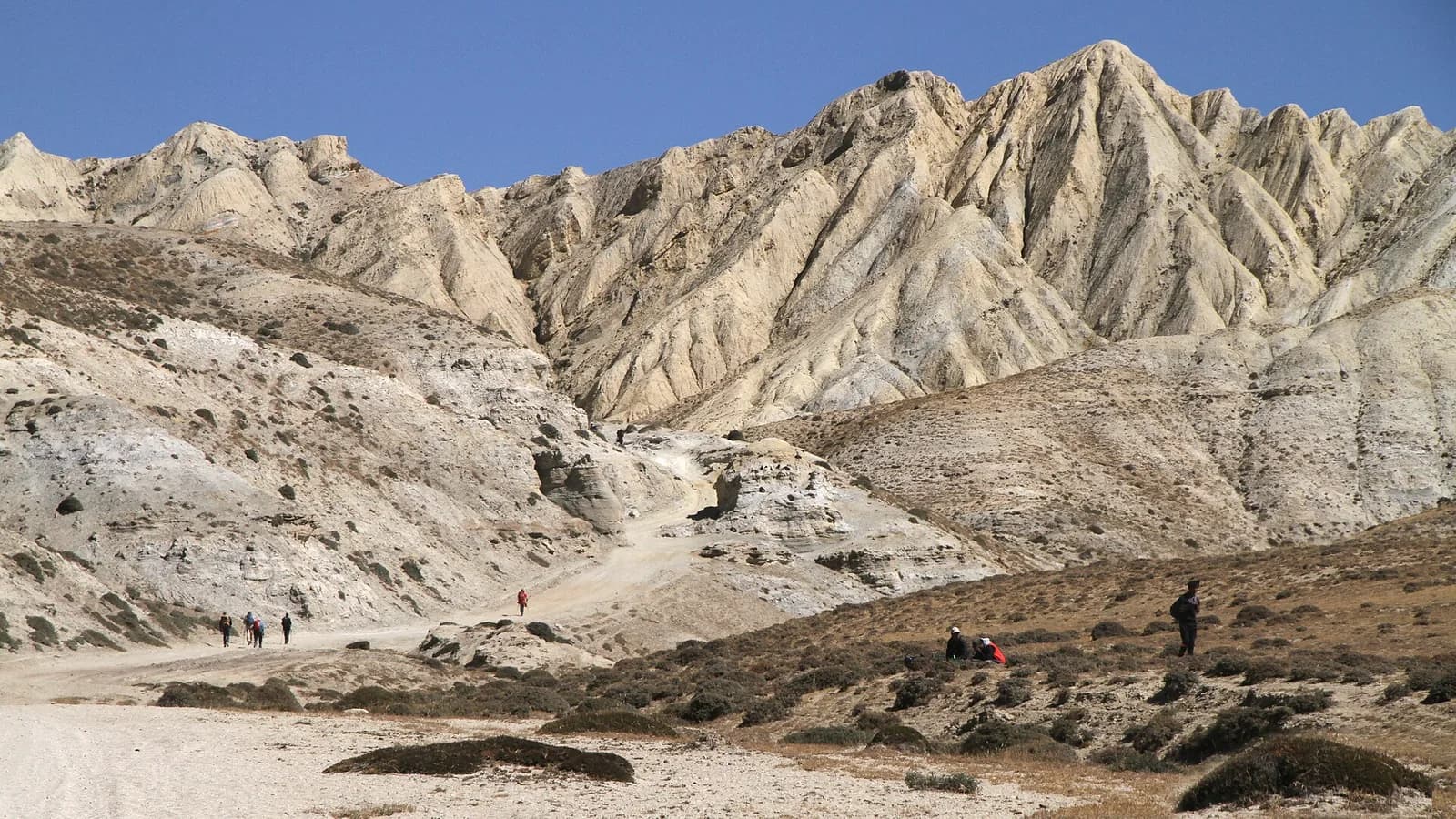
Upper Mustang sits behind the Annapurna massif, in the rain shadow of the Himalayas. It was a forbidden kingdom until 1992. Even today, Nepal restricts foreign access through a special permit system — currently USD 500 for the first 10 days, then USD 50/day for any extension.
Most trekkers hear "$500 permit" and look at other options. The ones who go don't regret it. Here's what the permit covers, what you see, and how to decide.
Why it costs $500
Upper Mustang remained closed to foreigners until 1992 specifically to preserve Tibetan Buddhist culture that had been disrupted across the border. The restricted-area permit system was the compromise that opened it: foreigners welcome, in limited numbers, with the fee channeled to conservation and local infrastructure.
The Nepali government still treats it as a sensitive border region (Mustang shares a long border with the Tibetan Autonomous Region). The permit is also a population-control tool — they cap foreign trekker numbers at a few thousand per year.
What the permit actually buys you
USD 500 for the first 10 days. Add USD 50/day for extensions beyond that. The fee is per person, paid in cash to a registered trekking agency (you cannot get an Upper Mustang permit as a solo trekker — agency mandatory).
Includes:
- Restricted Area Permit (RAP) for Upper Mustang
- Access to villages above Kagbeni — Lo Manthang (the old capital), Charang, Tsarang, and the desert plateau
Does NOT include:
- ACAP entry (NPR 3,000 separate)
- TIMS card (NPR 2,000 separate — required in Mustang's lower section)
- Guide and porter wages
- Food, lodging, transport
Total realistic cost for a 12-day Upper Mustang trek including everything: $1,800–2,500 per person. Not a budget trek.
What you see
The cultural and visual highlights:
Lo Manthang — the walled capital city of the former kingdom of Lo. The city walls still stand. Inside: monasteries, the royal palace (still occupied by the former royal family), narrow alleys that look like the photos from National Geographic in the 1980s. UNESCO has been working with the local community to preserve specific monasteries (Thubchen and Jampa) with rare 15th-century murals.
The Caves — the cliffs of Mustang are honeycombed with ancient cave dwellings, some used by Buddhist meditators for centuries. The Chungsi caves and the Mustang Eve cave system are reachable on foot from Lo Manthang.
Tiji Festival — annual three-day festival held in Lo Manthang in May or early June (date shifts by lunar calendar). Monks perform sacred dances over three days. If you can time your trek to overlap with Tiji, the permit cost suddenly looks reasonable for what you're witnessing.
The landscape — eroded red and ochre cliffs, deep canyons of the Kali Gandaki, green oases of barley and apricot orchards. It looks more like Ladakh or the Tibetan Plateau than the rest of Nepal because, geologically, it is.
The route
Standard 10-day Upper Mustang itinerary from Jomsom (which itself is reached by flight from Pokhara):
- Day 1: Fly Pokhara → Jomsom (2,720m); walk Jomsom → Kagbeni (2,800m)
- Day 2: Kagbeni → Chele (3,050m) — first day inside the restricted area
- Day 3: Chele → Geling (3,570m)
- Day 4: Geling → Charang (3,560m)
- Day 5: Charang → Lo Manthang (3,840m)
- Day 6: Lo Manthang exploration (Chosor caves, royal monastery, city walls)
- Day 7: Lo Manthang → Drakmar (3,810m)
- Day 8: Drakmar → Ghiling (3,570m)
- Day 9: Ghiling → Chele
- Day 10: Chele → Jomsom; fly back to Pokhara
Maximum altitude is around 3,900m — moderate by Nepal standards. AMS risk is real but manageable.
Best season — counterintuitive
Upper Mustang is in the rain shadow of the Himalayas. The monsoon that floods the rest of Nepal barely touches Mustang.
Best: June through September — the rest of Nepal is monsoon-locked but Mustang is dry, the high passes are open, and the trail is empty of other trekkers. Second-best: April–May (especially around the Tiji festival). Avoid: December–February (cold, some lodges close, flights to Jomsom often cancelled).
This makes Upper Mustang one of the few good summer treks in Nepal.
Who it's for
Upper Mustang fits:
- Trekkers who've already done the standard routes (EBC, ABC, Annapurna Circuit) and want something genuinely different
- Travelers interested in Tibetan Buddhist culture
- Photographers — the landscape is unlike anything else accessible in Nepal
- Trekkers who can travel during monsoon (June–September) when other regions are closed
- People who can afford the $1,800+ trip cost
It does NOT fit:
- First-time Himalayan trekkers
- Anyone on a tight budget
- Trekkers who want big mountain views — Mustang's high peaks are mostly inside Tibet
- Solo trekkers (impossible — agency mandatory)
The agency mandatory rule
Upper Mustang is one of the regions where the 2023 guide rule has always applied — you can never have trekked Upper Mustang solo legally. You must book through a registered Nepali trekking agency, who arranges the permit, guide, and (usually) porters.
This adds cost but also removes the planning load. The agency handles the permit application (you'll need to give them passport details and photos in advance — typically a week before departure).
Recommended approach: arrive in Kathmandu, take 2–3 days to settle in, then commit to an agency. Don't pre-book from abroad — you can find better rates and more local context once you're in Thamel.
Pre-trip checklist
- USD 500+ cash in clean bills (the agency wants to pay the permit office immediately)
- Two passport-size photos
- A copy of your passport (the agency keeps one)
- 90-day Nepal visa (your trek + acclimation + buffer adds up)
- The trekking insurance with helicopter evacuation — Mustang flights are weather-dependent
- The eight trail phrases plus some Tibetan-language greetings if you can pick them up
Upper Mustang is not the trek for everyone. For the right trekker, the permit is the cheapest part of an experience that's irreplaceable.
Spotted an error in this post? Tell us or suggest a correction.
Related posts
ABC Trek: A Plain-English Guide to Annapurna Base Camp
The ABC trek (Annapurna Base Camp) explained — the route, how many days it takes, difficulty, the best seasons, and what daily trail life is really like.
Read postAma Dablam Climb: 2026 Expedition Guide (6,812m)
An Ama Dablam climb and expedition guide for 2026 — height, the Southwest Ridge route, camps, fixed ropes, difficulty, permits, cost and the best seasons.
Read postAnnapurna vs Manaslu: Which Trek Should You Choose?
An Annapurna vs Manaslu decision guide for trekkers — compare permits, crowds, difficulty, infrastructure and cost to pick the right Himalayan route.
Read postAsan Bazaar Kathmandu: Old Town Market Guide
A visitor guide to Asan bazaar, Kathmandu's oldest market — its six-road square, Annapurna Temple, what to buy, when to go, and how to get there.
Read postAyurveda Nepal: A Traveller's Guide to Healing
Ayurveda Nepal explained for tourists — the history, the doshas, treatments like Panchakarma and Shirodhara, where to go and how to choose a centre safely.
Read postBest Restaurants Pokhara Lakeside: Where to Eat
The best restaurants in Pokhara Lakeside — lakeside trout, wood-fired pizza, Tibetan momos and healthy cafes, with what to order and rough 2026 prices.
Read post