Nepal Trekking Packing List — What Porters See Tourists Overpack
The honest packing list — what you actually need above 3,000m, what 90% of trekkers regret carrying, and the small items that punch above their weight.
Every kilo above 8 is something a porter is carrying for you. Pack accordingly.
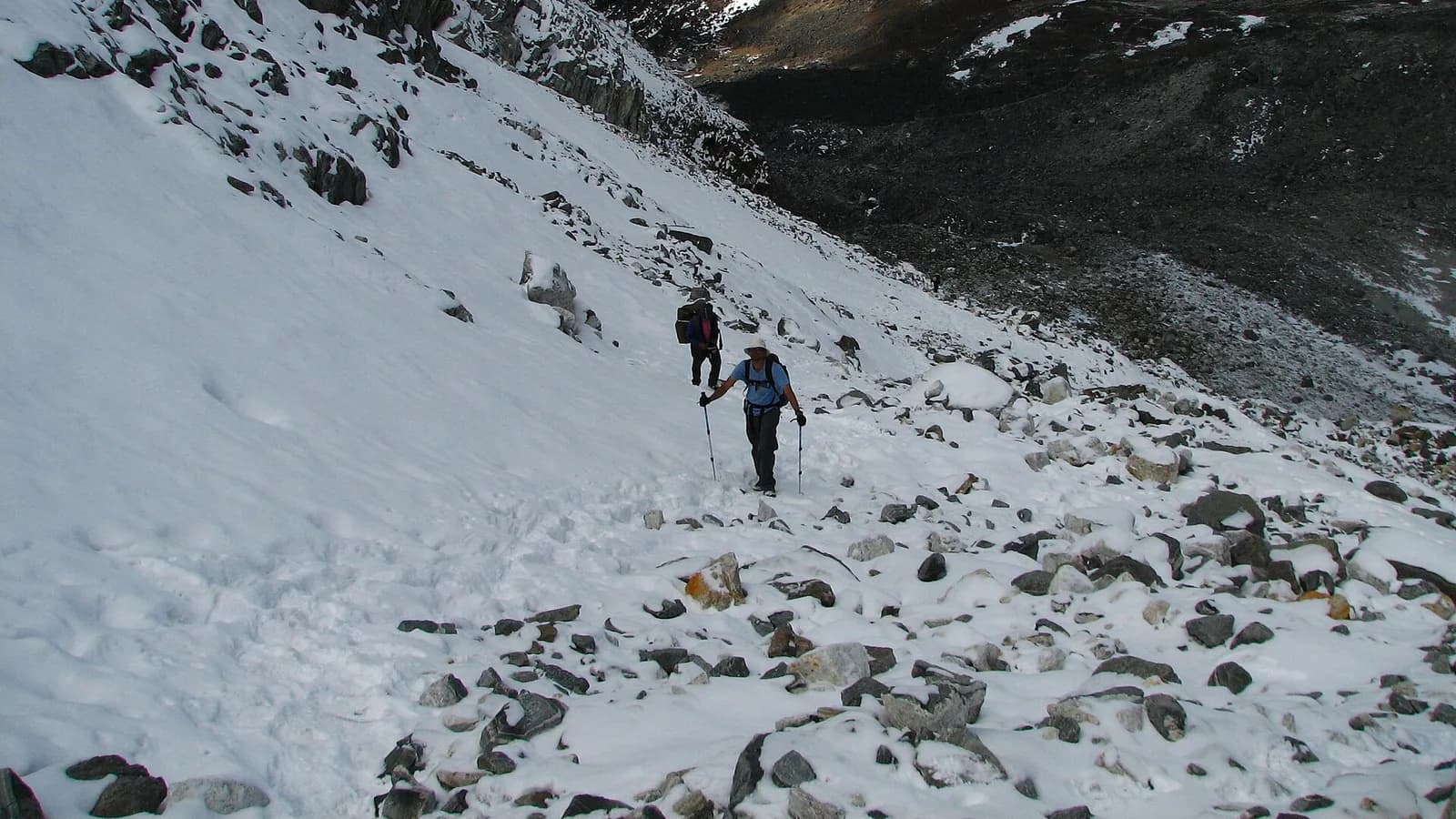
Porters in Khumbu and Annapurna carry trekker duffels for a living. They're paid by weight in some cases. They've seen what tourists pack, what gets used, and what gets carried up to Gorak Shep and back down without ever leaving the bag.
This is the list they'd write if they wrote one.
Total target: 8–10 kg of trekker-carried gear, 10–12 kg in the porter bag
That's it. Most trekkers pack 18–22 kg of porter bag and a 6–8 kg day pack. The porter is carrying 50% more than necessary and your day pack is heavier than it needs to be. Cut where it doesn't hurt.
The duffel (porter carries, you don't see it until evening)
Clothing — layered, not bulky
- 2 base-layer tops (merino if you can; synthetic if budget) — wear one, wash one
- 2 base-layer bottoms — same logic
- 1 fleece or light insulating mid-layer
- 1 down jacket (650+ fill, packable) — only one, doubled for evenings
- 1 waterproof shell jacket
- 1 pair softshell or quick-dry trekking pants
- 1 pair waterproof shell pants (don't skip — Manaslu La and Thorong La can hit you with snow)
- 4 pairs trekking socks — merino, mid-weight
- 4 pairs underwear (yes, that's all)
- 1 warm hat, 1 sun hat
- Light gloves AND heavy gloves (mittens preferred above 5,000m)
- Buff or neck gaiter — protects against cold air and trail dust
Sleeping
- Down or synthetic sleeping bag rated to -10°C comfort (not "limit" — comfort)
- Sleeping bag liner — adds 5°C of warmth and keeps the bag clean for rental returns
Other
- Toiletries in dry bag (toothbrush, toothpaste, shampoo travel size, hand sanitiser, lip balm with SPF, sunscreen 50+, deodorant if you must)
- Trail snacks for the duffel — main snack stash, not all in day pack
- 1 spare pair of camp shoes (lightweight, for evenings in lodge)
That's roughly 9–11 kg packed efficiently.
The day pack (you carry all day — 25–35L)
Essentials
- 2 × 1L water bottles or a 2L bladder — switch to bottles above 4,000m so you can see if the bladder hose froze
- Water purification — Steripen, drops, or filter (don't trust bottled-only above Namche; expensive and the bottles often have refilled tap water)
- Headlamp + spare batteries
- First aid mini-kit (ibuprofen, anti-nausea, plasters, blister patches, ORS sachets, Diamox)
- Diamox 125mg × however many days × 2/day above 3,000m
- Cash — NPR 5,000 minimum for permits, plus daily spend
- Passport + permit receipts in dry bag
- Phone (offline maps loaded), charger, power bank (10,000mAh+)
- Sunscreen, lip balm, sunglasses (Cat 4 above 4,500m — snow blindness is real)
- Trail snacks for the day (bars, nuts, electrolyte tablets)
- Toilet paper roll + plastic bag for used (pack out — don't trail-leave)
For the day's weather
- Light gloves
- Buff
- Shell jacket (always)
- Insulating mid-layer
Day pack target: 5–7 kg fully loaded with water.
The things you'll regret packing
Based on what porter bags consistently have unused at trek's end:
- Multiple cotton t-shirts. Cotton stays wet, doesn't insulate, and is dead weight. Merino or synthetic only.
- Jeans. Yes, people pack jeans. They never get worn.
- A second pair of trekking boots. One pair, broken in, that's all.
- A heavy "real" camera + 3 lenses. Your phone is fine for 95% of the photos. If you're a real photographer, you knew that and packed for it; if you're not, the camera kit lives in the duffel unused.
- A laptop. Used by 2% of trekkers. The other 98% carry it to charge it at the lodge for 800 NPR.
- Heavy books. Kindle, e-reader, or one paperback you'll actually finish.
- Trail running shoes for the trek itself. Some people prefer them; most regret it above Namche where the rocks are sharp and the cold is real.
- Compression sacks for everything. A few stuff sacks help; over-organising costs weight and time at the lodge.
- A "just in case" warm second sleeping bag. Lodge blankets are thick. Trust the rated bag + liner.
- Cooking gear. You're eating at the lodges. There's no scenario where you cook on this trek.
The small items that punch above their weight
- Earplugs. Lodges are thin-walled. Porters get up at 5am. Earplugs are the difference between sleeping and not.
- A small Velcro patch or carabiner for clipping wet socks to the outside of your pack to dry while walking.
- A few zip-ties. Pack repair, gaiter repair, securing things to the duffel.
- An eye mask. Lodges turn lights on early.
- A pen. For the permit checkpoint forms. Surprisingly absent from most kits.
- One large dry bag that fits over your packed duffel inside the porter bag — keeps everything dry in monsoon-season showers.
- A spare phone charger cable. They fail. Always.
Where to rent vs buy
Thamel and Pokhara's Lakeside have hundreds of trekking gear shops. The rule is: rent the bulky one-trip-only items, buy the things you'll use forever.
- Rent: down jacket, sleeping bag, trekking poles. Cost: $30–50 for the whole trek. The Kathmandu rental down jackets are real North Face, real fill, and the lodges are warm enough that one rental jacket is fine.
- Buy at home: boots (must be broken in), base layers, socks, headlamp, water filter. These are personal-fit items where you can't take a chance.
- Buy in Thamel cheaply: trekking poles (counterfeit but functional), gloves, hats, buffs, day packs. Real bargains.
The right Nepali phrase for the porter
When you hand over the duffel each morning, weigh it in your head. If it's over 15 kg, take something out — a fleece, a snack stash, a bottle of water — and carry it yourself for the day. The porter won't say anything. You should notice anyway.
Dhanyabad, dai — "thank you, older brother" — said at the end of the day, with eye contact, lands.
Pre-trek checklist
- Weigh your packed duffel before flying in — target 10–12 kg
- Weigh your day pack — target 5–7 kg with water
- Anything you "might use" goes back to the hotel storage in Kathmandu
- Boots broken in over at least 20 km of real walking
- The tipping guide so you've budgeted cash correctly
- The eight trail phrases for porter interactions
The porters who carry your gear know exactly what's in your bag. They notice when you pack like you respect them. They notice the opposite too.
Spotted an error in this post? Tell us or suggest a correction.
Related posts
ABC Trek: A Plain-English Guide to Annapurna Base Camp
The ABC trek (Annapurna Base Camp) explained — the route, how many days it takes, difficulty, the best seasons, and what daily trail life is really like.
Read postAma Dablam Climb: 2026 Expedition Guide (6,812m)
An Ama Dablam climb and expedition guide for 2026 — height, the Southwest Ridge route, camps, fixed ropes, difficulty, permits, cost and the best seasons.
Read postAnnapurna vs Manaslu: Which Trek Should You Choose?
An Annapurna vs Manaslu decision guide for trekkers — compare permits, crowds, difficulty, infrastructure and cost to pick the right Himalayan route.
Read postAsan Bazaar Kathmandu: Old Town Market Guide
A visitor guide to Asan bazaar, Kathmandu's oldest market — its six-road square, Annapurna Temple, what to buy, when to go, and how to get there.
Read postAyurveda Nepal: A Traveller's Guide to Healing
Ayurveda Nepal explained for tourists — the history, the doshas, treatments like Panchakarma and Shirodhara, where to go and how to choose a centre safely.
Read postBest Restaurants Pokhara Lakeside: Where to Eat
The best restaurants in Pokhara Lakeside — lakeside trout, wood-fired pizza, Tibetan momos and healthy cafes, with what to order and rough 2026 prices.
Read post