Trekking in Nepal: A 2026 Beginner's Planning Guide
A plain-English guide to trekking in Nepal in 2026: best seasons, permits and the guide rule, teahouses, costs, and how to choose your first trek.
Trekking in Nepal is the rare adventure where an ordinary walker, carrying only a daypack, can stand beneath the highest mountains on Earth.
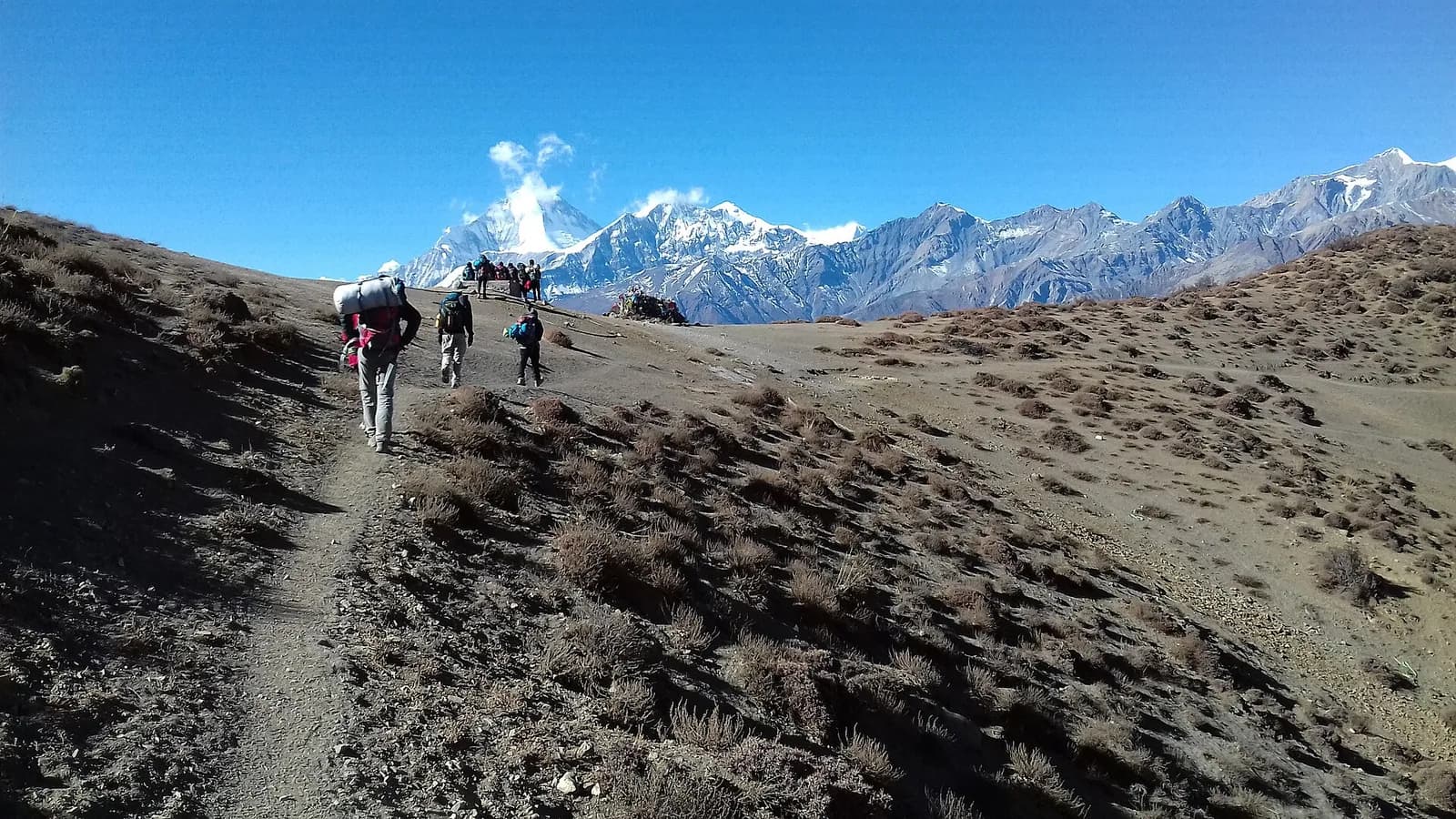
Trekking in Nepal is, for many travellers, the whole reason to fly halfway around the world. Nowhere else can an ordinary walker with no climbing skills reach the foot of the planet's highest mountains, sleeping in a warm village lodge and eating a hot meal every night. This guide is the plain-English starting point: it covers when to go, the permit and guide rules that changed in recent years, what life on the trail is actually like, what it costs, and how to pick a first route. Wherever a topic deserves more depth, we point you to a focused companion article.
Key takeaways
- Two seasons dominate: autumn (late September to November) for the clearest views and stable weather, and spring (March to May) for rhododendron blooms and warming trails.
- A guide rule changed the basics of access in April 2023: foreign trekkers are required to hire a licensed guide through a registered agency in national parks and conservation areas.
- Teahouse trekking is the magic ingredient — you sleep in family-run lodges, so no tents, food, or cooking gear are needed on the popular routes.
- Permits are region-specific: most treks need an area entry permit plus a local fee, and restricted areas need a special permit arranged through an agency.
- Budget roughly USD 25 to 60 per day on the trail (as of 2025 and 2026), then add permits, guide and porter, transport, gear, and proper insurance.
- Fitness matters less than altitude management — a slow, well-planned ascent is what keeps you safe and feeling well.
Why Nepal is the world's trekking capital
Plenty of countries have spectacular mountains. What sets Nepal apart is a rare combination: extraordinary high-mountain scenery, plus an established network of village lodges that removes the need to camp. Eight of the world's fourteen peaks above 8,000 metres sit inside the country, and on the main trails you walk through a changing world of terraced farmland, rhododendron forest, alpine meadow, and glacial moraine on the way to the giants.
Demand reflects that appeal. Nepal welcomed 1,147,567 international visitors in 2024, a 13.1% rise on the year before, according to figures reported from the Nepal Tourism Board. The Annapurna region alone recorded 244,045 trekkers in 2024. If you are still weighing the decision, our honest take on whether Nepal trekking is worth it for foreigners digs into the trade-offs.
When to go: seasons at a glance
Timing shapes everything about a trek — the views, the trail conditions, the crowds, and the temperature in your lodge at night. There are two prime windows.
Autumn (late September to November)
Autumn is generally the most reliable season. After the monsoon clears the air, the skies are at their crispest and the weather is at its most stable, giving the year's finest mountain visibility. October is widely regarded as the single best month, and it coincides with the major festivals of Dashain and Tihar, which adds cultural colour. The trade-off is that the popular trails are at their busiest.
Spring (March to May)
Spring is the other classic window. From late March into April, rhododendron forests bloom across the Annapurna and Langtang regions, and the lower trails are comfortably warm. April tends to offer clear, stable conditions before the pre-monsoon haze builds. It is also the main climbing season, so the higher routes feel lively.
Winter and monsoon
Winter (December to February) brings cold nights and the chance of snow closing high passes, but clear skies and very quiet trails reward those who go prepared and stick to lower elevations. The monsoon (June to August) means rain, leeches, mud, and clouds that hide the peaks on most routes — though the rain-shadow regions of Mustang and Dolpo stay relatively dry and are best visited then. For a month-by-month overview across the whole country, see our best time to visit Nepal guide.
| Season | Months | Conditions | Crowds | | --- | --- | --- | --- | | Autumn | Late Sep to Nov | Clearest views, stable weather | Highest | | Spring | Mar to May | Warming trails, rhododendrons | High | | Winter | Dec to Feb | Cold, possible snow up high | Lowest | | Monsoon | Jun to Aug | Rain and clouds (dry in Mustang) | Low |
Permits and the 2023 guide rule
Two things changed the basics of trekking in Nepal in recent years: a guide requirement and an evolving permit system. Both are region-specific, so the single most important habit is to confirm the current rule for your exact route before you travel.
The licensed-guide requirement
In April 2023, Nepal introduced a rule requiring foreign trekkers to hire a licensed guide, arranged through a government-registered trekking agency, in the country's national parks and conservation areas. Nepali citizens are exempt and may continue to trek solo. Restricted areas — including Manaslu, Upper Mustang, and Tsum Valley — have long required not just a guide but a minimum group and an agency. Enforcement of the broader rule has varied by region and checkpoint, with the Everest region in particular applying it loosely in practice, so check the live situation rather than relying on older blog posts. Our piece on whether you need a guide for the Everest Base Camp trek covers that region in detail.
TIMS and area permits
The TIMS card (Trekkers' Information Management System) is, according to the Nepal Tourism Board, mandatory only on specific protected routes rather than everywhere, and it is issued through a registered agency. The board lists the fee as NPR 2,000 for non-SAARC foreigners and NPR 1,000 for SAARC nationals (as of 2026). Several popular regions have moved away from the old card in favour of their own local entry fees. The most reliable approach is to treat each trek as having its own permit recipe.
What the two most popular regions need
For the Annapurna region, the key document is the Annapurna Conservation Area Permit (ACAP). For the Everest region, you need the Sagarmatha National Park entry permit plus a Khumbu Pasang Lhamu Rural Municipality local fee collected at Lukla.
| Region | Main entry permit | Foreign fee (approx.) | Notes | | --- | --- | --- | --- | | Annapurna | ACAP | NPR 3,000 (as of 2026) | Children under 10 typically exempt | | Everest | Sagarmatha National Park | NPR 3,000 (as of 2026) | Plus a local Khumbu fee, around NPR 2,000 to 3,000, paid at Lukla | | Restricted areas | Restricted-Area Permit | Higher, varies by area | Agency, guide, and minimum group required |
Fees are set by the authorities and can change, so treat the figures above as a planning guide and reconfirm at the time of booking. For a focused breakdown of the Everest documents, see our Everest Base Camp permits 2026 guide.
What teahouse trekking is really like
The detail that surprises most first-timers is that on the main routes you do not camp. You stay in teahouses — small lodges run by local families — eating home-cooked food and sleeping under thick blankets. This support network is precisely why ordinary travellers, not just expedition mountaineers, can reach these places carrying only a daypack.
A typical day starts early with breakfast in a stove-warmed dining room, followed by four to seven hours of walking between villages, with a tea or lunch stop along the way. Rooms are basic — usually twin beds with foam mattresses and a shared bathroom — but generally clean. The national dish, dal bhat (lentils, rice, and vegetables), is the staple trekking meal because it is filling, freshly cooked, and comes with free refills. We explain the whole system in our teahouse trekking in Nepal guide.
Staying healthy: altitude and safety
On the popular high routes, the main risk is not the terrain but the thin air. Altitude sickness can affect anyone, regardless of age or fitness, and the only reliable defences are a slow ascent profile, built-in acclimatization days, plenty of water, and a willingness to descend if symptoms worsen. Read our dedicated altitude sickness guide for Nepal trekking before you commit to anything above roughly 3,000 metres.
Beyond altitude, the practical risks are cold, slippery or exposed trail sections, weather-dependent mountain flights, and the simple remoteness of medical help in the high valleys. None of these should put you off, but they do argue for two things: a sensible, unhurried itinerary, and travel insurance that explicitly covers trekking at altitude and helicopter evacuation. We unpack the fine print in our guide to Nepal trekking insurance and helicopter evacuation.
What it costs
There is no single price for a Nepal trek, because the total depends on the route, the season, and how you travel. It helps to think in layers.
- On the trail: roughly USD 25 to 60 per day for food and a basic teahouse room, as of 2025 and 2026. Costs rise the higher and more remote you go, because everything has to be carried up.
- Permits: area entry permits and local fees, typically a few thousand rupees per region, plus restricted-area permits where they apply.
- Guide and porter: a licensed guide and an optional porter are a meaningful daily cost, and they are now effectively mandatory on many routes. Read our note on tipping trekking guides and porters so you can budget the extra.
- Transport: buses, jeeps, or domestic flights to and from the trailhead, which for the Everest region usually means the flight to Lukla.
- Gear and insurance: layered clothing, boots, a sleeping bag, and an insurance policy that covers high-altitude rescue.
Choosing a reputable operator makes the biggest difference to both cost and safety; our guide to the best trekking agency in Nepal explains what to look for.
Choosing your first trek
The right route depends on your time, budget, and tolerance for altitude. A few well-trodden options suit most first-timers.
Annapurna region
The Annapurna region is the classic introduction. The Annapurna Base Camp trek is shorter and lower than Everest Base Camp, with easy road access from Pokhara, which makes it a popular first big trek — see our Annapurna Base Camp trek cost breakdown. The Ghorepani Poon Hill trek is gentler still, ideal for a first taste of the foothills over just a few days.
Everest region
The Everest Base Camp trek is the iconic option, but it asks for more time, a bigger budget, higher altitude tolerance, and a flight to Lukla. For a gentler introduction to the same valleys, the shorter Everest View trek reaches superb viewpoints without going as high.
Langtang region
Closest to Kathmandu, the Langtang Valley is shorter and quieter than the two headline regions, and it offers a strong mix of mountain scenery and Tamang culture. It is a fine choice when time is limited.
Practical tips before you go
A handful of small preparations make a disproportionate difference on the trail.
- Carry some cash. ATMs are scarce or absent in the mountains, and teahouses are cash-only. Withdraw enough Nepali rupees in Kathmandu or Pokhara.
- Pack in layers. Mountain weather swings from warm sun to freezing nights. Our Nepal trekking packing list covers what actually earns its weight in your pack.
- Learn a few words. A simple namaste and dhanyabad (thank you) go a long way; see the Nepali phrases every trekker should know.
- Build in buffer days. Mountain flights are weather-dependent and can be delayed, so leave slack before any onward international flight.
- Go slow up high. Acclimatization days are not wasted time — they are what let you finish the trek feeling well.
Sources
- Nepal Tourism Board — TIMS Card
- The Longest Way Home — Trekking Entry Fees in Nepal (National Parks): A 2026 Guide
- The Longest Way Home — Latest information on the mandatory trekking guide rule in Nepal
- National Geographic — Was Nepal right to ban solo trekking in the Himalayas?
- Travel And Tour World — Nepal's tourism rebounds with 1.1 million foreign tourists in 2024 (13.1% increase, Nepal Tourism Board)
- Travel And Tour World — Record-breaking tourist arrivals in Nepal's Annapurna region in Asoj 2024
- Follow Alice — Nepal trekking permits and fees (2026)
Frequently asked questions
- What is the best time of year for trekking in Nepal?
- The two main seasons are autumn (late September to November) and spring (March to May). Autumn brings the clearest mountain views and the most stable weather, while spring is famous for rhododendron blooms and gradually warming trails. October is widely considered the single best month.
- Do I need a guide to trek in Nepal in 2026?
- Since April 2023 a rule requires foreign trekkers to hire a licensed guide through a registered agency in national parks and conservation areas. Restricted areas such as Manaslu and Upper Mustang have always required a guide and a group. The Everest region applied the rule loosely, so confirm the current situation before you go.
- Can I still trek solo in Nepal?
- Nepali citizens may trek solo. For foreign trekkers, the 2023 guide rule restricts genuinely solo trekking on most popular protected-area routes, though enforcement has varied by region and checkpoint. Outside national parks, such as on day hikes around Kathmandu, solo walking remains straightforward.
- What permits do I need for trekking in Nepal?
- It depends on the region. Most treks need an area entry permit, such as the Annapurna Conservation Area Permit or the Sagarmatha National Park permit, plus a local municipality fee or a TIMS card where required. Restricted areas need a special restricted-area permit arranged through an agency.
- How much does trekking in Nepal cost?
- On the trail, budget roughly USD 25 to 60 per day for a teahouse trek covering food and a basic room, as of 2025 and 2026. On top of that, add permits, a guide and any porter, transport to the trailhead, gear, and travel insurance that covers high-altitude rescue.
- What is teahouse trekking?
- On the main routes you sleep in family-run lodges called teahouses rather than camping. You walk between villages by day, eat home-cooked meals like dal bhat, and sleep under thick blankets at night. This means you can trek for days or weeks carrying only a daypack.
- Is trekking in Nepal dangerous?
- The biggest risk is altitude sickness rather than the terrain, and it is managed through gradual ascent and rest days. Other factors are cold, weather-dependent mountain flights, slippery trails, and the remoteness of medical help. With a sensible itinerary and proper insurance, the popular treks are completed safely every year by huge numbers of people.
- How fit do I need to be to trek in Nepal?
- You need to be reasonably fit rather than an athlete. If you can comfortably walk five to seven hours a day on uneven ground for several consecutive days, you can manage the popular treks. Altitude tolerance, which is separate from fitness, matters more and is handled with a slow itinerary.
Related posts
Annapurna Trek Package: How to Choose One in 2026
A practical guide to picking an Annapurna trek package in 2026 — durations, what is included and excluded, permits, the guide rule, and how to compare quotes.
Read postIs Everest Base Camp Worth It? An Honest Look
Is Everest Base Camp worth it? An honest, sourced look at the cost, difficulty, scenery and crowds to help you decide before you commit to the trek.
Read postIs Nepal Trekking Worth It for Foreigners? Honest 2026 Take
Is Nepal trekking worth it for foreigners? An honest look at the cost, the teahouse experience, the 2023 guide rules, and who should and shouldn't go.
Read post