Annapurna Trek Package: How to Choose One in 2026
A practical guide to picking an Annapurna trek package in 2026 — durations, what is included and excluded, permits, the guide rule, and how to compare quotes.
The cheapest Annapurna package is rarely the one that gets you to the mountains rested and safe.
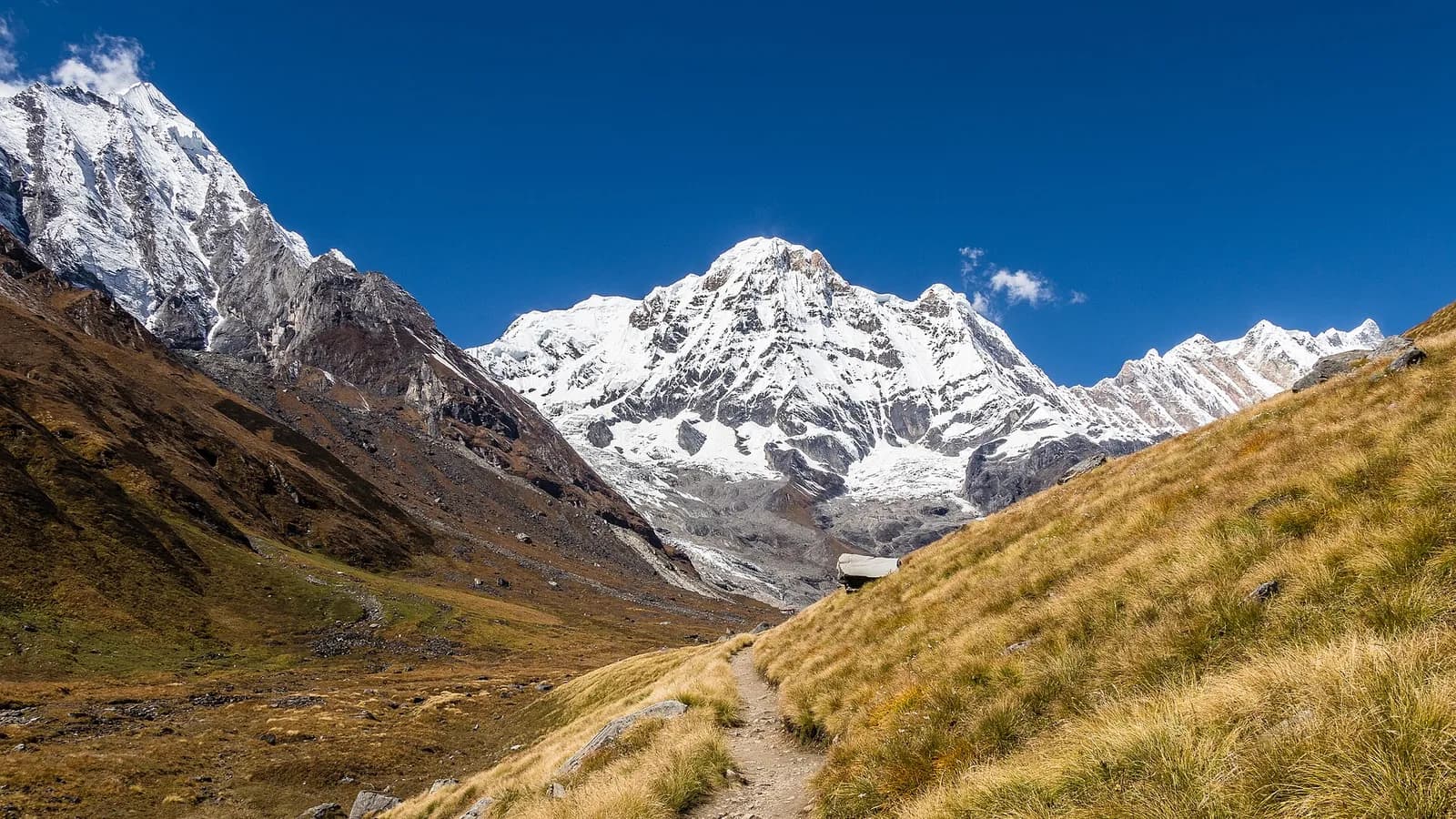
Choosing an Annapurna trek package is mostly an exercise in reading the fine print. The Annapurna region offers some of the most accessible high-mountain scenery in Nepal, and dozens of operators sell trips here — but two quotes for "the same" trek can differ by hundreds of dollars once you compare what each one actually covers. This guide walks through the durations on offer, what tends to be included and excluded, the permits and guide rules in force in 2026, and how to weigh one package against another without getting stung.
If you want the underlying numbers in detail, our companion piece on Annapurna Base Camp trek cost breaks down the line items; here we focus on the package itself — how it is built, and how to pick the right one.
Key takeaways
- A guided package is effectively mandatory: since April 2023, foreign trekkers in Nepal's conservation and national-park areas must trek with a licensed guide booked through a registered agency.
- The core ACAP permit costs NPR 3,000 for foreign nationals and NPR 1,000 for SAARC nationals (as of June 2026); the TIMS card is not enforced on Annapurna trails in practice.
- Advertised durations span 4 to 14 days, but the walking core for Annapurna Base Camp is usually 7 to 10 trail days; longer versions add Ghorepani and Poon Hill.
- Autumn (late September–November) and spring (March–May) are the prime seasons; winter brings real avalanche risk near Deurali and Machhapuchhre Base Camp.
- The headline price means little until you check inclusions — porter, city hotels, transport, tips and insurance are the usual hidden extras.
- Booking with a Nepal-registered operator is typically cheaper than an overseas agency, but verify registration and reviews either way.
What "Annapurna trek package" actually means
"Annapurna" is a region, not a single trail, so the first thing to pin down is which route a package covers. The most popular options are:
- Annapurna Base Camp (ABC), also called the Annapurna Sanctuary trek — an in-and-out route to a glacial amphitheatre at 4,130 m, ringed by peaks.
- Annapurna Circuit, a longer loop around the massif that crosses the high Thorong La pass.
- Ghorepani Poon Hill, a short, lower-altitude sunrise trek often bundled as a warm-up or a standalone family-friendly trip.
Most "Annapurna trek package" listings default to ABC, and that is the focus here. For the alternatives, see our guides to the Annapurna Circuit trek and the gentle Ghorepani Poon Hill trek.
The route in brief
A typical ABC package drives you from Pokhara to a trailhead such as Siwai or Jhinu Danda, then follows the Modi Khola valley up through Gurung villages and rhododendron forest. From the gateway village of Chhomrong the trail funnels through Sinuwa, Bamboo, Dovan, Himalaya and Deurali to Machhapuchhre Base Camp (around 3,700 m), before a short, gradual final climb into the sanctuary at Annapurna Base Camp, the trek's high point at 4,130 m.
Package durations: how many days do you need?
Operators advertise a wide spread of itineraries. Shorter trips start deeper in the valley and skip side trips; longer ones add the Ghorepani–Poon Hill loop for sunrise views and a more forgiving altitude profile.
| Package length | Roughly what you get | Best for | | --- | --- | --- | | 4–5 days | Fast in-and-out from a high trailhead, minimal acclimatisation | Very tight schedules, experienced and acclimatised walkers | | 7 days | The popular direct ABC route from Pokhara via Jhinu | Fit trekkers wanting the classic sanctuary with no frills | | 10 days | ABC plus extra buffer or a short Poon Hill add-on | First-timers who want margin for weather and acclimatisation | | 12–14 days | ABC combined with Ghorepani–Poon Hill, plus arrival and departure days in Kathmandu | A fuller trip with city time and the best acclimatisation |
The "right" length is mostly a trade-off between time, fitness and altitude safety. More days usually mean a gentler ascent profile, which matters because the sanctuary sits high enough for altitude to be a genuine concern — read our altitude sickness guide for Nepal trekking before you lock in a short itinerary.
What is included — and what is not
This is where packages diverge most. Two trips at very different prices can look identical in the headline until you compare the inclusions list. Treat the table below as a checklist when you read any quote.
| Commonly included | Commonly excluded (watch for these) | | --- | --- | | ACAP permit | Nepal entry visa | | Licensed, English-speaking guide | Porter (sometimes optional or shared) | | Teahouse lodging on the trail | Hotels in Kathmandu and Pokhara | | Main meals on the trail (often breakfast, lunch, dinner) | Domestic flights or tourist bus to and from Pokhara | | Ground transport between Pokhara and the trailhead | Travel insurance with helicopter evacuation cover | | Guide's wages, food, lodging and insurance | Tips for guide and porter | | | Drinks, hot showers, device charging and wifi on the trail |
Inclusions that are easy to misread
A few line items cause most of the confusion:
- "Meals on trek" sometimes means all three meals, sometimes only breakfast and dinner. Ask which.
- "Transport" may cover only one leg, or may assume a tourist bus rather than a flight. If a Kathmandu–Pokhara flight matters to you, confirm it is in the price.
- "Accommodation" in the city is often a separate booking. Decide early whether you want your operator to handle where to stay in Pokhara or whether you will sort it yourself.
- Porter is frequently sold as an add-on. If you would rather not haul a full pack up the long stone staircases, build it into the budget from the start.
Permits and the guide rule in 2026
For Annapurna, the permit picture is simpler than it once was. The single document that checkpoints actually verify is the Annapurna Conservation Area Permit (ACAP), issued by the National Trust for Nature Conservation. The fee is NPR 3,000 for foreign nationals and NPR 1,000 for SAARC nationals (as of June 2026), and a reputable package either includes it or itemises it clearly.
The older TIMS card still appears on some price lists and in older regulations, but on the Annapurna trails it is not consistently enforced in practice — checkpoints look for the ACAP. If a package quotes you a TIMS fee, that is not unusual; just ask whether it is genuinely required for your route.
Why almost every Annapurna trip is now guided
Since 1 April 2023, Nepal has required foreign trekkers in conservation and national-park areas — the Annapurna routes included — to trek with a licensed guide arranged through a government-registered agency. That single rule is why "package" and "Annapurna trek" now go hand in hand: independent solo trekking on these routes is no longer permitted. For the full picture, see do I need a guide to trek in Nepal.
Permits are issued in Kathmandu (at the Nepal Tourism Board office on Pradarshani Marg) and in Pokhara (at the Nepal Tourism Board service centre in Damside), and ACAP can also be processed online. In practice your agency handles all of this as part of the package.
When to go, and why season shapes your package
Two windows dominate the Annapurna calendar:
- Autumn (late September to November) is the headline season — stable weather, dry trails and famously clear mountain views after the monsoon. Late September can still see lingering rain, but conditions usually firm up by October.
- Spring (March to May) brings warm days, mostly dry trails and blooming rhododendron forests lower down.
Winter trekking is possible but harder: heavy snowfall and avalanche risk are highest in January and February, particularly near Deurali and Machhapuchhre Base Camp, and some teahouses close. Monsoon (June to early September) means rain, leeches and cloud-wrapped peaks. For a month-by-month view, our best season to trek in Nepal guide goes deeper.
Because the prime months are busy, popular dates and good guides get booked out. Reserving your package several weeks ahead helps secure both.
How to compare packages without getting stung
Once you have two or three quotes, judge them on more than price:
Check the operator is registered
Nepal's guide rule only works if your trip is booked through a government-registered agency. Confirm registration, and read recent independent reviews. Our overview of choosing a trekking agency in Nepal covers what to look for.
Normalise the inclusions before you compare prices
Put each quote against the checklist above and add the missing pieces — porter, city hotels, transport, insurance, tips — back into the cheaper one. A "budget" package can end up costing the same as a mid-tier one once the extras are filled in.
Weigh local versus overseas booking
Booking directly with a Nepal-based operator is generally cheaper and keeps more money in the local economy. An overseas agency costs more but adds a layer of consumer protection and pre-trip support. Neither is wrong — it depends on how much hand-holding you want.
Don't skip insurance
Whatever the package includes, arrange travel insurance that explicitly covers high-altitude trekking and helicopter evacuation. It is one of the most important line items and is almost always excluded from the trip price — see Nepal trekking insurance and helicopter evacuation.
A word on tipping
Tips for your guide and porter are customary and almost never built into the package. Budget for them separately so the end-of-trek gratuity is not a surprise — our tipping guides and porters in Nepal page gives sensible ranges.
Is it the right trek for you?
Annapurna Base Camp is one of the best-value major treks in Nepal and a sensible first big Himalayan trek for reasonably fit walkers. The high point of 4,130 m is meaningful but achievable with proper acclimatisation, daily walking is moderate, and the trailhead is reachable by road from Pokhara — no costly or weather-dependent mountain flight required. Pick a package with realistic pacing, confirm the inclusions, sort your insurance, and the mountains do the rest.
Sources
- Nepal Hiking Team — Annapurna Trekking Permits 2026: ACAP, TIMS & RAP Guide
- Magical Nepal — Annapurna Circuit Trek Permits: Guide, Costs and Rules
- The National — Nepal bans solo trekking for tourists, guides mandatory from April 1
- Ace the Himalaya — Best Time for Annapurna Base Camp Trek
- Himalayan Joy — Annapurna Base Camp Trek Map & Route Guide (Updated for 2026)
- Magical Nepal — Annapurna Base Camp Trek (itinerary and durations)
Frequently asked questions
- What is usually included in an Annapurna trek package?
- Most packages cover the ACAP permit, a licensed guide, teahouse lodging and main meals on the trail, and ground transport between Pokhara and the trailhead. Read each quote line by line, because porter hire, Kathmandu hotels, domestic flights, tips and insurance are often listed as extras.
- How many days does an Annapurna Base Camp package take?
- Operators advertise everything from 4-day dashes to 14-day grand itineraries. The walking core is usually 7 to 10 days on the trail, with shorter versions starting deep at Jhinu or Siwai and longer ones adding Ghorepani and Poon Hill for sunrise views and gentler acclimatisation.
- Do I need a guide for an Annapurna trek package in 2026?
- Yes. Since 1 April 2023 Nepal has required foreign trekkers in conservation and national-park areas, including the Annapurna routes, to trek with a licensed guide booked through a registered agency. That is why nearly all Annapurna trips are now sold as guided packages.
- What permits does an Annapurna trek package need?
- The core document is the Annapurna Conservation Area Permit (ACAP), which costs NPR 3,000 for foreign nationals and NPR 1,000 for SAARC nationals (as of June 2026). A reputable agency arranges this for you and includes it, or itemises it, in the package price.
- Is the TIMS card still required for Annapurna?
- In practice, no. Checkpoints on the Annapurna trails verify the ACAP permit, and the TIMS card is not consistently enforced there even though it still appears in some older notices and price lists. Confirm the current rule with your agency when you book.
- When is the best time to book an Annapurna package?
- Autumn from late September to November and spring from March to May are the prime trekking windows, with the clearest skies and most stable weather. These months fill up fast, so booking your package several weeks ahead helps secure guides and teahouse space.
- Should I book an Annapurna package locally or from abroad?
- Booking with a Nepal-registered operator is usually cheaper and supports local employment, while overseas agencies cost more but add hand-holding and Western consumer protections. Whichever you choose, check that the operator is government-registered and read reviews before paying a deposit.
- Is the Annapurna Base Camp trek suitable for beginners?
- It is a strong choice for fit first-timers. The highest point is 4,130 m, daily walking is usually 4 to 6 hours on well-marked trails, and the route returns by road rather than a mountain flight. Even so, take altitude seriously and pick a package with sensible acclimatisation days.
Related posts
Annapurna Circuit Trek: Route, Permits & Thorong La Guide
A practical Annapurna Circuit trek guide — the full route, Thorong La pass, 2026 ACAP permit and guide rules, costs, road impact and best season.
Read postAnnapurna Circuit Trek: A Practical 2026 Guide
Plan the Annapurna Circuit: Thorong La pass, permits, the best season, altitude safety, and how to walk the road-free NATT trails.
Read postCheap Nepal Trekking Package: Budget Guide 2026
How to find a cheap Nepal trekking package - real permit fees, daily teahouse costs, the best low-cost trails, and ways to cut the price safely.
Read post