Where to Stay in Pokhara: A Lakeside Hotels Guide
Where to stay in Pokhara: how Lakeside works, the quiet north vs busy central strip, hotel prices for every budget, and how to pick the right spot.
In Pokhara, the question is never which hotel. It is which end of Lakeside — the loud, walkable middle or the quiet northern edge of the lake.
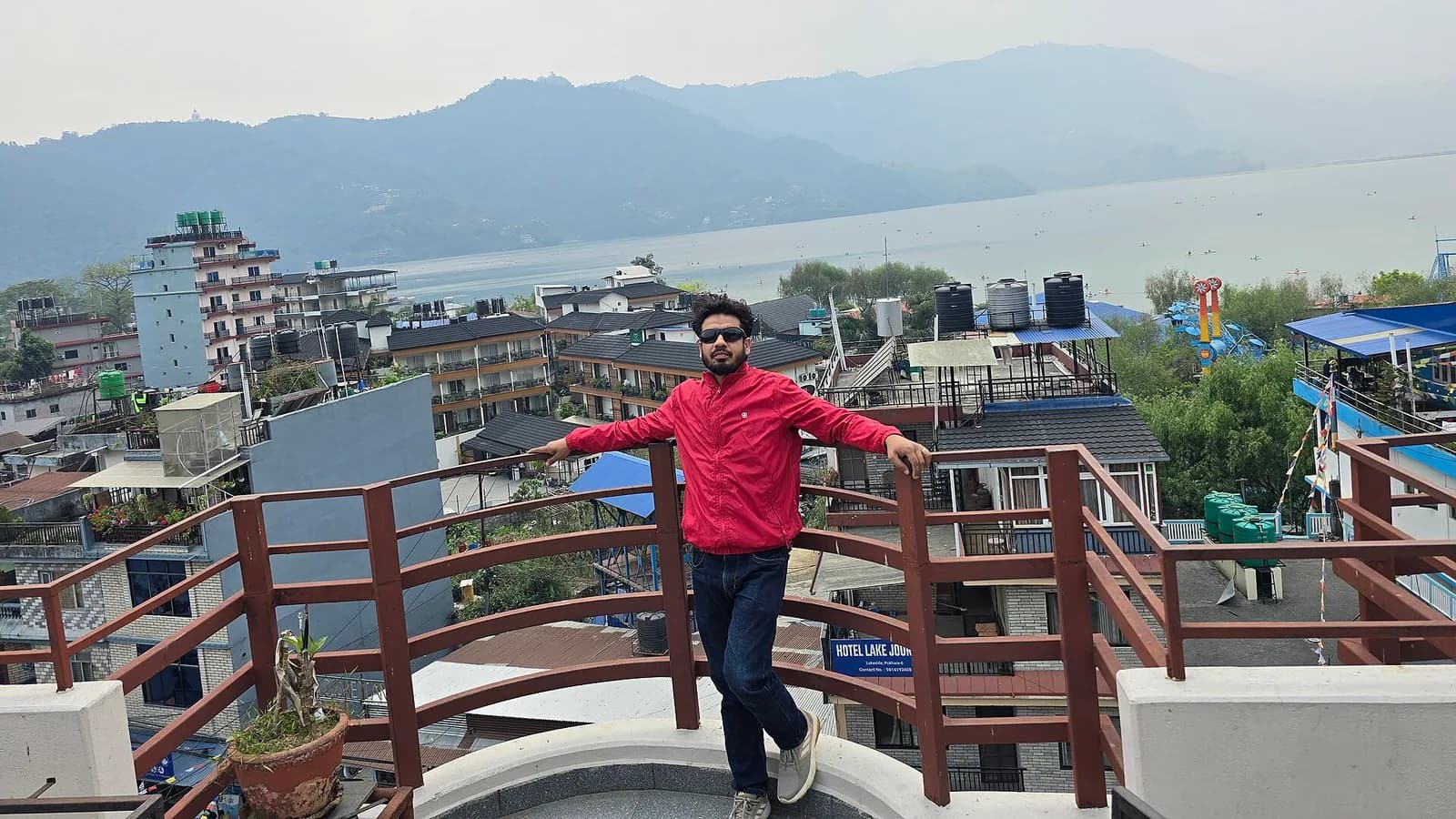
Pokhara is Nepal's lake city and its adventure capital — the launchpad for the Annapurna treks, paragliding, and a slower few days by the water after the mountains. Almost everyone who visits stays in the same place: Lakeside, the strip of hotels, restaurants, and shops running along the eastern shore of Phewa Lake. The real decision is not whether to stay in Lakeside, but where within it, because the busy central section and the quiet northern end offer genuinely different stays.
This guide explains how Lakeside is laid out, what hotels cost across every budget, and how to choose the spot that fits your trip.
Key takeaways
- Lakeside, along Phewa Lake, is where nearly all visitors stay; it has the most hotels and the easiest access to food, boats, and activities.
- Central Lakeside is lively and walkable but noisier; the northern end is calmer and more scenic but further from the action.
- Budget doubles commonly run NPR 1,500–4,000 per night, mid-range more, and luxury resorts well over USD 100 (as of June 2026).
- Prices climb roughly 20–40% in peak season (October–November and March–April) and fall in the monsoon.
- True lake-view rooms are limited and cost extra — many "view" rooms actually face the mountains or a garden, so confirm before booking.
- Book a few nights ahead in peak season; off-season you can usually walk in and bargain.
Why you stay in Lakeside
Lakeside — historically the area called Baidam on the eastern bank of Phewa Lake — is Pokhara's tourist heart. It is where the hotels cluster, where the restaurants and cafes line the street, where you rent a boat or a bicycle, and where the evening crowd gathers. The name itself comes from an early hotel on the shore; over time the whole lakefront road took on the "Lakeside" label.
Staying here means you can walk to almost everything that brings travellers to Pokhara: the lake and its promenade, dozens of places to eat, gear shops, trekking agencies, and the buses or taxis to the trailheads and viewpoints. Other areas exist — Damside to the south, hill villages like Sarangkot and Dhampus above the town — but for a first visit, and for sheer convenience and choice, Lakeside is the obvious base. The rest of this guide assumes you are staying somewhere along it.
North vs central Lakeside: pick your vibe
This is the choice that actually shapes your stay. Lakeside runs roughly north to south, and the character changes noticeably along its length.
- Central Lakeside is the busy, commercial core — the densest concentration of restaurants, bars, shops, and hotels, organised along numbered side streets running back from the lake. It is the most convenient and social area, walkable to everything, and the easiest place to find a meal or a beer at night. The trade-off is noise and, in places, daytime construction or traffic.
- Northern Lakeside is quieter, greener, and more laid-back. Hotels here sit on calmer side streets, the pace slows, and you are closer to the open, undeveloped end of the lake. The trade-off is a longer walk (or a short cab ride) to the thick of the restaurants and nightlife.
| Priority | Better choice | |---|---| | Restaurants, bars, nightlife on your doorstep | Central Lakeside | | Quiet sleep and a relaxed pace | Northern Lakeside | | First visit, short stay, want everything close | Central Lakeside | | Longer stay, remote work, couples | Northern Lakeside | | Easiest walk to the lake promenade | Either — both are close |
There is no wrong answer; it is a temperament question. Party-adjacent and central, or peaceful and a little removed.
One more option sits at the far south: Damside (Pardi), the area near the dam at the bottom end of Phewa Lake. It is calmer and more local-feeling than central Lakeside, with a cluster of mid-range hotels and a quieter waterfront, while still being a manageable walk or short taxi ride to the main restaurant strip. Damside suits travellers who want lake proximity and a slower atmosphere but do not need the nightlife on their doorstep — think of it as a southern counterpart to the quiet northern end.
Hotel prices by budget
Pokhara is excellent value, with a deep range from cheap guesthouses to genuine luxury resorts. The figures below are typical ranges as of June 2026; treat them as planning guides, not fixed quotes, and expect seasonal swings.
| Category | Typical price (per night) | What you generally get | |---|---|---| | Budget guesthouse | NPR 1,500–4,000 (~USD 11–30) | Clean double, hot shower, wifi, often a balcony | | Mid-range hotel | Higher than budget, varies | Bigger room, sometimes a pool, garden, on-site restaurant, spa | | Luxury resort | USD 100+ (some far higher) | Large pool, extensive grounds, spa, fine dining, lake or mountain views |
A few specifics worth knowing. For couples, the sweet spot in the budget-to-midrange band is frequently quoted around NPR 2,000–3,500 for a clean double with hot water, wifi, and a balcony (as of June 2026). At the top end, Pokhara has resorts running well into the hundreds of US dollars and beyond, often with pools, spas, and sustainability features like solar power. Across price-tracking sites, the cheapest month to book tends to be around October, with rates peaking in December. For a wider sense of trip costs, see the Nepal travel budget guide.
Seasons and booking
Pokhara's hotel prices move with Nepal's trekking calendar, because most of its visitors are arriving from or heading to the mountains.
- Peak season (October–November and March–April): the clearest skies and the busiest town. Hotel rates rise roughly 20–40% and the best-value places fill up. Book a few nights ahead, especially around the big autumn festivals.
- Shoulder and winter (December–February, May–June): quieter, often cheaper, and easy to find rooms. Winter mornings are crisp and clear; late spring can be hazier.
- Monsoon (July–August): low season, lowest prices, lush green hills, but frequent cloud and rain that can hide the mountains and ground the paragliders.
The booking rule is simple: reserve in peak season, walk in and negotiate off-season. If you are arriving overland, the tourist bus from Kathmandu drops you near Lakeside, so you can scout a couple of hotels on foot before committing if you have not pre-booked.
About those "lake-view" rooms
A quick reality check, because it disappoints people who do not know it in advance: genuine lake-view rooms in Pokhara are limited and command a premium. The hotels directly facing the water are fewer than the marketing suggests, and many properties sit a street or two back. Plenty of "view" rooms actually look out at the Annapurna and Machhapuchhre peaks, or onto a garden, rather than Phewa Lake itself — which is no bad thing, since the mountain views can be the better photograph.
If a lake view matters to you, confirm it explicitly when booking — ask which direction the room faces and whether the view is of the lake or the hills, ideally with a photo. Otherwise, do not pay a lake-view premium for a room that faces the street.
Beyond Lakeside: the hill options
If you would rather wake up above the town than beside the lake, Pokhara's surrounding hills hold a few worthwhile alternatives — best as a night or two, not your whole stay.
- Sarangkot: the famous sunrise ridge above Pokhara. Staying overnight means catching the Sarangkot sunrise without a pre-dawn drive, with the Annapurnas turning gold over the lake below.
- The World Peace Pagoda side: the hill across the lake, crowned by the World Peace Pagoda, is quieter and greener, reached by a short boat ride and a walk.
- Dhampus and the foothill villages: traditional Gurung settlements with mountain views, popular as a gentle first night on or off a trek.
For most visitors, though, these are excursions rather than bases. Sleep in Lakeside and day-trip the hills.
Making the most of your stay
Where you sleep in Pokhara is really about positioning yourself for everything else the town offers. Lakeside puts the lake, the food, and the activity operators within walking distance, so you can roll from breakfast to a boat to a paragliding flight without much planning. Spend at least one slow morning on the lake-front promenade and one evening watching the sunset over Phewa from a rooftop. For a full menu of what to fill your days with, the things to do in Pokhara guide rounds it up. Pick your end of Lakeside, settle in, and let the lake set the pace.
Sources
Frequently asked questions
- Where should I stay in Pokhara?
- Stay in Lakeside, the strip along Phewa Lake. It puts you within walking distance of restaurants, boats, shops, and most tourist activities.
- Is Lakeside the best area in Pokhara?
- For almost all visitors, yes. Lakeside has the widest choice of hotels at every budget plus easy access to the lake and nightlife.
- What is the difference between north and central Lakeside?
- Central Lakeside is busy with bars, shops, and restaurants, while the northern end is quieter and more relaxed but a longer walk to the action.
- How much do Pokhara Lakeside hotels cost?
- Budget doubles often run NPR 1,500 to 4,000 per night, mid-range hotels more, and luxury resorts well over USD 100 (as of June 2026).
- When are Pokhara hotels most expensive?
- Prices rise around 20 to 40 percent in the peak seasons of October to November and March to April, and dip in the monsoon.
- Do I need to book a Pokhara hotel in advance?
- In peak season book a few nights ahead, especially for popular hotels. Off-season you can usually walk in and negotiate a rate.
- Are there lake-view rooms in Pokhara?
- Yes, but true lake-view rooms are limited and cost more; many hotels advertise mountain or garden views instead, so confirm before booking.
- Is Pokhara Lakeside walkable?
- Very. The Lakeside strip and its lake-front promenade are flat and pedestrian-friendly, and most restaurants and shops are a short stroll apart.
Spotted an error in this post? Tell us or suggest a correction.
Related posts
ABC Trek: A Plain-English Guide to Annapurna Base Camp
The ABC trek (Annapurna Base Camp) explained — the route, how many days it takes, difficulty, the best seasons, and what daily trail life is really like.
Read postAma Dablam Climb: 2026 Expedition Guide (6,812m)
An Ama Dablam climb and expedition guide for 2026 — height, the Southwest Ridge route, camps, fixed ropes, difficulty, permits, cost and the best seasons.
Read postAnnapurna vs Manaslu: Which Trek Should You Choose?
An Annapurna vs Manaslu decision guide for trekkers — compare permits, crowds, difficulty, infrastructure and cost to pick the right Himalayan route.
Read postAsan Bazaar Kathmandu: Old Town Market Guide
A visitor guide to Asan bazaar, Kathmandu's oldest market — its six-road square, Annapurna Temple, what to buy, when to go, and how to get there.
Read postAyurveda Nepal: A Traveller's Guide to Healing
Ayurveda Nepal explained for tourists — the history, the doshas, treatments like Panchakarma and Shirodhara, where to go and how to choose a centre safely.
Read postBest Restaurants Pokhara Lakeside: Where to Eat
The best restaurants in Pokhara Lakeside — lakeside trout, wood-fired pizza, Tibetan momos and healthy cafes, with what to order and rough 2026 prices.
Read post