World Peace Pagoda Pokhara: Hike, Views & Guide
How to reach the World Peace Pagoda in Pokhara, the boat-and-hike route, what the Shanti Stupa means, best times for Annapurna views, and visitor tips.
A gleaming white dome on a forest ridge, with the Annapurnas on one side and Phewa Lake on the other — earned best on foot.
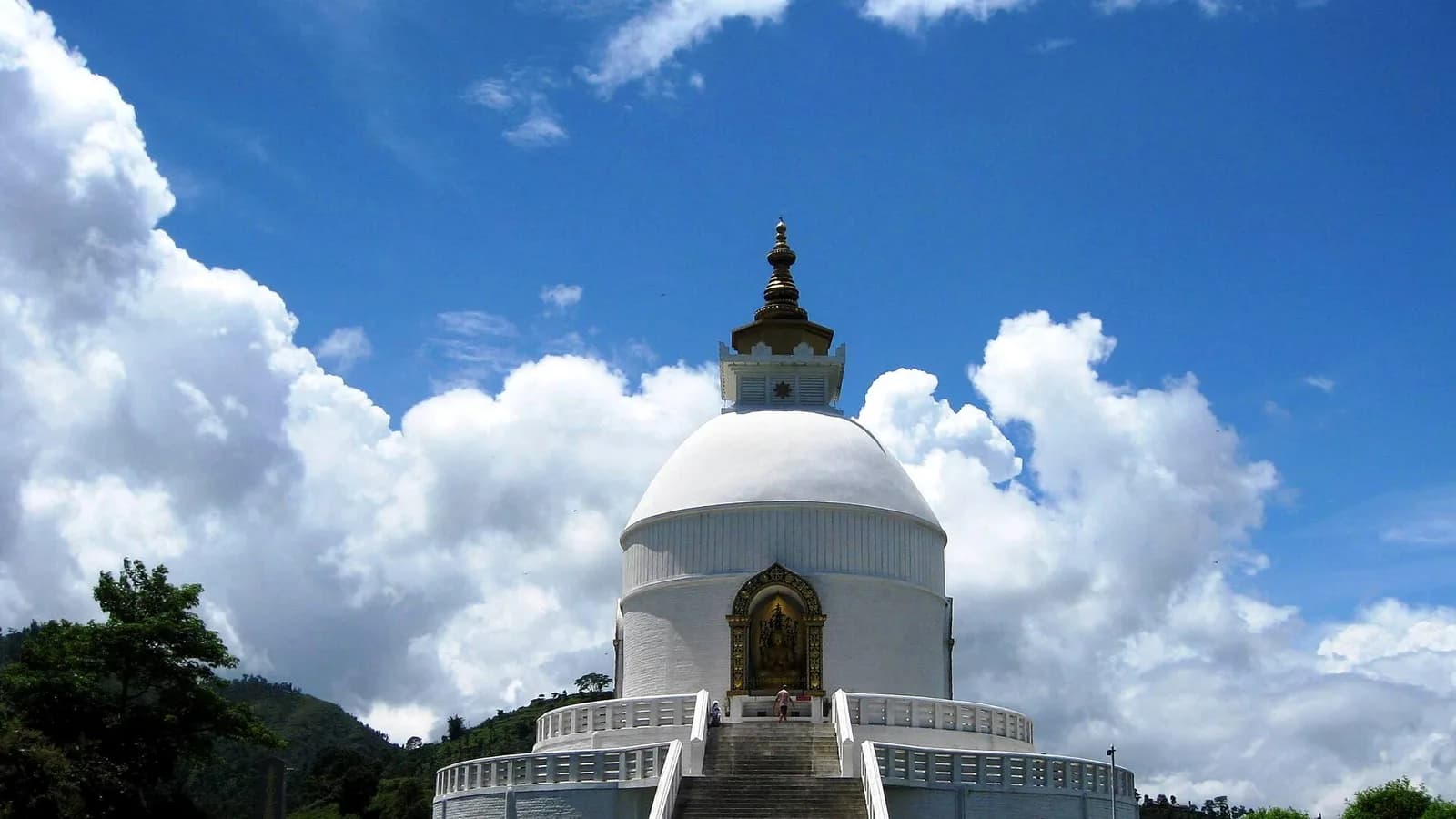
High on a forested ridge across Phewa Lake, a brilliant white dome catches the first and last light of every Pokhara day. This is the World Peace Pagoda — known locally as the Shanti Stupa — a Buddhist monument that has become one of Pokhara's signature sights. Reaching it is half the pleasure: a short boat ride across the lake and a climb through the trees deliver you to a 360-degree panorama of the Annapurna range, the fishtail peak of Machapuchare, and the whole lakeside town laid out below. This guide covers how to get there, what the pagoda means, when to go for the best views, and the practical details that make the trip smooth.
Pokhara is Nepal's most relaxed town and its great trekking gateway, and the Peace Pagoda slots neatly into a day of things to do in Pokhara. You can pair it with a morning on the water or an afternoon at the waterfalls without rushing.
Key takeaways
- The World Peace Pagoda sits on Ananda Hill at about 1,100 m, on the far side of Phewa Lake from the main Lakeside strip.
- The classic approach is a boat across the lake, then a 45 to 90 minute climb through forest to the top.
- Entry is free, and the grounds are open from around sunrise to sunset.
- It is the first peace pagoda built in Nepal, completed by the Japanese Nipponzan-Myohoji order and inaugurated in 1999.
- The ridge gives a sweeping view of the Annapurnas, Machapuchare and Dhaulagiri, plus the lake and valley.
- Go at sunrise for clear mountains or sunset for the glowing dome; the drier months from October to April are best.
What the World Peace Pagoda is
The pagoda is a stupa, a domed Buddhist structure built as a monument and a focus for reflection. This one belongs to a worldwide series of "peace pagodas" raised by Nipponzan-Myohoji, a Japanese Buddhist order founded by the monk Nichidatsu Fujii, who dedicated his life to promoting non-violence and built peace pagodas around the globe in the decades after the Second World War. The Pokhara stupa was the first of its kind in Nepal.
The gleaming white structure stands 115 feet tall and 344 feet in diameter, according to descriptions of the monument. Around its second tier sit four statues of the Buddha, each gifted from a different country and each representing a key moment in the Buddha's life: a Dharmachakra figure from Japan, a Bodh Gaya figure from Sri Lanka, a Kushinagar figure from Thailand, and a Lumbini figure from Nepal. Together they tie the monument to the wider Buddhist world, from the place of the Buddha's enlightenment to the place of his birth, which lies in Nepal's own lowlands and is covered in our look at whether Lumbini is worth visiting.
A long road to completion
The pagoda took an unusually long time to build. The foundation stone, laid with relics of the Buddha, was first placed in 1973. Construction then stalled for years amid local obstacles, and the foundation was re-laid in 1992. The completed stupa was finally inaugurated in 1999, more than a quarter of a century after the project began. That patient backstory suits the place: it feels less like a tourist attraction bolted onto a hill and more like something that was willed into being over a generation.
How to get to the World Peace Pagoda
The pagoda sits on the southern side of Phewa Lake, roughly across the water from the Lakeside tourist district. There are three main ways up, and many visitors mix them — for example, a boat across one way and a taxi back, or up the steep trail and down the gentler path.
| Route | Roughly how long | Good for | |---|---|---| | Boat across Phewa Lake + climb | 30 min boat + 45 to 90 min climb | The classic, most scenic approach | | Taxi or motorbike up the back road | 20 to 40 min drive + short walk | Saving energy, going for sunrise | | Full hike from Damside / Devis Fall side | About 2 hours | Walkers who want the whole loop on foot |
Option 1: Boat across the lake, then hike
This is the most enjoyable way to arrive. From a jetty on Lakeside, hire a brightly painted wooden rowboat — you can paddle yourself or take a boatman — and cross to a small landing on the southern shore. From there, a well-defined forest trail of stone steps climbs steeply to the stupa, taking most people somewhere between 45 and 90 minutes depending on fitness and the weather. Boats are an inexpensive local hire, charged per boat rather than per person, though it is worth agreeing the price and whether it is one-way or return before you set off. Our guide to common tourist scams in Nepal is a useful read so you negotiate with confidence.
Option 2: Taxi or motorbike up the back road
If you would rather not climb, a road winds up the back of the hill. A taxi can take you most of the way, after which a short walk brings you to the pagoda. This is the popular choice for a sunrise visit, when crossing the lake in the dark is less appealing. Rental motorbikes and scooters can also make the trip, but the road is steep and rough in places, so it suits confident riders only.
Option 3: Hike the whole way
For walkers, you can reach the pagoda entirely on foot from the Damside end of the lake or from near Devis Fall, following forest trails for roughly two hours. A satisfying way to do it is to walk up one side, visit the stupa, and descend the other to a boat back across the lake — a half-day loop that strings together several of Pokhara's best corners.
The view from the top
The reason everyone makes the trip is the panorama. From the ridge, the land falls away to Phewa Lake glinting below, with Lakeside and the town spread along its near shore. Lift your eyes and, on a clear day, the Annapurna range fills the northern horizon: the broad wall of Annapurna South and Annapurna II, the sharp unmistakable spire of Machapuchare (the "fishtail"), and away to the west the giant bulk of Dhaulagiri. It is one of the best free viewpoints in Pokhara, and arguably the most complete, because you get both the lake and the high mountains in a single sweep.
The light makes a big difference. Early morning typically offers the crispest mountain views before haze builds over the valley, while sunset turns the white dome golden and is the favourite hour for photographers. If you are chasing peaks specifically, the same clear-sky logic that governs a Sarangkot sunrise applies here.
Best time to visit
Timing is really about the mountains and the weather. The drier months from roughly October to April bring the clearest skies and the sharpest Annapurna views, which is also when Pokhara is at its best for paragliding over Phewa Lake and sunrise viewpoints. The monsoon, from around June to September, turns the hills a vivid green but often wraps the peaks in cloud and makes the forest trail slick underfoot. For a fuller breakdown across the seasons, see our guide to the best time to visit Nepal.
Within the day, aim for sunrise or the hours around sunset for the combination of good light and cooler walking. Midday is fine for the visit itself but tends to be hazier and hotter on the climb.
Etiquette and what to expect at the stupa
The pagoda is an active religious monument, not just a viewpoint, so a little awareness goes a long way. Move quietly and calmly around the stupa, and as at any Buddhist site, the custom is to walk clockwise around it. Dress modestly if you plan to go close — shoulders and knees covered — in keeping with the broader temple etiquette for visitors that applies across Nepal. There is usually a peaceful atmosphere maintained by resident monks, and small cafes near the top sell drinks and snacks if you want to linger over the view.
Entry is free, and the grounds are generally accessible from sunrise to sunset. There is no ticket booth, though donations toward upkeep are welcomed.
What to bring
The walk is short but steep, and the conditions can change, so pack with that in mind:
- Footwear with grip. The stone steps become slippery when wet, and the forest path can be muddy.
- Water and a snack. There are cafes at the top, but carry your own for the climb, especially in the heat.
- Sun protection. A hat and sunscreen help on exposed sections and at the open viewpoint.
- A light rain layer in monsoon. Showers arrive quickly, and the forest stays damp.
- Insect awareness. During and just after the monsoon, leeches can appear on the wet forest trail; long socks and a quick check help.
- A modest layer. Handy if you want to approach the stupa respectfully.
Fitting it into your trip
Most travellers reach Pokhara from the capital before tackling the lake and its viewpoints. You can take a tourist coach along the highway, covered in our Kathmandu to Pokhara tourist bus guide, or weigh up all the options including flying. Once you are in town, the Peace Pagoda makes an excellent half-day on its own or combined with a boat trip and a lakeside dinner.
If you are mapping out the whole country, the pagoda and the rest of Pokhara fit naturally into a longer loop — our two-week Nepal itinerary shows how the lake town links the capital, the trekking trails and the lowland parks. For many visitors, standing on that ridge at sunset, with the lake below and the Annapurnas turning pink, is the moment Pokhara clicks into place.
Sources
Frequently asked questions
- How do you get to the World Peace Pagoda in Pokhara?
- The classic way is to row or take a boat across Phewa Lake to the southern shore, then climb a forest trail to the top in roughly 45 to 90 minutes. You can also reach it by taxi or motorbike up the back road, or hike the whole way from the Damside area in about two hours. Many visitors combine a boat one way with the road the other.
- Is there an entry fee for the World Peace Pagoda?
- No. Entry to the pagoda and its grounds is free. Your only costs are getting there, such as a boat across Phewa Lake or a taxi up the hill, plus anything you spend at the small cafes near the top.
- How long is the hike to the Peace Pagoda?
- From the lakeshore boat landing, the climb takes most people about 45 to 90 minutes depending on fitness and the heat. The longer route from the Damside or Devis Fall side is around two hours. The trail is mostly stone steps and forest path, steep in places but short.
- What is the best time to visit the World Peace Pagoda?
- Early morning gives the clearest mountain views and the coolest walking, with the Annapurna range often sharpest before the midday haze. Sunset is the other favourite, when the dome glows and the lake catches the light. The drier months from roughly October to April have the most reliable skies.
- Can you see the mountains from the World Peace Pagoda?
- Yes, on a clear day. The ridge looks out across the Annapurna range and the distinctive fishtail peak of Machapuchare, with Dhaulagiri visible to the west. The same viewpoint also overlooks Phewa Lake and the whole Pokhara valley, which is why it is one of the best free panoramas in town.
- Who built the World Peace Pagoda and why?
- It was built by the Japanese Buddhist order Nipponzan-Myohoji, founded by the monk Nichidatsu Fujii, as a monument to world peace. It was the first such peace pagoda in Nepal. The foundation stone was first laid in 1973 and the stupa was finally inaugurated in 1999 after long delays.
- What should I wear and bring for the Peace Pagoda hike?
- Wear shoes with grip, since the stone steps get slippery when wet, and carry water and sun protection. In the monsoon months a light rain layer and insect awareness help, as leeches can appear on the forest sections. As it is a Buddhist site, dress modestly with shoulders and knees covered if you plan to go close to the stupa.
- Is the World Peace Pagoda worth visiting in Pokhara?
- For most visitors, yes. It pairs a short, scenic hike with a peaceful Buddhist monument and one of the finest views over Phewa Lake and the Annapurnas. Even without a long trek in your plans, it is an easy half-day that captures what makes Pokhara special.
Spotted an error in this post? Tell us or suggest a correction.
Related posts
ABC Trek: A Plain-English Guide to Annapurna Base Camp
The ABC trek (Annapurna Base Camp) explained — the route, how many days it takes, difficulty, the best seasons, and what daily trail life is really like.
Read postAma Dablam Climb: 2026 Expedition Guide (6,812m)
An Ama Dablam climb and expedition guide for 2026 — height, the Southwest Ridge route, camps, fixed ropes, difficulty, permits, cost and the best seasons.
Read postAnnapurna vs Manaslu: Which Trek Should You Choose?
An Annapurna vs Manaslu decision guide for trekkers — compare permits, crowds, difficulty, infrastructure and cost to pick the right Himalayan route.
Read postAsan Bazaar Kathmandu: Old Town Market Guide
A visitor guide to Asan bazaar, Kathmandu's oldest market — its six-road square, Annapurna Temple, what to buy, when to go, and how to get there.
Read postAyurveda Nepal: A Traveller's Guide to Healing
Ayurveda Nepal explained for tourists — the history, the doshas, treatments like Panchakarma and Shirodhara, where to go and how to choose a centre safely.
Read postBest Restaurants Pokhara Lakeside: Where to Eat
The best restaurants in Pokhara Lakeside — lakeside trout, wood-fired pizza, Tibetan momos and healthy cafes, with what to order and rough 2026 prices.
Read post