Nepal Temple Etiquette — What Tourists Should and Shouldn't Do
Shoes, dress code, photography, walking direction, leather, women's restrictions. The 12 rules that cover 95% of awkward temple moments.
The rules look complicated. They're actually the same rules: respect first, then act.
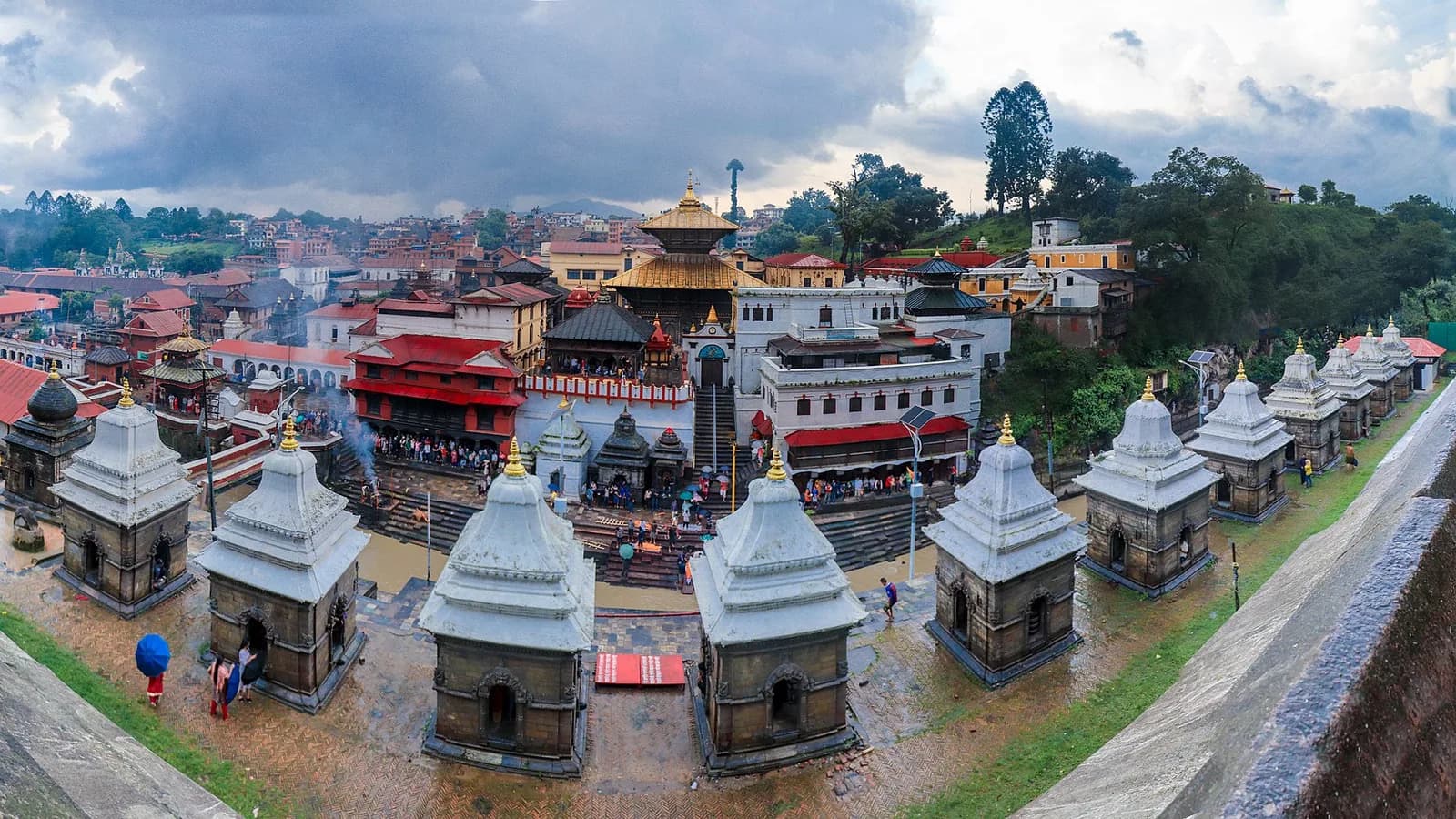
Nepal has thousands of temples — Hindu, Buddhist, and the syncretic blend unique to Nepal where both traditions worship at the same site. The etiquette varies slightly by religion and by individual temple, but the core principles are consistent.
Here are the 12 rules that cover almost every situation. Most tourists get them mostly right and slightly wrong in the same ways.
1. Shoes off at the threshold
Universal in every temple and monastery. No exceptions for "I'm just looking" or "the floor looks dirty." The shoe-shelves are usually visible at the entrance.
Slip-on shoes save time — you'll do this repeatedly throughout any day of temple visits.
In some temples, particularly Hindu ones, you'll also remove leather belts, leather wallets, and leather watch bands before entering the inner sanctum. The reason: cow leather is considered impure. The outer courtyard is usually fine; the inner sanctum is the line.
2. Dress conservatively
The minimum:
- Shoulders covered (no tank tops, sleeveless tops)
- Knees covered (no shorts above the knee, no short skirts)
- No exposed midriff (no crop tops)
- No transparent fabric
This applies for both men and women. Most temple complexes have signs at the entrance. Some major temples (Pashupatinath specifically) refuse entry to inappropriately dressed visitors.
A light scarf or shawl is the easiest fix — carry one in your daypack. Use it as needed.
3. Walk clockwise around stupas
For Buddhist stupas (Boudhanath, Swayambhunath, smaller ones), walk clockwise (in the direction of the sun's apparent motion). This is the ritual called kora or parikrama.
This applies even if you're not Buddhist. Walking counter-clockwise feels like swimming against a current — you're crossing paths with everyone doing kora.
The principle extends to Hindu temples too, though enforcement is less strict.
4. Don't point your feet at religious images
In Hindu and Buddhist cultures, the feet are the lowest, most impure part of the body. Pointing feet at a deity, monk, or sacred object is offensive.
Practically: when sitting in a temple or monastery, tuck your feet under you (cross-legged or sitting on your heels) rather than stretching them out toward the altar.
This rule also applies in homes — don't sit with your feet pointing at the family shrine.
5. Don't touch sacred objects or images
Statues of deities, religious paintings, prayer wheels (above eye level), butter lamps, religious texts — all are off-limits for casual touching.
The exception: prayer wheels at hand height are meant to be spun by passersby. Spin them gently with your right hand as you pass. The left hand is associated with hygiene functions and not used for sacred things.
6. Photography rules vary — ask first
The pattern:
- Outside the temple, in courtyards and squares: photos generally fine
- Inside the temple: usually not allowed
- Specific shrines (inner sanctums): definitely not allowed
- Photos of monks or worshippers in active prayer: ask first or skip
- Photos of the deities themselves: usually not allowed even in public areas
When in doubt, ask. The phrase "Photo khichna hunchha?" — "Can I take a photo?" — works at most temples. A small head nod from a monk or priest is consent; any hesitation is no.
7. Don't enter restricted areas
Many temples have signs that say "Hindus only" or "Buddhists only." These are firmly enforced. Don't try to slip in. Don't argue.
The most famous example: the main Pashupatinath temple. Foreigners are restricted to the surrounding complex. See our Pashupatinath guide.
8. The right hand for offerings
When giving or receiving anything sacred (a flower, prasad food after worship, a blessing string, money for a donation box), use your right hand or both hands. The left hand alone is considered impure in this cultural framing.
This is a small detail but Hindus and Buddhists notice it. Using both hands is the safest universal approach.
9. Don't show physical affection in temples
No kissing, no extended hugging, no hand-holding inside temple complexes. Conservative cultures don't display affection in religious spaces.
This applies to same-sex couples too — though the cultural awareness around same-sex relationships in Nepal is more limited than in Western countries. See our LGBTQ Nepal travel guide for the broader context.
10. Menstruating women in some temples
Some Hindu temples in Nepal still enforce restrictions on menstruating women entering the inner sanctum. This is contested within Nepali Hindu tradition (and has been the subject of recent legal challenges) but remains the practice at some traditional temples.
The decision is yours; the practice exists. If you're observant of the local custom, sit outside the inner sanctum during your period. If you're not observant, most temple staff won't know your status and won't ask.
This restriction does NOT apply to Buddhist sites.
11. Don't tip priests / monks for "blessings"
Some temple courtyards have priests who will tie a string around your wrist, mark your forehead with sandalwood paste, or offer a brief blessing — then ask for a specific donation amount.
Standard donations to a temple poor-box (a sealed container near the entrance) are appropriate. Direct payments to individual priests for blessings sometimes operate on legitimate religious practice and sometimes on tourist exploitation. The fake monk variation is documented in our scam-defence guide.
If you're given an unsolicited blessing, NPR 100-300 is a reasonable token. Don't pay USD 10-20 for a string around your wrist.
12. Quiet voices, slow movements
Temple complexes are public spaces for religious activity. Loud voices, laughter, and rushed movement are jarring.
Move at the pace of the people praying. Speak in low tones. The Boudhanath plaza at dawn has a quality of attention that's destroyed by a single loud tourist conversation.
Special considerations by religion
Hindu temples — the most rule-heavy. Caste-specific restrictions sometimes apply (most Pashupatinath inner-sanctum restrictions). Menstruation restrictions in some traditional temples. Brahmin priests perform most rituals.
Buddhist monasteries — usually more open to foreign visitors. Public chanting sessions in many monasteries welcome quiet observers. Same shoes-off, modest-dress rules.
Syncretic sites (like Swayambhunath) — observe both Hindu and Buddhist rules; default to the more conservative of the two when in doubt.
At Pashupatinath specifically (cremations)
The cremation ghats are a particularly sensitive space. The general rules:
- Don't talk loudly
- Don't eat or drink near them
- Don't photograph individual mourners
- Don't approach close to the platforms
- Sit on the steps across the river to observe
See the Pashupatinath visitor guide for the full context.
A few useful Nepali phrases
- "Namaste" — basic greeting, hands together at chest
- "Photo khichna hunchha?" — "Can I take a photo?"
- "Yo kahaan rakhne?" — "Where do I put this?" (for offerings)
- "Dhanyabad" — "Thank you"
- "Maaf garnuhos" — "Excuse me / sorry" (if you've made a small mistake)
The full phrasebook covers more.
Pre-trip checklist
- A light scarf for shoulder/head covering when needed
- Slip-on shoes for easy removal
- Modest clothing layered for warmer days
- Small NPR notes (100, 200) for donations
- A quiet voice
- The acceptance that you'll get things slightly wrong; that's fine if you got the spirit right
Temple visits in Nepal are some of the most memorable experiences of any trip. The rules look complicated; the actual practice is simply attention and respect.
Spotted an error in this post? Tell us or suggest a correction.
Related posts
ABC Trek: A Plain-English Guide to Annapurna Base Camp
The ABC trek (Annapurna Base Camp) explained — the route, how many days it takes, difficulty, the best seasons, and what daily trail life is really like.
Read postAma Dablam Climb: 2026 Expedition Guide (6,812m)
An Ama Dablam climb and expedition guide for 2026 — height, the Southwest Ridge route, camps, fixed ropes, difficulty, permits, cost and the best seasons.
Read postAnnapurna vs Manaslu: Which Trek Should You Choose?
An Annapurna vs Manaslu decision guide for trekkers — compare permits, crowds, difficulty, infrastructure and cost to pick the right Himalayan route.
Read postAsan Bazaar Kathmandu: Old Town Market Guide
A visitor guide to Asan bazaar, Kathmandu's oldest market — its six-road square, Annapurna Temple, what to buy, when to go, and how to get there.
Read postAyurveda Nepal: A Traveller's Guide to Healing
Ayurveda Nepal explained for tourists — the history, the doshas, treatments like Panchakarma and Shirodhara, where to go and how to choose a centre safely.
Read postBest Restaurants Pokhara Lakeside: Where to Eat
The best restaurants in Pokhara Lakeside — lakeside trout, wood-fired pizza, Tibetan momos and healthy cafes, with what to order and rough 2026 prices.
Read post