Annapurna Circuit Trek: Route, Permits & Thorong La Guide
A practical Annapurna Circuit trek guide — the full route, Thorong La pass, 2026 ACAP permit and guide rules, costs, road impact and best season.
Five climate zones, one Tibetan-edge pass, and the most varied long walk in Nepal.
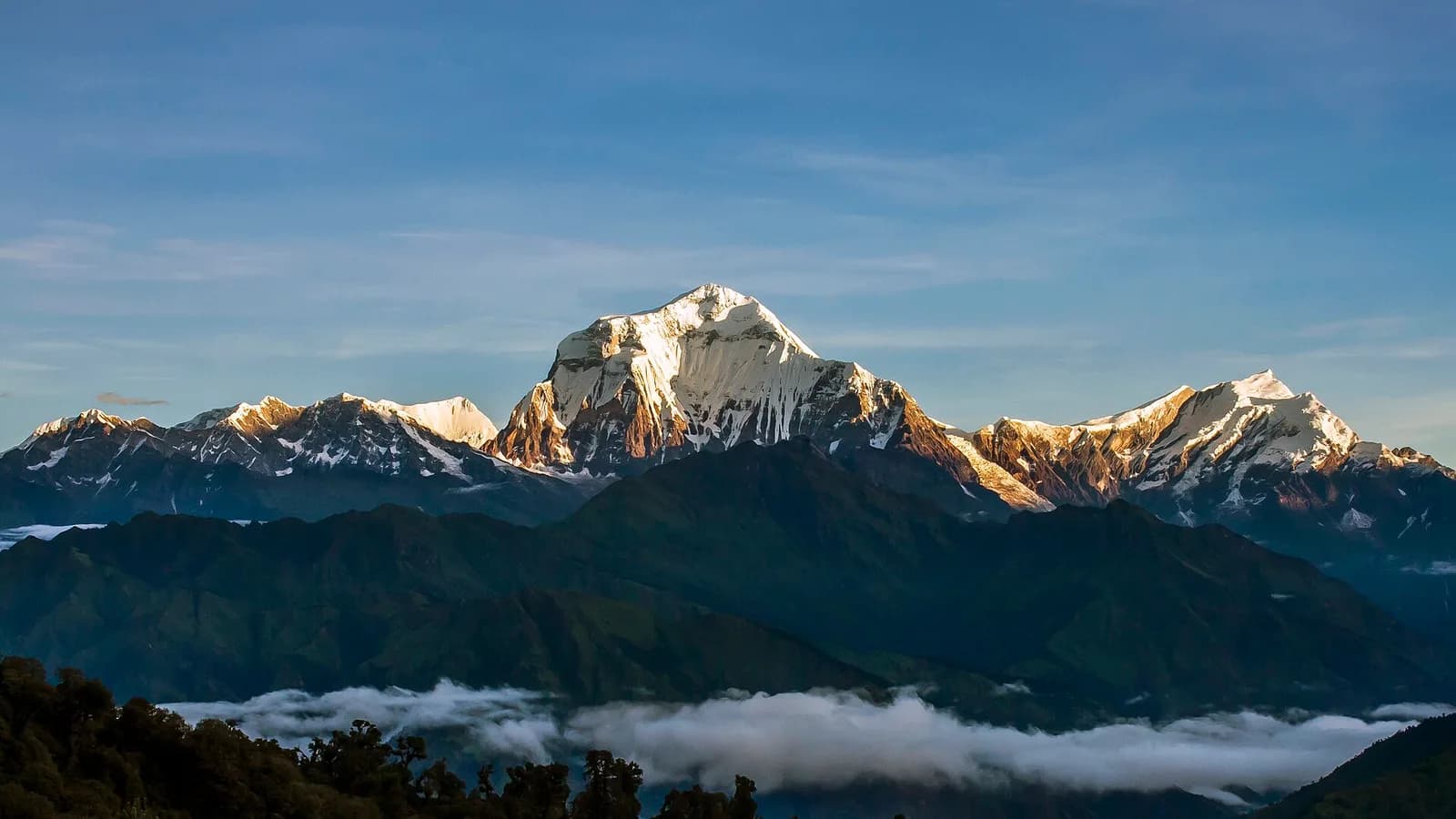
The Annapurna Circuit trek is the original Nepal long-distance classic — a loop around the Annapurna massif in central Nepal that climbs from subtropical rice terraces to a wind-scoured pass on the edge of the Tibetan plateau. Over its length you pass through five climate zones, cross Thorong La (about 5,416m), and descend into the arid, Mustang-flavoured Kali Gandaki valley. It is less a single mountain viewpoint and more a journey, which is exactly why so many trekkers rate it among the best multi-week walks anywhere.
This guide covers the route, the all-important Thorong La pass, the 2026 permit and guide picture, costs, how the road has changed things, and the safest way to handle altitude. If you are still choosing between Nepal's big walks, our Annapurna Circuit vs Annapurna Base Camp comparison and the Manaslu Circuit vs Annapurna difficulty breakdown tackle those head to heads; this article focuses on planning the Circuit itself. For the at-a-glance trail summary, see our Annapurna Circuit route page.
Key takeaways
- The Annapurna Circuit is a roughly 160–230 km loop (the figure varies with where you start, finish and use jeeps) usually walked in 12–18 days.
- Its high point is Thorong La at about 5,416m, one of the highest non-technical trekking passes in the world.
- The main permit is the ACAP (NPR 3,000 for foreigners, as of June 2026); the old TIMS card is generally not enforced here.
- A licensed guide has been required for foreign trekkers in the region since 1 April 2023, so plan to trek with at least a porter-guide.
- Roads now reach Chame and Muktinath, so many trekkers jeep past the lower valley and walk the scenic upper circuit.
- Cross the pass anticlockwise (Manang to Muktinath) for a slower, safer altitude gain; best seasons are autumn and spring.
What and where is the Annapurna Circuit
The Circuit wraps around the Annapurna Himal and the neighbouring Damodar Himal in central Nepal. Wikipedia describes it as a roughly 300 km route around the range; on the ground, the section you actually walk now ranges from about 160 to 230 km depending on how much you cover by jeep and where you end. The classic direction is anticlockwise: up the Marsyangdi valley on the east side, over Thorong La, and down the Kali Gandaki on the west.
That direction is not arbitrary. Going anticlockwise means you gain altitude more gradually and approach the pass from the Manang side, which most sources agree is the easier and safer way to cross. Going the other way would force a brutal climb to 5,416m with far too little acclimatisation.
Five climate zones
What sets the Circuit apart from an out-and-back trek is variety. You start in warm, green, terraced lowlands with waterfalls and rice paddies. You climb through pine and rhododendron forest. Above Manang the land turns to dry alpine scrub and then high-desert that genuinely looks like the Tibetan plateau. After the pass you drop into the arid Mustang country and the deep Kali Gandaki gorge, with apple orchards around Marpha and the pilgrimage town of Muktinath on the way down.
The route and a typical itinerary
There is no single "correct" itinerary — the road has made the Circuit highly modular. Below is a representative modern plan that skips the dustiest lower section by jeep and keeps proper acclimatisation built in. Treat altitudes as approximate.
| Day | Stage | Approx. altitude | |---|---|---| | 1 | Kathmandu/Pokhara to Besisahar, jeep to Chame | ~2,670m | | 2 | Chame to Upper Pisang | ~3,300m | | 3 | Upper Pisang to Manang (upper route via Ghyaru) | ~3,540m | | 4 | Acclimatisation day in Manang | ~3,540m | | 5 | Manang to Yak Kharka | ~4,020m | | 6 | Yak Kharka to Thorong Phedi / High Camp | ~4,450–4,900m | | 7 | Cross Thorong La to Muktinath | 5,416m pass, down to ~3,760m | | 8 | Muktinath to Jomsom (or jeep) | ~2,720m | | 9 | Jomsom out by flight or jeep to Pokhara | — |
Many trekkers extend the western side on foot through Marpha, Tatopani and Ghorepani to Poon Hill for the classic panorama, which adds several days. Others compress everything and fly out of Jomsom. The flexibility is the point.
The big day: crossing Thorong La
Pass day is the crux. From Thorong Phedi (about 4,450m) or High Camp (about 4,900m), trekkers typically set out before dawn to reach the pass before the wind picks up, then make a long knee-testing descent to Muktinath at about 3,760m. The climb from Phedi to the summit gains close to 1,000m of altitude and commonly takes five to six hours; the whole day can run eight to ten hours. An early start, layered warm clothing and stable weather are non-negotiable.
Permits and the 2026 guide rule
For the standard Circuit you need one main permit, plus you should be ready to comply with the guide requirement.
ACAP permit
The Annapurna Conservation Area Permit (ACAP) is mandatory for everyone trekking the region. As of June 2026:
| Item | Cost | Notes | |---|---|---| | ACAP — foreign nationals | NPR 3,000 (~USD 22–25) | Per person | | ACAP — SAARC nationals | NPR 1,000 | Per person | | TIMS card | Generally not enforced here | Required historically; standard Circuit no longer needs it |
You can buy the ACAP in person at the Nepal Tourism Board offices in Kathmandu (Bhrikutimandap) or Pokhara, or have a registered agency prepare it before you arrive. Bring your original passport and a couple of passport-size photos for the paperwork.
Restricted-area side trips
The base Circuit is not a restricted area, but two popular detours are. Upper Mustang and the Nar Phu valley each require their own restricted-area permits, which are pricier and must be arranged through an agency. The side trip to Tilicho Lake, one of the highest lakes in the world, sits within ACAP and does not need a separate restricted permit, but it adds altitude and exposure and should be planned carefully.
Do you need a guide?
Since 1 April 2023, Nepal's rules require foreign trekkers in the Annapurna region to use a licensed guide; the previous option of trekking fully independent here was withdrawn. A separate 2026 change to restricted-area rules also dropped the old two-person minimum for restricted treks, so a single trekker can now be permitted with a licensed guide. Enforcement on the main Circuit varies in practice, but given the altitude and the Thorong La crossing, hiring at least a licensed guide or porter-guide through a registered agency is the sensible and compliant choice.
How much does it cost
Costs vary widely with style, season and how much you fly versus jeep. As a rough framework rather than a quote:
- Permits: the ACAP is NPR 3,000 for foreigners (as of June 2026); restricted side trips cost extra.
- Guides and porters: budget for daily wages plus their food, lodging and insurance, arranged through your agency.
- Teahouse food and lodging: prices climb steadily with altitude, since everything above the road must be carried or flown in.
- Transport: jeep transfers in and out, plus an optional Jomsom–Pokhara flight, are the swing costs.
The Circuit generally costs more than a shorter Annapurna Base Camp trek because it runs longer and reaches higher, where food markups are steepest. We have not stamped a single total here on purpose — get current quotes from a registered agency, because fuel, wages and flight prices move.
How the road changed the trek
The Annapurna Circuit of twenty years ago was an unbroken footpath. Today, roads reach Chame on the east side and Muktinath and Jomsom on the west, so the lower valleys see jeeps and dust. Villages like Dharapani, Bagarchhap and Chame now sit beside a working road.
Rather than ruin the trek, this has reshaped it. The most common tactic is to take a jeep from Besisahar up to Chame (one day at some future point this may extend toward Manang) and start walking the scenic upper circuit from there. On the far side, many trekkers finish at Muktinath or Jomsom and fly or jeep back to Pokhara instead of walking the road-affected descent. The stretch from Chame to Muktinath over Thorong La remains one of the finest high mountain walks in the country, and that is the part most people now prioritise.
Altitude: the real risk on the Circuit
The Circuit's genuine danger is not falling off anything — it is altitude. The trek climbs to 5,416m, and serious acute mountain sickness (AMS) can escalate to life-threatening HACE or HAPE within hours if early symptoms are ignored. Studies cited by trekking sources suggest a meaningful share of trekkers crossing Thorong La feel at least mild AMS.
The history is sobering. Thorong La was the site of Nepal's worst trekking disaster, when a sudden October 2014 storm killed dozens of people on and around the pass. Beyond rare disasters, the Annapurna Conservation Area records altitude-related deaths most years.
Acclimatise properly in Manang
Manang (about 3,540m) is the acclimatisation hub, and the Himalayan Rescue Association (HRA) runs a post there. The HRA advises spending several nights between arriving in Manang and crossing to Muktinath — a guideline often quoted as around five nights in the Manang area before the pass — to let your body adjust. The HRA clinic also runs free daily altitude talks. Attend one; they cost nothing and they save lives.
Practical rules that matter more than any gadget:
- Build at least one or two rest days into the upper itinerary, centred on Manang.
- Ascend gradually and use the anticlockwise direction; do not skip acclimatisation to save a day.
- Recognise early AMS symptoms (headache, nausea, dizziness) and descend if they worsen.
- Carry good travel and trekking insurance that covers high-altitude helicopter evacuation.
Our altitude sickness guide for Nepal trekking goes deeper on prevention, symptoms and the descend-early rule.
Best time to trek
Two windows dominate:
- Autumn (late September to November): the prime season. Skies are clearest, the air is stable, and the pass is most reliably crossable. It is also the busiest window.
- Spring (March to May): the second-best option, warmer lower down with rhododendrons in bloom, though haze can build later in the season.
Avoid the June to September monsoon, when the lower valleys are wet, leech-prone and exposed to landslide risk, and the pass is far less dependable. Deep winter is possible for the experienced but brings cold, snow and a real chance the pass is closed.
A few phrases for the trail
A little Nepali goes a long way in teahouses and with porters. Our eight phrases every trekker should know cover most lodge and trail interactions, from ordering dal bhat to asking how far the next village is. Even a simple namaste and dhanyabad (thank you) changes how you are received in the mountains.
Sources
- Annapurna Circuit — Wikipedia
- Thorong La — Wikipedia
- Annapurna Trekking Permits 2026: ACAP, TIMS & RAP Guide — Nepal Hiking Team
- Annapurna Circuit Trek Permits: Guide, Costs and Rules — Magical Nepal
- Annapurna Trek Permits 2026 | ACAP & TIMS Updates — Shikhar Adventure
- Annapurna Conservation Area Project (ACAP) — National Trust for Nature Conservation
- Thorong La Pass Trek Guide 2026: Cost, Route & Safety — Annapurna Trek
- Annapurna Circuit After Road Construction — Himalayan Recreation
- How to Avoid Altitude Sickness on Annapurna Circuit — Magical Nepal
- Thorong La Pass (5,416m) — Altitude, Difficulty & Risks — Himalayan Dream Team
Frequently asked questions
- How many days is the Annapurna Circuit trek?
- Most people walk it in about 12 to 18 days, depending on where they start and finish and how much road transport they use. A common modern version uses a jeep to skip the dusty lower valley, then walks roughly 10 to 12 days from Chame or Manang over Thorong La to Muktinath. Adding rest days for acclimatisation is strongly recommended, not optional.
- How high is Thorong La pass?
- Thorong La sits at about 5,416m (17,769ft), the highest point of the Annapurna Circuit and one of the highest non-technical trekking passes in the world. Crossing it is the trek's biggest single day, usually a pre-dawn start from Thorong Phedi or High Camp down to Muktinath. At that altitude the air holds roughly half the oxygen of sea level.
- What permits do I need for the Annapurna Circuit in 2026?
- The main requirement is the Annapurna Conservation Area Permit (ACAP). The old TIMS card is generally not enforced on this route as of recent years. You only need extra restricted-area permits for specific side trips such as Upper Mustang or Nar Phu. Carry your passport and bring passport-size photos for the paperwork.
- How much does the ACAP permit cost?
- The ACAP is NPR 3,000 for foreign nationals and NPR 1,000 for SAARC nationals, as of June 2026. That is roughly USD 22 to 25 at typical exchange rates. You can buy it at the Nepal Tourism Board offices in Kathmandu or Pokhara, or have a registered agency arrange it for you before you arrive.
- Can I trek the Annapurna Circuit solo without a guide in 2026?
- Officially, a licensed guide has been required for foreign trekkers in the Annapurna region since the rule change that took effect on 1 April 2023. In practice enforcement varies, but the safe and rule-compliant choice is to hire at least a licensed guide or porter-guide through a registered Nepali agency, especially given the Thorong La crossing.
- How hard is the Annapurna Circuit?
- It is a long, demanding trek but technically non-technical — no ropes or climbing skills are needed. The main challenges are the daily distances, the sustained altitude above Manang, and the single big pass day. Reasonable fitness and careful acclimatisation matter far more than mountaineering experience.
- When is the best time to trek the Annapurna Circuit?
- Autumn (roughly late September to November) is the prime season, with clear skies and stable weather for the pass. Spring (March to May) is the second-best window and adds rhododendron blooms lower down. Avoid the June to September monsoon, when clouds, leeches and landslide risk affect the lower valleys and the pass is less reliable.
- Has the road ruined the Annapurna Circuit?
- Roads now reach Chame on the east side and Muktinath and Jomsom on the west, so the dustiest lower sections see jeep traffic. Many trekkers respond by jeeping in to Chame and walking the spectacular upper circuit from there to Muktinath, which remains one of the best high mountain walks in Nepal.
Spotted an error in this post? Tell us or suggest a correction.
Related posts
ABC Trek: A Plain-English Guide to Annapurna Base Camp
The ABC trek (Annapurna Base Camp) explained — the route, how many days it takes, difficulty, the best seasons, and what daily trail life is really like.
Read postAma Dablam Climb: 2026 Expedition Guide (6,812m)
An Ama Dablam climb and expedition guide for 2026 — height, the Southwest Ridge route, camps, fixed ropes, difficulty, permits, cost and the best seasons.
Read postAnnapurna vs Manaslu: Which Trek Should You Choose?
An Annapurna vs Manaslu decision guide for trekkers — compare permits, crowds, difficulty, infrastructure and cost to pick the right Himalayan route.
Read postAsan Bazaar Kathmandu: Old Town Market Guide
A visitor guide to Asan bazaar, Kathmandu's oldest market — its six-road square, Annapurna Temple, what to buy, when to go, and how to get there.
Read postAyurveda Nepal: A Traveller's Guide to Healing
Ayurveda Nepal explained for tourists — the history, the doshas, treatments like Panchakarma and Shirodhara, where to go and how to choose a centre safely.
Read postBest Restaurants Pokhara Lakeside: Where to Eat
The best restaurants in Pokhara Lakeside — lakeside trout, wood-fired pizza, Tibetan momos and healthy cafes, with what to order and rough 2026 prices.
Read post