Pokhara Lakeside: A Tourist's Guide to Baidam
A guide to Pokhara Lakeside (Baidam): how the strip is laid out, where to eat, sleep and stroll, plus the lake, viewpoints and practical tips.
One long road, the lake on one side and the Annapurnas on the other — Lakeside is the part of Pokhara where travellers slow down and stay a while.
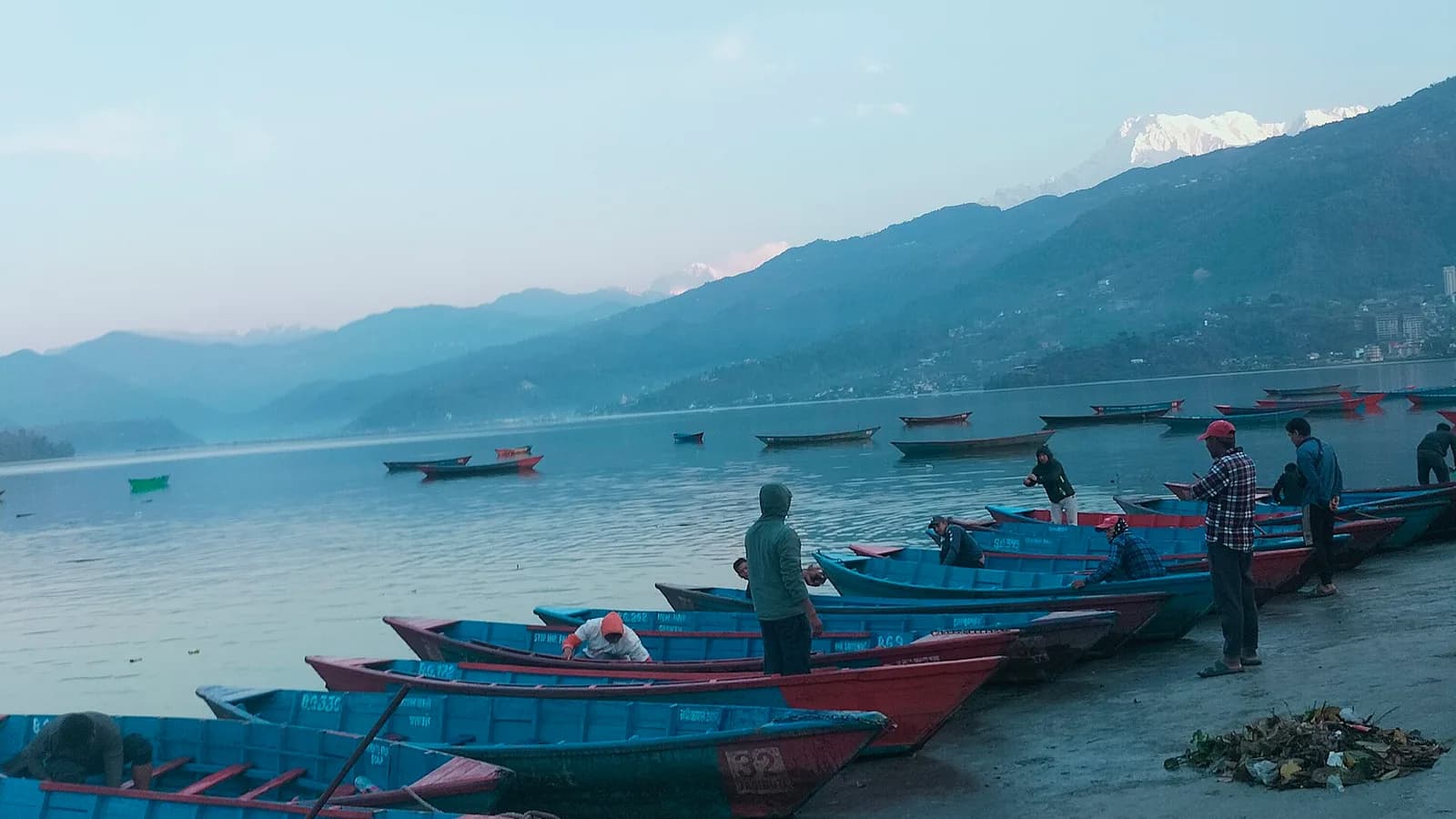
Most travellers who fall for Pokhara fall for one specific part of it: Pokhara Lakeside. This long, easygoing strip along the northern shore of Phewa Lake is where the cafes, guesthouses, trekking shops and boat jetties cluster, and where the city's famous mix of lake, hills and Himalaya is most easily enjoyed. Officially it is the neighbourhood of Baidam, but everyone calls it Lakeside, and for most visitors it is effectively the Pokhara they came to see. This guide focuses on the district itself — how it is laid out, where to eat and sleep, how to get around and what to fit in — and points you to deeper guides for the lake and the viewpoints when you want them.
If your main interest is the water itself — boating, the island temple and the mountain reflections — start with our dedicated guide to Phewa Lake and treat this article as the map to everything around it.
Key takeaways
- Lakeside (Baidam) is Pokhara's tourist heart, filling most of Ward 6 along the north shore of Phewa Lake.
- The strip is built around three roughly parallel roads with numbered side streets, which makes finding your way simple.
- It is the city's hub for cafes, restaurants, hotels and trekking agencies, and the main staging base for the Annapurna region.
- The lake, Sarangkot sunrise, the World Peace Pagoda and paragliding launches all sit within easy reach.
- Pokhara International Airport is about 3 km away; the city itself sits at roughly 800 metres, so there is no altitude concern.
- Visit in the drier months (roughly October to April) for the clearest mountain views; the monsoon is green but cloudy.
What and where Lakeside is
Lakeside runs along the northern bank of Phewa Lake, on the floor of the Pokhara Valley in Kaski District, western Nepal. The city of Pokhara sits at roughly 800 metres above sea level, low enough that altitude is a non-issue, yet close enough to the high mountains that within about 30 kilometres to the north the land rises past 7,000 metres. That dramatic gap is why a relaxed lakeside town can stare straight at giant Himalayan peaks.
The district's older name is Baidam, and that is still what you will see on street signs and addresses. The switch to "Lakeside" is a quirk of tourism history: as the lakefront developed, a property called Hotel Lakeside opened along the shore road, and travellers gradually began referring to the road — and then the whole area — as Lakeside. Today the name covers most of Ward 6 of Pokhara Metropolitan City.
For orientation, it helps to think of Lakeside as a long, narrow zone pressed between the lake on its southwest side and the rest of the city behind it. Almost everything a visitor needs sits within a walkable couple of kilometres.
How the strip is laid out
Lakeside looks confusing on arrival but is genuinely simple once you grasp the pattern. It is built around three roughly parallel roads running the length of the district, linked by numbered side lanes.
| Road | Rough position | Character | |---|---|---| | Lakefront road (South/Lakeside Road) | Closest to the water | Cafes, jetties, lake views, the liveliest stretch | | Middle road (Malpot Road) | One block back | Shops, hotels, services, quieter | | North road (Phewa Road) | Furthest from the lake | More local, budget stays, everyday businesses |
The clever part is the street numbering. Side lanes connecting the main roads are numbered as "Streets" — Street 1, Street 2 and so on, rising as you move along the strip, with roughly seventeen of them through the core. So if a guesthouse gives its address as "Street 8," you simply count along to the eighth connecting lane. Combined with a few well-known landmarks and junctions, this makes Lakeside one of the easier Nepali tourist areas to navigate without getting lost.
Finding your bearings
A handful of reference points anchor the strip: the Tourist Bus Park at one end where intercity coaches arrive, the central junctions where the side streets meet the lake road, and the Barahi area near the boat jetties that face the island temple. Once you have walked the lakefront road once, the whole layout clicks into place.
Things to do from Lakeside
Lakeside's real value is as a launchpad. The headline experiences are mostly a short hop away, and the strip itself is where you arrange, start and finish them.
- Boating on Phewa Lake. The signature Pokhara activity. Hire a painted rowboat, paddle boat or shared barge from the jetties and cross to the Tal Barahi island temple. Full details, including how pricing works, are in our Phewa Lake guide.
- Sunrise at Sarangkot. A pre-dawn drive up to the ridge above town for the Annapurna skyline catching first light — see our Sarangkot sunrise guide.
- The World Peace Pagoda. Row across the lake and climb the forest trail to the white stupa on the southern ridge, with sweeping views back over Lakeside; our World Peace Pagoda guide covers the routes.
- Paragliding. Tandem flights launch from the hills above and drift down toward the lakeshore. See paragliding in Pokhara.
- A slow cafe afternoon. Lakeside rewards doing very little. A long lunch or a coffee with a lake view is a legitimate highlight.
For a fuller menu of options across the city — including quieter corners like Begnas Lake — see our roundup of things to do in Pokhara.
Eating and drinking
The lakefront road is essentially one long ribbon of places to eat, from simple Nepali kitchens to bakeries, pizzerias, steakhouses and rooftop bars. Many of the best-positioned spots line up along the water so you can watch the sunset over Phewa Lake with a meal in front of you. Cuisine runs international as much as local — Pokhara has long catered to a global crowd — so you can swing from a plate of dal bhat to wood-fired pizza within a few doors.
After dark the strip stays busy. Several venues host live music, often running late into the night during peak season, and the lakefront fills with an unhurried evening crowd. It is social without being raucous, and an evening stroll along the water with the lights reflecting off the lake is a low-effort pleasure in its own right.
If you want to compare Pokhara's food scene with the capital's before you travel, our guide to the best restaurants in Kathmandu gives a useful contrast in style and price.
Where to stay
Accommodation in Lakeside spans the full range, from cheap backpacker guesthouses on the back roads to comfortable mid-range hotels and a handful of higher-end lakefront properties. As a rough rule:
- Lakefront road: best for views and atmosphere, generally the priciest, can be a little noisier near the bars.
- Middle road: a good balance — a short walk from the water, usually quieter and better value.
- North road and back lanes: the budget end, more local in feel, still within easy walking distance of the lake.
Because the district is compact, you rarely need to pay purely for a lakefront position to be close to the water; many rooms a street or two back are only a few minutes' walk from the jetties. Our dedicated guide to Pokhara Lakeside hotels breaks down the areas and what to look for. Lakeside has also become a favourite with remote workers thanks to its cafes and calm pace — if that is you, see our notes on a workation in Pokhara.
Lakeside as a trekking base
For many visitors, Lakeside is not just a holiday in itself but the gateway to the Annapurna region. The strip is packed with trekking agencies, equipment shops and offices that help arrange guides, porters and permits, and it sits close to the road heads for popular trails. A common rhythm is to arrive in Lakeside, spend a night sorting logistics and gear, head off to the mountains, and then return to recover by the lake with a hot meal and a comfortable bed.
If you are planning a route, our broader Nepal trekking overview explains the regions and the permit system, so you can walk into a Lakeside agency already knowing roughly what you want.
Getting there and getting around
Most travellers reach Pokhara from the capital, either on a tourist coach along the highway or a short domestic flight. Our Kathmandu to Pokhara transport guide compares the routes, timings and what the journey is actually like.
By air, the city is served by Pokhara International Airport, which opened on 1 January 2023 and sits roughly 3 kilometres from Lakeside — a taxi transfer of around 10 to 15 minutes. As of mid-2026 it mainly handles domestic flights, to cities such as Kathmandu, Bharatpur, Bhairahawa and Nepalgunj, alongside some chartered international services.
Within Lakeside, the best way to get around is simply on foot. The whole strip is walkable end to end, and that is part of its charm. For trips up to Sarangkot, across to the Peace Pagoda or out to quieter lakes, taxis are easy to arrange; agree the fare before you set off. A few words of Nepali smooth the way and earn warm smiles — our phrases every trekker should know is a handy primer.
Staying safe and avoiding scams
Lakeside is one of the more relaxed travel hubs in Nepal, comfortable to wander by day and lively but easygoing at night. The usual sensible habits apply: keep an eye on your belongings in crowds, and agree prices in advance for boats, taxis and activities so there are no surprises. Adventure sports such as paragliding should be booked through licensed, reputable operators rather than the cheapest tout. Petty scams do occur, as in any tourist centre, but they are easy to sidestep — our guide to common tourist scams in Nepal walks through the ones worth knowing.
Best time to visit
Lakeside is pleasant year-round, but the experience shifts sharply with the seasons.
| Season | Months (approx.) | What to expect | |---|---|---| | Autumn | Oct–Nov | Peak season; clear skies, sharp mountain views, busy strip | | Winter | Dec–Feb | Cool, often clear mornings; quieter, mild by day | | Spring | Mar–Apr | Warm, generally clear; second peak, rhododendrons in the hills | | Monsoon | Jun–Sep | Lush and green but cloudy, with heavy afternoon rain; peaks often hidden |
The drier months from roughly October to April are the prime window, with the best chance of those mirror-perfect reflections of the Annapurnas in Phewa Lake. The monsoon turns the surrounding hills a vivid green and is quieter and cheaper, but cloud frequently hides the mountains and downpours can interrupt plans. For a month-by-month breakdown across the whole country, see our guide to the best time to visit Nepal.
Fitting Lakeside into a bigger trip
Lakeside slots neatly into almost any Nepal route. A classic pattern pairs the Kathmandu Valley, a few slow days in Pokhara and a trek or a lowland safari, and Pokhara is the natural pause in the middle. Our two-week Nepal itinerary shows how the lake town links the cultural sights, the trekking trails and the national parks into one loop.
However you arrange it, give yourself at least a couple of unhurried nights on the strip. The magic of Pokhara Lakeside is not any single attraction but the accumulation of small, easy pleasures — a morning on the water, an afternoon over coffee, a sunset walk with the fishtail peak floating above the lake. It is the place in Nepal designed for slowing down, and it does that better than almost anywhere.
Sources
Frequently asked questions
- What is Pokhara Lakeside?
- Lakeside is the tourist district that runs along the northern shore of Phewa Lake in Pokhara. Its older name is Baidam, and it now fills most of Ward 6 of Pokhara Metropolitan City. It is the city's main hub for hotels, cafes, restaurants and trekking shops, and it doubles as the base for almost everything visitors do in the area.
- Why is it called Lakeside if the older name is Baidam?
- The northern bank of Phewa Lake was traditionally called Baidam. As tourism grew, a hotel named Hotel Lakeside opened on the lakefront road, and travellers began calling the whole road Lakeside. Over time the name spread to the entire neighbourhood, though Baidam is still used on maps and addresses.
- How is the Lakeside strip laid out?
- Lakeside is built around three roughly parallel roads. The lakefront road runs closest to the water, a middle road sits one block back, and a third road runs furthest from the lake. Side lanes are numbered as streets, so an address like Street 8 simply means the eighth connecting lane along the strip, which makes navigation easy.
- How many days should I spend in Pokhara Lakeside?
- Two to three nights suits most travellers, which is enough for a boat trip on Phewa Lake, a sunrise viewpoint, the Peace Pagoda and a slow cafe day. If you plan to paraglide, take day trips to nearby lakes or use Pokhara as a rest stop before or after a trek, four or more nights is easy to fill.
- Is Pokhara Lakeside a good base for trekking?
- Yes. Lakeside is the main staging point for the Annapurna region, and its streets are full of trekking agencies, gear shops and permit help. Many travellers spend a night here to arrange logistics before heading to the trailheads, then return afterwards to rest by the lake.
- Is Lakeside Pokhara safe for tourists?
- Lakeside is generally relaxed and walkable, including after dark when the strip is lively. As anywhere busy, keep an eye on your belongings, agree prices before you take a boat or taxi, and use licensed operators for adventure activities. Petty scams exist but are avoidable with normal care.
- How far is Pokhara airport from Lakeside?
- Pokhara International Airport sits roughly 3 kilometres from Lakeside, a short taxi ride of around 10 to 15 minutes depending on traffic. The airport opened on 1 January 2023 and currently handles domestic flights to cities such as Kathmandu, along with some chartered international services.
- What is the best time to visit Pokhara Lakeside?
- The drier months from roughly October to April bring the clearest mountain views and the most reliable lake reflections, which is peak season. The monsoon from June to September turns the hills lush green but often hides the peaks behind cloud and brings heavy afternoon rain. Spring and autumn are the sweet spots.
Spotted an error in this post? Tell us or suggest a correction.
Related posts
ABC Trek: A Plain-English Guide to Annapurna Base Camp
The ABC trek (Annapurna Base Camp) explained — the route, how many days it takes, difficulty, the best seasons, and what daily trail life is really like.
Read postAma Dablam Climb: 2026 Expedition Guide (6,812m)
An Ama Dablam climb and expedition guide for 2026 — height, the Southwest Ridge route, camps, fixed ropes, difficulty, permits, cost and the best seasons.
Read postAnnapurna vs Manaslu: Which Trek Should You Choose?
An Annapurna vs Manaslu decision guide for trekkers — compare permits, crowds, difficulty, infrastructure and cost to pick the right Himalayan route.
Read postAsan Bazaar Kathmandu: Old Town Market Guide
A visitor guide to Asan bazaar, Kathmandu's oldest market — its six-road square, Annapurna Temple, what to buy, when to go, and how to get there.
Read postAyurveda Nepal: A Traveller's Guide to Healing
Ayurveda Nepal explained for tourists — the history, the doshas, treatments like Panchakarma and Shirodhara, where to go and how to choose a centre safely.
Read postBest Restaurants Pokhara Lakeside: Where to Eat
The best restaurants in Pokhara Lakeside — lakeside trout, wood-fired pizza, Tibetan momos and healthy cafes, with what to order and rough 2026 prices.
Read post