UNESCO World Heritage Sites in Nepal: Full Guide
Nepal has four UNESCO World Heritage sites: the Kathmandu Valley, Lumbini, Sagarmatha and Chitwan. Here is what each one is and how to visit.
Four sites, two of them whole landscapes — Nepal packs more world heritage into a small country than almost anywhere.
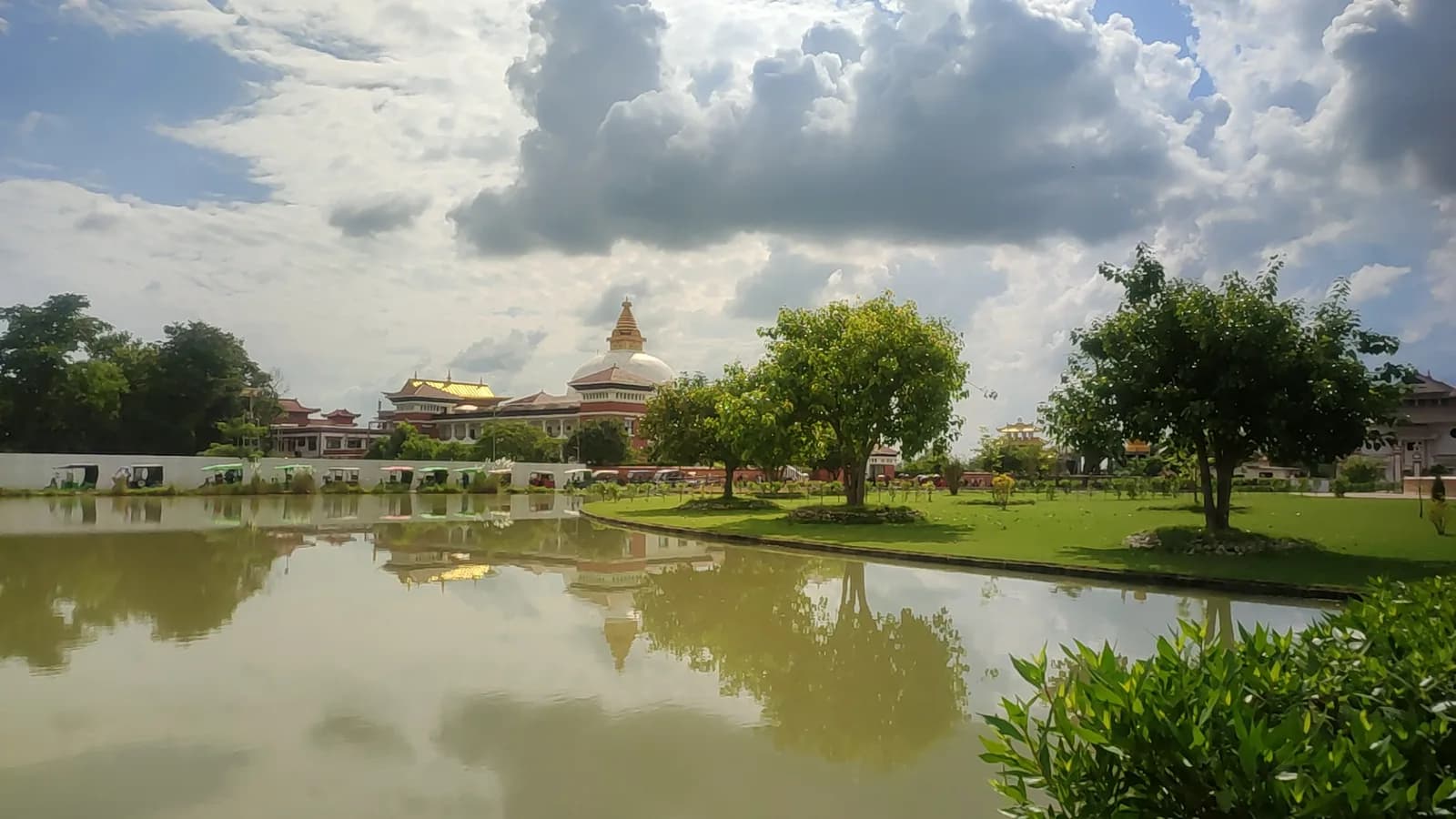
Nepal is a small country with an outsized concentration of world heritage. The country holds four UNESCO World Heritage Sites in Nepal — and remarkably, two of them are not single buildings but entire landscapes: a Himalayan park crowned by Mount Everest, and a subtropical jungle full of rhinos and tigers. The other two are cultural treasures: the densely beautiful Kathmandu Valley and the garden where the Buddha was born.
This guide walks through all four UNESCO sites in Nepal — what each one actually is, why it earned the listing, what you will see, and how to fit them into a trip. Whether you have a long weekend in the valley or a full two weeks to roam, knowing the UNESCO map of Nepal helps you spend your time on what matters most.
Key takeaways
- Nepal has four UNESCO World Heritage Sites: two cultural and two natural.
- The Kathmandu Valley (1979) is a single listing made up of seven monument zones.
- Sagarmatha National Park (1979) contains Mount Everest; Chitwan National Park (1984) protects rhinos and tigers.
- Lumbini (1997) is the Buddha's birthplace in the southern Terai.
- The Kathmandu Valley was on the danger list from 2003 to 2007, and the 2015 earthquake damaged several monuments.
- Nepal also keeps a long tentative list of sites hoping for future inscription.
The four UNESCO sites at a glance
| Site | Inscribed | Type | What it is | |---|---|---|---| | Kathmandu Valley | 1979 | Cultural | Seven monument zones across three cities | | Sagarmatha National Park | 1979 | Natural | Everest and the high Khumbu Himalaya | | Chitwan National Park | 1984 | Natural | Terai jungle, rhinos and Bengal tigers | | Lumbini | 1997 | Cultural | Birthplace of the Buddha |
1. Kathmandu Valley — seven monuments, one listing
The Kathmandu Valley is the heavyweight of the list and the easiest to reach, since everything sits within a short drive of the capital. What confuses many first-time visitors is that the "site" is not one place. UNESCO inscribed the valley as a single cultural property made up of seven separate monument zones, each a masterpiece in its own right.
The seven zones are:
- Kathmandu Durbar Square (Hanuman Dhoka) — the old royal palace complex.
- Patan Durbar Square — arguably the finest concentration of Newar architecture.
- Bhaktapur Durbar Square — a medieval city that feels frozen in time.
- Swayambhunath — the valley's oldest stupa, on a hilltop.
- Boudhanath — the largest stupa in Nepal.
- Pashupatinath — the great Hindu temple precinct on the Bagmati River.
- Changu Narayan — a Hindu temple with a fifth-century inscription, set above a traditional Newar village.
The valley's signature is its tiered pagoda temples, built of fired brick and timber, roofed with overlapping terracotta tiles, and ornamented with gilded brass and astonishingly detailed wood carving on every window, doorway and roof strut. UNESCO praised these seven groups as showcasing "the full range of historic and artistic achievements" for which the valley is famous.
You can devote a full day to each Durbar Square. Start with our guides to Kathmandu Durbar Square, the Patan / Lalitpur guide, and a Bhaktapur day trip from Kathmandu. The two great stupas have their own deep-dives: the Boudhanath stupa visitor guide and the Swayambhunath guide. For the Hindu precinct, see the Pashupatinath guide for foreigners.
Earthquakes, the danger list and restoration
The valley's heritage has not had an easy century. UNESCO placed it on the List of World Heritage in Danger from 2003 to 2007 over the steady erosion of traditional buildings and urban character under modern development. Then the April 2015 earthquake struck, collapsing or badly damaging several monuments across the Durbar Squares. Much has since been painstakingly rebuilt using traditional techniques, though restoration continues. It is a reminder that this is a living, fragile heritage rather than a sealed museum.
Entry fees
Each Durbar Square and the major religious sites charge a separate foreigner entry fee, paid in Nepali rupees at the gate (fees are revised periodically, so confirm the current amount on arrival). Budget for these as you plan; our Nepal travel budget breakdown folds them into a realistic daily spend, and the Nepal trip cost guide covers the bigger picture.
2. Sagarmatha National Park — the roof of the world
Inscribed in 1979, Sagarmatha National Park is Nepal's first natural World Heritage Site and one of the most dramatic protected areas on Earth. "Sagarmatha" is the Nepali name for Mount Everest, and the park encompasses the world's highest peak along with a sweep of glaciers, deep gorges and serrated Himalayan ridgelines in the Solukhumbu district. It covers roughly 1,148 square kilometres (about 124,400 hectares).
Beyond the scenery, the park protects rare high-altitude wildlife including the elusive snow leopard and the red panda, plus Himalayan tahr and colorful danphe pheasants. Culturally, it is the homeland of the Sherpa people, and the trail to Everest passes Buddhist monasteries, mani walls and the famous market town of Namche Bazaar.
Most travelers experience Sagarmatha on a trek rather than a day visit. The classic route is the Everest Base Camp trek, but you do not have to go that far — the gentler Everest View trek reaches stunning vantage points in a few days. Before you commit, read up on altitude sickness on Nepal treks and the Everest Base Camp permits for 2026, since the park requires entry permits.
3. Chitwan National Park — rhinos, tigers and jungle
Down in the steamy lowland Terai, Chitwan National Park offers a completely different face of Nepal. Established in 1973 as the country's first national park and inscribed by UNESCO in 1984, Chitwan covers about 932 square kilometres (93,200 hectares) of grassland, riverine forest and sal jungle.
Chitwan is one of the last strongholds of two iconic and endangered animals: the greater one-horned rhinoceros and the Bengal tiger. It is also home to gharial and mugger crocodiles, wild elephants, sloth bears, leopards, and an exceptional birdlife of over 500 species, alongside dozens of mammal species. For wildlife lovers, it is the single best place in Nepal to see big animals in the wild.
Activities center on jeep safaris, canoe trips on the Rapti River, guided jungle walks and birdwatching. Plan with our Chitwan safari guide, and if you are routing from the capital, the Kathmandu to Chitwan transport notes help. Chitwan pairs naturally with a trip to Lumbini, since both lie in the southern plains.
4. Lumbini — where the Buddha was born
The fourth site, inscribed in 1997, is Lumbini, the birthplace of Siddhartha Gautama, the historical Buddha, around the 6th century BCE. Its authenticity rests on hard evidence: an Ashoka pillar erected in the 3rd century BCE bears an inscription recording that the emperor came here because the Buddha was born at this spot.
The site centers on the Maya Devi Temple, which shelters the marker stone and ancient foundations, beside a sacred pond and Bodhi tree. Surrounding it is a vast monastic zone where Buddhist nations — Thailand, Japan, China, Korea, Myanmar, Sri Lanka and others — have each built a monastery, making it a kind of living atlas of global Buddhism.
Lumbini is remote and contemplative rather than visually spectacular, so it suits some travelers far better than others. Our honest take in is Lumbini worth visiting helps you decide, and the broader Buddhism in Nepal guide gives the religious context that makes the place meaningful.
How to combine the four sites in one trip
The four UNESCO sites are spread across the country, but a well-planned itinerary can hit all of them.
| Days | Plan | Sites covered | |---|---|---| | 1–3 | Kathmandu Valley (the three Durbar Squares, stupas, Pashupatinath) | Kathmandu Valley | | 4–6 | Bus or fly south to Chitwan for a jungle safari | Chitwan | | 7–8 | Continue west to Lumbini's sacred garden | Lumbini | | 9–14 | Fly to Lukla for a Khumbu trek | Sagarmatha |
If you only have a long weekend, focus entirely on the Kathmandu Valley — it alone holds seven of these monuments. Our two-week Nepal itinerary shows a realistic version of the full loop, and the best time to visit Nepal guide helps you avoid monsoon clouds in the mountains and the worst Terai heat.
Practical tips for visiting
- Carry rupees for entry fees. Each cultural site charges foreigners separately at the gate, and amounts change over time — verify on the day rather than relying on old figures.
- Dress modestly at the religious sites. Shoulders and knees covered for Pashupatinath, the stupas and Lumbini; our temple etiquette guide covers the rest.
- Hire a licensed guide at the Durbar Squares and in the national parks — the carving and the wildlife both reveal far more with someone who knows them.
- Respect restoration zones. Post-earthquake rebuilding is ongoing in places; stay outside barriers.
- For the parks, permits are mandatory. Sagarmatha and Chitwan both require entry permits arranged in advance or at official counters.
Beyond the four: Nepal's tentative list
Four inscribed sites are not the whole story. Nepal maintains a long tentative list of properties it hopes to nominate in future, including the walled medieval town of Lo Manthang in Upper Mustang, the Mustang cave complexes, the Tilaurakot ruins (a candidate for ancient Kapilavastu), the living Newar town of Panauti, Khokana, the Sinja Valley and others. Several are already wonderful to visit even without the formal label — see our Upper Mustang trek permit guide if Lo Manthang tempts you.
Sources
- List of World Heritage Sites in Nepal — Wikipedia
- Kathmandu Valley — UNESCO World Heritage Centre
- Sagarmatha National Park — UNESCO World Heritage Centre
- Chitwan National Park — UNESCO World Heritage Centre
- Lumbini, the Birthplace of the Lord Buddha — UNESCO World Heritage Centre
- Nepal — UNESCO World Heritage Convention
Frequently asked questions
- How many UNESCO World Heritage Sites does Nepal have?
- Nepal has four UNESCO World Heritage Sites: two cultural (Kathmandu Valley and Lumbini) and two natural (Sagarmatha and Chitwan).
- What are the seven monuments in the Kathmandu Valley UNESCO site?
- The Durbar Squares of Kathmandu, Patan and Bhaktapur, the stupas of Swayambhunath and Boudhanath, and Pashupatinath and Changu Narayan temples.
- When were Nepal's UNESCO sites inscribed?
- Sagarmatha and the Kathmandu Valley in 1979, Chitwan National Park in 1984, and Lumbini in 1997.
- Which UNESCO site contains Mount Everest?
- Sagarmatha National Park in the Solukhumbu district, which encompasses Mount Everest and the surrounding Khumbu Himalaya.
- Can you see all of Nepal's UNESCO sites in one trip?
- Yes, with about two weeks. The Kathmandu Valley is compact, while Chitwan, Lumbini and Sagarmatha need separate days or treks.
- Was the Kathmandu Valley ever on the danger list?
- Yes. It was on the List of World Heritage in Danger from 2003 to 2007 over loss of traditional architecture and urban character.
- What wildlife lives in Chitwan National Park?
- Chitwan shelters the greater one-horned rhinoceros, Bengal tigers, gharial crocodiles, wild elephants and over 500 bird species.
Spotted an error in this post? Tell us or suggest a correction.
Related posts
ABC Trek: A Plain-English Guide to Annapurna Base Camp
The ABC trek (Annapurna Base Camp) explained — the route, how many days it takes, difficulty, the best seasons, and what daily trail life is really like.
Read postAma Dablam Climb: 2026 Expedition Guide (6,812m)
An Ama Dablam climb and expedition guide for 2026 — height, the Southwest Ridge route, camps, fixed ropes, difficulty, permits, cost and the best seasons.
Read postAnnapurna vs Manaslu: Which Trek Should You Choose?
An Annapurna vs Manaslu decision guide for trekkers — compare permits, crowds, difficulty, infrastructure and cost to pick the right Himalayan route.
Read postAsan Bazaar Kathmandu: Old Town Market Guide
A visitor guide to Asan bazaar, Kathmandu's oldest market — its six-road square, Annapurna Temple, what to buy, when to go, and how to get there.
Read postAyurveda Nepal: A Traveller's Guide to Healing
Ayurveda Nepal explained for tourists — the history, the doshas, treatments like Panchakarma and Shirodhara, where to go and how to choose a centre safely.
Read postBest Restaurants Pokhara Lakeside: Where to Eat
The best restaurants in Pokhara Lakeside — lakeside trout, wood-fired pizza, Tibetan momos and healthy cafes, with what to order and rough 2026 prices.
Read post