Kathmandu Durbar Square: A Visitor's Guide (2026)
The old royal palace square at the heart of Kathmandu — what to see, the entry fee, the living goddess, and how the 2015 earthquake reshaped it.
A working medieval city square where coronations, a living goddess, and the morning vegetable trade all share the same brick.
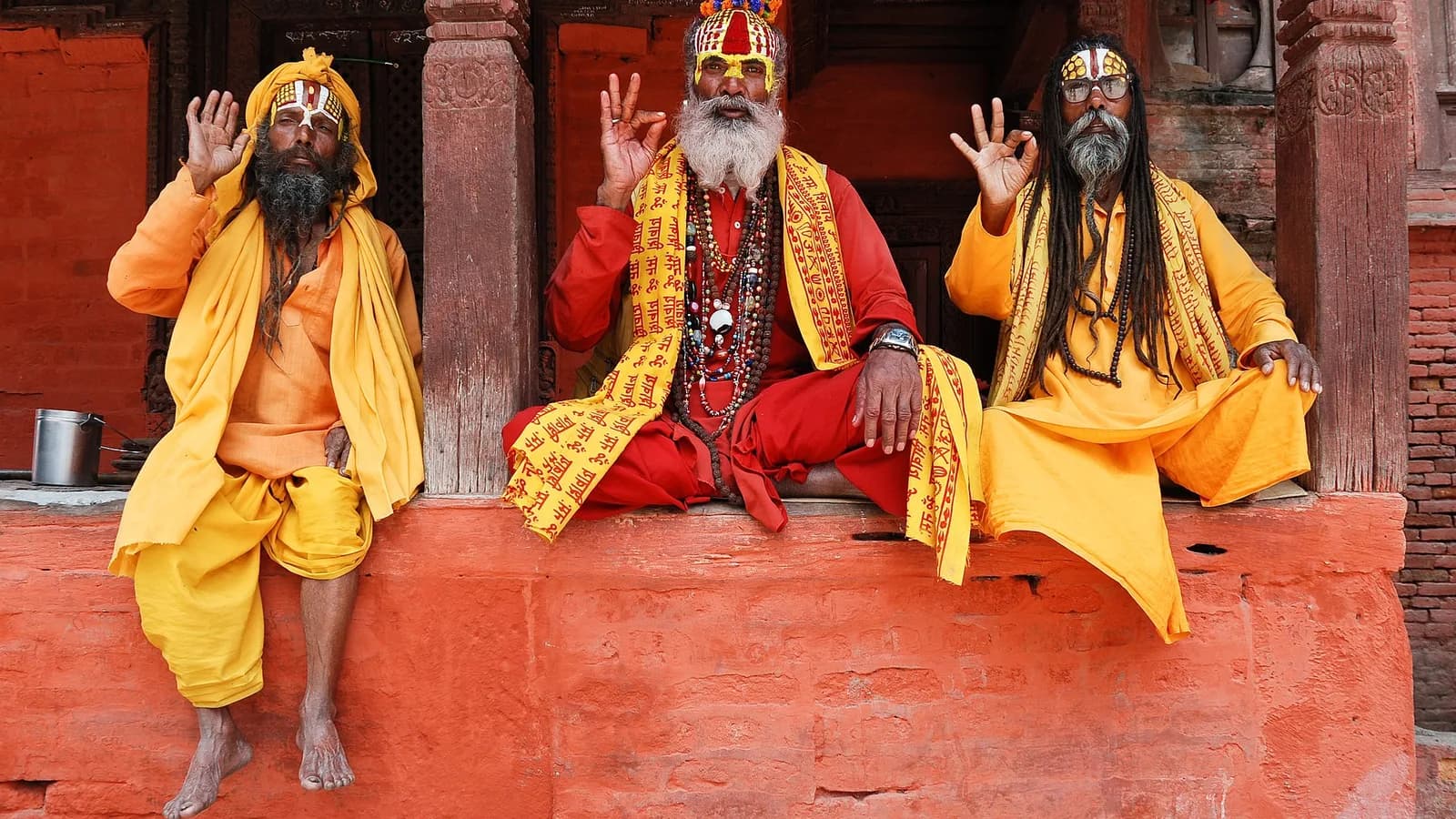
Kathmandu Durbar Square is the old royal heart of the city — a dense cluster of palaces, courtyards and pagoda temples where Nepal's kings were once crowned and where a living goddess still resides today. Known locally as Basantapur, it is the most theatrical of the Kathmandu Valley's three Durbar Squares, and for many travellers it is the first real taste of Newar architecture and old-city life. This guide covers what to see, the 2026 entry fee, how the 2015 earthquake changed the skyline, and how to make the visit count.
Unlike a museum, the square is a working public space. Vendors sell marigold garlands, pigeons swirl around the temple steps, schoolkids cut through on their way home, and pilgrims ring bells at shrines that have been in continuous use for centuries. You are walking through a medieval city that never stopped being lived in.
Key takeaways
- The foreigner entry fee is NPR 1,500 (SAARC NPR 750), valid for three days (as of 2026).
- It is one of seven monument zones in the Kathmandu Valley UNESCO World Heritage Site, inscribed in 1979.
- The 2015 earthquake destroyed several temples; some, like Kasthamandap, have been rebuilt with traditional techniques, while others remain works in progress.
- The Kumari Ghar houses a living goddess who occasionally appears at an upper window — photography of her is forbidden.
- Allow 1.5 to 2 hours; go at dawn or late afternoon for the best light and atmosphere.
- It pairs naturally with a walk down through the Ason and Indra Chowk bazaars from Thamel.
A quick history: Licchavi to Malla to Shah
The square's roots run deep. The site has held structures since the early centuries CE, but its golden age came under the Malla kings who ruled the valley's rival city-states from the 12th century onward. Most of the temples and palace wings you see today are Malla-era work from roughly the 16th to 18th centuries, built in the distinctive Newar style: tiered pagoda roofs, intricately carved wooden struts and windows, and brick walls the colour of dried earth.
In 1768, the Shah dynasty under Prithvi Narayan Shah conquered the valley and unified Nepal, taking over the palace as a seat of power. So the complex you walk through is a layered record of competing dynasties — Malla foundations crowned with Shah additions.
The palace itself is called Hanuman Dhoka, after the statue of the monkey god Hanuman that has guarded the main gate since the 17th century. The figure is draped in red cloth and smeared with vermilion paste, its face long worn smooth by devotion.
What to see in the square
The square is not one open plaza but a sequence of linked spaces — a main square, the palace, and several courtyards. Here are the landmarks worth seeking out.
Hanuman Dhoka Palace and the courtyards
The royal palace complex is built around a series of chowks (courtyards). Nasal Chowk was the coronation courtyard, where kings were formally crowned. Mul Chowk and others served religious and ceremonial functions. Inside the palace, the Tribhuvan Museum displays royal regalia, thrones and photographs tracing the Shah monarchy. Museum access is included with your square ticket, though opening hours are limited and the palace closes one day a week — check on arrival.
Kumari Ghar and the living goddess
Just off the main square stands the Kumari Ghar, an exquisitely carved three-storey courtyard building that is home to the Kumari — a young girl worshipped as the living embodiment of the goddess. Selected as a small child from a specific Newar Buddhist community, she lives here through her tenure as goddess, appearing in public only on ritual occasions.
Visitors can enter the courtyard and admire some of the finest wood carving in Nepal. If the Kumari is present and inclined, she may appear briefly at an upper latticed window. Photographing the goddess is strictly forbidden; you may photograph the building. A small donation is customary if she appears.
Kal Bhairav
One of the square's most arresting sights is Kal Bhairav — a large, fearsome stone image of Shiva in his destructive aspect, black-faced, many-armed, garlanded and trampling a corpse. It is among the most worshipped images in the square, and you will usually find offerings and worshippers before it throughout the day.
Kasthamandap
The Kasthamandap is a large wooden pavilion whose name — roughly "wood-covered shelter" — is widely believed to be the origin of the city's name, Kathmandu. Historically it was a public rest house rather than a temple. It collapsed completely in the 2015 earthquake, and after a careful reconstruction using traditional methods and salvaged timber, it reopened in 2022. Its rebuild became something of a symbol of community-led heritage recovery.
Taleju Temple
Towering over the northern end, the Taleju Temple is the tallest structure in the square, a multi-tiered pagoda dedicated to the royal goddess Taleju Bhawani. It is closed to the public for most of the year, opening only briefly during the Dashain festival, but its silhouette dominates the skyline.
The temple platforms
The broad, stepped plinths of temples such as Maju Deval have long been the square's living room — places where locals sit, watch the crowd, and chat. Some of these temples were lost or damaged in 2015 and their platforms now stand empty of their superstructures, but the steps remain a favourite perch.
The 2015 earthquake and reconstruction
On 25 April 2015, a major earthquake struck central Nepal and severely damaged the square, reducing several temples to rubble. The losses included Kasthamandap, the Maju Deval, the Trailokya Mohan Narayan temple and others.
A decade on, the picture is mixed but encouraging. Kasthamandap was rebuilt and reopened in 2022. The Trailokya Mohan Narayan temple was reconstructed and the Basantapur tower restored. Other structures are still in progress, and some — like the Kumari Ghar — have remained structurally fragile, awaiting full retrofitting even though they look sound from outside. Expect to see some scaffolding, a few empty plinths, and ongoing restoration work somewhere in the complex. Far from spoiling the visit, it adds a layer to it: you are watching one of the world's great heritage sites being stitched back together.
Practical information
| Detail | Information (as of 2026) | | --- | --- | | Foreigner entry fee | NPR 1,500 | | SAARC entry fee | NPR 750 | | Ticket validity | 3 days | | Time needed | 1.5 to 2 hours | | Best time of day | Early morning or late afternoon | | Palace museum | Included; closed one day weekly | | Location | Basantapur, old city Kathmandu |
A few tips that make the difference:
- Keep your ticket. It is valid for three days. If you want it issued as a longer tourist pass linked to your passport, bring the passport and ask at the ticket office.
- Beware unofficial "guides." Friendly strangers may attach themselves to you and demand payment afterward. Licensed guides carry ID; agree on a price in writing first, or simply decline politely. Our guide to common tourist scams in Nepal covers the usual approaches.
- Walk in from the bazaars. Approaching on foot from Thamel through Ason and Indra Chowk is far more rewarding than a taxi straight to the gate.
- Mind temple etiquette. Shoes off where indicated, no climbing on roped-off shrines, walk clockwise. Our temple etiquette guide goes into detail.
How it fits into a Kathmandu day
Kathmandu Durbar Square works best as the anchor of a half-day in the old city. From here you can continue on foot to the markets, or onward to other heritage sites. If you have a few days in the valley, the three Durbar Squares make a natural trio — each was the seat of a rival Malla kingdom, and seeing all three reveals how they competed in stone and timber.
- For the next square over, see our Patan (Lalitpur) guide — arguably the most refined of the three, just across the river.
- For the best-preserved medieval square, plan a Bhaktapur day trip from Kathmandu.
- The nearby hilltop stupa of Swayambhunath, the "Monkey Temple", is an easy add-on with valley views.
- To understand how to move between sites, see getting around Kathmandu.
- Learning a few Nepali phrases before you wander the bazaars goes a long way with vendors.
The square rewards slow attention. Buy your ticket, then simply sit on a temple step for ten minutes and watch. The puja bells, the pigeons, the porters, the schoolkids — it is a thousand years of city life still in motion, and there is nowhere else in Nepal quite like it.
Sources
- Kathmandu Durbar Square — Wikipedia
- Entrance Fees for Kathmandu UNESCO Sites (2026 Guide) — Third Eye Adventure
- Heritage site entry fees — Nepal Tourism Board
- A decade after quake, Kumari Ghar awaits retrofitting — The Rising Nepal
- Kasthamandap, Kathmandu Durbar Square — The Longest Way Home
- Guide to Kathmandu Durbar Square — The Longest Way Home
Frequently asked questions
- What is the entrance fee for Kathmandu Durbar Square?
- For foreign tourists the ticket is NPR 1,500, and for SAARC nationals it is NPR 750 (as of 2026). The ticket is valid for three days, so keep it if you plan to return. Bring your passport if you want a multi-day tourist pass linked to your details. Children under 10 generally enter free.
- Is Kathmandu Durbar Square worth visiting after the 2015 earthquake?
- Yes. The square lost several major temples in 2015, but the palace, courtyards, the Kumari Ghar, Kal Bhairav and many pagodas survived or have been rebuilt. Landmarks such as the Kasthamandap pavilion were reconstructed using traditional methods and reopened in 2022. It remains the most atmospheric of the three Durbar Squares in the valley.
- Can you see the Kumari, the living goddess?
- Sometimes. The Kumari lives in the Kumari Ghar courtyard just off the square. When she is present and willing, she briefly appears at an upper window for a few seconds. Appearances are unscheduled and photography of the goddess herself is forbidden, though you may photograph the courtyard's wood carvings.
- How much time do you need at Kathmandu Durbar Square?
- Plan on one and a half to two hours for a relaxed visit, or longer if you go into the Tribhuvan Museum inside the Hanuman Dhoka palace. Early morning and late afternoon are the best times for light and for watching the square function as a real public space.
- Where is Kathmandu Durbar Square and how do I get there?
- It sits in the old city, also called Basantapur, about a 20 to 30 minute walk south of Thamel through busy market lanes. A Pathao or InDrive bike, or a short taxi ride, will also get you there. Most visitors simply walk down through the Ason and Indra Chowk bazaars, which is half the experience.
- Is Kathmandu Durbar Square a UNESCO World Heritage Site?
- Yes. It is one of the seven monument zones that make up the Kathmandu Valley UNESCO World Heritage Site, inscribed in 1979. The other Durbar Squares at Patan and Bhaktapur are part of the same listing.
- What should I wear and how should I behave at the temples?
- Cover your shoulders and knees, remove shoes where signs indicate, and walk clockwise around shrines. Do not climb on temple platforms that are roped off or marked as sacred. The square is full of active places of worship, so keep voices low near pujas and ask before photographing people closely.
Spotted an error in this post? Tell us or suggest a correction.
Related posts
ABC Trek: A Plain-English Guide to Annapurna Base Camp
The ABC trek (Annapurna Base Camp) explained — the route, how many days it takes, difficulty, the best seasons, and what daily trail life is really like.
Read postAma Dablam Climb: 2026 Expedition Guide (6,812m)
An Ama Dablam climb and expedition guide for 2026 — height, the Southwest Ridge route, camps, fixed ropes, difficulty, permits, cost and the best seasons.
Read postAnnapurna vs Manaslu: Which Trek Should You Choose?
An Annapurna vs Manaslu decision guide for trekkers — compare permits, crowds, difficulty, infrastructure and cost to pick the right Himalayan route.
Read postAsan Bazaar Kathmandu: Old Town Market Guide
A visitor guide to Asan bazaar, Kathmandu's oldest market — its six-road square, Annapurna Temple, what to buy, when to go, and how to get there.
Read postAyurveda Nepal: A Traveller's Guide to Healing
Ayurveda Nepal explained for tourists — the history, the doshas, treatments like Panchakarma and Shirodhara, where to go and how to choose a centre safely.
Read postBest Restaurants Pokhara Lakeside: Where to Eat
The best restaurants in Pokhara Lakeside — lakeside trout, wood-fired pizza, Tibetan momos and healthy cafes, with what to order and rough 2026 prices.
Read post