Nepal Weather in December: A Tourist's Guide
Nepal weather in December: clear skies, cold nights, dry trails — with temperatures for Kathmandu, Pokhara, the Terai and the mountains.
December trades the crowds and the haze for the sharpest mountain views of the year — you just have to be ready for the cold once the sun goes down.
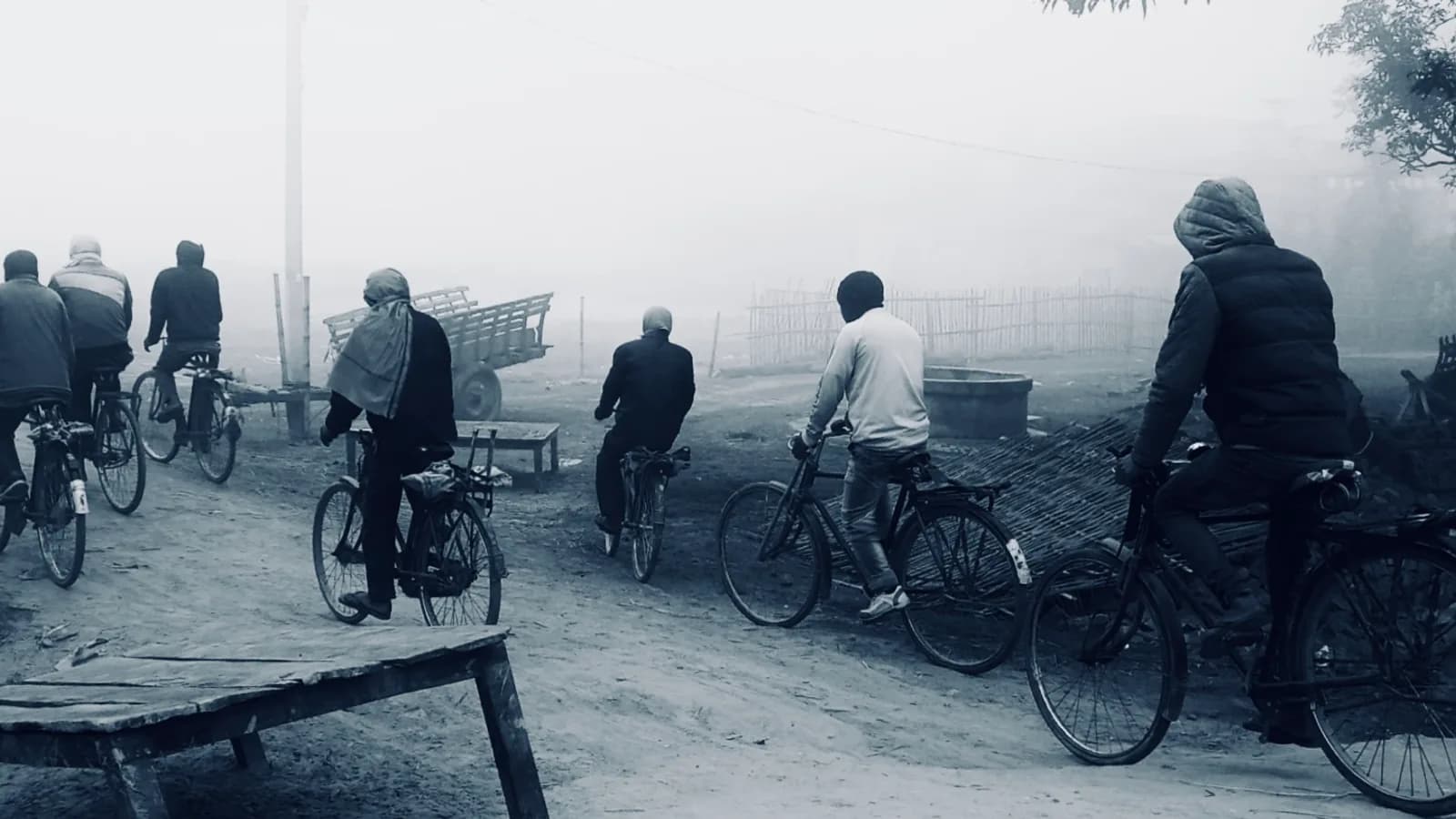
December is one of the most rewarding — and most misunderstood — months to travel in Nepal. Nepal weather in December is dry, stable and famously clear, delivering some of the sharpest Himalayan views of the entire year, but it is also genuinely cold once the sun drops or once you gain altitude. The result is a month that suits sightseers, photographers, wildlife-watchers and lower-altitude trekkers beautifully, provided they arrive ready for chilly nights rather than expecting warm-weather travel. This guide breaks down exactly what to expect by region and elevation, with temperature tables, trekking conditions and packing advice. For the full-year picture, pair it with our Nepal weather by month calendar.
Key takeaways
- December is dry and clear across most of Nepal, with little to no rain and excellent mountain visibility.
- Altitude decides everything: mild days in Kathmandu and Pokhara, mild lowland warmth in the Terai, and deep cold high in the mountains.
- City nights are cold (around 4–8 °C) with no central heating, and morning fog is common in valleys and the Terai.
- Lower treks like Ghorepani Poon Hill and Langtang are superb; high passes such as Thorong La and Larkya La are often snow-closed.
- It is a quieter, less crowded month than peak-autumn October, with the cold keeping numbers down.
- Whatever your plan, warm layers are non-negotiable — pack for the cold, not the sun.
How cold is Nepal in December? It depends on altitude
Nepal stacks three climate zones — hot lowlands, temperate hills and high Himalaya — within a short distance, so there is no single "December temperature." The same day can be mild in Chitwan, crisp in Kathmandu and brutally cold at Everest Base Camp. Understanding which zone you are heading to matters far more than any national average. (Our Nepal weather by month guide explains these zones in detail.)
| Region / zone | Typical Dec daytime high | Typical Dec night low | What to expect | |---|---|---|---| | Kathmandu (hills, ~1,400 m) | ~18–20 °C | ~4–7 °C | Sunny days, cold nights, morning fog | | Pokhara (hills, ~820 m) | ~20–21 °C | ~8 °C | A touch milder, very clear skies | | Terai / Chitwan (lowlands) | ~25–28 °C | ~10 °C | Mild days, chilly mornings, fog | | High trek areas (3,000 m+) | Often near or below freezing by day | Well below freezing | Snow on passes, deep cold at night |
Approximate December figures (as of June 2026); any given year varies, and high-altitude lows fall far lower than the hill numbers.
The cities: Kathmandu and Pokhara
In Kathmandu, December days are pleasant and sunny, with highs around 18–20 °C, but nights fall to roughly 4–7 °C and buildings rarely have heating, so evenings feel colder indoors than the numbers suggest. Pokhara runs a few degrees milder, with average highs near 20.7 °C and lows around 8 °C, and its lakeside setting often serves up stunning, cloudless mountain reflections this time of year. Both cities see very little rain.
The Terai lowlands
Down in the Terai — home to Chitwan, Bardia and Lumbini — December is mild by day, with daytime warmth that can reach the mid-to-high 20s °C, though mornings and evenings turn chilly. The catch is fog: winter fog events in the Terai begin in November, peak in December and January, and can cut visibility to under 200 metres, especially in the western plains. That occasionally delays flights and road travel, so build a little buffer into lowland itineraries.
The high mountains
Above roughly 3,000 metres, December is a different world. Days can hover near or below freezing, and nights plunge far lower — near Everest Base Camp, Gorak Shep can reach around minus 25 °C. Snow lies on the high passes and the loftiest viewpoints. This is the zone where December stops being a mild-weather month and becomes a serious cold-weather undertaking.
Why December has the clearest skies of the year
If your priority is mountain views, December is hard to beat. After the monsoon has washed the air clean and before the spring haze builds, the winter atmosphere is dry and stable, leaving skies that are frequently cloudless. The snow-capped peaks look razor-sharp, and panoramic Himalayan views are about as reliable as Nepal ever offers.
That makes December excellent for the classic viewpoints. Sunrise spots like Sarangkot above Pokhara and Nagarkot near Kathmandu reward early risers with crisp panoramas on clear mornings — though you will want a warm layer for the pre-dawn cold. The main caveat is the morning fog in valleys and the Terai, which can briefly soften visibility before the sun burns it off, usually leaving bright, clear afternoons.
Trekking in Nepal in December
December trekking is very much possible — and the clear skies and quiet trails are a real draw — but the cold and snow shape where you can realistically go. The broad rule: valley and lower routes stay open and pleasant; high passes get blocked.
Lower-altitude treks: the December sweet spot
Routes that stay lower are the standout choice. The Ghorepani Poon Hill trek is a December favourite: daytime temperatures around 8–15 °C, some of the clearest views of the year, and quiet trails. Expect cold nights — Ghorepani can drop to roughly minus 5 to minus 8 °C — and some snow around Poon Hill and the forested stretch toward Tadapani, which can get slippery. The Langtang valley is also a gem in winter, with mostly dry trails and only light frost higher up around Kyanjin.
Everest and Annapurna base camps
Everest Base Camp is achievable in December for fit, well-equipped winter trekkers, partly because the route follows valleys and glacier moraine rather than crossing a high pass, so snow does not block it. The cost is extreme cold: summit-day starts toward Kala Patthar can begin around minus 15 to minus 20 °C. Annapurna Base Camp is likewise possible in early December but demands serious cold-weather kit, as the sanctuary takes snow and the trail above Deurali can ice up.
Where December closes the door
The high passes are the limiting factor. On the Annapurna Circuit, Thorong La (5,416 m) is frequently snow-covered and impassable from December through February, though the eastern approach to Manang remains a comfortable winter walk. On the Manaslu Circuit, Larkya La (5,160 m) is often closed by snow as well. If a high pass is the heart of your itinerary, December is not the month for it.
Whatever you trek, altitude cold raises real safety considerations — read our altitude sickness guide before any high-elevation route, and check our Nepal trekking packing list to gear up for winter conditions.
December weather and your activities
The month's strengths and weaknesses line up neatly with different kinds of trips:
| If you want… | December verdict | Notes | |---|---|---| | Clear mountain views | Excellent | Among the best months; mind morning fog | | City sightseeing & culture | Very good | Mild days; bring warm evening layers | | Terai wildlife safari | Very good | Mild, dry; watch for lowland fog delays | | Lower-altitude trekking | Very good | Quiet trails, cold nights, some snow | | High-pass trekking | Limited | Passes often snow-closed | | Warm-weather relaxation | Poor | Nights are cold; no beach-style warmth |
Wildlife in the Terai
Dry winter weather makes December a strong time for a Chitwan jungle safari. With limited snow confined to high altitudes and mild lowland days, conditions favour rhino and other wildlife sightings. The same chilly mornings that bring fog also mean animals are often active in the gentler daytime warmth.
Culture and city time
December is comfortable for exploring Kathmandu Valley's heritage at a relaxed pace, since the days are sunny and the crowds thinner than peak autumn. It is a good month to slow down around Boudhanath, Pashupatinath and the Durbar Squares, then warm up over a plate of dal bhat or a steaming bowl of thukpa noodle soup.
Festivals and daylight in December
December coincides with several cultural events. Yomari Punhi, a Newar festival marking the end of the rice harvest, falls on the full moon of the month of Mangsir and often lands in December; it centres on yomari, a sweet steamed dumpling of rice flour filled with molasses (chaku) or sesame. Tamu Lhosar, the New Year of the Gurung people, is celebrated around mid-December near the winter solstice, symbolising the return of the sun as days begin to lengthen. Christmas is a public holiday observed by Nepal's Christian community, and the Kirat community marks Udhauli.
On daylight: December includes the winter solstice, the shortest day of the year, so plan for limited daylight. Sunrise comes late and dusk arrives early, which matters on the trail — start walks early and aim to reach tea houses well before dark, when temperatures drop fast.
Packing for Nepal in December
The single rule is layer for the cold. Even mild-sounding daytime highs sit alongside near-freezing nights, and high-altitude figures are far harsher.
- Cities (Kathmandu, Pokhara): a warm insulated jacket, hat and gloves for evenings, plus lighter layers for sunny days. Indoor heating is rare, so warmth indoors matters.
- Trekking, any altitude: a down jacket, a warm (rated) sleeping bag, thermal base layers, a fleece, sturdy boots and trekking poles are essentials, not extras.
- Terai safaris: mild by day but cold at dawn — bring a fleece and a windproof layer for early-morning game drives and boat rides.
- Everywhere: sun protection. December days are bright, and high-altitude sun is intense even when the air is cold.
For trekkers, our full Nepal trekking packing list breaks this down item by item for winter conditions.
Is December the right month for you?
Choose December if you value clear skies, quiet trails and dry, stable weather, and you are happy to bundle up against cold nights. It is an outstanding month for mountain views, photography, Terai wildlife, cultural travel and lower-altitude treks. Look elsewhere — to autumn or spring — if your trip hinges on crossing a high pass, or if cold-weather travel simply is not your thing. For an activity-first comparison across the calendar, see our best time to visit Nepal guide and our broader best season to trek in Nepal breakdown.
Sources
- Nepal weather in December, averages — Weather and Climate
- Pokhara weather in December — Wanderlog
- Weather in Nepal in December — Rough Guides
- Nepal in December: Travel Tips, Weather & More — kimkim
- Trekking in Nepal in December — The Everest Holiday
- Winter Trekking in Nepal: December, January, February — The Everest Holiday
- Ghorepani Poon Hill Trek in December — Magical Nepal
- Trends in winter fog events in the Terai region of Nepal — ScienceDirect
- Nepal in December: Weather, Top Places, Festivals — Nepal Eco Adventure
- Yomari Punhi — Festivals of Nepal
- Sonam Lhosar & Tamu Lhosar in Nepal — Advanced Adventures Nepal
Frequently asked questions
- Is December a good time to visit Nepal?
- Yes, for the right trip. December brings dry, stable weather and some of the clearest Himalayan views of the year, which is ideal for sightseeing, photography, lower-altitude treks and Terai wildlife. The trade-off is cold — chilly nights in Kathmandu and genuinely harsh conditions at high altitude — so it suits travellers who pack warm layers more than those chasing warm weather.
- How cold does Nepal get in December?
- It depends entirely on altitude. Kathmandu and Pokhara see mild daytime highs around 18 to 21 degrees Celsius but cold nights near 4 to 8 degrees. The Terai lowlands stay mild by day. High trekking areas are far colder, and places like Gorak Shep near Everest Base Camp can fall to around minus 25 degrees at night, so the national picture ranges from pleasant to deeply freezing.
- Does it snow in Nepal in December?
- Snow in Kathmandu and Pokhara is very rare, but it is normal on trekking routes above roughly 2,500 to 3,000 metres and on the high passes. Places like Ghorepani and Poon Hill can pick up snow, and the loftiest passes such as Thorong La often stay snow-covered. The cities themselves usually just get cold nights and occasional morning fog rather than snowfall.
- Can you trek in Nepal in December?
- Yes. Everest Base Camp and Annapurna Base Camp are achievable for fit, well-equipped trekkers, and lower routes like Ghorepani Poon Hill and Langtang are excellent with clear skies and quiet trails. The main limits are extreme cold at altitude and snow-blocked high passes — Thorong La on the Annapurna Circuit and Larkya La on Manaslu are frequently closed in December.
- Is there fog in Nepal in December?
- Yes, especially in the Terai lowlands. Winter fog events peak in December and January and can drop visibility below 200 metres in the western Terai, which sometimes delays road and air travel. In the hills, fog is usually a brief morning affair in valleys like Kathmandu and clears once the sun rises, leaving bright, clear afternoons.
- Are the mountains clearly visible in December?
- Yes — December is one of the best months of the year for mountain views. The dry, stable winter air and lack of monsoon haze mean skies are often cloudless and the snow-capped peaks look razor-sharp. Viewpoints like Sarangkot, Nagarkot and Poon Hill reward early risers with crisp Himalayan panoramas on most clear December mornings.
- What festivals happen in Nepal in December?
- December overlaps several cultural events. Yomari Punhi, a Newar harvest festival centred on sweet rice-flour dumplings, falls on the Mangsir full moon and often lands in December. Tamu Lhosar, the Gurung New Year, is celebrated around mid-December near the winter solstice, and Christmas is a public holiday observed by Nepal's Christian community.
- What should I pack for Nepal in December?
- Pack in layers built around the cold. For the cities bring a warm jacket, hat and gloves for the nights plus lighter clothing for sunny days. If you are trekking, treat a down jacket, a warm sleeping bag, insulated layers and good boots as essential, since high-altitude nights fall well below freezing. A small daypack with sun protection helps too, as December days are bright.
Related posts
Dry Trekking Nepal: Best Seasons and Rain-Shadow Trails
Dry trekking Nepal explained: the dry seasons for firm trails plus rain-shadow regions like Mustang and Dolpo that stay dry even in monsoon.
Read postMonsoon Season in Nepal: A Traveller's Honest Guide
When the monsoon season hits Nepal, what the rain really means for trekking and travel, and the rain-shadow regions that stay dry from June to September.
Read postNepal in Monsoon: What to Expect and Where to Go
A practical guide to Nepal in monsoon (June to September): what the rain is like, where to still trek, the risks and how to travel smart.
Read post