Nepal in Monsoon: What to Expect and Where to Go
A practical guide to Nepal in monsoon (June to September): what the rain is like, where to still trek, the risks and how to travel smart.
The monsoon does not cancel Nepal — it just changes which Nepal you get to see.
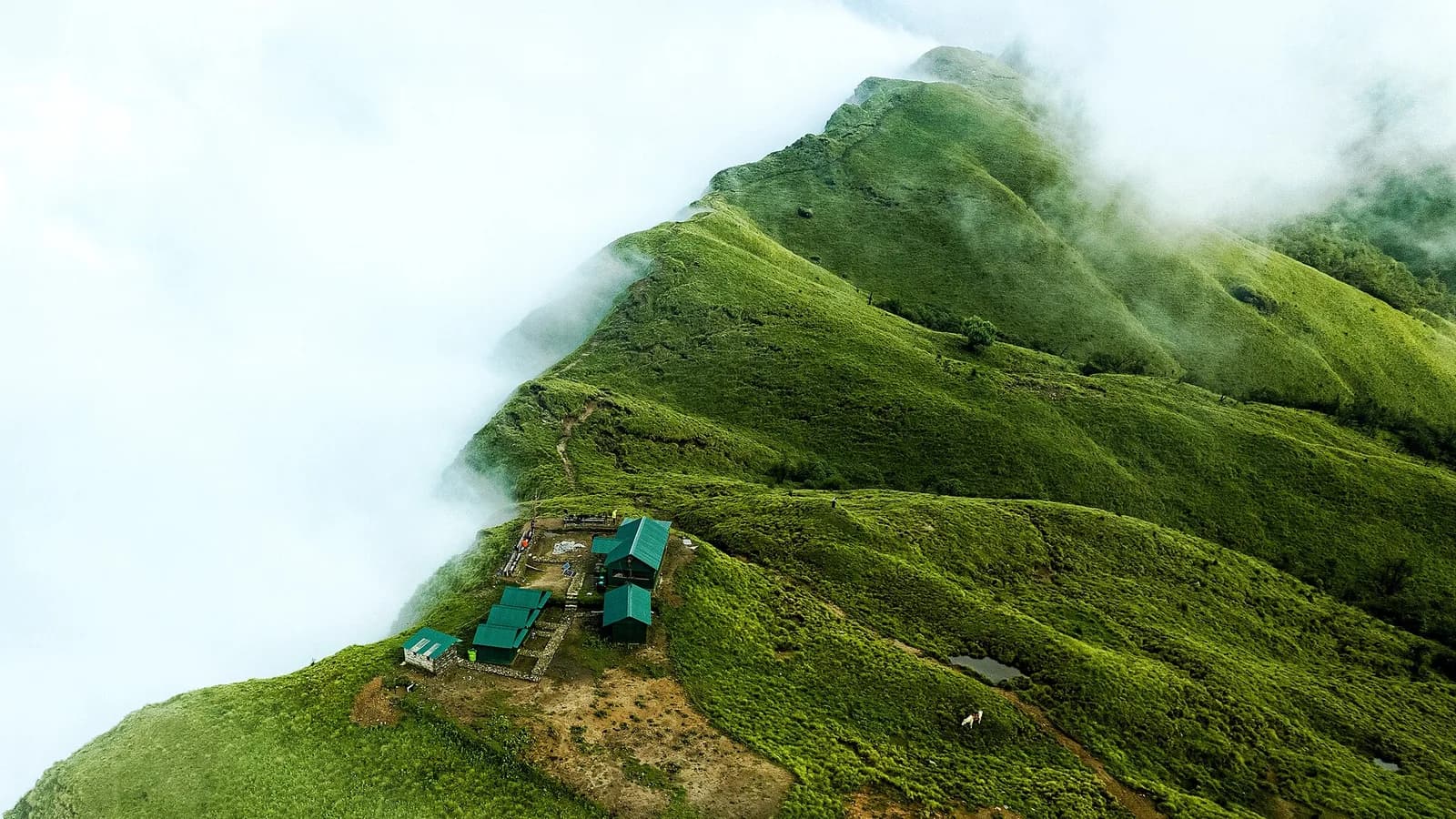
The monsoon is the season most guidebooks tell you to avoid, yet it is also when Nepal turns its greenest and emptiest. From roughly mid-June to late September the country sits under the South Asian monsoon, which delivers about 80 percent of its yearly rainfall in a few intense months. That changes everything about a trip — the views, the trails, the prices and the risks. This guide explains what Nepal in monsoon is actually like, where you can still travel well, and how to plan around the rain instead of being caught out by it. For the wider yearly picture, pair it with our Nepal weather by month calendar.
Key takeaways
- Nepal's monsoon runs roughly mid-June to late September, but exact onset and withdrawal dates move every year.
- Rain usually comes in afternoon and evening bursts, not all day — but persistent cloud hides mountain views.
- Mainstream treks (Everest, Annapurna, Langtang) are wet, leechy and often viewless; rain-shadow regions like Upper Mustang and Dolpo stay dry.
- The real hazards are landslides, swollen rivers and flash floods, which can close highways — September 2024 was a deadly reminder.
- Upsides are genuine: green landscapes, fewer tourists, lower prices and quiet cultural sites.
- Travel in this season demands flexibility and buffer days, especially around mountain flights.
When the monsoon actually arrives
On paper, Nepal's Department of Hydrology and Meteorology (DHM) uses a tentative onset around June 13 and withdrawal around September 23, giving a typical season of about 105 days. In practice the dates swing widely. In 2025 the monsoon entered unusually early, on 28 May, spread across the country by 20 June, and did not officially withdraw until 10 October — both an early start and a delayed end.
So treat "mid-June to late September" as the planning window, but expect the shoulders (late May and early October) to be unpredictable. A monsoon can start early, finish late, pause mid-season, or surge again right before it clears.
How the rain falls
The monsoon is rarely an all-day drizzle. The common rhythm is clearer mornings followed by heavy afternoon and evening downpours, sometimes a torrential hour or two, sometimes persistent light rain. Even on dry days the sky tends to stay overcast, which is why the high peaks are so often invisible from June through September. If your trip is built around mountain panoramas, this is the hardest season for them.
Where it rains — and where it does not
Nepal does not get one monsoon; it gets three, stacked by altitude and blocked unevenly by the mountains. The wettest zones are the Terai plains and the middle hills, including the Kathmandu Valley and Pokhara. Pokhara is one of the rainiest places in the country in this season.
The crucial exception is the rain shadow north of the high Himalaya. Areas such as Upper Mustang, Dolpo, Nar-Phu and parts of Manang sit behind the Annapurna and Dhaulagiri ranges, which wring the moisture out of the clouds before they arrive. These high-desert regions get very little summer rain, which is exactly why they are the go-to trekking areas when everywhere else is soaked.
| Region | Monsoon character | Good for travel? | |---|---|---| | Terai (Chitwan, Lumbini) | Hot, humid, heavy rain, tall grass | Limited — wildlife harder to spot | | Kathmandu Valley | Warm, cloudy, afternoon downpours | Yes, for culture and sightseeing | | Pokhara & mid-hills | Very wet, lush, frequent rain | Yes, for relaxed lakeside time | | Upper Mustang / Dolpo | Dry rain shadow, little rain | Yes — prime monsoon trekking | | High Himalaya passes | Cloud, snow above, slick trails | Generally poor |
Where to still trek in the monsoon
If you want to walk in the hills between June and September, point yourself at the rain shadow.
Upper Mustang
Upper Mustang is the classic answer. This high, arid former kingdom behind the Annapurna and Dhaulagiri massifs receives barely any monsoon rain — reportedly on the order of just tens of millimetres in July, while the wettest hill stations are getting many times more. You get walled medieval villages, ochre cliffs and Tibetan-influenced culture under mostly clear skies. It needs a restricted-area permit and a guide.
Dolpo and Nar-Phu
Dolpo, in Nepal's remote far west, also lies in the rain shadow and is a genuine monsoon-season trek, with the turquoise Phoksundo Lake and ancient Bon and Buddhist villages. Nar-Phu, tucked behind Manang, is another dry, dramatic option. These are committing, multi-day routes for experienced trekkers — but you may have the trails almost to yourself.
What to skip
The headline trails are at their worst now. Everest Base Camp, the Annapurna routes and Langtang are slippery, leech-prone below about 3,000 metres, and usually cloud-covered, so you carry the effort without the views. Early June and early September, when rains are lighter, are the least bad windows if you must go. For the bigger picture on timing, see our best season to trek in Nepal guide.
The real risks: landslides and floods
This is the part to take seriously. The monsoon is Nepal's natural-hazard season, and the danger is not the rain itself but what it triggers: landslides, debris flows, swollen rivers and flash floods. Highways out of the hills can be blocked for hours or days, and low-lying or riverside areas can flood fast.
The clearest recent warning came in late September 2024, when a stalled low-pressure system dumped the heaviest rainfall the Kathmandu Valley had recorded since at least 1970 — roughly 240 to 322 millimetres in 24 hours on 28 September. The resulting floods and landslides killed over 240 people nationwide, damaged bridges and highways, and at one point blocked nearly every road out of the capital. Researchers linked the scale of the damage to rapid, unplanned urban growth and building on floodplains as much as to the rainfall.
The practical lessons for a traveller:
- Do not camp or stay right beside rivers during heavy rain.
- Build buffer days so a blocked road or grounded flight does not wreck your whole trip.
- Watch DHM forecasts and local advisories, and be willing to change plans.
- Avoid driving long mountain highways at the peak of a downpour if you can wait it out.
Most monsoon trips pass without incident, but the season rewards caution and flexibility over a fixed schedule.
Getting around: flights, roads and leeches
Domestic flights
Mountain flights are the weak link. Cloud, rain and reduced runway visibility cause frequent delays and occasional cancellations, especially on routes like Kathmandu–Lukla. The fix is buffer time: never schedule an international departure tight against a monsoon-season mountain flight, and have a backup day or two.
Roads
Long-distance road travel is doable but slower. Landslide debris, mud and the occasional washed-out section mean journeys can stretch, and tourist buses may run behind schedule. Tunnel-vision itineraries with no slack are the ones that fall apart.
Leeches and humidity
On wet forest trails below roughly 3,000 metres, leeches are common in the monsoon — harmless but unloved. Long socks, trousers tucked in, and a dab of salt or repellent keep them at bay. The Terai is hot and very humid, which is one reason wildlife is harder to see then. The dry rain-shadow routes have almost no leech problem at all.
Why some travellers love it
For all the caveats, the green season has a loyal following, and the reasons are real.
- The landscape transforms. Brown spring hillsides turn into deep-green carpets; terraced paddies fill with water and rice shoots; waterfalls run full and forests bloom.
- Crowds thin out. Kathmandu Durbar Square, Patan's temples and Pokhara's lakeside cafés feel calm, and rain-shadow trails and teahouses can be nearly empty.
- Prices soften. Outside peak season, many hotels, guesthouses and operators offer lower rates.
- Culture stays open. Temples, museums, cooking classes and city walks are unaffected by rain, and a few Nepali phrases go a long way with quieter, more relaxed hosts.
If your priority is solitude, photography of misty green hills, or a quieter cultural trip rather than crisp peak views, monsoon can be a feature, not a bug. For a season-by-season comparison of what you gain and lose, see our best time to visit Nepal overview.
Monsoon festivals
Several festivals fall within the rainy months, adding colour to a monsoon visit:
- Nag Panchami, honouring serpent deities, with images placed above doorways.
- Janai Purnima, when Hindu men change the sacred thread and many tie a protective wrist cord; it often coincides with Gai Jatra celebrations in the Kathmandu Valley.
- Yartung, a high-spirited horse-racing festival in Upper Mustang, fitting neatly with a rain-shadow trek.
All of these follow the lunar calendar, so their Gregorian dates move each year — confirm timing before building a trip around one.
A simple monsoon plan
If you are set on Nepal between June and September, a workable shape looks like this: base your sightseeing in Kathmandu and Pokhara, expecting cloud and afternoon rain; add a rain-shadow trek in Upper Mustang or Dolpo if you want mountains; keep the Terai and high passes for another season; and pad the schedule with buffer days for weather. Treat the Chitwan safari as a lower priority now, since tall wet grass makes wildlife harder to spot. Travel light on fixed bookings and heavy on flexibility, and the season opens up rather than shuts you out.
Sources
- DHM — Monsoon Onset and Withdrawal
- The Kathmandu Post — Above-average rainfall in first four weeks of monsoon
- The Kathmandu Post — Monsoon withdrawal expected to be delayed this year (2025)
- Wikipedia — 2024 Nepal floods
- ReliefWeb — Nepal: Floods and Landslides, Sep 2024
- World Weather Attribution — Drivers of the September 2024 Nepal floods
- Rough Guides — Nepal in June
- Nepali Times — Flying during the monsoon in Nepal
Frequently asked questions
- When is the monsoon season in Nepal?
- The monsoon usually runs from mid-June to late September, delivering around 80 percent of Nepal's annual rainfall. The tentative onset date is around June 13 and withdrawal around September 23, but real dates shift each year — in 2025 the rains arrived early on May 28 and did not fully withdraw until October 10.
- Does it rain all day during the monsoon in Nepal?
- Usually not. The typical pattern is heavy bursts in the afternoon and evening, often with clearer mornings, rather than constant rain all day. Skies stay cloudy much of the time, so mountain views are frequently hidden even when it is not actively raining.
- Can you still trek in Nepal during the monsoon?
- Yes, but choose the region carefully. Mainstream trails like Everest Base Camp and Annapurna are wet, leech-prone and often cloud-covered. The rain-shadow areas of Upper Mustang, Dolpo, Nar-Phu and parts of Manang stay relatively dry and are the classic monsoon-season treks.
- Is it safe to travel to Nepal in the monsoon?
- City sightseeing in Kathmandu, Pokhara and Patan is generally fine if you stay flexible. The real hazards are landslides, swollen rivers and flash floods, which can block highways and isolate areas. Avoid riverside camping, check road and weather updates, and build buffer days into your plans.
- What are the advantages of visiting Nepal during the monsoon?
- Fewer crowds, lush green hills and full waterfalls, terraced rice paddies being planted, and often lower prices on hotels and tours. Cultural sites and rain-shadow treks feel quiet and intimate, and several festivals fall in this window.
- Will my domestic flights be delayed in the monsoon?
- They can be. Cloud, rain and reduced runway visibility cause frequent delays and occasional cancellations on mountain routes such as Lukla. Build spare days into your itinerary and avoid booking an international departure tight against a domestic mountain flight.
- How bad are leeches during the monsoon?
- On wet, forested trails below about 3,000 metres leeches are common in the monsoon. They are harmless but unpleasant. Long socks, trousers tucked in, and a little salt or repellent help; rain-shadow high-desert routes like Mustang have very few.
- Which festivals happen during Nepal's monsoon?
- Several fall in the rainy months, including Nag Panchami and Janai Purnima, plus the Yartung horse-racing festival in Upper Mustang. Exact dates follow the lunar calendar and shift year to year, so confirm before planning around one.
Related posts
Monsoon Season in Nepal: A Traveller's Honest Guide
When the monsoon season hits Nepal, what the rain really means for trekking and travel, and the rain-shadow regions that stay dry from June to September.
Read postBest Month for Clean Air in Nepal (and the Trade-Off)
The best month for clean air in Nepal is the monsoon, but that hides a real trade-off with mountain views. How the air-quality calendar works.
Read postBest Season to Trek in Nepal: A Trekker's Calendar
The best season to trek in Nepal is autumn or spring — but the right month depends on your route, altitude, and tolerance for crowds. Here is the full breakdown.
Read post