Everest Base Camp Trek: A Complete 2026 Guide
Plan the Everest Base Camp trek with this 2026 guide to routes, permits, seasons, altitude, costs, fitness, and the Lukla flight — all in plain English.
No ropes, no climbing skill — just a long, slow walk into the thinnest air an ordinary traveller can reach.
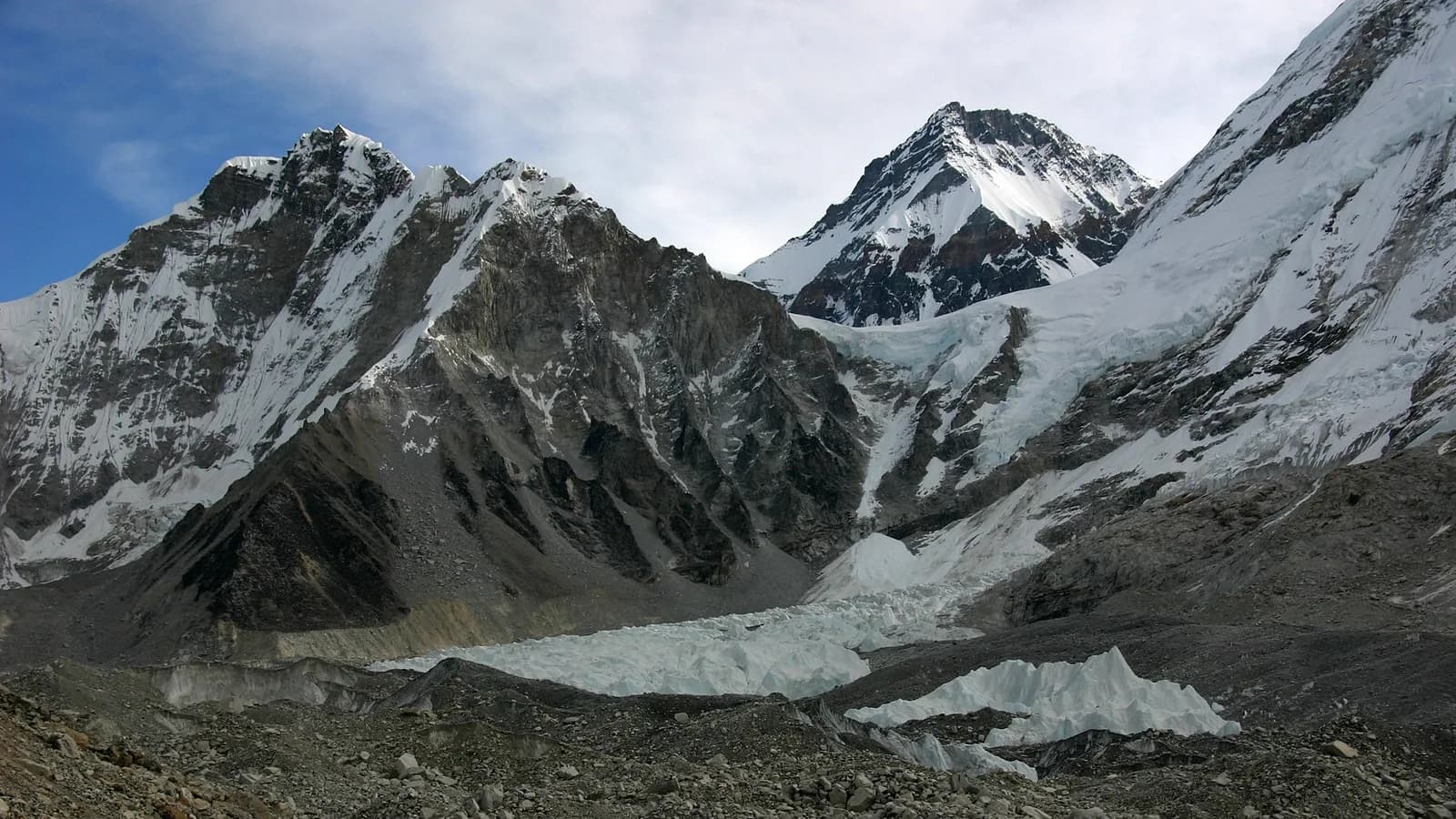
The Everest Base Camp trek is the most famous high-altitude walk on earth, and one of the few bucket-list adventures an ordinary, reasonably fit traveller can genuinely complete. There is no rope work, no crampons, and no climbing skill required — just a long, patient walk through Sherpa villages, over glacial moraine, to the foot of the highest mountain on the planet. What decides who reaches Base Camp is rarely fitness. It is altitude, and beating altitude comes down to a sensible plan.
This guide pulls the whole trip together in plain English: the route, how high you go, the permits, the best seasons, what it costs, and how to prepare. Numbers here are drawn from official and established trekking sources (linked at the end), but mountain logistics shift from year to year — treat fees, prices, and rules as a starting point and confirm the current position before you book.
Key takeaways
- The classic trek is about 12 days from Lukla and back, roughly 130 km round trip, with two essential acclimatization days.
- You climb to Everest Base Camp at ~5,364 m, and stand highest at the Kala Patthar viewpoint (~5,545–5,643 m).
- Spring (Mar–May) and autumn (Sep–Nov) are the prime seasons; October is the most reliable for clear skies.
- You need two permits (national park + Khumbu municipality); a TIMS card is generally not required for the Everest region.
- The trip starts and ends with the Lukla flight, which is morning-only and prone to weather delays — always keep a buffer day.
- There is no technical climbing, but the altitude is the real test — slow ascent and rest days matter far more than raw fitness.
What the trek actually is
The route follows the Dudh Koshi valley up through the Khumbu region of north-east Nepal, inside Sagarmatha National Park (a UNESCO World Heritage Site). You start with a short, dramatic flight into Lukla, then walk for several days through Sherpa towns — most famously Namche Bazaar — gaining height gradually until you reach Gorak Shep, the last settlement. From there you walk out across the Khumbu Glacier moraine to Base Camp itself, and climb the nearby Kala Patthar viewpoint for the classic sunrise view of Everest.
Crucially, Everest's summit is not clearly visible from Base Camp. Most trekkers get their best mountain view from Kala Patthar, the dark hill above Gorak Shep, which is why nearly every itinerary includes a pre-dawn climb up it.
For a full day-by-day plan with elevations and walking hours, see our Everest Base Camp trek itinerary.
How long, how high, how far
| Metric | Figure | |---|---| | Typical duration (from Lukla) | ~12 days | | Door-to-door package | ~13–16 days | | Round-trip distance | ~130 km (~65 km each way) | | Everest Base Camp elevation | ~5,364 m | | Highest point (Kala Patthar) | ~5,545–5,643 m | | Highest you sleep (Gorak Shep) | ~5,164–5,170 m | | Lukla airstrip elevation | ~2,845 m |
Distances and elevations vary slightly by source and by the exact lodges you use, but the figures above reflect the commonly cited ranges from established Everest trekking guides. The elevation gain from Lukla to Kala Patthar is roughly 2,780 m spread over more than a week — that gradual climb is what makes the trek possible for non-mountaineers.
The Lukla flight
The trek begins and ends with a flight to Lukla (officially Tenzing-Hillary Airport), perched at about 2,845 m on a short hillside runway. The flight takes roughly 30–35 minutes from Kathmandu. Flights operate in the morning only, because cloud and crosswinds build through the day, and cancellations are common enough that you should never schedule a tight onward connection.
Ramechhap in peak season
During the busiest trekking months — broadly spring and autumn — Kathmandu's airport gets overcrowded and many Lukla flights are shifted to Ramechhap (Manthali Airport), roughly 4–5 hours by road from Kathmandu. From Ramechhap the hop to Lukla is shorter (around 15–20 minutes). If you travel in peak season, check which airport your flight actually departs from, because it changes your Day 1 logistics and means a very early start. Tara Air, Summit Air, and Sita Air are among the operators on this route.
Permits for 2026
You generally do not need a TIMS card for the Everest region, which runs its own local permit system. What you do need are two entry permits:
| Permit | Typical foreigner fee | Where you get it | |---|---|---| | Sagarmatha National Park entry | Around USD 30 / NPR 3,900 (as of 2026) | Monjo checkpoint or Kathmandu | | Khumbu Pasang Lhamu Rural Municipality | Around USD 20 / NPR 2,600 (as of 2026) | Lukla / Monjo en route |
Fees quoted by operators vary, and SAARC-national rates are lower. Permits are non-transferable and generally non-refundable once issued, and you will need a passport valid for at least six months plus passport photos. Always reconfirm the current fee on arrival. For the full breakdown, see our Everest Base Camp permits guide for 2026.
Do you need a guide?
In April 2023 Nepal introduced a national rule requiring a licensed guide, hired through a registered agency, on many of the country's trekking routes. Enforcement in the Everest region has been inconsistent: because the area uses its own permit system rather than TIMS, multiple reports — including comments attributed to a senior tourism official — indicate solo trekkers are not turned back there. That said, rules can change and enforcement can tighten without much notice. The safe approach is to budget for a guide, weigh the safety benefits at altitude, and confirm the current position with a registered agency before you fly. Our do-I-need-a-guide breakdown goes deeper.
Best time to go
The two prime seasons are spring (March–May) and autumn (September–November).
Spring (March–May)
Spring brings warming temperatures, blooming rhododendrons lower down, and the energy of the Everest climbing season in the air. Late spring days at Base Camp can climb toward the freezing mark or a little above, and lower villages get genuinely pleasant. The trade-off is that clouds often build around the peaks after midday, so the best mountain views are usually in the morning.
Autumn (September–November)
Post-monsoon autumn delivers the clearest, most stable weather of the year, which is why October is the single most popular trekking month — and the busiest. Visibility is often excellent all day, though nights at altitude are cold and trails and lodges fill up.
What to avoid
The June–August monsoon brings cloud, rain, leeches lower down, and frequent Lukla flight cancellations. Deep winter (December–February) is doable for experienced, well-equipped trekkers but brings serious cold and the risk of snow closing high sections. For a month-by-month national overview, see our guide to the best time to visit Nepal.
Difficulty and preparation
The Everest Base Camp trek is rated moderate to strenuous. There is no technical terrain — the difficulty is the combination of consecutive long days, cold, basic lodges, and above all thin air. If you can comfortably walk 5–7 hours a day on uneven trails for two weeks, you have the physical base.
Training
- Build cardio fitness with running, cycling, or stair work over 8–12 weeks.
- Do back-to-back hill walks with a daypack so your legs adapt to consecutive days.
- Break in your boots well before the trip.
Altitude is the real challenge
Fitness does not protect you from acute mountain sickness — how well you adjust depends on your individual body, not your cardio level. A large share of trekkers feel some mild symptoms at altitude, and the people who get into real trouble are overwhelmingly those who climbed too fast or skipped rest days. The defences are simple: ascend slowly, take the scheduled acclimatization days seriously, stay hydrated, and descend if symptoms worsen. Before you go, read our altitude sickness guide for Nepal treks and learn the warning signs.
Where you sleep and what you eat
The trek is a teahouse trek: you sleep in family-run lodges and eat in their dining rooms, walking from one to the next each day. Rooms are basic — often twin beds, thin walls, shared bathrooms — and they get colder and simpler the higher you go. The reliable staple is dal bhat, the Nepali plate of rice, lentil soup, and vegetables, usually with free refills, which is exactly the fuel a long trekking day needs. Prices for food, hot showers, charging, and Wi-Fi all rise with altitude because everything is carried or flown in.
For a realistic picture of the lodges and menus, see our EBC teahouse food and accommodation guide.
What it costs
Costs vary enormously with how you travel. Independent trekkers who arrange things locally generally spend in the low four figures in US dollars on the trail once food, lodging, a guide or porter, and permits are added up — not counting the Lukla flight, which is a significant extra each way. Guided packages booked from abroad typically cost more for the convenience of having everything arranged, and helicopter-return options cost more again.
Because operator prices change with fuel, demand, and exchange rates, we are deliberately not pinning exact figures here. For a line-by-line breakdown including the costs people forget, read our honest EBC cost guide for 2026.
Money on the trail
- Carry enough Nepali rupees in cash from a Kathmandu ATM — card machines on the trail are scarce and unreliable.
- Budget extra for hot showers, device charging, Wi-Fi, and bottled or treated water, which add up over two weeks.
- Buy travel insurance that explicitly covers helicopter evacuation at altitude, not just hospital bills.
A few words go a long way
You do not need to speak Nepali to trek, but a handful of phrases changes how you are treated in every lodge along the way. A warm namaste, a dhanyabad (thank you), and being able to ask the price politely all earn goodwill. Our short list of Nepali phrases every trekker should know is built exactly for the trail.
Is it worth it?
For most people who go, yes — overwhelmingly. The reward is not just the moment at Base Camp but the slow build through one of the most spectacular landscapes on earth, the Sherpa culture along the way, and the genuine sense of having walked somewhere few people ever reach. Go in the right season, take the rest days seriously, keep a buffer day for the Lukla flight, and the standard route will carry you all the way to the foot of Everest.
Sources
- Everest Base Camp trek permits and fees 2026 — Himalayan Recreation
- EBC trek distance and elevation — ebctrekguide.com
- Best months to trek to Everest Base Camp — Ian Taylor Trekking
- Nepal trekking guide rule change (2023) — Much Better Adventures
- No restrictions for solo trekkers in the Everest region — Kathmandu Post
- Lukla flight and Ramechhap logistics 2026 — Nepal Guide Trekking
Frequently asked questions
- How long is the Everest Base Camp trek?
- The classic route runs about 12 days from Lukla and back, roughly 130 km round trip, with two acclimatization days built in. Door to door from Kathmandu most packages take 13 to 16 days once you add buffer days for the Lukla flight.
- How high is Everest Base Camp?
- Everest Base Camp sits at about 5,364 m. The highest point trekkers actually stand on is the Kala Patthar viewpoint at roughly 5,545 to 5,643 m, and you sleep no higher than Gorak Shep at around 5,164 to 5,170 m.
- Do you need a guide for the Everest Base Camp trek?
- Nepal introduced a national rule in April 2023 requiring a licensed guide on many trekking routes, but the Everest region runs its own permit system and reports indicate solo trekkers are not turned back there. Rules can change, so budget for a guide and confirm the current position with a registered agency before you fly.
- What permits do you need for Everest Base Camp?
- Two permits: the Sagarmatha National Park entry permit and the Khumbu Pasang Lhamu Rural Municipality entry permit. A TIMS card is generally not required for the Everest region. Carry your passport and verify current fees on arrival.
- What is the best time to trek to Everest Base Camp?
- Spring from March to May and autumn from September to November are the prime windows. October is famous for the most stable, clear weather. Avoid the June to August monsoon, when cloud, rain, and flight cancellations peak.
- Can a beginner do the Everest Base Camp trek?
- Yes, if you train. There is no technical climbing — if you can walk 5 to 7 hours a day on rough trails for two weeks you have the fitness. The real challenge is altitude, so train with cardio and back-to-back hill walks for 8 to 12 weeks before you go.
- How much does the Everest Base Camp trek cost?
- It varies widely by style. Independent trekkers commonly spend in the low four figures in US dollars on the trail, while guided packages booked from abroad usually run higher and helicopter-return options cost more again. Treat any figure as a starting point and confirm current prices with operators.
- Is the Lukla flight dangerous, and can it be cancelled?
- Lukla is a short mountain airstrip and flights run in the morning only because cloud and crosswinds build later in the day. Cancellations and delays are common, so never book a tight onward connection and keep a spare day in Kathmandu at the end of your trip.
Spotted an error in this post? Tell us or suggest a correction.
Related posts
ABC Trek: A Plain-English Guide to Annapurna Base Camp
The ABC trek (Annapurna Base Camp) explained — the route, how many days it takes, difficulty, the best seasons, and what daily trail life is really like.
Read postAma Dablam Climb: 2026 Expedition Guide (6,812m)
An Ama Dablam climb and expedition guide for 2026 — height, the Southwest Ridge route, camps, fixed ropes, difficulty, permits, cost and the best seasons.
Read postAnnapurna vs Manaslu: Which Trek Should You Choose?
An Annapurna vs Manaslu decision guide for trekkers — compare permits, crowds, difficulty, infrastructure and cost to pick the right Himalayan route.
Read postAsan Bazaar Kathmandu: Old Town Market Guide
A visitor guide to Asan bazaar, Kathmandu's oldest market — its six-road square, Annapurna Temple, what to buy, when to go, and how to get there.
Read postAyurveda Nepal: A Traveller's Guide to Healing
Ayurveda Nepal explained for tourists — the history, the doshas, treatments like Panchakarma and Shirodhara, where to go and how to choose a centre safely.
Read postBest Restaurants Pokhara Lakeside: Where to Eat
The best restaurants in Pokhara Lakeside — lakeside trout, wood-fired pizza, Tibetan momos and healthy cafes, with what to order and rough 2026 prices.
Read post