Pashupatinath Temple: History, Meaning & How to Visit
A guide to Pashupatinath temple in Kathmandu — its history, pagoda architecture, Shiva mythology, opening hours, and how to visit respectfully.
Older than its 1692 walls and pre-Vedic at its root, Pashupatinath is the beating heart of Shiva worship in the Himalaya.
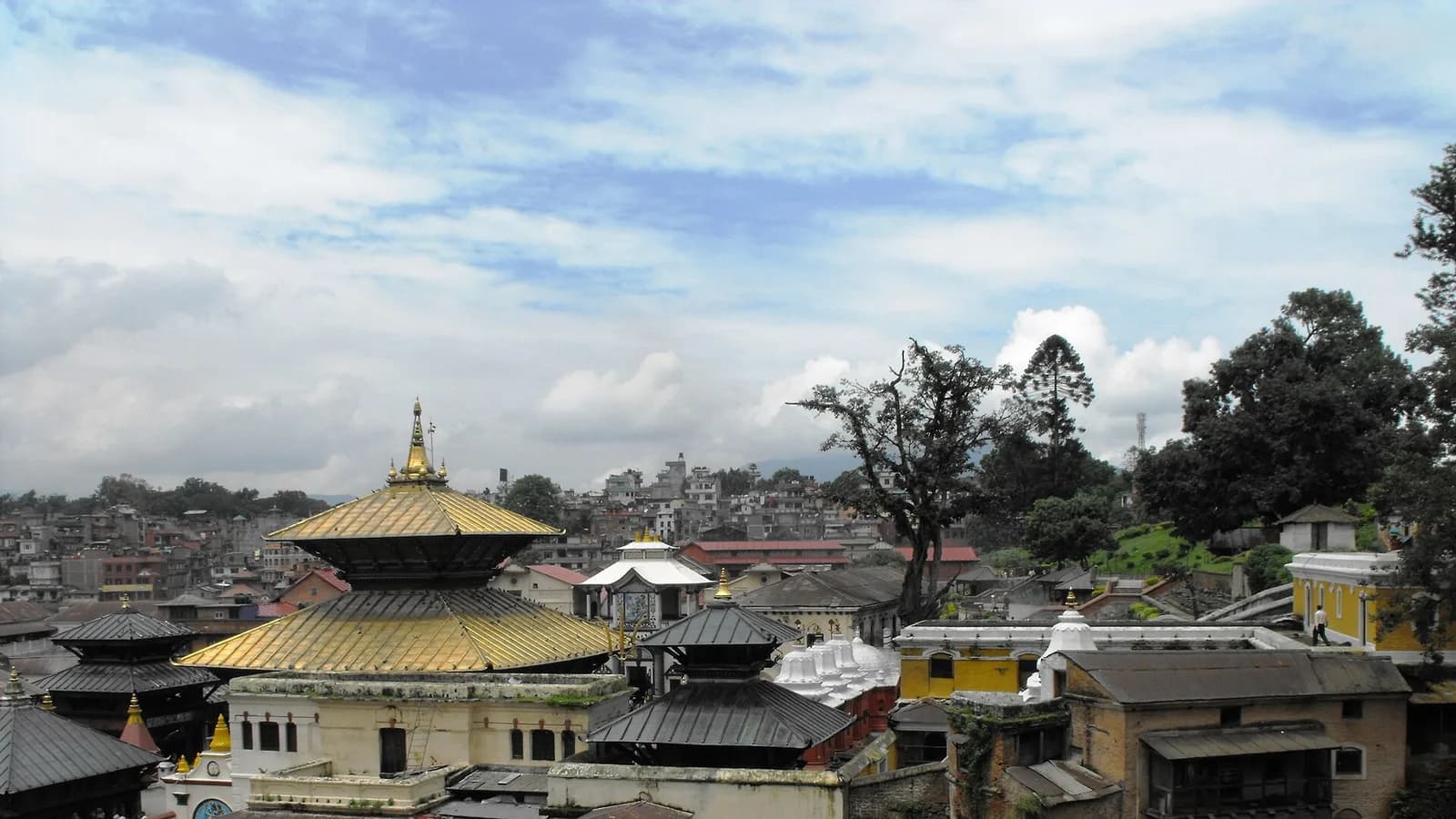
Pashupatinath temple is the holiest Hindu shrine in Nepal — a sprawling riverside complex dedicated to Shiva in his form as Pashupati, the lord of animals. For many Hindus it ranks among the most sacred Shiva sites anywhere on earth, and for visitors to Kathmandu it is one of the most vivid encounters with living religion you can have in a single morning. This guide focuses on the why behind the place: its history, its pagoda architecture, the mythology of Pashupati, and the practical details of getting there and visiting with respect.
For a detailed walkthrough of exactly what foreigners can and cannot see on the day — the layout, the cremation ghats, photography rules, and dealing with the sadhus — pair this with our Pashupatinath temple guide for foreigners, which this post complements rather than repeats.
Key takeaways
- Pashupatinath is Nepal's most important Hindu temple and a UNESCO World Heritage Site (inscribed 1979) on the banks of the Bagmati River, about 5 km east of central Kathmandu.
- The site's roots are ancient — recorded by 400 CE and considered pre-Vedic — but the main pagoda was rebuilt in 1692.
- The temple is dedicated to Shiva as Pashupati; the inner shrine holds a stone mukhalinga with four faces, and only practising Hindus may enter the main sanctum.
- It is built in classic Nepalese pagoda (Newari) style, with a gold-plated copper roof, four silver-clad doors, and a giant golden Nandi bull.
- The complex covers 246 hectares with 518 smaller temples and shrines and is managed by the Pashupati Area Development Trust.
- Foreigners pay roughly NPR 1,000 (as of 2025) and view the main temple from across the river; Maha Shivaratri is the biggest festival of the year here.
What and where Pashupatinath is
Pashupatinath sits on both banks of the Bagmati River on the eastern edge of Kathmandu, in Bagmati Province. The Nepal Tourism Board places it about 5 km east of the city centre, an easy trip from anywhere in the valley. The name comes from Pashupati — "lord of animals" or "lord of all living beings" — one of the gentler, protective aspects of Shiva.
What surprises first-time visitors is the scale. This is not a single building but an entire sacred precinct: a UNESCO-listed area of 246 hectares containing 518 smaller temples, ashrams, shrines, inscriptions, and statues accumulated over centuries. The golden pagoda you see in postcards is the centrepiece, but the wider site includes meditation platforms, the riverside cremation ghats, shelters for Hindu holy men, and dozens of subsidiary shrines climbing the wooded eastern hillside.
Why it matters to Hindus
Pashupatinath is one of the foremost Shiva temples in the Hindu world and a major pilgrimage destination, drawing devotees from across Nepal and India. The Bagmati that flows past it is itself considered sacred, which is why so many Hindu families bring their dead here for cremation — being burned and returned to a holy river is believed to aid the soul's onward journey. That continuous public presence of both worship and death is what gives Pashupatinath its singular, unforgettable atmosphere.
A short history
Pashupatinath's origins are genuinely ancient. Its existence is documented as far back as around 400 CE, and scholars consider its roots pre-Vedic, predating the recorded religious history of the region. Over the centuries it was rebuilt and expanded by successive rulers; medieval reconstruction is associated with King Shivadeva, and the main pagoda that stands today dates to a renovation in 1692, after earlier damage.
| Period | Milestone | | --- | --- | | c. 400 CE | Earliest recorded mention of the temple's existence | | Medieval era | Reconstruction associated with King Shivadeva | | 1692 | Current main pagoda rebuilt after earlier damage | | 1979 | Inscribed as a UNESCO World Heritage Site | | 1987 | Pashupati Area Development Trust established by Act |
In 1979 Pashupatinath was inscribed on the UNESCO World Heritage List as one of the monument zones that together make up the Kathmandu Valley site, recognised for its cultural value as an extensive Hindu temple precinct. You can read more about that listing alongside the valley's other treasures in our overview of UNESCO sites in Nepal.
The architecture
Pashupatinath is a textbook example of Nepalese pagoda (Newari) architecture — the tiered, temple-on-a-plinth style that defines the Kathmandu Valley's skyline. The main shrine is a two-tiered structure rising roughly 23 metres from base to pinnacle, crowned with a roof of copper sheathed in gold. Its four main doors are clad in silver, and the whole is richly carved with deities and decorative woodwork.
Inside the sanctum: the mukhalinga
At the heart of the temple stands the object of worship: a stone mukhalinga, a lingam of Shiva about a metre high carved with faces looking out in four directions. This is what the temple's four priests tend each day, and what pilgrims come to glimpse. Non-Hindus never see it directly, since they cannot enter the inner courtyard — but understanding what lies within helps make sense of the devotion you will witness at the gates.
Nandi and the bulls
Guarding the western entrance is a massive gilded statue of Nandi, the sacred bull who serves as Shiva's mount and most devoted follower. Nandi appears again and again across the complex — the outer walls carry rows of carved bull heads, a recurring reminder of the bond between Shiva and his vahana. Spotting the great golden Nandi from the main gate is one of the few close-up architectural details non-Hindu visitors can fully enjoy.
Mythology: why Shiva is Pashupati here
Hindu tradition offers several stories for why Shiva is worshipped as Pashupati at this exact spot. The most popular tells of Shiva, wishing to escape his divine duties, taking the form of a one-horned deer and roaming the forest on the banks of the Bagmati. When the other gods came to retrieve him and seized the deer by its horn, the horn broke; that fragment is said to have become the original lingam later enshrined here. Whatever the version, the throughline is constant: this riverbank is where Shiva chose to dwell as the gentle protector of all living creatures, and the temple grew up around that belief.
Who runs it — and who may enter
The entire precinct is managed by the Pashupati Area Development Trust (PADT), a statutory body established under a 1987 Act and tasked with conserving and operating the temple and its surrounding heritage sites. The Trust maintains the buildings, organises festivals, and supports the sadhus and pilgrims who pass through.
Daily rituals inside the sanctum are performed by a small, specialised priesthood. The senior Bhatta priests are Vedic scholars traditionally drawn from Karnataka in South India and trained in Sanskrit learning; only a handful are permitted to touch the idol itself, assisted by a larger body of caretakers who handle other duties. This South Indian priestly tradition is one of the temple's distinctive features and has continued for centuries.
The rule for foreign visitors
The single most important practical point: only practising Hindus may enter the main temple courtyard. The Nepal Tourism Board states plainly that the main temple complex is open only to Hindus, and that other visitors must content themselves with the view from the terraces across the Bagmati to the east. This is firmly and consistently enforced. It is not a snub — it is a living place of worship with rules that predate tourism, and the view from across the river is genuinely rewarding.
Visiting Pashupatinath: practical details
Hours
The wider complex is generally accessible from around 4 am to 9 pm, while the inner sanctum opens for darshan in the morning and again in the evening, with a midday closure. The most atmospheric moments are the morning aarti soon after dawn and the evening aarti by the Bagmati in the early evening, when oil lamps, bells, and chanting fill the riverbank. Exact timings shift with the season and with festival days, so treat any published schedule as approximate and confirm locally.
Entry fee
| Visitor | Fee | Notes | | --- | --- | --- | | Foreign tourists | NPR 1,000 (as of 2025) | Paid in cash at the entrance | | Indian and Nepali citizens | Free | — |
Carry exact change in Nepali rupees, keep your ticket handy because it is checked at several points, and budget the fee on top of any guide or transport costs. For a fuller picture of money matters, see our notes on Nepal's currency and cash.
Getting there
Pashupatinath lies about 5 km east of central Kathmandu, near the Gaushala junction. Taxis, ride-hailing apps, microbuses, and the small three-wheelers known as tempos all run to Gaushala, from where it is a short walk to the gates. Because it sits so close to Boudhanath stupa, many travellers see both in one outing — start at Pashupatinath in the morning light, then walk or take a short ride to the calm of Boudhanath stupa in the afternoon.
Dress code and etiquette
Dress modestly: shoulders and legs covered, no shorts or sleeveless tops. Be prepared to remove shoes and hats in inner areas. The Nepal Tourism Board also notes that leather items and photography are restricted within the temple precinct itself, so leave leather belts and bags where indicated and keep cameras down inside the sanctum zone. A little preparation goes a long way at any shrine — our guide to temple etiquette in Nepal covers the wider do's and don'ts.
The cremation ghats and the Bagmati
Along the river you will see open-air Hindu cremations on the stone ghats, performed almost continuously through the day. It is a profound, sometimes confronting sight, and the single most distinctive experience the site offers. Observe quietly from a respectful distance across the river, never photograph mourners or the pyres up close, and remember that the families present are in real grief. The Bagmati itself, though sacred, is heavily polluted; admire it from the steps and do not touch the water.
When to go
Any clear morning rewards a visit, but the calendar shapes the experience:
- Early morning, most days — the most active worship and the best light, with fewer foreign tourists around.
- Teej (around August–September) — a major women's festival when crowds of devotees in red throng the temple.
- Maha Shivaratri (February or early March) — the single biggest event here, drawing vast crowds and sadhus from across the subcontinent. It is spectacular but extremely congested; for how to handle it, read our dedicated Maha Shivaratri at Pashupatinath guide.
If you simply want a meaningful encounter with Hindu Kathmandu without festival-scale crowds, an ordinary weekday morning is ideal. Either way, give the place a couple of unhurried hours and let its rhythm — worship, ritual, smoke, and river — register on its own terms.
Sources
- Pashupatinath Temple — Wikipedia
- Pashupatinath Temple | History, Description, & Facts — Britannica
- Pashupatinath Temple | Nepal Tourism Board
- Kathmandu Valley — UNESCO World Heritage Centre
- Pashupati Area Development Trust — Wikipedia
- Pashupatinath Temple In Kathmandu Entry Fees (updated 2025) — Travel Triangle
Frequently asked questions
- What is Pashupatinath temple known for?
- Pashupatinath is Nepal's holiest Hindu temple, dedicated to Shiva in his form as Pashupati, lord of animals. It sits on the Bagmati River in Kathmandu, is a UNESCO World Heritage Site, and is one of the most important Shiva pilgrimage destinations in the Hindu world.
- Can non-Hindus enter Pashupatinath temple?
- Non-Hindus cannot enter the main inner temple, which is reserved for practising Hindus of the South Asian diaspora. Foreign visitors can still buy a ticket, walk the wider 246-hectare complex, and view the golden pagoda and cremation ghats from the terraces across the river.
- How old is Pashupatinath temple?
- Its existence is recorded as early as 400 CE and its origins are considered pre-Vedic, but the main pagoda that stands today was rebuilt in 1692 after earlier damage. The wider precinct has been added to over many centuries by different kings and patrons.
- What are the opening hours of Pashupatinath temple?
- The complex is generally open from around 4 am to 9 pm, while the main sanctum typically opens for darshan in the morning and again in the evening with a midday closure. Times shift with festivals and seasons, so confirm locally before you go.
- How much is the entry fee for Pashupatinath?
- The entry fee for foreign visitors is about NPR 1,000 (as of 2025), paid in cash at the entrance, while Nepali and Indian citizens enter free. Carry exact change in rupees and keep your ticket, as it is checked at several points.
- Why is the Bagmati River important at Pashupatinath?
- The Bagmati is considered sacred and runs through the heart of the complex, with Hindu cremations performed on its ghats almost continuously. It is also one of the most polluted urban rivers in the region, so admire it from a distance and do not touch the water.
- What should I wear to visit Pashupatinath?
- Dress modestly with shoulders and legs covered, avoid shorts and sleeveless tops, and be ready to remove shoes and hats in inner areas. Leather belts and bags, along with photography, are restricted inside the temple precinct itself.
- How do I get to Pashupatinath from central Kathmandu?
- The temple is about 5 km east of the city centre near Gaushala, reachable by taxi, ride-hailing app, microbus, or tempo. From the Gaushala stop it is a short walk to the gates, and the site pairs naturally with a visit to nearby Boudhanath.
Related posts
Pashupatinath Temple — What Foreigners Can and Can't See
The temple complex is open to all. The main temple isn't. Here's where you can walk, what you can photograph, and how to navigate the cremation ghats respectfully.
Read postBoudhanath Stupa: Architecture & Symbolism Guide
How to read the Boudhanath stupa — its mandala shape, the Buddha eyes, the 13 golden steps, and the meaning behind the clockwise kora walk.
Read postBuddha Statue Nepal: A Traveller's Guide to the Best
Where to see the most striking Buddha statue sites in Nepal, from the giant golden trio at Swayambhu to the stone Buddha of Mustang.
Read post