One-Horned Rhino in Nepal: Where to See Them in Chitwan
See the greater one-horned rhino in Nepal. Chitwan holds 694 of the country's 752 rhinos — where, when, and how to spot them on safari in 2026.
From roughly 100 animals in the 1960s to 752 today — the one-horned rhino is one of Asia's great comebacks, and Chitwan is where you watch it graze.
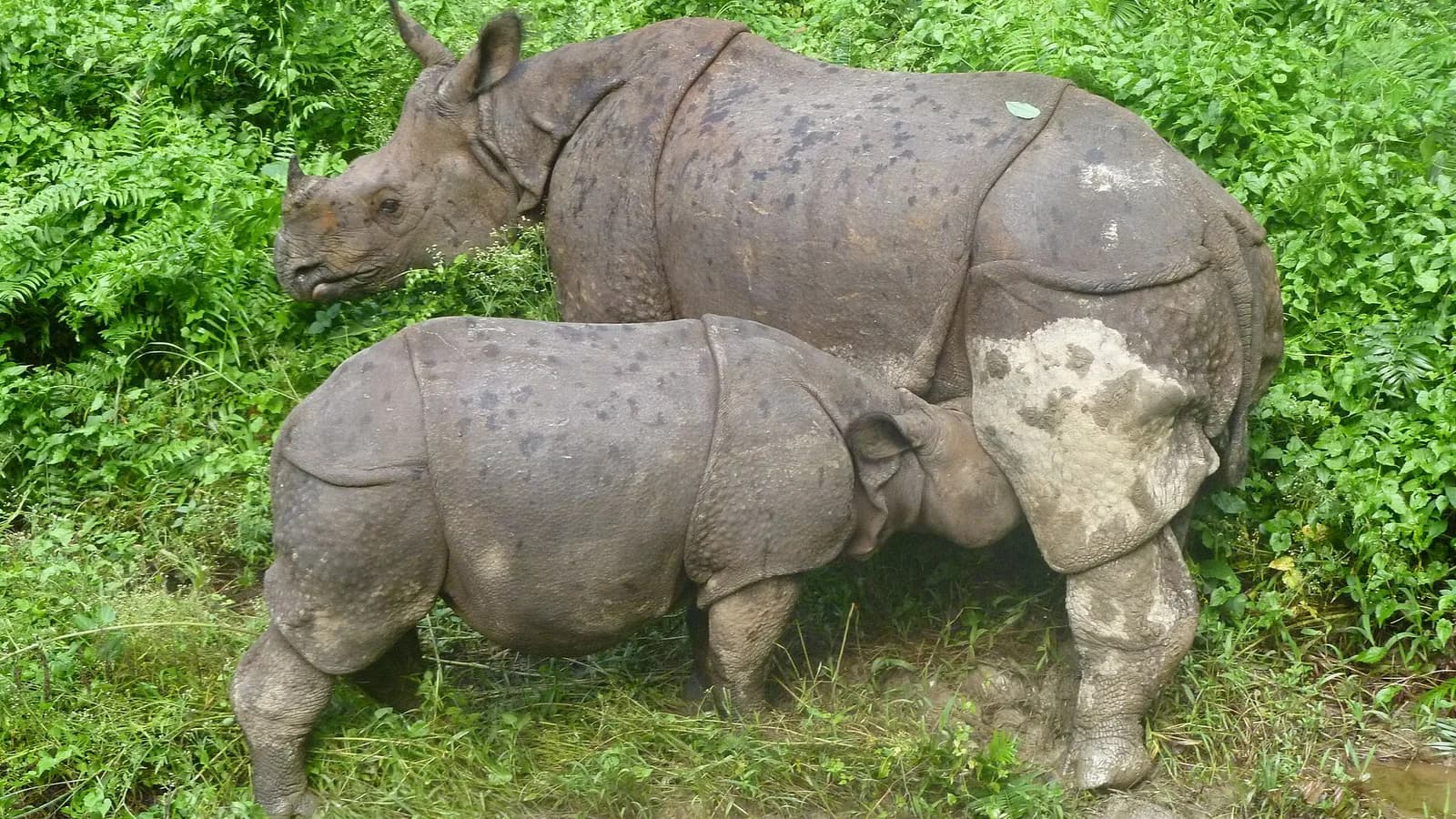
The greater one-horned rhino is the animal most travellers picture when they imagine Nepal's jungle, and for good reason. Heavy, grey, and plated like something out of the Pleistocene, it grazes the riverside grasslands of the southern Terai in numbers that, a few decades ago, seemed impossible. If you want to see a wild one-horned rhino in Nepal, you are really planning a trip to one place above all others: Chitwan National Park. This guide covers where the rhinos are, how many survive, the realistic odds of a sighting, the best season, and how to watch them responsibly in 2026.
Key takeaways
- Nepal counted 752 one-horned rhinos in its 2021 National Rhino Count, the most recent national census, up from 645 in 2015.
- Chitwan National Park holds 694 of them — more than 90 percent of the national total — making it the single best place to see the species.
- Sightings are very likely: most visitors on a jeep safari or river canoe trip see at least one rhino, often several in a morning.
- October to March is the prime season, with cooler air, shorter grass, and better visibility across the grassland.
- The species is a global conservation success, recovering from around 100 animals in the 1960s; it is now listed as Vulnerable rather than Endangered.
- Watch from a safe distance with a licensed guide — rhinos are wild, fast, and occasionally aggressive when surprised.
Meet the greater one-horned rhino
The greater one-horned rhino (Rhinoceros unicornis), sometimes called the Indian rhino, is the largest of the three Asian rhino species and the second-largest land mammal in Nepal after the wild elephant. A big bull can weigh well over two tonnes. Its most distinctive feature, beyond the single horn, is its skin: thick grey hide folded into segments that genuinely resemble riveted armour plates, with raised bumps that look like studs.
Unlike the grazing-and-running African rhinos of the open savannah, the one-horned rhino is semi-aquatic. It loves water, wallows for hours in rivers and oxbow lakes to cool off and shed parasites, and swims easily across the Rapti and Narayani rivers. That habit is good news for visitors, because rhinos spend a lot of time in and around open water where they are easy to see.
They are mostly solitary and largely peaceful, feeding on grasses, fruits, leaves, and aquatic plants. But they have poor eyesight, an excellent sense of smell, and a surprising turn of speed, which is exactly why you keep your distance.
How many rhinos are left in Nepal?
Nepal runs a national rhino count every few years, led by the Department of National Parks and Wildlife Conservation with support from conservation partners. The headline numbers from the most recent census tell a clear recovery story.
| Census year | Total rhinos in Nepal | Rhinos in Chitwan | | --- | --- | --- | | 2015 | 645 | 605 | | 2021 | 752 | 694 |
The 2021 count of 752 rhinos nationwide was a roughly 16.6 percent jump over 2015. The full 2021 breakdown by protected area was:
- Chitwan National Park and surroundings: 694
- Bardia National Park: 38
- Shuklaphanta National Park: 17
- Parsa National Park: 3
The 2021 survey ran from 22 March to 10 April and used trained observers on the backs of elephants sweeping methodically through the grasslands and forest. The next national count will refresh these figures, but as of 2026 the 752 / 694 numbers remain the official reference.
Zoom out, and the picture is even more striking. The greater one-horned rhino once numbered fewer than 200 across its entire range in the early twentieth century, dropping to around 100 in the worst years of the 1960s. The combined India-and-Nepal population had climbed to roughly 4,075 animals by early 2025. That is one of the great wildlife comebacks anywhere in Asia.
Why Chitwan is the place to go
If more than nine in ten of Nepal's rhinos live in and around one park, the planning decision is easy. Chitwan National Park sits in the subtropical lowland Terai in the country's south, a complete change of scenery from the temple cities and high mountains most visitors come for. It was Nepal's first national park, established in 1973, and is a UNESCO World Heritage Site.
The main visitor hub is Sauraha, a small town on the park's eastern edge built around wildlife tourism, with everything from budget guesthouses to riverside lodges. From Sauraha you can arrange every kind of safari. For the full breakdown of park logistics, safari types, and lodges, see our Chitwan National Park safari guide.
Getting there is straightforward: a tourist bus from Kathmandu or Pokhara takes five to six hours, or you can fly to nearby Bharatpur in about 25 minutes. Our Kathmandu to Chitwan transport guide compares the bus, the flight, and a private car in detail.
If you would rather trade easy access for solitude, Bardia National Park in the far west is the quieter alternative, but with only 38 rhinos there your odds of a sighting are much lower than in Chitwan.
Your chances of a sighting
This is the rhino's great gift to travellers: you will very probably see one. Because rhinos graze in open grassland and gather at water, they are far easier to find than tigers or leopards. On a typical half-day jeep safari or a dawn canoe trip down the Rapti, most visitors see at least one rhino, and seeing three, four, or more in a single morning drive is common in the right season.
Here is the rough hierarchy of what Chitwan delivers, with rhinos near the top:
| Animal | Realistic chance on a safari | | --- | --- | | One-horned rhino | Very high — most visitors see at least one | | Spotted (chital) and sambar deer | Almost guaranteed | | Crocodiles (gharial and mugger) | Likely, especially on the river | | Wild elephant | Possible, more common in winter | | Sloth bear / leopard | Uncommon, mostly dawn and dusk | | Bengal tiger | Rare — see our tiger safari guide |
The rhino is the animal Chitwan can almost promise. The tiger is the one it cannot.
How to see them: safari options
You have three main ways to look for rhinos inside the park, and most visitors combine at least two over a couple of days.
Jeep safari
An open-top 4x4 with a driver and a licensed naturalist, covering a wide range of grassland, forest, and riverbank over four to six hours. This is the classic option and arguably the best all-rounder for rhinos, because it gets you across a lot of varied habitat. Mornings are best.
Guided jungle walk
A walk on foot through the forest and grassland edge with one or two trained guides. This is the most immersive and quiet way to experience the park, and you can come surprisingly close to a grazing rhino. It is also where you most need to respect your guides' instructions, because you have no vehicle between you and a two-tonne animal. Smaller groups, slower pace, more intense.
Canoe trip on the Rapti
A dugout canoe drifting down the river at dawn, looking for rhinos at the water's edge, crocodiles on the banks, and a wealth of birds. Beautiful, peaceful, and often productive for rhino sightings, since the animals come to the river to drink and wallow.
One thing this guide will say plainly, as our main Chitwan guide does: skip any elephant-back safari. Responsible operators have moved away from it on animal-welfare grounds. The breeding centre visit and the safaris above give you everything you came for without the ethical problem.
Best time of year
Season matters more for rhino-watching than many visitors expect, mostly because of grass height.
- October to March (best): cool, dry, and clear. After the autumn grass-cutting season the grassland is shorter and thinner, so rhinos are far easier to spot. Animals are active through the day. This is the sweet spot.
- April to May (hot): pre-monsoon heat climbs toward the high 30s Celsius. Rhinos cluster near water, which can actually help sightings, but the heat is taxing and the grass is growing tall again.
- June to September (monsoon): the grass is shoulder-high or taller, trails turn to mud, leeches and mosquitoes appear, and visibility drops. The jungle is dramatic and green, but it is the hardest time to see rhinos.
For the wider seasonal picture across the whole country, see our best time to visit Nepal breakdown.
A conservation story you are part of
It is worth understanding what you are looking at. The rhino's recovery did not happen by accident. Nepal has invested heavily in protection, including army-backed anti-poaching patrols inside the parks, intelligence networks, community buffer-zone forests that give local people a stake in conservation, and habitat management. The results have been remarkable: Nepal has recorded several separate stretches of a full 365 days with zero rhino poaching since 2011, a benchmark almost no other rhino-range country has matched.
That success is real but not guaranteed. Conservationists point to ongoing pressures: shrinking and fragmented habitat, the loss of grazing land and water sources, occasional flooding linked to a changing climate, and the constant background threat of poaching for the horn. A newer concern is rhinos dying from electrocution on poorly insulated farm fences near park edges. Tourism that runs through licensed operators and pays park fees directly supports the system that keeps these animals alive, which is a genuinely good reason to do it properly.
Watching rhinos responsibly
A few simple rules keep both you and the animals safe.
- Keep your distance. Rhinos have poor eyesight and can charge if startled. Let your guide set how close is acceptable, and never approach one on foot for a photo.
- Stay quiet and downwind where you can. Their sense of smell is strong; loud noise and sudden movement cause stress.
- Wear earth tones — khaki, olive, brown — for walks, and closed shoes rather than sandals.
- Do not feed or bait wildlife, and do not litter in the park.
- Choose licensed operators and trained naturalists. The cheapest unofficial option is not worth the safety or ethical risk.
- On a jungle walk, follow the briefing exactly. If a rhino approaches, guides typically have you move quietly behind a large tree; rhinos turn slowly and you can keep the trunk between you and the animal.
A few useful Nepali words
- Gaida — "rhino" (the local word you will hear constantly)
- Gaida kaha cha? — "Where is the rhino?"
- Bistarai — "slowly" (to your guide or driver)
- Suraksha — "safe / safety"
- Dhanyabaad — "thank you"
For more travel phrases, our Nepali phrases every trekker should know is a handy primer even if you are heading to the jungle rather than the mountains.
Final word
The one-horned rhino is the rare wildlife experience that lives up to the photos and reliably delivers. Plan two or three days in Chitwan, base yourself in Sauraha, take a jeep safari and a dawn canoe with a licensed guide, go between October and March if you can, and keep a respectful distance. You will almost certainly come home with the image you came for: a great grey armoured animal, head down in the grass by the river, part of one of the best conservation stories in Asia.
Sources
- The National Trust for Nature Conservation — 752 one-horned rhinos in Nepal, National Rhino Count 2021
- The Kathmandu Post — Nepal has 752 one-horned rhinos, new census reveals
- World Wildlife Fund — Nepal's rhino population rises 16%
- International Rhino Foundation — Nepal's greater one-horned rhino population grows
- Mongabay — Latest rhino assessment finds two species recovering (combined population about 4,075)
- WWF — Greater one-horned rhino species profile (IUCN Vulnerable status)
- Down To Earth — State of the Rhino 2024
Frequently asked questions
- How many one-horned rhinos are there in Nepal?
- Nepal counted 752 greater one-horned rhinos in its 2021 National Rhino Count, the most recent nationwide census. Of those, 694 live in and around Chitwan National Park, 38 in Bardia, 17 in Shuklaphanta, and 3 in Parsa. That figure was up from 645 in the 2015 count, a rise of about 16.6 percent, and it reflects decades of anti-poaching work.
- Where is the best place to see a one-horned rhino in Nepal?
- Chitwan National Park in the southern Terai lowlands is by far the best place, holding more than 90 percent of Nepal's rhinos. Most visitors base themselves in the gateway town of Sauraha and see rhinos on a jeep safari, a guided jungle walk, or a dugout-canoe trip on the Rapti River. Bardia National Park in the far west is a quieter alternative with a smaller rhino population.
- What are the chances of seeing a rhino in Chitwan?
- Very high. With nearly 700 rhinos concentrated in and around the park, most visitors who take a half-day jeep safari or a riverside canoe ride see at least one, and many see several in a single morning. Rhinos graze in open grassland and wallow in rivers and oxbow lakes, so they are far easier to spot than the park's elusive tigers and leopards.
- Is the greater one-horned rhino endangered?
- The greater one-horned rhino is currently listed as Vulnerable on the IUCN Red List, an improvement from earlier Endangered status. The combined India and Nepal population reached about 4,075 animals by early 2025, up from fewer than 200 in the early twentieth century. It remains protected by law in Nepal, and poaching and habitat loss are still real threats.
- What is the difference between a one-horned rhino and an African rhino?
- The greater one-horned rhino, native to Nepal and northern India, has a single horn and thick, folded grey skin that looks like armour plating, giving it a prehistoric appearance. African white and black rhinos have two horns and smoother skin. The one-horned rhino is also a strong swimmer and spends a lot of time in water, which African rhinos generally do not.
- When is the best time of year to see rhinos in Chitwan?
- October to March is the prime window. Cooler weather keeps animals active during daylight, the tall grass is shorter and thinner after the autumn cutting season, and visibility across the grassland is at its best. The pre-monsoon heat of April and May pushes rhinos toward water, which can help sightings, while the monsoon from June to September brings high grass and muddy trails.
- Can you see rhinos from outside the national park?
- Sometimes, yes. Rhinos regularly move into the buffer-zone community forests and even graze near the edge of Sauraha, especially in the early morning and at dusk, so occasional sightings happen outside the park boundary. However, the reliable, well-managed way to see them is on a licensed safari inside the park with a trained naturalist, which is also far safer.
- Are one-horned rhinos dangerous to tourists?
- Rhinos are wild animals and can charge if surprised or if a mother feels her calf is threatened, so they should always be watched from a safe distance under guide supervision. On jeep and canoe safaris the risk is low, but on jungle walks your naturalist will brief you on what to do, usually moving quietly behind a tree if a rhino approaches. Never approach one on foot for a photo.
Spotted an error in this post? Tell us or suggest a correction.
Related posts
Chitwan Jungle Resort: How to Choose Where to Stay
A Chitwan jungle resort guide for tourists — Sauraha vs Meghauli, resort types, what packages include, and how to book the right base for your safari.
Read postHimalayan Tahr: Nepal's Cliff-Dwelling Wild Goat
A trekker's guide to the Himalayan tahr in Nepal: where to see this wild goat, its alpine habitat, conservation status, and the Everest trail's most-spotted mammal.
Read postKalinchok Travel Guide: Cable Car, Temple & Snow
A tourist's guide to Kalinchok (Kalinchowk) in Dolakha — the cable car, the Bhagwati temple at 3,842 m, Kuri village, snowfall and how to get there from Kathmandu.
Read postABC Trek: A Plain-English Guide to Annapurna Base Camp
The ABC trek (Annapurna Base Camp) explained — the route, how many days it takes, difficulty, the best seasons, and what daily trail life is really like.
Read postAma Dablam Climb: 2026 Expedition Guide (6,812m)
An Ama Dablam climb and expedition guide for 2026 — height, the Southwest Ridge route, camps, fixed ropes, difficulty, permits, cost and the best seasons.
Read postAnnapurna vs Manaslu: Which Trek Should You Choose?
An Annapurna vs Manaslu decision guide for trekkers — compare permits, crowds, difficulty, infrastructure and cost to pick the right Himalayan route.
Read post