Gurung People (Tamu): Culture of the Annapurna Region
A respectful guide to the Gurung (Tamu) people of Nepal's Annapurna region — their language, religion, Rodi tradition, Tamu Lhosar and Gurkha heritage.
From the stone villages beneath Annapurna to the ranks of the Gurkhas, the Gurung have carried their mountain culture far beyond the hills they call home.
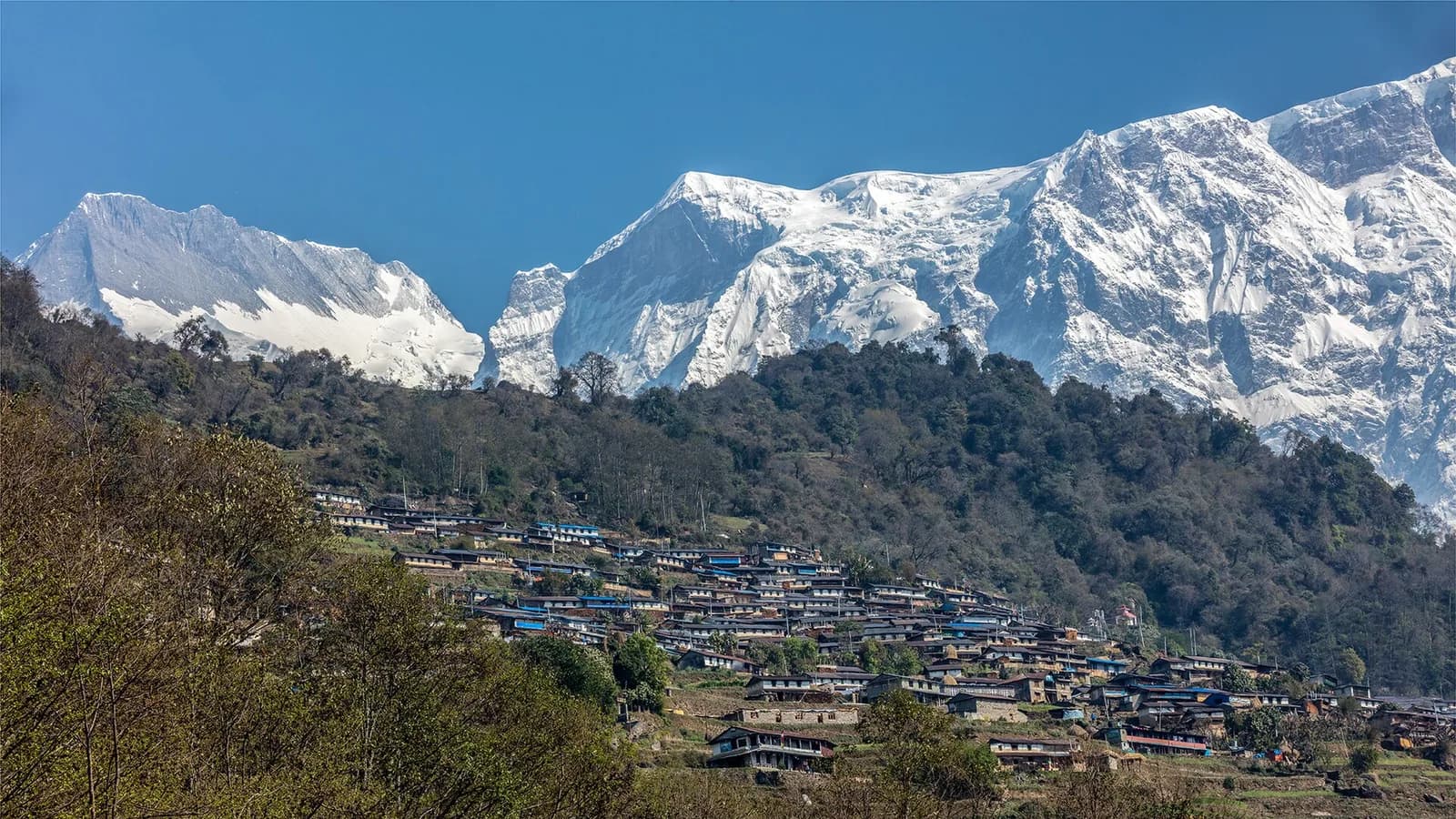
The Gurung people, who call themselves Tamu, are one of the best-known mountain communities of central Nepal — the hill people of the Annapurna region whose stone villages, warm hospitality and proud Gurkha heritage have become part of the trekking story for visitors from around the world. Yet behind the famous soldiers and the postcard villages lies a distinct culture with its own language, religion, dances and social traditions. This guide is a respectful introduction to who the Gurung are and how to encounter their world thoughtfully.
If you have trekked through Ghandruk or planned a walk in the Annapurnas, you have already stepped into Tamu country. This page steps back to look at the people themselves.
Key takeaways
- The Gurung call themselves Tamu and are a Tibeto-Burman people of central Nepal's mid-hills, centred on the Annapurna region.
- Nepal's 2021 census recorded 543,790 Gurungs (about 1.86 percent) of the population, concentrated in Gandaki Province.
- Their language, Tamu Kyi, had roughly 328,074 speakers in 2021 and is considered to be in decline.
- Most Gurung follow Tibetan Buddhism blended with Bon and shamanism, with rituals led by lamas and by Pachyu and Klehbri priests.
- The Rodi, a traditional youth gathering, was once the heart of village social life, and Tamu Lhosar is the community's new year.
- Along with the Magars, Gurungs form a large part of the famous Gurkha soldiers, a deep source of community pride.
Who the Gurung are
The Gurung, endonymously Tamu, are an indigenous Tibeto-Burman group native to the mid-hill and mountainous districts of central Nepal, particularly Gandaki Province. Their heartland lies in the foothills of the Annapurna and Manaslu ranges, in districts including Kaski, Lamjung, Syangja, Gorkha, Tanahun, Parbat, Manang, Mustang and Dolpa. Because so many of their villages sit along the great trekking trails, the Gurung are among the first communities many visitors meet on routes like the Annapurna Base Camp and Annapurna Circuit.
According to Nepal's 2021 census, there are 543,790 Gurungs, about 1.86 percent of the national population. Traditionally a community of farmers and herders working the steep hill terraces, the Gurung have a semi-nomadic pastoral past that included herding sheep across the high foothills — a heritage still visible in upland villages today.
Language: Tamu Kyi
The Gurung speak Tamu Kyi, a Sino-Tibetan language of the Tibeto-Burman family, distinct from the Nepali that serves as the national lingua franca. The 2021 census recorded about 328,074 mother-tongue speakers, or roughly 1.12 percent of the population.
Like several indigenous languages of Nepal, Tamu Kyi shows declining vitality. Rapid urbanisation and decades of labour migration — including the well-trodden path into military and overseas work — mean many families in the childbearing generation no longer pass the language on, and younger Gurung increasingly grow up speaking Nepali. Community organisations now run classes and cultural programmes to keep the language and its oral traditions alive. For wider context, see our overview of the languages of Nepal.
Religion: Buddhism, Bon and shamanism
Gurung spiritual life is a syncretic blend. The majority follow Tibetan Buddhism, but it is interwoven with the older Bon tradition and with indigenous animism centred on nature spirits and ancestor reverence. Some Gurung villages still preserve remnants of a pre-Buddhist Bon religion that flourished more than two thousand years ago, and Hindu influences are also present.
What makes Gurung practice distinctive is its trio of ritual specialists. Alongside Buddhist lamas, the community maintains its own priests — the Pachyu and the Klehbri (also written Ghyabri) — who conduct healing, divination and protective ceremonies, sometimes entering trance states. Among the most important rites are the elaborate Gurung death and memorial ceremonies, which guide the spirit of the deceased and can involve days of ritual. These practitioners carry a body of oral knowledge — chants, genealogies and ritual narratives — that is one of the deepest reservoirs of traditional Gurung culture, and their survival is closely tied to the survival of the Tamu Kyi language itself.
Society: clans and the Rodi
Traditional Gurung society is organised into clan groups, often described as the Char Jat (four clans) and Sora Jat (sixteen clans), which historically carried different social standing and shaped marriage rules — cross-cousin marriage being acceptable while parallel-cousin marriage is forbidden.
The Rodi
Perhaps the most famous Gurung institution is the Rodi (or Rodhi) — a traditional evening gathering where unmarried village youth came together to sing, dance, share work and learn the customs of the community, all under the watchful eye of elders. Part social club, part informal school and part courtship space, the Rodi was where folk songs and dances were passed down and where many couples first met. As young people have moved to towns and schools have spread, the classic Rodi has largely faded, though its songs and spirit survive in cultural performances and revival efforts.
Festivals, music and dance
The great fixed point of the Gurung year is Tamu Lhosar (also written Lhochhar), the Gurung new year, celebrated around the 15th of Poush (late December or early January). Following a twelve-year animal cycle, Lhosar is a joyful occasion of feasting, folk songs, parades and traditional dress, and is celebrated with particular energy in villages like Ghandruk and Sikles.
Two traditional dances stand out:
- Ghatu, a solemn dance performed by young girls that re-enacts an old royal legend and can induce trance-like states.
- Sorathi, a narrative dance-cycle telling the story of a king and his many wives, often performed over many days around Lhosar.
Traditional dress is part of the celebration: Gurung women wear a velvet cholo blouse and a wrap skirt with a colourful shawl and gold jewellery, while men traditionally wear a bhangra (a white cotton garment) with a dark vest and waist cloth.
Gurkha heritage
No account of the Gurung is complete without the Gurkhas. After the Anglo-Nepalese War of 1814–1816, the British were so struck by the fighting qualities of Nepal's hill soldiers that they began recruiting them, and ever since, the Gurung — together with the Magars — have formed a large share of the men serving in the Gurkha regiments of the British and Indian armies, and in forces such as the Singapore Police and the army of Brunei.
This service has shaped Gurung society profoundly: it is a source of immense pride, a major economic lifeline through pensions and remittances, and one reason villages like Ghandruk feel relatively prosperous. You can read more about this heritage in our Ghandruk village guide, where a small museum displays the regalia and khukuri knives associated with Gurkha service.
Traditional life and livelihoods
For most of their history, the Gurung have been a community of the middle and high hills, combining terrace farming with the herding of sheep, goats and yaks across the upland pastures of the Annapurna and Manaslu foothills. This pastoral past — driving flocks up to high grazing in summer and down to the villages in winter — shaped a culture closely attuned to the seasons and the mountains, and it underpins many of the foods, festivals and songs that survive today.
That older economy now sits alongside two powerful modern forces: military and overseas service, and tourism. Generations of Gurkha pensions and, more recently, remittances from labour abroad have transformed many Gurung villages, funding stone houses, schools and small businesses. At the same time, villages along the trekking trails have built lodges, museums and homestays, so that hospitality to visitors has itself become part of the local economy. The result is a community that is at once rooted in old hill traditions and unusually connected to the wider world.
Where to experience Gurung culture
The Annapurna foothills are the natural place to encounter Gurung life, and several villages have become cultural showcases:
| Village | Region | Known for | |---|---|---| | Ghandruk | Kaski | Large stone village, Gurung museum, Annapurna views | | Sikles | Kaski | One of the largest traditional Gurung settlements | | Ghale Gaun | Lamjung | Pioneering community homestay village | | Bhujung | Lamjung | Preserved architecture and farming life |
Many of these sit on or near established trekking routes. The classic introduction is the Ghorepani Poon Hill area around Ghandruk, while the wider region is covered in our best time to visit Nepal guide for timing your trip around clear mountain weather and, if you are lucky, a festival.
Staying in a homestay in a Gurung village — eating home-cooked food, sharing an evening of songs — is one of the most rewarding and respectful ways to engage with the culture. Our homestay in Nepal guide explains how it works. As always, ask before photographing people or ceremonies, accept hospitality graciously, and treat Lhosar and ritual events as the community occasions they are.
Sources
Frequently asked questions
- Who are the Gurung people?
- The Gurung, who call themselves Tamu, are a Tibeto-Burman ethnic group native to the mid-hills of central Nepal, especially the Annapurna region. They are known for their mountain villages, distinctive culture and long service in the Gurkha regiments.
- How many Gurungs are there in Nepal?
- Nepal's 2021 census recorded 543,790 Gurungs, about 1.86 percent of the national population. They are concentrated in Gandaki Province in districts such as Kaski, Lamjung, Syangja and Gorkha.
- What language do the Gurung speak?
- The Gurung language, called Tamu Kyi, is a Sino-Tibetan language of the Tibeto-Burman family. The 2021 census recorded about 328,074 speakers, and the language is considered to be in decline as younger people shift toward Nepali.
- What religion do the Gurung follow?
- Most Gurung follow Tibetan Buddhism blended with the older Bon tradition and indigenous shamanism, with some Hindu influence. Rituals are led by Buddhist lamas and by traditional priests known as Pachyu and Klehbri.
- What is the Rodi?
- The Rodi was a traditional Gurung gathering place where village youth met in the evenings to sing, dance, learn customs and socialise under community oversight. It served as an informal cultural school, though the classic Rodi has largely faded.
- What is Tamu Lhosar?
- Tamu Lhosar is the Gurung new year, celebrated around the 15th of the month of Poush, in late December or early January. It follows a twelve-year animal cycle and is marked with feasts, folk songs, dances and traditional dress.
- Why are Gurungs associated with the Gurkhas?
- Along with the Magars, Gurungs have long made up a large share of the famous Gurkha soldiers recruited into the British, Indian and other armies since the early 19th century. This military service is a major source of community pride.
- Which villages are good for experiencing Gurung culture?
- Ghandruk, Sikles, Ghale Gaun and Bhujung in the Annapurna foothills are well-known Gurung villages with stone houses, museums, homestays and mountain views, several of them on popular trekking routes.
Spotted an error in this post? Tell us or suggest a correction.
Related posts
ABC Trek: A Plain-English Guide to Annapurna Base Camp
The ABC trek (Annapurna Base Camp) explained — the route, how many days it takes, difficulty, the best seasons, and what daily trail life is really like.
Read postAma Dablam Climb: 2026 Expedition Guide (6,812m)
An Ama Dablam climb and expedition guide for 2026 — height, the Southwest Ridge route, camps, fixed ropes, difficulty, permits, cost and the best seasons.
Read postAnnapurna vs Manaslu: Which Trek Should You Choose?
An Annapurna vs Manaslu decision guide for trekkers — compare permits, crowds, difficulty, infrastructure and cost to pick the right Himalayan route.
Read postAsan Bazaar Kathmandu: Old Town Market Guide
A visitor guide to Asan bazaar, Kathmandu's oldest market — its six-road square, Annapurna Temple, what to buy, when to go, and how to get there.
Read postAyurveda Nepal: A Traveller's Guide to Healing
Ayurveda Nepal explained for tourists — the history, the doshas, treatments like Panchakarma and Shirodhara, where to go and how to choose a centre safely.
Read postBest Restaurants Pokhara Lakeside: Where to Eat
The best restaurants in Pokhara Lakeside — lakeside trout, wood-fired pizza, Tibetan momos and healthy cafes, with what to order and rough 2026 prices.
Read post