Languages of Nepal: Official Language & 124 Mother Tongues
Languages of Nepal explained: Nepali is the official language, but the 2021 census counted 124 mother tongues from Maithili to Newar. A clear guide.
One small country, two great language families, and 124 mother tongues spoken between the Himalaya and the plains.
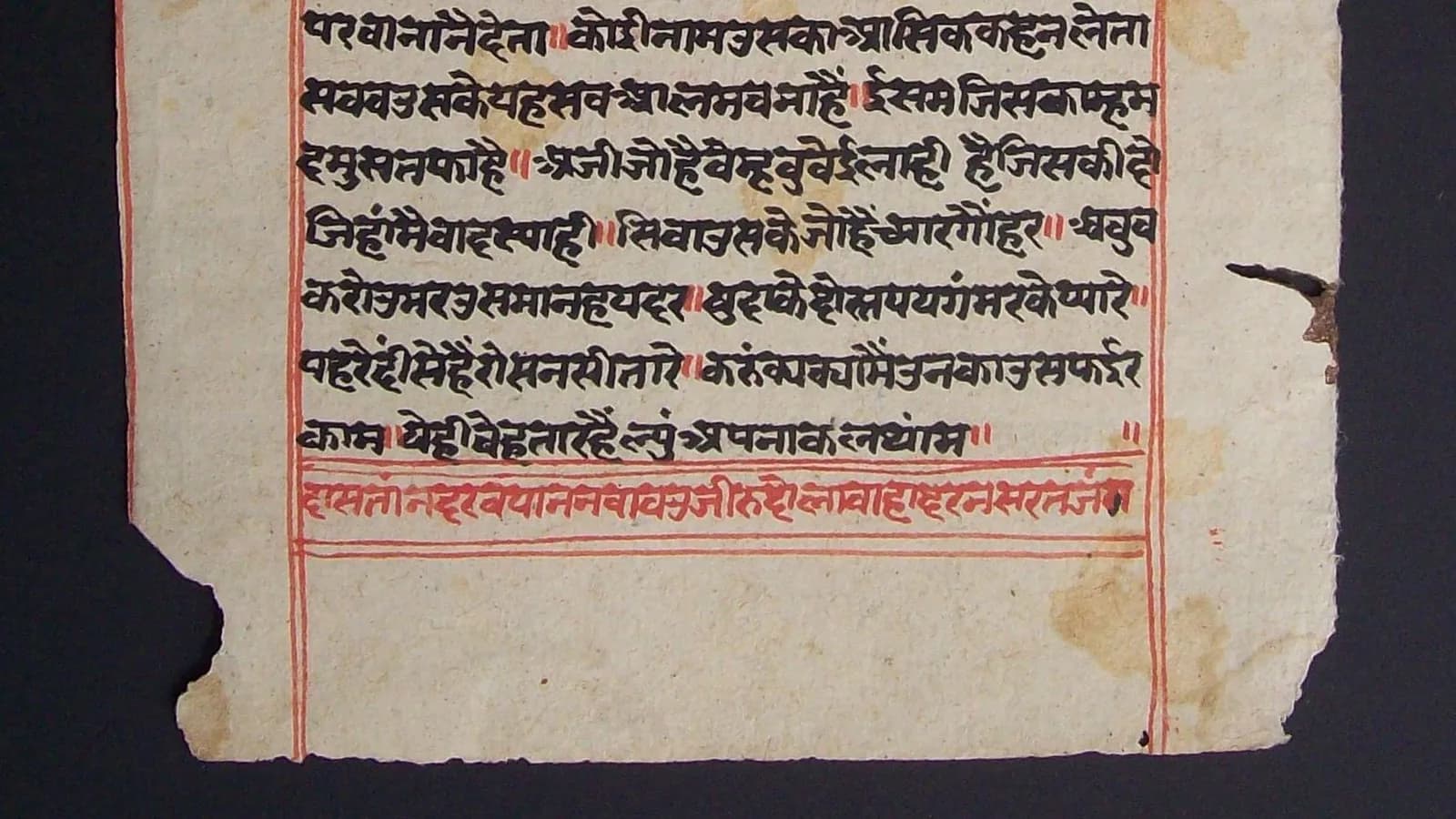
The languages of Nepal are far more varied than the country's modest size suggests. Nepali, written in the Devanagari script, is the official language and the shared tongue that ties the nation together — but it is only the headline. Nepal's most recent census counted a remarkable 124 mother tongues, drawn from two major language families and spoken by communities spread from the high Himalaya to the southern plains. This guide explains what the official language actually is, how many languages Nepalis really speak, which ones dominate, and how the country's constitution handles all that diversity.
Key takeaways
- Nepali, in Devanagari script, is Nepal's official language and its lingua franca.
- The 2021 census recorded 124 mother tongues across the country.
- Only about 44.86% of Nepalis speak Nepali as a first language — though far more speak it as a second.
- After Nepali, the biggest mother tongues are Maithili (~11%) and Bhojpuri (~6%), then Tharu, Tamang, Bajjika, Nepal Bhasa (Newar) and Magar.
- Nepal's languages fall mainly into two families: Indo-Aryan (~83% of speakers) and Sino-Tibetan (~17%).
- The constitution lets provinces adopt additional official languages alongside Nepali.
What is the official language of Nepal?
Nepal's official language is Nepali, written in the Devanagari script. The constitution states plainly that "the Nepali language in the Devanagari script shall be the official language of Nepal." This is the language of the federal government, the courts, national media and the school system, and it is the tongue most Nepalis from different backgrounds use to communicate with one another.
Crucially, though, the constitution draws a careful distinction. It also declares that "all languages spoken as the mother tongue in Nepal are the languages of the nation." In other words, Nepali is the official language for running the state, but every other language in the country has formal status as a national language. That single sentence captures Nepal's whole linguistic philosophy: one shared language for administration, full recognition for everything else.
Nepali as a second language
It is easy to over-read the 44.86% figure for native Nepali speakers and assume the language is a minority tongue. In practice, Nepali functions as the country's lingua franca: huge numbers of Nepalis whose first language is Maithili, Tamang or Newar also speak Nepali fluently as a second language, learning it at school and using it in markets, offices and travel. So while fewer than half of Nepalis are native speakers, the language's real day-to-day reach is much broader.
How many languages are spoken in Nepal?
The headline number is striking: Nepal's 2021 census recorded 124 mother tongues. That is an enormous figure for a country of Nepal's size, and it reflects centuries of distinct communities living in valleys, hills and plains often separated by formidable terrain. The count has grown over time as surveys document languages more thoroughly — the 2011 census listed 123, and newly recorded tongues continue to surface.
This density is one of the things that makes Nepal so culturally rich to travel through. Cross a ridgeline or descend into a new valley and you can find yourself among speakers of an entirely different language, with their own songs, scripts and traditions. It is a major reason the country rewards slow, curious travel — something our guide to why Nepal is worth visiting returns to again and again.
The most spoken languages
While 124 mother tongues exist, a handful account for most speakers. Here are the largest, based on the 2021 census share of the population that speaks each as a first language:
| Language | Share of population | Family | |---|---|---| | Nepali | 44.86% | Indo-Aryan | | Maithili | ~11.05% | Indo-Aryan | | Bhojpuri | ~6.24% | Indo-Aryan | | Tharu | ~5.88% | Indo-Aryan | | Tamang | ~4.88% | Sino-Tibetan | | Bajjika | ~3.89% | Indo-Aryan | | Nepal Bhasa (Newar) | ~2.96% | Sino-Tibetan | | Magar (Dhut) | ~2.78% | Sino-Tibetan |
A few of these deserve a closer look.
Maithili and the languages of the plains
Maithili is Nepal's second most spoken language, the mother tongue of around 11% of the population, concentrated in the southern Tarai plains near the Indian border. Together with Bhojpuri and Bajjika, also spoken across the Tarai, these Indo-Aryan languages of the lowlands account for a large slice of the country. The southern belt, in other words, has a very different linguistic character from the hills.
Nepal Bhasa (Newar) and the Kathmandu Valley
Nepal Bhasa, the language of the Newar people, is the historic tongue of the Kathmandu Valley and carries a deep literary and cultural heritage. It belongs to the Sino-Tibetan family, not the Indo-Aryan one that includes Nepali, and it is woven into the valley's festivals, architecture and cuisine. You can still hear it in the old quarters of Kathmandu and in cities like Patan (Lalitpur) and Bhaktapur, where Newar culture remains strongest.
Tamang, Magar and the hill languages
Up in the hills, Tamang and Magar are among the most widely spoken Sino-Tibetan languages, the first languages of large Indigenous communities across central and western Nepal. These languages, and dozens of smaller ones, give the middle hills a linguistic map quite distinct from both the Tarai and the Kathmandu Valley.
Two language families, one country
Almost all of Nepal's languages belong to one of two great families, and the split is fundamental to understanding the country:
- Indo-Aryan (Indo-European): the largest group by far, covering roughly 83% of speakers. Nepali itself is Indo-Aryan, as are Maithili, Bhojpuri, Tharu and Bajjika. These languages descend ultimately from Sanskrit and dominate the plains and much of the hills.
- Sino-Tibetan: spoken by around 17% of the population but accounting for the largest number of distinct languages — roughly 70 of them. This family includes Tamang, Nepal Bhasa, Magar, Gurung, Limbu and many Himalayan tongues, often spoken by Indigenous mountain communities.
Two smaller families, Austro-Asiatic and Dravidian, are present too, each spoken by a tiny fraction of the population. The meeting of these families in one compact country — the Indo-Aryan world reaching up from the south, the Sino-Tibetan world reaching down from the Himalaya — is exactly what makes Nepal such an unusual linguistic crossroads.
How the constitution handles diversity
Managing 124 mother tongues is no small task, and Nepal's constitution takes a deliberately layered approach:
- Nepali in Devanagari is the single official language of federal government business.
- All mother tongues are recognised as languages of the nation, giving every community's language formal standing.
- Provinces may adopt one or more additional official languages, spoken within their territory, for use alongside Nepali in local administration.
This framework tries to balance two real needs: a common language so the country can function as one, and respect for linguistic identity so no community feels erased. For a country this diverse, it is a pragmatic compromise — Nepali to bind the nation together, and constitutional space for everything else to thrive.
A few endangered voices
Not every one of Nepal's 124 mother tongues is thriving. Many of the smallest Sino-Tibetan languages are spoken by only a few thousand people, or a few hundred, and some are slipping away as younger speakers shift to Nepali for school and work. Linguists consider a number of Nepal's languages endangered, and a handful have very few fluent speakers left at all. Efforts to document and revive them — through local schools, radio and the provincial language provisions — are ongoing, but the pressure of a shared national language is a real force. It is the same tension found in mountainous, multi-ethnic countries the world over: the convenience of one common tongue weighed against the loss of many older ones.
For travellers, this is a quiet reason to listen closely. The song you hear in a hill village or the chatter in a valley market may be in a language that exists nowhere else and is heard by only a small community — a living thread of Nepal's heritage as worth noticing as any temple or peak.
What this means for travellers
For visitors, the practical picture is reassuringly simple. Nepali is the language to learn a few words of, because it works almost everywhere and a single phrase of it opens doors across communities. A warm namaste, a dhanyabad (thank you) and the phrases every trekker should know will carry you a long way. English is also widely used in tourism, so you will rarely be stuck in Kathmandu, Pokhara or on popular trails.
That said, knowing that the person serving your dal bhat might speak Tamang, Maithili or Newar at home — and Nepali as a second language, just as you are attempting it — adds a quiet richness to every interaction. And if you are weighing how Nepali relates to a language you may already know, our comparison of Nepali versus Hindi is the place to start.
Sources
Frequently asked questions
- What is the official language of Nepal?
- Nepali, written in the Devanagari script, is the official language of Nepal and the language of government and federal business. It is also the country's lingua franca, the shared tongue people from different communities use to speak to one another.
- How many languages are spoken in Nepal?
- Nepal's 2021 national census recorded 124 mother tongues spoken across the country. That total reflects an extraordinary range of communities for a nation of Nepal's size, packed between the Himalaya and the southern plains.
- What percentage of Nepal speaks Nepali?
- About 44.86 percent of Nepalis reported Nepali as their mother tongue in the 2021 census, making it the single most spoken first language. Many millions more speak it as a second language, so its real reach across the country is far wider.
- What are the most spoken languages in Nepal after Nepali?
- After Nepali, the most spoken mother tongues are Maithili at around 11 percent and Bhojpuri at around 6 percent, followed by Tharu, Tamang, Bajjika, Nepal Bhasa (Newar) and Magar. Most of these belong either to the Indo-Aryan or the Sino-Tibetan language family.
- Is English widely spoken in Nepal?
- English is widely used in tourism, business, higher education and signage, especially in Kathmandu and Pokhara, so travellers can usually get by. It is not a native language for Nepalis, but many people in tourist-facing roles speak it well.
- Is Nepali the same as Hindi?
- No, though they are related. Both are Indo-Aryan languages written in Devanagari and share much vocabulary, but they are separate languages with different grammar and pronunciation. A Hindi speaker can follow some Nepali but is not fluent in it automatically.
- Do Nepal's provinces have their own official languages?
- Yes. While Nepali is the national official language, the constitution lets each province adopt one or more additional official languages spoken locally, alongside Nepali. This recognises the country's deep linguistic diversity in day-to-day administration.
- What script is used to write Nepali?
- Nepali is written in Devanagari, the same script family used for Hindi and Sanskrit, read from left to right. Many of Nepal's other languages also use Devanagari, though some communities have their own traditional scripts.
Spotted an error in this post? Tell us or suggest a correction.
Related posts
ABC Trek: A Plain-English Guide to Annapurna Base Camp
The ABC trek (Annapurna Base Camp) explained — the route, how many days it takes, difficulty, the best seasons, and what daily trail life is really like.
Read postAma Dablam Climb: 2026 Expedition Guide (6,812m)
An Ama Dablam climb and expedition guide for 2026 — height, the Southwest Ridge route, camps, fixed ropes, difficulty, permits, cost and the best seasons.
Read postAnnapurna vs Manaslu: Which Trek Should You Choose?
An Annapurna vs Manaslu decision guide for trekkers — compare permits, crowds, difficulty, infrastructure and cost to pick the right Himalayan route.
Read postAsan Bazaar Kathmandu: Old Town Market Guide
A visitor guide to Asan bazaar, Kathmandu's oldest market — its six-road square, Annapurna Temple, what to buy, when to go, and how to get there.
Read postAyurveda Nepal: A Traveller's Guide to Healing
Ayurveda Nepal explained for tourists — the history, the doshas, treatments like Panchakarma and Shirodhara, where to go and how to choose a centre safely.
Read postBest Restaurants Pokhara Lakeside: Where to Eat
The best restaurants in Pokhara Lakeside — lakeside trout, wood-fired pizza, Tibetan momos and healthy cafes, with what to order and rough 2026 prices.
Read post