Nepal Map Explained: Provinces, Regions and Highlights
A Nepal map made simple: the seven provinces and their capitals, the three geographic belts, and the highlights to look for when reading a map of Nepal.
Read a Nepal map from south to north and the whole country tells its story — jungle, hills, then the highest mountains on Earth.
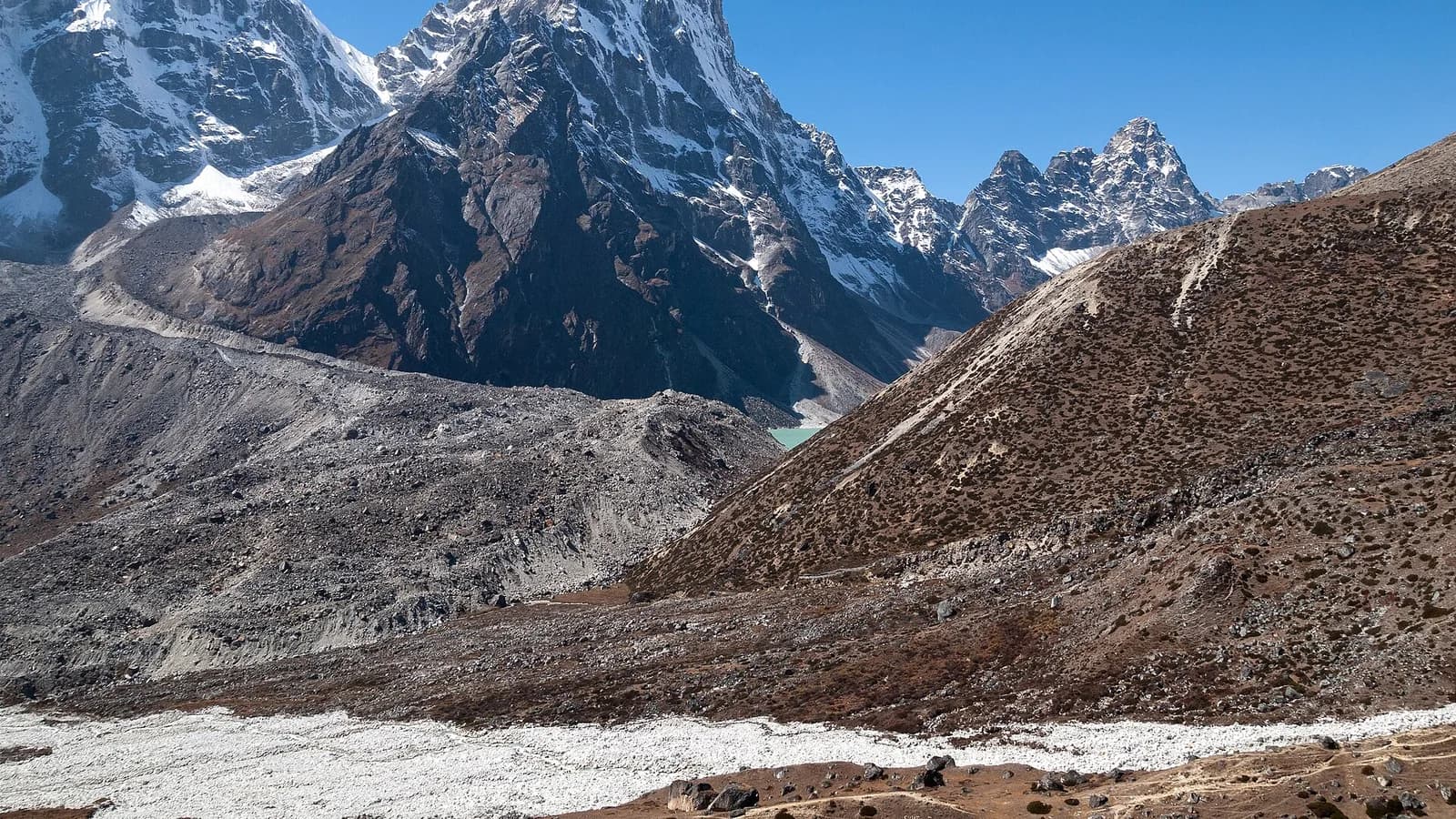
A Nepal map can look busy at first — seven provinces, dozens of districts, mountain names crowding the north — but it follows a simple logic once you know how to read it. The country is a long ribbon stretched east to west along the Himalayas, and almost everything on the map is organised by that shape. This guide makes a map of Nepal easy to read: the seven provinces and their capitals, the three geographic belts that define the terrain, and the highlights to look for. It is the companion to our main guide on where Nepal is, focused on what you actually see when you open the map.
Key takeaways
- Nepal has seven provinces, running east to west: Koshi, Madhesh, Bagmati, Gandaki, Lumbini, Karnali, Sudurpashchim.
- Below the provinces, the country splits into 77 districts and 753 local units.
- A Nepal map reads in three belts south to north: Terai plains, Hills, and high Mountains.
- The national capital, Kathmandu, sits in Bagmati province, roughly in the centre.
- Major highlights cluster in Bagmati (Kathmandu Valley), Gandaki (Pokhara, Annapurna) and Koshi (Everest).
The seven provinces of Nepal
Since the 2015 constitution, Nepal has been a federal republic divided into seven provinces, each with its own provincial government and capital. They run in sequence from the eastern border with India across to the far west. Here they are, east to west, with their capitals.
| Province | Capital | Where it sits | |---|---|---| | Koshi | Biratnagar | Far east; includes the Everest region | | Madhesh | Janakpur | Southeast Terai plains, on the Indian border | | Bagmati | Hetauda | Central hills; contains Kathmandu Valley | | Gandaki | Pokhara | West-central; Annapurna and lake country | | Lumbini | Deukhuri | Southwest; birthplace of the Buddha | | Karnali | Birendranagar | Remote northwest; largest and least populated | | Sudurpashchim | Godawari | Far western corner |
A common point of confusion: Kathmandu is the national capital, but it is not the capital of its own province — that role goes to Hetauda in Bagmati. Kathmandu simply sits within Bagmati's borders. Our overview of Nepal's provinces goes into more detail on each one.
The deeper layers: districts and local units
Provinces are only the top layer. Reading a more detailed administrative map of Nepal, you will see the country divided further into smaller pieces. Nepal runs on three levels of government:
- 7 provinces — the largest federal units.
- 77 districts — the traditional administrative subdivisions, still widely used for everything from licence plates to postal areas.
- 753 local units — municipalities and rural municipalities, the level closest to everyday life.
For most travellers the provinces and districts are all you need, but the layered structure explains why a detailed Nepal map can look so densely subdivided.
The three belts: how the terrain is laid out
The single most useful thing to read off a Nepal map is the three geographic belts that run east to west, with the land rising sharply from south to north. On a topographic or relief map they are unmistakable.
1. The Terai (southern plains)
Along the Indian border lies the Terai, a flat, fertile strip that is part of the Gangetic plain. It is low — dropping to around 60 metres above sea level — hot, and home to much of Nepal's farmland, population and wildlife. The national parks here shelter rhinos and tigers, a world away from the snow peaks. Our overview of Nepal's national parks covers this subtropical south.
2. The Hills (middle belt)
North of the Terai the land buckles into the Hill region, a band of ridges and valleys between roughly 700 and 4,000 metres. This is Nepal's cultural heartland, holding the Kathmandu Valley and the lakeside city of Pokhara. The temperate climate is why most of Nepal's famous towns and temples sit in this zone.
3. The Mountains (northern Himalayas)
Finally comes the Mountain belt, the high Himalayas along the Chinese border. This is where Nepal earns its reputation: eight of the ten tallest mountains on Earth stand here, crowned by Mount Everest at 8,848.86 metres. If that figure interests you, we break it down in our guide to Mount Everest's height.
Highlights to look for on the map
Once the belts and provinces make sense, the highlights fall into place. Here is where Nepal's best-known places sit.
- Kathmandu Valley (Bagmati, central hills) — the capital, ancient temples and the country's main gateway. Start with our guide to Kathmandu.
- Pokhara and the Annapurnas (Gandaki, west) — lakes backed by an 8,000-metre wall of peaks, Nepal's adventure hub. See Pokhara.
- Everest region (Koshi, northeast) — Sagarmatha National Park and the trails toward Everest Base Camp, in the country's far northeast.
- Lumbini (Lumbini province, southwest plains) — the birthplace of the Buddha, a flat-country landmark near the Indian border. See Lumbini.
- Chitwan (Bagmati, southern Terai) — the famous wildlife park where you look for rhinos and tigers rather than mountains.
Notice how they spread across the map: mountains in the north and northeast, lakes and hills in the centre and west, wildlife and sacred sites in the southern plains. That spread is exactly why a Nepal trip can feel like several countries in one.
It is also worth noting what the map does not crowd with highlights. The far west — Karnali and Sudurpashchim provinces — is the most remote and least visited part of the country, holding wild high-altitude treks like Rara Lake and Upper Dolpo but few of the headline names. On most tourist maps this corner looks comparatively empty, which reflects how travel concentrates in the central and eastern belts rather than any lack of scenery. If you are drawn to the quieter side of the map, that western emptiness is precisely the appeal.
A final tip for reading distances: the map's east–west span is long, but the routes between highlights are slow. Roads wind through hills and the terrain is steep, so two places that look close on the page can be a full day apart by vehicle. Plan around travel time rather than straight-line distance, and the map becomes a far more honest guide to a trip.
Reading the map before you travel
A map of Nepal rewards a south-to-north reading. Scan up from the hot plains of the Terai, through the temperate hills where the cities sit, to the icy crest along the Chinese border, and the whole country tells its story in a single glance. Keep the seven provinces in mind for orientation, watch the three belts for terrain, and the highlights will arrange themselves naturally.
If you want to fix Nepal's position in the wider region first, our guide to Nepal on the map covers the neighbours and coordinates. And for everything else about the country, our overview of Nepal is the place to begin planning.
Sources
Frequently asked questions
- How many provinces are on a Nepal map?
- Nepal is divided into seven provinces under its 2015 constitution. From east to west they are Koshi, Madhesh, Bagmati, Gandaki, Lumbini, Karnali and Sudurpashchim, each with its own provincial government and capital.
- What are the seven provinces of Nepal and their capitals?
- The provinces and their capitals are Koshi with Biratnagar, Madhesh with Janakpur, Bagmati with Hetauda, Gandaki with Pokhara, Lumbini with Deukhuri, Karnali with Birendranagar, and Sudurpashchim with Godawari. Kathmandu, the national capital, sits within Bagmati province.
- What are the three regions on a Nepal map?
- A Nepal map splits into three belts running east to west: the low Terai plains in the south, the middle Hill region, and the high Mountain belt of the Himalayas in the north. The land rises sharply as you move from south to north.
- How is Nepal divided administratively?
- Nepal has three levels of government. The country is split into seven provinces, then 77 districts, and then 753 local units made up of municipalities and rural municipalities. This federal structure dates from the 2015 constitution.
- Where is Kathmandu on a Nepal map?
- Kathmandu sits roughly in the centre of Nepal, in a valley in the Hill region, within Bagmati province. It is the national capital and largest city, and most travel routes radiate out from it.
- Which province has the most tourist highlights?
- Gandaki province, with Pokhara and the Annapurna mountains, and Bagmati province, with Kathmandu Valley, hold many of Nepal's best-known highlights. Koshi province in the east contains the Everest region and Sagarmatha National Park.
Related posts
Where Is Nepal? Location, Neighbours and Map Explained
Where is Nepal? A clear guide to Nepal's location in South Asia, its borders with India and China, coordinates, and how to find it on a map.
Read postThe Himalayas: A Traveller's Guide to the Range
The Himalayas explained for travellers — how the range formed, its highest peaks, the rivers it feeds, and the best ways to see it from Nepal.
Read postIs Nepal a Country? Yes — Here Are the Quick Facts
Is Nepal a country? Yes. Nepal is an independent, sovereign nation in South Asia and a UN member since 1955. Here are the quick facts that prove it.
Read post