Nepal Provinces: A Guide to the 7 Federal States
Nepal's provinces explained: the 7 federal states from the 2015 constitution — Koshi, Bagmati, Gandaki, Lumbini and more, and what each is known for.
Nepal redrew itself in 2015 — from a centralised kingdom into a federal republic of seven provinces, each numbered before it was named.
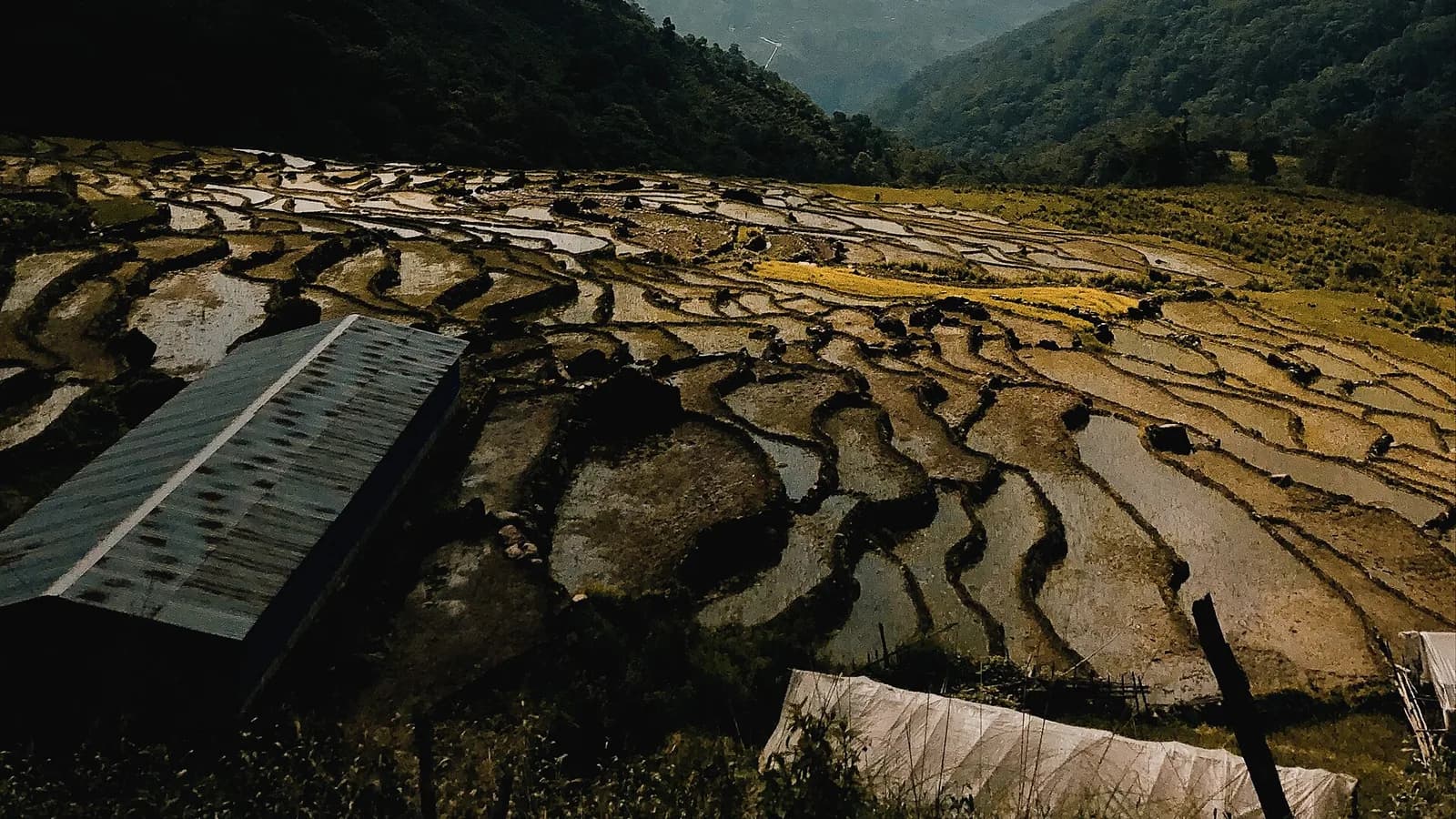
Nepal's provinces are a relatively new feature of an old country. For most of its history Nepal was a centralised kingdom governed from Kathmandu, but the constitution promulgated on 20 September 2015 remade it as a federal democratic republic of seven provinces, each with its own assembly, chief minister and capital. Understanding them is the quickest way to grasp how modern Nepal is organised — and, for a traveller, a clean mental map of where the country's regions and headline sights actually sit.
This guide is an editorial overview of the seven: how they came to be, what distinguishes each one, and how they break down into Nepal's 77 districts. It is a companion to the data-rich explore provinces page, which charts every province by population and area; here we tell the story behind the map rather than repeat the tables.
Key takeaways
- Nepal has 7 provinces, created by the 2015 constitution when the country became a federal republic.
- They are Koshi, Madhesh, Bagmati, Gandaki, Lumbini, Karnali and Sudurpaschim.
- Together they hold 77 districts and 753 local governments; explore them at explore districts.
- Bagmati is the most populous (the Kathmandu Valley); Karnali is the largest by area and least populous.
- Several provinces were numbered first and named years later, between 2018 and 2023.
How Nepal got its provinces
Federalism was one of the central demands of the political upheavals that ended Nepal's monarchy. After a decade-long civil conflict and the abolition of the kingdom in 2008, a long and contested constitution-drafting process finally produced the 2015 constitution, which carved the country into seven provinces along lines meant to balance geography, ethnicity and administrative practicality.
Tellingly, the provinces were born without names. The constitution created them as Province No. 1 through Province No. 7, leaving each provincial assembly to choose a permanent name later by a two-thirds vote — a deliberately devolved decision that took years and, in some cases, sparked debate. Gandaki and others adopted names in 2018; Koshi, the last holdout, only became "Koshi Province" in 2023. This is why older maps and documents still show numbers, and why locals sometimes use both.
The result reorganised the country from the Himalaya in the north to the Terai plains in the south, with most provinces running as vertical strips that each capture a slice of high mountains, middle hills and lowland. For the deeper background, our notes on Nepal's transformation appear throughout the explore history section.
The seven provinces at a glance
Each province has a distinct geography and identity. Rather than reproduce the full statistics — those live on the explore provinces page — here is the character of each, west of the capital and east of it.
Koshi (east)
Nepal's eastern province, named after the great Koshi river system, and home to the country's two highest mountains — Everest and Kanchenjunga — along with Sagarmatha National Park. Its capital is Biratnagar, an industrial city on the southern plains. Koshi blends high Himalaya, tea-growing hills around Ilam, and busy Terai border towns.
Madhesh (south-east)
The smallest province by area but among the most populous and the most densely settled, occupying the fertile Terai plains along the Indian border. Its capital is Janakpur, the city associated with the goddess Sita and the heart of Maithili culture, language and art. Madhesh is Nepal's breadbasket and its most distinctly plains-Indian region.
Bagmati (centre)
The most populous province, with around 6.1 million people, and the political and cultural core of the country. It contains the Kathmandu Valley — the national capital, plus the historic cities of Patan and Bhaktapur — and all seven of Nepal's UNESCO World Heritage zones in the valley. Curiously, the provincial capital is not Kathmandu but Hetauda, to the south. Bagmati is where most visitors begin; see best places to visit in Nepal.
Gandaki (centre-west)
The trekking heartland, built around Pokhara, its capital and Nepal's tourism hub. Gandaki holds the Annapurna and Dhaulagiri massifs and the country's largest conservation area, making it the launchpad for the Annapurna Circuit and a base for things to do in Pokhara. It spans from the high Himalaya through the lake city to the lowlands.
Lumbini (west)
Named for Lumbini, the birthplace of the Buddha, the most significant Buddhist pilgrimage site in the country — see whether Lumbini is worth visiting. The province also takes in Bardia National Park, one of Nepal's best wildlife reserves, and the bustling Terai city of Butwal. Its capital is Deukhuri.
Karnali (north-west)
The largest province by area and the least populous — a vast, rugged, sparsely settled expanse of high mountains and remote valleys in Nepal's north-west. It is home to the spectacular Rara Lake, the country's largest, and some of its most off-the-beaten-path country. The capital is Birendranagar (Surkhet).
Sudurpaschim (far west)
The "far west," long one of the country's least-developed and least-visited regions, with the Khaptad and Shuklaphanta national parks and a distinct far-western culture. Its capital is Godawari, near the Terai city of Dhangadhi. For travellers chasing solitude, it is part of Nepal off the beaten path.
How the provinces compare
The seven provinces are strikingly uneven, and the contrasts tell you a lot about Nepal's geography. The crowded southern plains hold far more people per square kilometre than the empty northern mountains:
| Contrast | Province | Why it stands out | |---|---|---| | Most populous | Bagmati | The Kathmandu Valley | | Largest by area | Karnali | Vast, mountainous, empty | | Smallest by area | Madhesh | Dense Terai plains | | Most-visited | Bagmati & Gandaki | Kathmandu and Pokhara |
The explore provinces page visualises these differences with ranked charts of population and land area — the quickest way to see how Madhesh packs the most people into the least space while Karnali is the reverse.
Three belts cut across every province
There is a second way Nepalis describe their country's geography, older than the provinces and just as useful: the three horizontal belts that run east to west across the whole nation. Because most provinces are vertical strips, each one captures a piece of all three.
- Himal (the high mountains) — the snow-covered north, home to the eight-thousanders and the high trekking valleys. Sparsely populated and bitterly cold in winter.
- Pahad (the middle hills) — the temperate hill country where most Nepalis live, terraced for farming and dotted with towns; Kathmandu and Pokhara both sit in this belt.
- Terai (the southern plains) — the flat, fertile, subtropical lowland along the Indian border, Nepal's agricultural engine and most densely settled zone.
This is why a single province like Gandaki can contain an 8,000-metre peak, a lakeside hill city and a strip of jungle within a few hours' drive. It also shapes the climate you will meet as a traveller: read our best time to visit Nepal guide, because the ideal season differs sharply between the snowy Himal and the steamy Terai. The provinces are the political map; the three belts are the physical one, and you need both to read Nepal.
Provinces, districts and local government
Provinces are only the top tier of Nepal's federal structure. Below them sit 77 districts, and below those 753 local governments — a mix of metropolitan cities, municipalities and rural municipalities that handle day-to-day services. The district count rose from the old 75 to 77 when two districts (Nawalparasi and Rukum) were split across new provincial boundaries during federalisation.
For travellers this matters mostly as orientation: a place is identified by its district, and the district tells you which province and region you are in. Browse the complete breakdown at explore districts, which maps all 77 to their provinces.
Why the provinces matter for a trip
You will rarely hear a traveller say "I'm visiting Bagmati Province" — they say Kathmandu or Pokhara. But the provincial map is a useful planning frame:
- Bagmati for the Kathmandu Valley, temples and the UNESCO sites.
- Gandaki for Pokhara and the Annapurna treks.
- Koshi for Everest and the eastern hills.
- Lumbini for the Buddha's birthplace and Bardia's wildlife.
- Madhesh, Karnali and Sudurpaschim for travellers seeking the plains, remote mountains and the far west respectively.
Pair this with our two-week Nepal itinerary, best time to visit Nepal and, if you are still deciding, is Nepal worth visiting. For the country's headline statistics in one place, the explore facts page collects population, geography and national symbols.
The bottom line
Nepal's seven provinces — Koshi, Madhesh, Bagmati, Gandaki, Lumbini, Karnali and Sudurpaschim — are the framework of a country that reinvented itself in 2015, trading a centralised kingdom for a federal republic of 77 districts and 753 local governments. They range from the crowded, fertile Madhesh plains to the vast emptiness of Karnali, from the temple-rich Kathmandu Valley of Bagmati to the trekking trails of Gandaki and the Buddha's birthplace in Lumbini. Learn the seven and you have a clean map of Nepal in your head. Dig into the numbers at explore provinces and the full district list at explore districts.
Sources
Frequently asked questions
- How many provinces does Nepal have?
- Nepal has 7 provinces, created by the 2015 constitution when the country became a federal republic. They are Koshi, Madhesh, Bagmati, Gandaki, Lumbini, Karnali and Sudurpaschim, and together they contain 77 districts.
- What are the names of Nepal's 7 provinces?
- Koshi, Madhesh, Bagmati, Gandaki, Lumbini, Karnali and Sudurpaschim. Several were originally identified only by number and given their permanent names later, between 2018 and 2023, by their provincial assemblies.
- What is the capital of each province in Nepal?
- Koshi's is Biratnagar, Madhesh's is Janakpur, Bagmati's is Hetauda, Gandaki's is Pokhara, Lumbini's is Deukhuri (near Butwal), Karnali's is Birendranagar (Surkhet) and Sudurpaschim's is Godawari (near Dhangadhi).
- Which is the most populous province in Nepal?
- Bagmati is the most populous province with about 6.12 million people in the 2021 census, narrowly ahead of Madhesh. Bagmati contains the Kathmandu Valley and the national capital.
- Which is the largest province in Nepal by area?
- Karnali is the largest province by area at about 27,984 square kilometres, and also the least populous. Madhesh in the southern plains is the smallest by area but the most densely populated.
- When did Nepal become a federal country with provinces?
- Nepal's seven provinces were established on 20 September 2015 with the promulgation of the new constitution, which transformed the former unitary kingdom into a federal democratic republic.
- How many districts are there in Nepal?
- Nepal has 77 districts spread across the 7 provinces, and below them 753 local-level governments. The district count rose from 75 to 77 when two districts were split across new provincial boundaries.
- Which province should tourists visit in Nepal?
- Most travel happens in Bagmati (Kathmandu Valley) and Gandaki (Pokhara and the Annapurna region), with Lumbini for the Buddha's birthplace and Koshi for the Everest region. Each province offers a distinct slice of the country.
Spotted an error in this post? Tell us or suggest a correction.
Related posts
ABC Trek: A Plain-English Guide to Annapurna Base Camp
The ABC trek (Annapurna Base Camp) explained — the route, how many days it takes, difficulty, the best seasons, and what daily trail life is really like.
Read postAma Dablam Climb: 2026 Expedition Guide (6,812m)
An Ama Dablam climb and expedition guide for 2026 — height, the Southwest Ridge route, camps, fixed ropes, difficulty, permits, cost and the best seasons.
Read postAnnapurna vs Manaslu: Which Trek Should You Choose?
An Annapurna vs Manaslu decision guide for trekkers — compare permits, crowds, difficulty, infrastructure and cost to pick the right Himalayan route.
Read postAsan Bazaar Kathmandu: Old Town Market Guide
A visitor guide to Asan bazaar, Kathmandu's oldest market — its six-road square, Annapurna Temple, what to buy, when to go, and how to get there.
Read postAyurveda Nepal: A Traveller's Guide to Healing
Ayurveda Nepal explained for tourists — the history, the doshas, treatments like Panchakarma and Shirodhara, where to go and how to choose a centre safely.
Read postBest Restaurants Pokhara Lakeside: Where to Eat
The best restaurants in Pokhara Lakeside — lakeside trout, wood-fired pizza, Tibetan momos and healthy cafes, with what to order and rough 2026 prices.
Read post