Lumbini: Buddha's Birthplace Travel Guide (2026)
A complete first-timer's guide to Lumbini, the birthplace of Buddha in Nepal — the Sacred Garden, Maya Devi Temple, monastic zone, fees, and how to plan a visit.
A marker stone, a 23-century-old pillar, and a sacred pond — Lumbini holds the single spot where, by tradition, the Buddha was born.
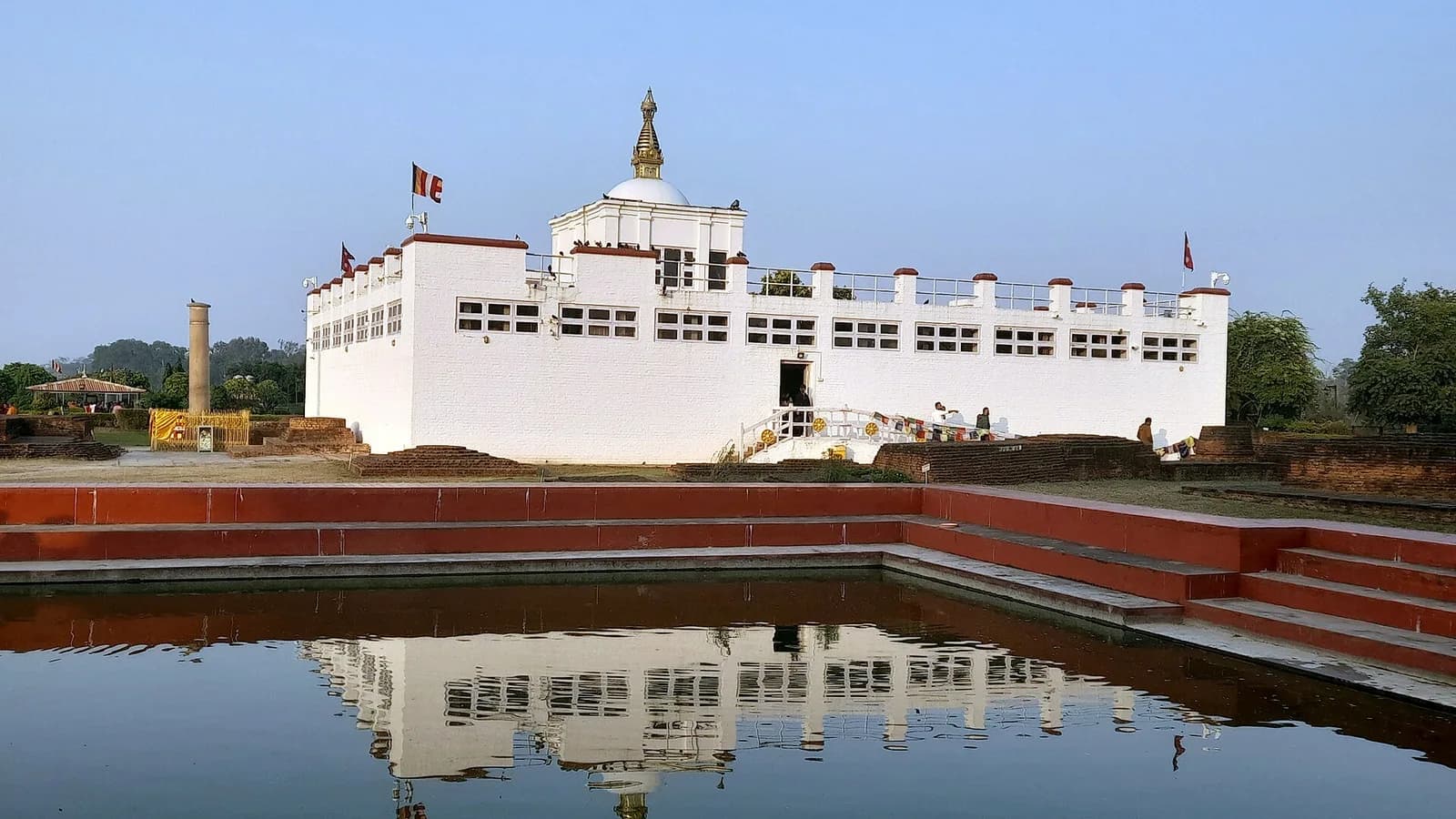
Lumbini, on Nepal's southern Terai plains near the Indian border, is the birthplace of the Buddha — and one of the four holiest sites in Buddhism. By tradition, Queen Maya Devi gave birth to Siddhartha Gautama here around the 6th century BCE, and a sandstone pillar planted by the emperor Ashoka has marked the spot for more than 2,200 years. This guide is the first-timer's overview: what Lumbini actually is, what to see, when to go, and how to plan a calm, respectful visit.
If you want depth on a single thread — the history, the monasteries, meditation retreats, or how to get there — this post links out to focused guides as you go.
Key takeaways
- Lumbini is the birthplace of the Buddha, a UNESCO World Heritage Site since 1997, in Rupandehi district, Lumbini Province, Nepal.
- The heart of the site is the Sacred Garden — the Maya Devi Temple, the Ashoka pillar, and the sacred pond (Puskarini).
- A planned monastic zone, split into an eastern (Theravada) and a western (Mahayana) half, holds dozens of monasteries built by Buddhist nations worldwide.
- One full day covers the highlights; pilgrims and meditators often stay longer in monastery guesthouses.
- October to March is the comfortable season — the Terai is very hot in spring and humid in the monsoon.
- Entry fees, opening hours, and modest dress all apply; confirm current fees at the gate (as of June 2026, the Sacred Garden fee is reported around NPR 200 for foreigners).
Why Lumbini matters
Lumbini is one of the four principal Buddhist pilgrimage places, alongside Bodh Gaya (enlightenment), Sarnath (first teaching), and Kushinagar (passing) — all the others lie in India. Lumbini marks the beginning of the story: the birth.
What makes the claim concrete rather than legendary is the archaeology. The emperor Ashoka visited around 249 BCE and erected a stone pillar whose inscription, in the Brahmi script, records that the Buddha was born at this spot — effectively the world's oldest "you are here" sign for the birthplace. In 2013, a Durham University and Nepali archaeology team excavating beneath the Maya Devi Temple reported a 6th-century BCE timber shrine, among the earliest physical evidence of Buddhist worship at the site.
For the long version of the history — Ashoka's pillar, the rediscovery of Lumbini in 1896, and the excavations — see our companion post, Lumbini: birthplace of Buddha.
The Sacred Garden: the spiritual core
Everything radiates from the Sacred Garden, the green, flat heart of the site. Three things anchor it:
- The Maya Devi Temple — a low white building that shelters the marker stone said to pinpoint the exact birthplace, along with an ancient nativity sculpture and the excavated brick foundations. Shoes come off; photography inside is usually restricted.
- The Ashoka pillar — the inscribed sandstone column beside the temple, the document in stone that ties Lumbini to the historical record.
- The sacred pond (Puskarini) — the still tank where, by tradition, Maya Devi bathed before the birth. A venerable Bodhi tree draped in prayer flags stands nearby, and pilgrims sit beneath it in silence.
The garden is a place to slow down. If meditation is your reason for coming, our guide to Lumbini meditation retreats covers Vipassana centres, monastery sits, and where to find quiet.
Fees and hours
The Sacred Garden generally opens around sunrise and closes near sunset (roughly 6:00 am to 6:00 pm). Fees vary by nationality and have changed over the years; recent visitor reports put the Sacred Garden entry at around NPR 200 for foreign nationals, with lower rates for SAARC and Nepali visitors (as of June 2026). The small Lumbini Museum charges a separate, modest fee. Because these figures shift, treat them as a guide and confirm the current amount at the ticket counter.
The monastic zone: a world map of Buddhism
North of the Sacred Garden runs a long central canal, and along it sits one of Lumbini's most surprising features: a planned monastic zone where Buddhist countries have each built a national monastery. The layout, part of a master plan drawn up by the Japanese architect Kenzo Tange in the late 1970s, splits the zone into two halves:
| Zone | Tradition | Examples of national monasteries | | --- | --- | --- | | East Monastic Zone | Theravada | Sri Lanka, Myanmar, Thailand, Cambodia | | West Monastic Zone | Mahayana / Vajrayana | China, Korea, Vietnam, Japan, Germany, France |
Walking the canal is like flipping through an atlas of Buddhist architecture in an afternoon — a golden Thai roofline here, a Tibetan-style gompa there, a serene German temple further on. There are dozens of monasteries in all, and you will not see every one; pick a handful that draw your eye.
For a building-by-building walk-through and a sensible one-day route, see Lumbini monasteries: a guide to the monastic zone.
The World Peace Pagoda and Eternal Peace Flame
At the far north end stands the gleaming white World Peace Pagoda, built by Japanese Buddhists of the Nipponzan-Myohoji order — a peaceful spot to end a slow loop of the grounds. Near the Sacred Garden, the Eternal Peace Flame, first lit in 1986, burns as a symbol of world peace. Together they bookend the site's north-south axis.
Getting there and getting around
Lumbini is in the lowlands, far from Nepal's mountain trails, so the journey is its own decision.
- By air: Fly Kathmandu to Bhairahawa (Gautam Buddha International Airport) in around 30 minutes, then drive the roughly 22 km to Lumbini. This is the fastest option.
- By road: Tourist buses and private vehicles run from Kathmandu (about 8–10 hours), Pokhara (about 7–8 hours), and Chitwan (about 4–5 hours) through the hot Terai.
For a full comparison of bus, flight, and private jeep — with honest timings and the final hop into Lumbini — read Kathmandu to Lumbini: how to get there.
Inside the complex
The development zone is large but flat and walkable. Bicycles and electric rickshaws are the most efficient way to cover the distance between the Sacred Garden and the far monasteries — a pleasant, low-effort way to see more without rushing.
When to go and what to expect
The single most important planning fact: Lumbini is hot. It sits on the plains, not in the hills, and the climate is very different from Kathmandu or the trekking regions.
| Season | Months | What to expect | | --- | --- | --- | | Cool, dry | Oct–Mar | The comfortable window — best for walking and outdoor meditation | | Hot, dry | Apr–early Jun | Intense pre-monsoon heat on the plains | | Monsoon | Jun–Sep | Humid, green, with rain; fewer crowds |
October to March is the clear sweet spot. Whenever you go, set expectations honestly: the actual birthplace marker is modest, and the monastic zone is a quiet, contemplative park rather than a spectacle. That is the point — but it surprises travellers expecting grandeur. For a candid take on whether it suits you, see Is Lumbini worth visiting?.
How long to stay
- Half a day to a day: Enough to see the Sacred Garden, the Maya Devi Temple, and a handful of standout monasteries by bicycle or rickshaw.
- Two to three days: Comfortable for pilgrims, slow travellers, and anyone meditating — time to revisit the garden at dawn and explore both monastic zones.
- Longer: Some visitors settle into a monastery guesthouse for retreat-style stays.
If you are short on time and only passing through, a focused single day still captures the essence.
Etiquette and practical tips
Lumbini is an active pilgrimage site, so a little courtesy goes a long way.
- Dress modestly — cover shoulders and knees, especially in the Sacred Garden and monasteries.
- Remove your shoes before entering the Maya Devi Temple and individual monastery halls.
- Keep quiet in meditation areas, and ask before photographing people or temple interiors.
- Walk clockwise around stupas and shrines, following local pilgrims.
- Donations at monasteries are typically given as dana (a freewill offering), not a fixed ticket.
- Carry water and sun protection — shade is limited and the heat is real.
A few words of greeting help, too. A respectful "Namaste" works everywhere in Nepal; you can pick up more from our basic Nepali phrases and learn how to say hello in Nepali before you go.
Where to stay and eat
Accommodation clusters in three areas: simple guest rooms inside the monastic zone (offered to pilgrims on a donation basis), guesthouses and hotels in Lumbini bazaar just outside the gate, and a wider range in nearby Bhairahawa, which has more restaurants and services. Food near the site leans toward simple Nepali and Indian fare; many monastery kitchens serve vegetarian meals to guests. If you want to understand the staple you will eat most, our guide to dal bhat explains the national plate.
Combining Lumbini with the rest of Nepal
Because it sits on the Terai, Lumbini pairs naturally with other lowland stops rather than mountain treks. Many travellers link it with a wildlife safari at Chitwan National Park to the east, or break the overland journey in the hill town of Bandipur. If you are mapping a wider itinerary, see our roundup of the best places to visit in Nepal to slot Lumbini into the bigger picture.
Sources
- Lumbini — Wikipedia
- Maya Devi Temple, Lumbini — Wikipedia
- Lumbini, the Birthplace of the Lord Buddha — UNESCO World Heritage Centre
- Lumbini, the Birthplace of Buddhism — Nepal Tourism Board
- Lumbini Development Trust
- Getting from Kathmandu to Lumbini — Third Rock Adventures
- Flights to Bhairahawa — Buddha Air
- Nepal heritage sites entrance fees — Regulus Nepal
Frequently asked questions
- Where is Lumbini and was the Buddha born in Nepal?
- Lumbini sits in Rupandehi district on Nepal's southern Terai plains, near the Indian border. By tradition Siddhartha Gautama was born here, inside present-day Nepal, a claim supported by Ashoka's pillar and modern excavations.
- Is Lumbini a UNESCO World Heritage Site?
- Yes. UNESCO inscribed Lumbini on the World Heritage List in 1997 as the birthplace of the Lord Buddha and a major Buddhist pilgrimage centre.
- How much does it cost to enter the Sacred Garden?
- Recent visitor reports put the Sacred Garden fee at around NPR 200 for foreign nationals with lower rates for SAARC and Nepali visitors (as of June 2026), but fees change, so confirm the current amount at the ticket counter on arrival.
- How long do I need at Lumbini?
- Most travellers find one full day enough to see the Sacred Garden and the highlight monasteries, while pilgrims and meditators often stay two to three days or longer in a monastery guesthouse.
- What is the best time of year to visit Lumbini?
- October to March brings the most comfortable weather for walking and outdoor meditation, as the Terai plains turn very hot from April through the pre-monsoon months.
- How do I get from Kathmandu to Lumbini?
- You can fly Kathmandu to Bhairahawa in roughly 30 minutes then drive about 22 km, or take a tourist bus or private vehicle overland in around eight to ten hours; see our dedicated Kathmandu to Lumbini guide.
- What should I wear at Lumbini?
- Dress modestly with shoulders and knees covered, and be ready to remove your shoes before entering the Maya Devi Temple and individual monasteries.
- Can I stay overnight inside the Lumbini complex?
- Several monasteries in the monastic zone offer simple guest rooms to pilgrims on a donation basis, and there are hotels and guesthouses in nearby Lumbini bazaar and Bhairahawa.
Related posts
Lumbini: Birthplace of Buddha in Nepal
Lumbini, the birthplace of Buddha in southern Nepal, holds the Maya Devi Temple, Ashoka's pillar, and a UNESCO-listed sacred garden. Here's the full story.
Read postLumbini Monasteries: A Guide to the Monastic Zone
A guide to the Lumbini monasteries: the East and West Monastic Zones, which countries built what, and how to actually see them in a day.
Read postLumbini — Is It Worth Visiting? An Honest Answer
The birthplace of Buddha is sacred. It's also remote, hot, and not what most tourists expect. Here's who should go and who shouldn't bother.
Read post