Lumbini Monasteries: A Guide to the Monastic Zone
A guide to the Lumbini monasteries: the East and West Monastic Zones, which countries built what, and how to actually see them in a day.
One garden, two traditions, and three dozen national temples — a world map of Buddhism laid out around a single canal.
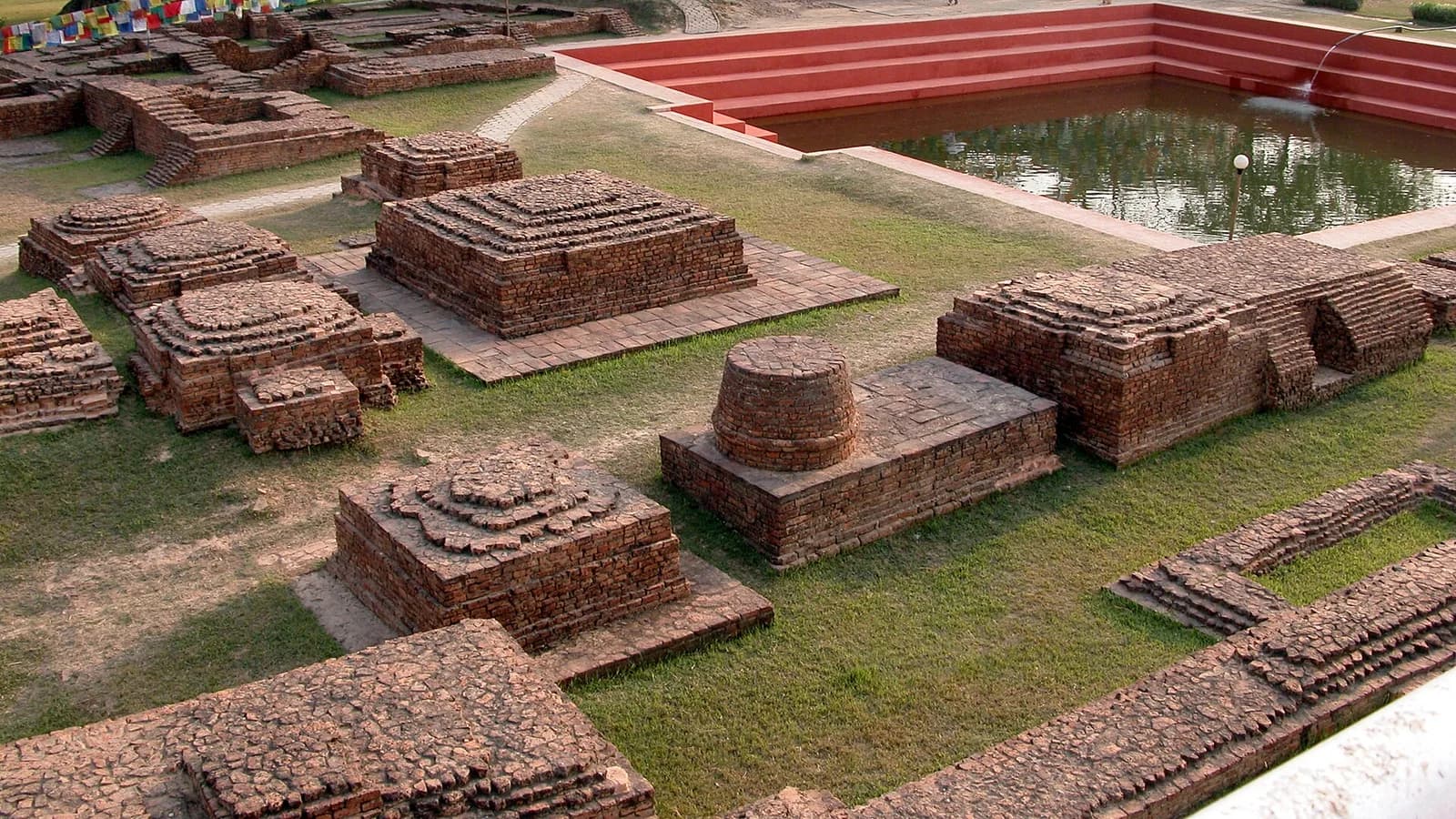
The Lumbini monasteries are the part of Buddha's birthplace that most surprises first-time visitors. Beyond the famous Maya Devi Temple and the ancient Ashoka pillar lies a vast, planned park where Buddhist nations from around the world have each built a temple in their own architectural style. Walk or cycle through it and you pass from a white Thai marble hall to a Burmese golden stupa to a Tibetan-style painted shrine within a single afternoon. This guide explains how the monastic zone is organised, which countries built what, and how to see it without wilting in the Terai heat.
Key takeaways
- The Lumbini monasteries sit inside a dedicated Monastic Zone that forms the middle section of the Kenzo Tange Master Plan, between the Sacred Garden and the New Lumbini Village.
- A central canal and a long pedestrian walkway split the zone into an East Monastic Zone (Theravada) and a West Monastic Zone (Mahayana and Vajrayana).
- The plan reserves 42 plots (13 east, 29 west); roughly 32 monasteries and meditation centres have been built or are under construction, each by a different country or organisation.
- Standout temples include Thailand's white-marble hall, Myanmar's Shwedagon-inspired golden stupa, the German-funded Great Lotus Stupa with its painted interior, and South Korea's towering Dae Sung Shakya temple.
- The individual monasteries are generally free to enter in daylight; only the Maya Devi Temple charges admission.
- Allow at least half a day, bring water and sun cover, and consider a bicycle or rickshaw because the zone is large and flat.
How the monastic zone is laid out
To make sense of the monasteries, it helps to understand the master plan they sit inside. In 1978 the Japanese architect Kenzo Tange was commissioned to design a long-term plan for Lumbini, and his blueprint still governs the site today. It organises the area along a north-south axis into three linked zones — the Sacred Garden at one end, the New Lumbini Village at the other, and the Monastic Zone in the middle — with the idea of a symbolic path leading toward the birthplace.
The Monastic Zone itself is about a square mile. A roughly 1.6 km pedestrian walkway and a central canal run down the middle, neatly dividing the temples into two halves. This is not just a tidy bit of planning: the division reflects the two great branches of Buddhism, and which side a country's temple sits on tells you something about the tradition it follows.
East versus West: Theravada and Mahayana
The split is the single most useful thing to know before you wander in.
| Feature | East Monastic Zone | West Monastic Zone | |---|---|---| | Tradition | Theravada | Mahayana and Vajrayana | | Typical countries | Thailand, Myanmar, Sri Lanka, India, Nepal | Japan, China, South Korea, Vietnam, Germany, Austria, Tibetan/Himalayan groups | | Plots reserved | 13 | 29 | | Architectural feel | Often white, restrained, stupa-centred | Often colourful, ornate, heavily painted |
The East Monastic Zone is reserved for the Theravada school followed across much of South and Southeast Asia. The West Monastic Zone is dedicated to the Mahayana and Vajrayana traditions of East Asia and the Himalaya. Because the two branches developed distinct artistic languages, crossing the canal genuinely changes the architecture around you.
How many monasteries are actually there?
Numbers vary depending on what you count and when, because construction has continued slowly for decades. The widely reported figures are 42 reserved plots in total — 13 in the East Zone and 29 in the West — with around 32 monasteries and meditation centres built or under construction. Reporting from Nepal's tourism authorities describes the East Zone as having roughly seven operating Theravada monasteries plus a Vipassana centre, and the West Zone as the busier half with well over a dozen Mahayana monasteries and a couple of meditation centres in operation, plus several still being built. Expect a few sites to be works in progress when you visit.
The monasteries worth seeking out
You do not need to see all of them. A handful stand out for their architecture, and they are spread across both zones, so a sensible loop takes in several without backtracking. The notes below describe what each is known for; treat them as orientation rather than a strict tick-list.
East Monastic Zone highlights
The Royal Thai Monastery is one of the most photographed buildings in Lumbini, a gleaming hall faced in white marble that reflects the clean, pale aesthetic of much Thai Theravada architecture. Nearby, Myanmar's Golden Temple echoes the famous Shwedagon Pagoda of Yangon with its golden, bell-shaped stupa — a strong contrast to the Thai whites. Sri Lanka, India and Nepal are also represented on this side, and Nepal's contribution includes a temple associated with Buddhist nuns. The Theravada half tends to feel quieter and more pared-back, which suits its meditative tradition.
West Monastic Zone highlights
The West Zone is where the architecture turns loud and varied. The German-funded Great Lotus Stupa (linked to the Drigung Kagyu Tibetan tradition and built with support from the German Tara Foundation) is a favourite for its interior: the domed ceiling of the main prayer room is covered in detailed Buddhist murals, and the structure carries a great deal of painted and decorative work themed around peace and non-violence. South Korea's Dae Sung Shakya temple is frequently described as one of the tallest buildings in the zone, with elaborately painted Korean-style ceilings. China, Japan, Vietnam and Austria are among the other nations with temples here, each rendered in an unmistakable national idiom — from sweeping Chinese rooflines to more austere modern forms.
The World Peace Pagoda
At the northern end of the wider Lumbini area stands the World Peace Pagoda, a large white stupa built by the Japanese Nipponzan Myohoji order and completed in 2001. Its four sides carry golden Buddha images representing birth, enlightenment, the first sermon and the passing — the four great events of the Buddha's life. It sits a little apart from the dense cluster of national monasteries and makes a natural turnaround point if you are working your way up the canal.
Getting around the zone
The Monastic Zone is large and dead flat, which is good news and bad news: easy to move through, but a long way to cover on foot in the heat. You have a few options.
| Option | Rough cost (as of June 2026) | Best for | |---|---|---| | Walking | Free | A slow, meditative pace if the weather is cool | | Bicycle hire | Around NPR 200 per day | Independent exploring at your own speed | | Battery rickshaw (e-rickshaw) | Around NPR 500-800 for a shorter loop | Covering the main temples in a few hours with little effort |
Prices are indicative and were reported in 2024-2026 traveller accounts; confirm the rate before you set off, as fares are negotiated rather than fixed. A shorter rickshaw circuit of roughly three to four hours covers the principal monasteries on both sides of the canal. Cycling gives you the freedom to stop wherever you like, which many visitors prefer. Whatever you choose, carry plenty of water and ideally a packed lunch, because there is little for sale once you are deep inside the development zone.
A practical half-day plan
If you only have part of a day, a workable approach is to start near the Sacred Garden, move up one side of the canal taking in the major temples of that zone, cross over at the top near the World Peace Pagoda, and return down the other side. That way you experience the Theravada and Mahayana halves back to back and end where you started. Early morning is the most comfortable and atmospheric time, with cooler air and the chance of hearing chanting drift across the park.
Visiting respectfully
These are active places of worship, not museums, so a few simple habits matter. Dress modestly with shoulders and knees covered, and remove your shoes before stepping into a prayer hall. Photography is usually fine in the grounds, but be discreet inside shrine rooms and around anyone who is meditating or praying — and remember that inside the Maya Devi Temple itself photography is restricted. Keep your voice low. Our guide to Nepal temple etiquette for tourists covers the wider do's and don'ts that apply here as much as at Hindu sites.
Some monasteries welcome visitors to sit quietly for meditation, and a number run formal courses or offer simple lodging to pilgrims. If staying overnight in a monastery appeals, arrange it directly with a specific monastery beforehand rather than turning up and hoping, since availability varies.
When to go
Lumbini lies in the Terai, the hot lowland plain along the Indian border, so timing matters more than at higher-altitude sites. The cool, dry months from roughly October to March are by far the most comfortable for walking the monastic zone, with pleasant daytime temperatures. The pre-monsoon months of April and May can climb past 40°C, which makes a midday wander between temples genuinely punishing; if you visit then, stick to early morning and late afternoon. The summer monsoon brings heat, humidity and rain. For a fuller breakdown, see our notes on Nepal weather by month.
How the monasteries fit your trip
The monastic zone is the main reason a Lumbini visit can fill two days rather than two hours. A common pattern is to spend the first afternoon among the monasteries and the next dawn at the Maya Devi Temple in the Sacred Garden. Many travellers pair Lumbini with a southern-Nepal loop — a jungle safari at Chitwan, then on to the Buddha sites — or use it as a stepping stone across the border into India's Buddhist circuit. For the deeper history of the site, read our companion piece on Lumbini, the birthplace of Buddha, and for a frank take on whether the journey suits you, see is Lumbini worth visiting. To place it all in context, our overview of Buddhism in Nepal explains the traditions these temples represent.
The pleasure of the monastic zone is precisely that it is a world tour in miniature: in one quiet, planned park you can compare how Thailand, Myanmar, Korea, Germany, China and Japan each chose to honour the same birthplace. That is something you will not find at any other Buddhist site on earth.
Sources
- Lumbini — Wikipedia
- Sacred Monasteries of Lumbini: A Global Monastic Landscape of Peace — Nepal Tourism Board
- The Lumbini Master Plan — Lumbini Development Trust
- Lumbini International Monasteries — Lumbini Development Trust
- West Monastic Zone — World Heritage Journeys: Buddha (UNESCO)
- World Peace Pagoda, Lumbini — Wikipedia
- Great Drigung Kagyud Lotus Stupa — Lonely Planet
- Lumbini Nepal Travel Guide — The Longest Way Home
Frequently asked questions
- How many monasteries are there in Lumbini?
- The master plan reserves 42 plots split between the two monastic zones, and roughly 32 monasteries and meditation centres have been built or are under construction, each by a different country or Buddhist organisation.
- What is the difference between the East and West Monastic Zones?
- The East Monastic Zone is reserved for the Theravada tradition followed in South and Southeast Asia, while the West Monastic Zone holds the Mahayana and Vajrayana temples of East Asian and Himalayan countries.
- Do you have to pay to enter the Lumbini monasteries?
- Reports indicate the individual monasteries are free to enter during daylight hours; only the Maya Devi Temple in the Sacred Garden charges an entry fee, so confirm current prices at the ticket office by the gate.
- How long do you need to see the monastic zone?
- A focused loop of the main temples by rickshaw takes about three to four hours, while walking or cycling the whole zone at a relaxed pace can fill the better part of a day.
- Which is the tallest monastery in Lumbini?
- South Korea's Dae Sung Shakya temple is often cited as one of the tallest structures in the monastic zone, with a richly painted Korean-style interior.
- Can you stay overnight in a Lumbini monastery?
- Some monasteries offer simple accommodation to pilgrims and meditators, and a few run meditation courses; arrangements vary, so contact a specific monastery in advance rather than assuming a bed is available.
- Who designed the layout of the monastic zone?
- The overall plan came from Japanese architect Kenzo Tange, whose 1978 design organises Lumbini into a Sacred Garden, a Monastic Zone, and a New Lumbini Village along a north-south axis with a central canal.
- What should I wear to visit the monasteries?
- Dress modestly with shoulders and knees covered as you would at any active religious site, remove your shoes before entering prayer halls, and carry water and sun protection because the Terai gets very hot.
Related posts
Lumbini: Birthplace of Buddha in Nepal
Lumbini, the birthplace of Buddha in southern Nepal, holds the Maya Devi Temple, Ashoka's pillar, and a UNESCO-listed sacred garden. Here's the full story.
Read postLumbini: Buddha's Birthplace Travel Guide (2026)
A complete first-timer's guide to Lumbini, the birthplace of Buddha in Nepal — the Sacred Garden, Maya Devi Temple, monastic zone, fees, and how to plan a visit.
Read postLumbini — Is It Worth Visiting? An Honest Answer
The birthplace of Buddha is sacred. It's also remote, hot, and not what most tourists expect. Here's who should go and who shouldn't bother.
Read post