Luxury Everest Base Camp Trek: 2026 Guide
How a luxury Everest Base Camp trek works in 2026 — heated 5-star lodges, a private guide, helicopter return, costs and who it suits.
Same trail, same thin air, same dawn on Everest — only the bed at the end of the day gets warm.
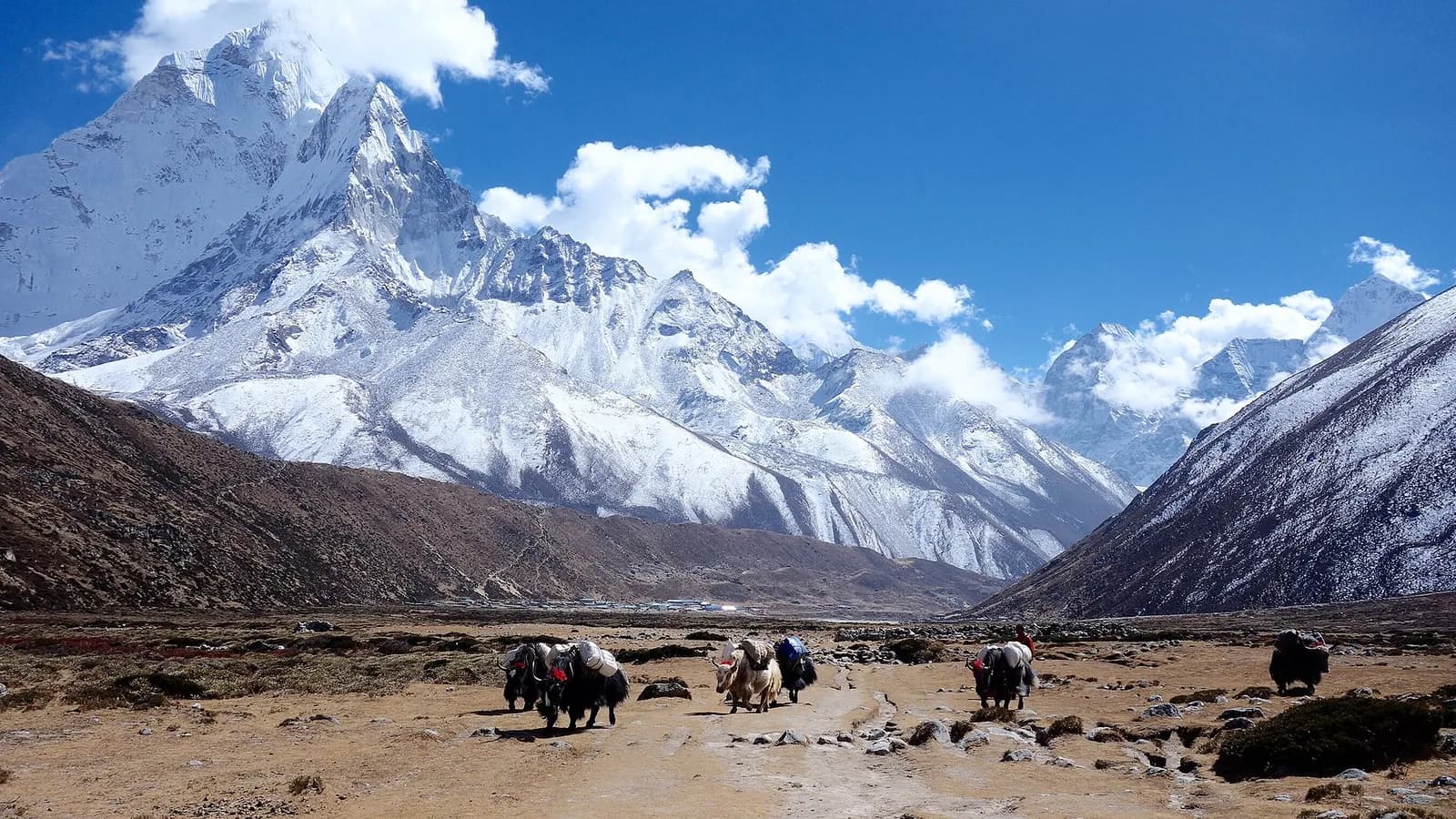
A luxury Everest Base Camp trek does not change the mountain. You still walk the classic Khumbu trail through Namche, Tengboche and Dingboche, you still stand at 5,364 m beneath the Khumbu Icefall, and you still climb Kala Patthar for the postcard view of Everest at dawn. What changes is everything between the walking: heated lodges with proper beds, en-suite bathrooms, cooked-to-order food, a private guide watching your pace, and — most signature of all — a helicopter that flies you back instead of marching you down the same valley. This guide explains what that upgrade actually buys in 2026, where the comfort runs out, what it costs, and who it genuinely suits.
For the wider picture across both the Everest and Annapurna regions, see our companion guide to luxury trekking in Nepal. This article zooms in on the Khumbu.
Key takeaways
- A luxury EBC trek keeps the walking identical but upgrades the nights — heated rooms, en-suite bathrooms, better beds and richer menus, usually with a private guide.
- The premium lodge network is concentrated in the lower and middle Khumbu (Phakding, Namche, Deboche); the highest villages stay basic, so no trek is "5-star" the whole way.
- The defining feature is the helicopter return, which typically trims two to three descent days and gets tired legs off the trail.
- Published 2026 prices span widely — from around USD 2,250 for a heli-return package to USD 4,000–6,000+ for fully premium trips (as of June 2026).
- Comfort aids rest and acclimatisation, but altitude sickness ignores your budget; built-in acclimatisation days, a watchful guide and evacuation insurance remain essential.
- The headline stays are Hotel Everest View (~3,880 m, a Guinness record holder) and the helicopter-accessed Kongde lodge (~4,250 m).
What "luxury" actually means in the Khumbu
"Luxury" is a marketing word, so it pays to be concrete. On the Everest Base Camp trail it refers to a specific set of upgrades over the standard teahouse trek, and the biggest of them is where you sleep.
The lodges
Premium operators advertise heated rooms or heated beds, en-suite bathrooms with hot running water, proper beds with linens rather than a bring-your-own sleeping bag, and dining rooms angled at the peaks. The best-known network is Mountain Lodges of Nepal — formerly Yeti Mountain Homes — which describes a collection of premium lodges split between the Everest and Annapurna/Manang regions (source: Mountain Lodges of Nepal). One widely sold 2026 luxury itinerary, for example, places four nights in these premium lodges at Phakding, Namche and Deboche, with the remaining nights in the best available standard lodges higher up (source: Discover Altitude).
That split matters. The premium beds cluster in the lower and middle Khumbu. Above Deboche — at Dingboche, Lobuche and Gorak Shep — you are back in standard teahouses, because that is all that exists. Any honest operator will tell you a luxury EBC trek is comfortable at the bottom and basic at the top.
The food and the pace
Luxury lodges run smaller, fresher kitchens with multi-course set menus and better coffee. The classic dal bhat is still there and still excellent, but it is one choice among many. Just as important, luxury trips are almost always private rather than group departures, built around a gentler daily rhythm with deliberate acclimatisation. That slower pace is not just indulgence — it genuinely helps your body adjust.
The signature lodges
Two properties define the premium Khumbu experience, and they are worth knowing by name.
Hotel Everest View
Perched on the Syangboche ridge above Namche at about 3,880 m, Hotel Everest View opened in 1971 and is listed in Guinness World Records as the highest-placed hotel in the world (source: Hotel Everest View). It is reached by a steep walk of roughly two hours up from Namche, or by helicopter from Kathmandu. Many trekkers fold a night or a long lunch here into the route for the headline panorama of Everest, Lhotse and Ama Dablam. Note the careful wording of the record: at least a couple of buildings sit higher today, but the Guinness category is specifically a hotel, and Everest View's blend of altitude, amenities and view keeps the title.
The Kongde lodge
Higher still, at about 4,250 m, sits the Kongde lodge (part of the same Mountain Lodges of Nepal / Yeti Mountain Home collection), named after the Kongde Ri peak across the valley. It is reached mainly by helicopter rather than the main trail, and is often sold as a flightseeing-and-breakfast experience with aerial views of the Everest massif (source: Mountain Lodges of Nepal). Because of the altitude and the way most guests arrive — flying up fast rather than walking — it is a spectacle stop, not an acclimatisation one.
The helicopter factor
If one thing separates a luxury EBC trek from a standard guided one, it is the helicopter. It appears in three distinct roles.
Trek up, fly back
The most popular luxury format is to walk the ascent at a sensible acclimatisation pace, reach Base Camp and Kala Patthar, then take a helicopter back toward Lukla or Kathmandu instead of retracing the trail. On a typical 2026 itinerary the chopper lifts off after the Kala Patthar morning, around day 10 (source: Nepal Trek Adventures). This removes the repeat descent days — often the least interesting part of an out-and-back route — and spares tired legs.
The scenic leg
Some trips add a sightseeing loop: a dawn aerial circuit of the high peaks, or a landing at Kongde for breakfast with the mountains. This is pure spectacle rather than transport.
Emergency evacuation
The third role is the serious one. Helicopters are the backbone of high-altitude rescue in the Khumbu, which is exactly why trekking insurance with helicopter evacuation cover is non-negotiable on any EBC trip. A single evacuation can be extremely expensive to pay for out of pocket.
A blunt caveat on every helicopter plan: mountain flying is entirely weather dependent. Cloud, wind or fresh snow can ground a helicopter for hours or days, so build buffer time into any trip that hinges on a flight — and confirm whether the heli leg is guaranteed and prepaid or an optional extra.
What it costs in 2026
Pricing needs a clear head, because what gets bundled varies enormously and the word "luxury" is applied to very different products. Treat the figures below as orientation, not quotes, and confirm current prices directly with operators.
| Tier | Typical range (as of June 2026) | What it usually means | |---|---|---| | Standard guided EBC | USD 1,400–2,500 | Group or private, basic teahouses, guide and porter | | Heli-return "comfort" trek | from ~USD 2,250 pp | Standard lodges plus a helicopter return on a sharing basis | | Fully premium / 5-star lodge | ~USD 4,000–6,000+ | Several premium-lodge nights, private guiding, heli, higher staff ratio |
Published 2026 examples illustrate the spread. One Nepali operator advertises an Everest Base Camp trek with helicopter return from around USD 2,250 per person on a group-sharing basis (source: Green Valley Nepal Treks). At the top end, fully premium luxury Everest treks with upgraded lodges and helicopter transfers are commonly quoted from roughly USD 4,150 and into the USD 4,000–6,000+ band (source: Highland Expeditions; Discover Altitude). International agencies often price comparable trips higher again.
For the underlying mechanics of permits, Lukla flights, guide and porter day-rates and on-trail spending, our detailed EBC trek cost breakdown for 2026 applies to luxury trips too — the premium simply stacks better lodges, private guiding and a helicopter on top of the same foundation.
Questions to ask before booking
- Exactly which lodges am I in each night, and which of them are genuinely heated and en-suite?
- Is the helicopter leg guaranteed and prepaid, or paid on the day — and who pays if weather grounds it?
- What is the staff-to-trekker ratio, and are porters insured and weight-limited?
- Are park fees, the two regional permits and domestic flights included or added later?
The itinerary and the altitude
A luxury EBC trek follows the same skeleton as the classic route, just with comfier nights and a flight home. For the full day-by-day, see our Everest Base Camp trek itinerary.
The key elevations
| Point | Altitude | Note | |---|---|---| | Lukla airport | ~2,850 m | The famously weather-dependent start | | Namche Bazaar | ~3,440 m | Acclimatisation hub; Hotel Everest View above | | Everest Base Camp | 5,364 m | Above the limit of many standard insurance policies | | Kala Patthar | ~5,545 m | The classic dawn viewpoint for Everest itself |
Comfort is not immunity
This is the part no upgrade can buy away. Research and operator guidance suggest a large share of trekkers feel some symptoms of acute mountain sickness on the EBC route, and the physiology is the same in a heated suite as in a plywood box (source: Adventure Master Trek). What a good luxury trip does is stack the odds in your favour: a slower schedule, built-in acclimatisation days at Namche and Dingboche (climb high, sleep low), a higher staff ratio, and a private guide trained to spot trouble and enforce rest or descent. Many premium operators also carry an oximeter, a first-aid kit and sometimes supplementary oxygen — useful tools, though how you actually feel matters more than any single reading. For the full picture, read our altitude sickness guide for Nepal trekking.
The Lukla flight remains the wildcard at both ends. In peak months (broadly April, May, October and November) flights often shift from Kathmandu to Ramechhap (Manthali), a four-to-five-hour drive east, with a shorter hop up to Lukla from there. A weather buffer day is wise even on a premium trip.
Who should choose a luxury EBC trek
A luxury Everest Base Camp trek suits a few clear profiles. It is a strong fit if you want the Khumbu but have limited days and prefer to compress the trip without rushing acclimatisation. It works well for travellers who find unheated teahouse nights genuinely off-putting, for honeymooners wanting comfort with their adventure, and for older trekkers or anyone who simply rests far better in a warm room with a proper bed — a theme we explore in senior trekking in Nepal.
It is less essential for budget travellers, for those who relish the rough-and-ready social texture of teahouse life, or for anyone whose goal is a long, immersive expedition. And it is worth repeating that the premium runs out above Deboche: the highest, coldest nights are standard for everyone.
Whichever way you lean, the mountain is indifferent to your budget. Sunrise on Everest from Kala Patthar looks identical whether you slept in a heated lodge or a plywood box. A luxury trek simply softens the edges of the journey and trims the dull descent days — and for the right traveller, that is exactly the point. A few trail phrases in Nepali will warm the welcome at any lodge, premium or not.
Sources
- Mountain Lodges of Nepal — official site
- Mountain Lodges of Nepal — Kongde Lodge
- Hotel Everest View — official site
- Discover Altitude — Everest Base Camp Luxury Trek cost & itinerary 2026/2027
- Green Valley Nepal Treks — Everest Base Camp Trek with Helicopter Return cost 2026/2027
- Highland Expeditions — Luxury Everest Base Camp Trek
- Nepal Trek Adventures — Everest Base Camp Heli Return Trek (11 days)
- Adventure Master Trek — Everest Base Camp Altitude Sickness Guide 2026
- Kala Patthar — Wikipedia
Frequently asked questions
- What is a luxury Everest Base Camp trek?
- It is the same Khumbu walk to Everest Base Camp, but you sleep in upgraded lodges with heated rooms, en-suite bathrooms and richer food, usually with a private licensed guide, a gentler pace and a helicopter return on the way back.
- How much does a luxury Everest Base Camp trek cost in 2026?
- Quotes vary widely by operator and how many lodge nights are genuinely premium; published 2026 figures range from roughly USD 2,250 per person for a helicopter-return package up to USD 4,000 to 6,000 plus for fully premium trips (as of June 2026). Confirm exactly what is bundled.
- How many days does a luxury EBC trek take?
- Most luxury itineraries run about 10 to 14 days, and the helicopter return on the way back typically trims two to three descent days off a standard out-and-back trek.
- Do luxury lodges really have heated rooms at altitude?
- Yes. Premium lodges such as the Mountain Lodges of Nepal network advertise room heaters or heated beds, en-suite bathrooms and hot showers, though these comforts are concentrated in the lower and middle Khumbu rather than the highest villages.
- Does a luxury trek make altitude sickness less likely?
- Warm rooms, good food and a slower schedule support rest and acclimatisation, but altitude sickness can affect anyone regardless of comfort, so built-in acclimatisation days, a watchful guide and proper insurance still matter.
- What is the highest luxury hotel on the route?
- Hotel Everest View above Namche at about 3,880 m holds a Guinness World Records listing as the highest-placed hotel; the Kongde lodge sits higher at about 4,250 m but is reached mainly by helicopter rather than on the main trail.
- Can the whole luxury trek be done by helicopter?
- You still walk the ascent at an acclimatisation pace; the helicopter usually replaces the return journey, and separate heli-only day tours exist but do not let your body adjust to altitude the way trekking up does.
- Do I still need permits and insurance for a luxury trek?
- Yes. The same Sagarmatha National Park and Khumbu Pasang Lhamu permits apply, and travel insurance that explicitly covers high-altitude trekking and helicopter evacuation is essential on any EBC trip, premium or budget.
Related posts
Ama Dablam Climb: 2026 Expedition Guide (6,812m)
An Ama Dablam climb and expedition guide for 2026 — height, the Southwest Ridge route, camps, fixed ropes, difficulty, permits, cost and the best seasons.
Read postBest Time for Everest Base Camp Trek: Month Guide
The best time for the Everest Base Camp trek is spring and autumn. Here is how each month stacks up for weather, views, crowds and Lukla flights.
Read postHow to Book the Everest Base Camp Trek (2026)
A practical guide to book the Everest Base Camp trek: when to reserve, choosing a registered agency, deposits, permits, and what a package includes.
Read post