How to Book the Everest Base Camp Trek (2026)
A practical guide to book the Everest Base Camp trek: when to reserve, choosing a registered agency, deposits, permits, and what a package includes.
Booking the right agency, in the right season, is the part of the trek you finish before you ever lace up your boots.
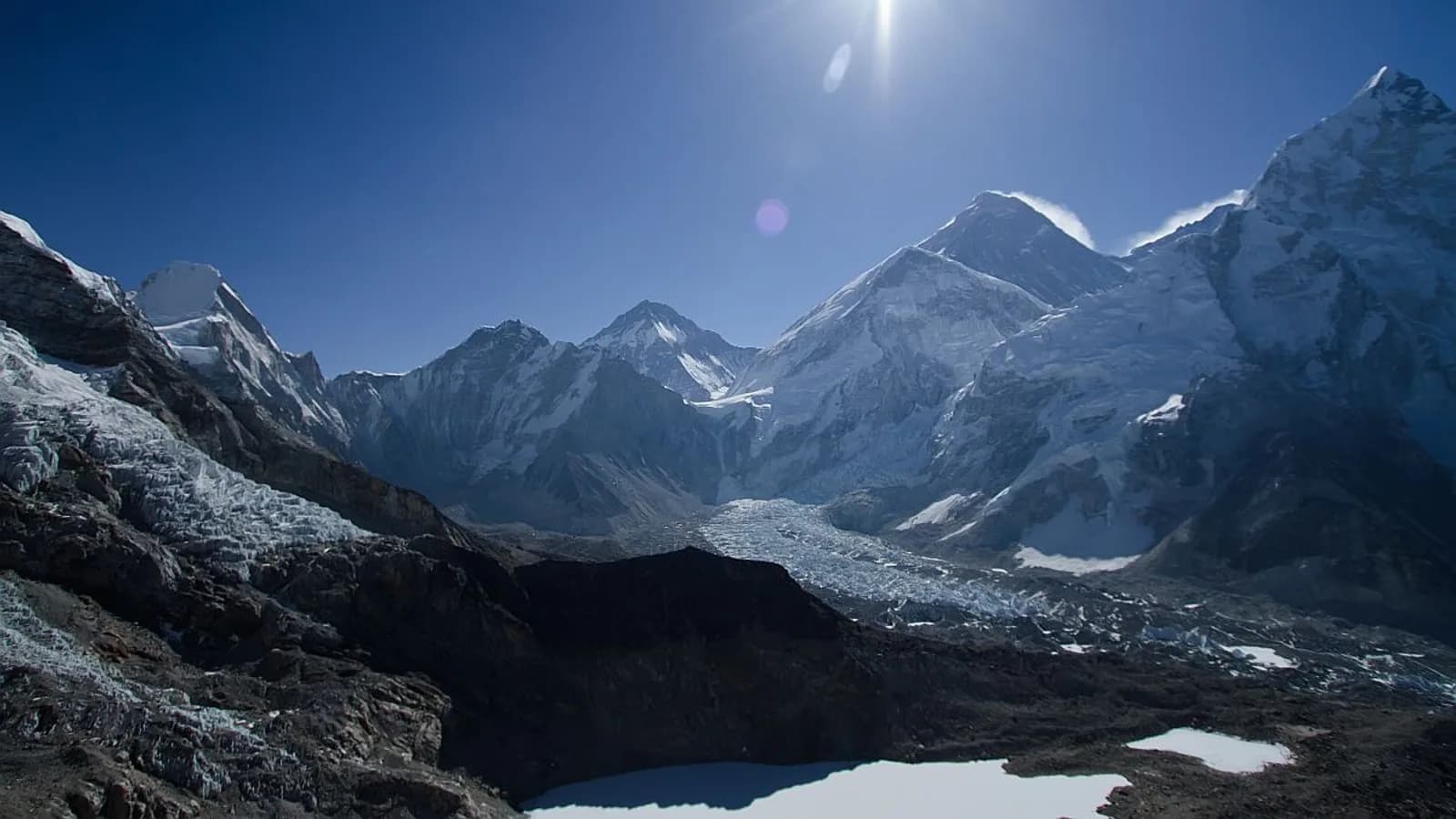
Deciding to walk to the foot of Everest is the easy part. The trickier step is how you actually book the Everest Base Camp trek — when to reserve, who to trust with your money, what a fair package includes, and how to avoid paying for things twice. This guide focuses purely on the booking process, so by the time you read about routes and altitude elsewhere, the logistics are already handled.
Numbers here come from official and established trekking sources (linked at the end), but operator terms, deposits, and fees shift from year to year. Treat every figure as a starting point and confirm the current position with your chosen agency before you pay. For the trail itself, our full Everest Base Camp trek guide covers the route, seasons, and altitude in plain English.
Key takeaways
- Book peak-season treks two to four months ahead so flights, lodges, and a guide are secured; quieter months allow shorter lead times.
- You can book a package from abroad for certainty, or arrange one in Kathmandu in person, usually for less — both should use a Nepal-registered agency.
- Verify the agency through its Nepal Tourism Board registration and, ideally, TAAN membership before sending any deposit.
- Expect a deposit of roughly 10–30% (as of 2026) to confirm dates, with the balance often payable on arrival in Kathmandu.
- A standard package bundles the Lukla flights, a licensed guide, teahouse lodging, meals, and permits — read the inclusion list line by line.
- Carry travel insurance covering high-altitude trekking and helicopter evacuation; reputable operators expect it.
When to book
The single biggest booking decision is timing, because the Everest region has two short, intensely popular windows. Spring (March–May) and autumn (September–November) deliver the most stable weather, and both fill up months in advance — guides, the better lodges, and Lukla flight seats all get scarce as the season approaches.
A sensible rule of thumb:
| When you trek | Suggested lead time | Why | |---|---|---| | Peak autumn (Oct) | 3–4 months | Busiest month; guides and lodges book out early | | Spring / shoulder autumn | 2–3 months | High demand but slightly more availability | | Winter or monsoon edges | A few weeks | Fewer trekkers, but weather and flight risk rise |
Booking early does not just secure a slot — it gives you time to train, break in boots, and arrange insurance without rushing. If your dates are fixed around annual leave, lock the trek in as soon as they are confirmed. For help picking the window, see our guide to the best time for the Everest Base Camp trek.
Build in a buffer day
Whenever you book, leave at least one spare day in Kathmandu at the end of your trip. The Lukla flight is morning-only and frequently delayed or cancelled by cloud, and in peak season many flights shift to Ramechhap (Manthali), several hours by road from Kathmandu. A tight onward international connection is the most common way trekkers turn a great trip into a stressful one.
Booking from abroad vs in Kathmandu
There are two honest routes to a booking, and neither is wrong.
Book a package before you arrive
Reserving online from home buys certainty: your guide, permits, lodges, and Lukla flights are arranged before you land, and you have a paper trail and a named contact. This suits travellers on a fixed schedule or anyone who would rather not negotiate on arrival. The trade-off is that internationally marketed packages usually cost more than the same trek arranged locally.
Arrange it in Kathmandu
Plenty of independent travellers fly to Kathmandu, spend a day comparing agencies around Thamel, and book a guided trek in person — often at a noticeably lower price. This gives you the chance to meet your guide and read the contract face to face. The downsides are that it eats a day or two of your trip, and in the busiest weeks the best guides and flight seats may already be taken. Either way, the trek must be run by a Nepal-registered agency, and you should confirm the current guide rules first. Our best trekking agency in Nepal guide walks through how to compare operators.
How to vet a trekking agency
This is the step that protects your money, and it takes about five minutes. A legitimate trekking company in Nepal is licensed by the government and will happily prove it.
Check the registration
- Ask for the company's Nepal Tourism Board (NTB) registration number and verify it on the official register at ntb.gov.np.
- Confirm whether the agency is a member of the Trekking Agencies' Association of Nepal (TAAN), the long-standing industry body, which you can check on the TAAN website.
- A properly registered operator will encourage you to verify their credentials. If a company cannot give you a registration number, treat that as a stop sign.
Read the reviews properly
Generic five-star reviews tell you little. Look instead for recent reviews that mention specific guide names, specific dates, and specific trail details — a review describing how a guide handled a headache at Dingboche on day seven is worth far more than a wall of vague praise. Cross-check across Google, TripAdvisor, and Trustpilot.
Ask the right pre-booking questions
Before you pay, get clear answers on:
- Is the guide licensed and insured, and is there a porter (and at what weight limit)?
- What exactly is included and excluded (see the next section)?
- What is the deposit, the balance due date, and the refund/cancellation policy?
- What happens, and who pays, if the Lukla flight is cancelled or you need to descend or evacuate?
For a wider look at where bookings go wrong, our Nepal tourist scams guide is worth a read before you hand over a deposit.
What a package includes (and what it doesn't)
Packages vary, so the inclusion list matters more than the headline price. Two quotes that look similar can differ by hundreds of dollars once you account for what is left out.
| Usually included | Often excluded | |---|---| | Kathmandu–Lukla round-trip flights | Travel insurance | | Licensed guide (and often a porter) | Tips for guide and porter | | Teahouse accommodation on the trail | Drinks, hot showers, Wi-Fi, charging | | Meals on the trek (often breakfast, lunch, dinner) | Meals and hotel nights in Kathmandu beyond the stated count | | Sagarmatha and Khumbu permits | Personal trekking gear |
Always ask whether all meals on the trail are covered or only some, and whether Kathmandu hotel nights are included before and after the trek. Extras such as hot showers, device charging, bottled or treated water, and Wi-Fi are charged per use on the trail and climb in price with altitude, so budget for them separately. Our EBC cost guide for 2026 breaks down the line items people forget.
Deposits, balance, and payment
Most agencies take a deposit to confirm your dates and then the balance closer to departure, but the specifics differ widely.
- Deposit: commonly in the range of 10–30% of the package price (as of 2026) to secure your booking.
- Balance: many local operators let you pay the remainder in cash or by bank transfer on arrival in Kathmandu, while some expedition-style companies require full payment a set number of weeks before the start date.
- Method and surcharges: card payments may carry a processing fee, and on-the-trail spending is effectively cash only — there are few reliable ATMs in the Khumbu, so withdraw enough Nepali rupees in Kathmandu first.
Get the deposit amount, the balance date, the accepted payment methods, and the refund and cancellation policy in writing before you transfer anything. For practical cash advice, see how much cash to bring to Nepal.
Permits and paperwork
Booking a trek also means sorting permits, though a guided package normally arranges these for you. The Everest region uses its own local permit system rather than the standard TIMS card you may read about for other parts of Nepal.
| Permit | Where it is issued | Notes | |---|---|---| | Sagarmatha National Park entry | Nepal Tourism Board in Kathmandu, or Monjo checkpoint | Required for everyone entering the park | | Khumbu Pasang Lhamu Rural Municipality | Lukla or Monjo en route | Collected locally, not in Kathmandu |
Exact fees are quoted differently by different operators and SAARC-national rates are lower, so confirm the current amount with your agency or on arrival rather than relying on an old figure. Whatever you book, carry a passport valid for at least six months and several passport-sized photos. Our Everest Base Camp permits guide for 2026 covers the documents in detail.
Do you still need a guide?
Nepal introduced a national rule in 2023 requiring a licensed guide on many trekking routes, hired through a registered agency. Enforcement in the Everest region has been reported as inconsistent because the area runs its own permit system, but rules can tighten with little notice. The safe assumption when booking is to include a guide in your package and confirm the current position with a registered agency before you fly. Our do I need a guide for the Everest Base Camp trek breakdown goes deeper.
Insurance before you pay
Treat travel insurance as part of the booking, not an afterthought. Reputable agencies expect you to carry a policy that explicitly covers high-altitude trekking (check the altitude limit reaches well above 5,000 m) and helicopter evacuation, which is the realistic rescue method in the Khumbu. A standard holiday policy that caps cover at low altitudes is no use here. Arrange and verify the policy details before you make your final payment, so you are not scrambling once your dates are locked. See our guide to helicopter evacuation insurance for Nepal for what to check.
A simple booking checklist
Before you send a deposit, make sure you can tick every box:
- Dates chosen with a buffer day for the Lukla flight.
- Agency NTB registration verified, TAAN membership checked.
- Inclusions and exclusions confirmed in writing.
- Deposit, balance date, payment method, and refund policy in writing.
- Travel insurance with high-altitude and helicopter cover arranged.
- Passport valid 6+ months and passport photos ready.
Tick all of those and the administrative side of your trek is genuinely done — the rest is training and packing. A few words of Nepali also go a long way with guides and lodge owners, so glance at our Nepali phrases every trekker should know before you go.
Sources
- How to obtain Everest Base Camp trek permits and fees in 2026 — Himalayan Recreation
- Everest Base Camp trek permit cost & rules 2026 — View Nepal Treks
- How to choose a Nepal trekking company for EBC (2026) — Mountainkick
- How to tell if a Nepal trekking company is government licensed — Everest Trekking Routes
- Trekking Agencies' Association of Nepal (TAAN)
- Everest Base Camp trek cost 2026 (full breakdown) — Himalayan Hero
- Why book direct with a Nepal trekking company — The Everest Holiday
Frequently asked questions
- How far in advance should I book the Everest Base Camp trek?
- For peak spring (March to May) and autumn (September to November), reserve a guided package two to four months ahead so flights, lodges, and a guide are locked in. Outside those windows you can often book a few weeks out, but earlier is always safer for the Lukla flight.
- Do I have to book through an agency, or can I just turn up in Nepal?
- Many travellers book a package from abroad for certainty, but you can also arrange a guided trek in person from Kathmandu or Thamel once you arrive, often for less. Either way, use a Nepal-registered agency and confirm the current guide rules before you commit.
- How do I check that a trekking agency is legitimate?
- Ask for the company's Nepal Tourism Board registration number and verify it on the official register, and check whether they are a TAAN member. A genuine operator will encourage you to confirm their credentials rather than dodge the question.
- How big a deposit do agencies ask for?
- It varies by operator, but a deposit of roughly 10 to 30 percent of the package price to secure your dates is common (as of 2026), with the balance due before or on arrival. Always get the exact deposit, balance date, and refund terms in writing.
- What is usually included in an Everest Base Camp package?
- A typical guided package covers the Kathmandu to Lukla flights, a licensed guide, teahouse accommodation, meals on the trail, and the trekking permits. Tips, travel insurance, drinks, hot showers, and Wi-Fi are usually extra, so check the inclusion list line by line.
- Which permits do I need, and who arranges them?
- You need the Sagarmatha National Park entry permit and the Khumbu Pasang Lhamu Rural Municipality permit; the Everest region runs its own local system rather than a standard TIMS card. A guided package normally arranges these for you, but carry your passport and several passport photos.
- Can I pay the balance in cash when I reach Kathmandu?
- Many local operators accept the remaining balance in cash or by bank transfer on arrival in Kathmandu, while some expedition companies require full payment well before the start date. Confirm the accepted payment methods and any card surcharge before you book.
- Is travel insurance required to book the trek?
- Reputable agencies expect you to carry travel insurance that explicitly covers high-altitude trekking and helicopter evacuation. It is not a government permit, but it is effectively non-negotiable for a trip that climbs above 5,000 metres.
Related posts
Is Everest Base Camp Worth It? An Honest Look
Is Everest Base Camp worth it? An honest, sourced look at the cost, difficulty, scenery and crowds to help you decide before you commit to the trek.
Read postDry Trekking Nepal: Best Seasons and Rain-Shadow Trails
Dry trekking Nepal explained: the dry seasons for firm trails plus rain-shadow regions like Mustang and Dolpo that stay dry even in monsoon.
Read postEBC Trek: What 'EBC' Means & Quick Orientation
Confused by 'EBC trek'? Here is what EBC means, how high it is, what it costs, and the season, permit and Lukla basics for the Everest Base Camp trek.
Read post