Lobuche Peak Climbing (Lobuche East, 6,119m): 2026 Guide
A Lobuche Peak climbing guide for 2026 — Lobuche East height, route, the false summit, itinerary, difficulty, NMA permit cost and best seasons.
Lobuche East is the Khumbu's classic training summit — a glacier climb with fixed ropes, climbed by many as a rehearsal for Ama Dablam or Everest.
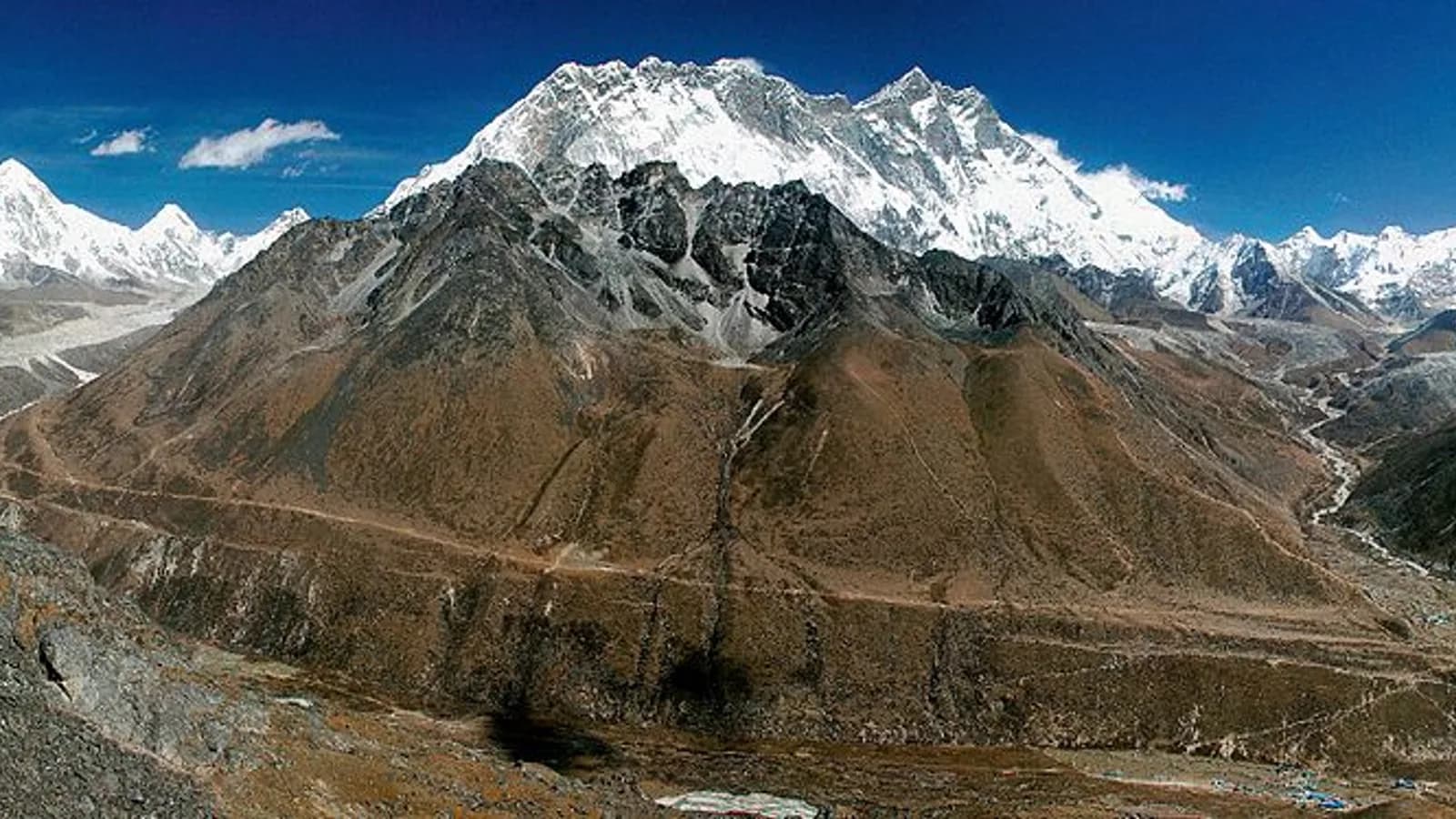
The Lobuche Peak climb is one of the Everest region's most popular ways to turn a trek into a genuine Himalayan summit — and, for many, a deliberate rehearsal for something bigger. The mountain has two tops, but when climbers say "Lobuche Peak" they almost always mean Lobuche East, which stands at 6,119 metres (about 20,075 feet), a Nepal Mountaineering Association trekking peak rising right beside the Khumbu Glacier and the classic Everest Base Camp trail. It is graded a notch above a simple snow plod: glacier travel, fixed ropes, a steep summit section and an exposed ridge make it a real mountaineering day. This guide covers the height and the two summits, the route and the famous false-summit catch, a realistic itinerary, the honest difficulty, the NMA permit and costs, and the best seasons, all stamped to mid-2026.
If you are mapping out a wider climbing trip, our guides to Island Peak and Mera Peak cover the region's other classic trekking peaks, while the Ama Dablam expedition guide covers the technical step up that many climbers tackle straight after Lobuche.
Key takeaways
- Lobuche East is 6,119 metres (20,075 feet) — an NMA trekking peak and the popular objective; Lobuche West (6,145 m) is a harder expedition peak.
- It is graded around PD+ in the alpine system — basic mountaineering with fixed ropes and glacier travel, not advanced technical climbing.
- Watch the false summit: many trips turn around there, with the true summit a corniced, exposed ridge several hours further on.
- Expect 16 to 20 days door to door, sharing the Everest Base Camp approach and its acclimatisation days.
- The NMA climbing permit is USD 350 in spring and USD 175 in autumn/winter/summer, effective 1 September 2025 (as of June 2026); the Khumbu trekking permits also apply.
- It is one of the Khumbu's favourite training peaks before Ama Dablam or an 8,000-metre expedition.
The mountain: two summits, one popular peak
Lobuche sits in the heart of Nepal's Khumbu, close to the Khumbu Glacier and the small settlement of Lobuche that the Everest Base Camp trail passes through. The name covers two distinct summits, and the difference matters when you read itineraries and compare operators.
| Summit | Height | Classification | Notes | |---|---|---|---| | Lobuche East | 6,119 m (20,075 ft) | NMA trekking peak | The popular objective | | Lobuche West | 6,145 m (20,161 ft) | Expedition peak | Higher, harder, rarely climbed |
The two tops are separated by a long, deeply notched ridge. The steep drop and the sheer distance between them make crossing from the East summit to the West practically impossible, so despite sharing a name they are treated as entirely separate climbs. The vast majority of climbers — and effectively every "Lobuche Peak" trip you will see advertised — head for Lobuche East.
The first recorded ascent of Lobuche East was made by Laurence Nielson and Sherpa Ang Gyalzen on 25 April 1984, establishing the south-ridge line that remains the standard route. Lobuche West was first climbed earlier, in the 1950s, by a different route on the far side of that dividing ridge.
The false summit you should know about
Here is the detail that separates an honest Lobuche guide from a sales page. On Lobuche East, many climbers reach only a false summit rather than the true high point. The true summit lies further along a corniced, exposed ridge, often several hours of additional climbing beyond the false top, and a good number of commercial trips quietly turn around at the lower point because the final section is harder, slower and more committing.
The false summit is still a high, demanding place with superb views, but it does mean you should ask your operator exactly which point the itinerary aims for, and not assume that "summit Lobuche East" always means the genuine top. If standing on the true summit matters to you, confirm it in writing and budget the extra time and steadier nerves the final ridge demands.
How hard is Lobuche East?
Lobuche East is a trekking peak, but like Island Peak it sits at the more serious end of that category, and you should not picture a gentle walk-up. It is usually graded around PD+ in the alpine system — harder than the easiest snow plods, but short of a technical climb like Ama Dablam.
The climb mixes several kinds of terrain:
- A rocky lower section with scrambling on the approach to the glacier, reached via a "crampon point" where you gear up.
- Glacier travel on snow and ice, roped up, with crevasses to negotiate.
- A steep snow-and-ice section near the top, climbed on fixed ropes using a jumar (ascender).
- An exposed, sometimes corniced summit ridge above the steep ground.
| Aspect | Lobuche East | |---|---| | Technical grade | Around PD+ (alpine) | | Crux | Steep upper snow-and-ice on fixed rope | | Notable features | Rocky scramble low down; exposed, corniced ridge high up | | Skills needed | Crampons, ice axe, jumar, abseil, roped glacier travel | | Good for | A first real summit and Ama Dablam / 8,000 m training |
None of this requires advanced technique once the fixed ropes are in place, but it is strenuous at altitude, and the summit day is long — commonly around nine to ten hours from high camp and back. Good fitness, calm rope-work and patient acclimatisation matter far more than raw climbing skill. Because altitude is the underlying risk, read our altitude sickness guide for Nepal treks before you go and treat every acclimatisation day as non-negotiable.
The route and a realistic itinerary
Lobuche East's biggest practical advantage is its approach: it shares the Everest Base Camp trail almost the whole way in. That means the days that build your acclimatisation also deliver the trek's greatest hits — Namche, Tengboche, and often a side trip to Everest Base Camp and Kala Patthar — before you branch off to climb. From Lobuche village the route climbs to a base camp around 4,950 metres and a high camp near 5,400 metres for the summit push.
| Phase | Stage | Approx. high point | Notes | |---|---|---|---| | 1 | Fly to Lukla, trek to Namche | ~3,440 m | Shared with the EBC trail | | 2 | Acclimatise, continue toward Dingboche | ~4,410 m | Key acclimatisation village | | 3 | Trek via Lobuche, often visit EBC / Kala Patthar | up to ~5,550 m | Acclimatisation high points | | 4 | Move to Lobuche Base Camp | ~4,950 m | Below the route | | 5 | Move to High Camp | ~5,400 m | Short, cold night before the push | | 6 | Summit day and return | 6,119 m | Pre-dawn start; ropes and ridge | | 7 | Descend and trek out to Lukla | — | Back down the valley |
Most full itineraries run 16 to 20 days from Lukla and back, including the EBC-style acclimatisation. There are also short three-to-four-day climbs from Lobuche village for trekkers who arrive already acclimatised from a longer trek nearby — efficient, but only safe if your body is genuinely ready. On whether to go guided, see our guide-or-no-guide breakdown for the Everest region — for a climb with fixed ropes and glacier travel, the answer is firmly yes. For the trekking spine of the trip, our Everest Base Camp itinerary maps the shared approach day by day.
Base camp and high camp
Lobuche Base Camp, around 4,950 metres, sits below the route and is where technical preparation begins — checking crampons, harness, jumar and abseil device, usually with a short practice session on a nearby slope. High Camp, near 5,400 metres, is a stark, exposed spot from which teams launch the summit attempt in the small hours. Nights up here are cold and short on sleep, so much of your summit success is really decided lower down, by how well you acclimatised on the EBC approach.
A favourite training peak
Lobuche East has a particular reputation worth understanding: it is one of the Khumbu's most popular training summits. The combination of glacier travel, fixed-rope ascending and a steep, exposed top gives a realistic rehearsal of the exact skills you need on harder objectives — which is why so many climbers tackle Lobuche immediately before Ama Dablam, or use it as preparation for an 8,000-metre expedition such as Everest. Combined Lobuche-plus-Ama-Dablam trips are a well-trodden package, with Lobuche serving as both acclimatisation and a confidence-building warm-up on rope and crampon before the bigger climb. If your long-term goal is a serious peak, a Lobuche season is one of the most useful apprenticeships in Nepal.
Permits and the guide rule
Lobuche East is a Nepal Mountaineering Association (NMA) trekking peak, so it uses the NMA permit system rather than the expedition-peak royalties. The NMA revised its trekking-peak fees effective 1 September 2025, and those are the rates that apply now.
| Permit / fee | Amount (as of June 2026) | Notes | |---|---|---| | NMA climbing permit (spring) | USD 350 per person | Effective 1 Sep 2025 | | NMA climbing permit (autumn/winter/summer) | USD 175 per person | Lower off-season rate | | Sagarmatha National Park entry | NPR 3,000 | Same as the Everest trek | | Khumbu Pasang Lhamu Rural Municipality | ~NPR 2,000 | Local municipal permit | | NMA garbage deposit | USD 500 (team level) | Handled by your operator |
As with Island Peak and Mera, be wary of older pages still quoting the pre-September-2025 NMA figures of USD 250 in spring and USD 125 in autumn — they are now out of date. Since 1 April 2023, Nepal has required a licensed guide, arranged through a registered agency, for trekking inside its national parks and conservation areas, the Everest region included; for a roped glacier climb this is essential rather than optional. The two trekking permits are the same ones used on the standard Everest route, and our Everest Base Camp permits explainer covers why the old TIMS card is no longer needed in the Khumbu.
What climbing Lobuche Peak costs
Costs depend on how you book and how long the trip is. A full guided Lobuche East expedition commonly runs from roughly USD 2,000 to USD 3,500 per person (as of June 2026), covering logistics, guiding and Sherpa support, climbing equipment on the mountain, food and lodging on the trek, and usually the Lukla flights. Short climbs from Lobuche village, for trekkers who are already acclimatised, can come in lower because they cut out the long approach.
On top of the package, budget for:
- The NMA climbing permit (USD 350 in spring as of June 2026) plus the park and municipality permits.
- Personal climbing gear — crampons, ice axe, harness, jumar, boots, warm layers — bought or hired.
- Travel insurance covering high-altitude climbing and helicopter rescue.
- Domestic flights to and from Lukla, the most weather-exposed link in the chain.
On the trail, the usual Khumbu economics apply — our teahouse food and accommodation guide covers how prices climb with altitude, and you should carry enough rupees from Kathmandu because mountain ATMs are unreliable. And do not economise on travel insurance: a climb above 6,000 metres with fixed ropes and a glacier needs a policy that covers the altitude and the mountaineering, with evacuation. Our guide to trekking insurance with helicopter evacuation explains what a suitable policy must include.
When to climb Lobuche Peak
Lobuche East has the same two prime windows as the rest of the Everest region.
- Spring (roughly March to May) is warmer, with the glacier and upper slopes generally in good condition and the lower trail greening up. It overlaps with the big Everest expedition season, when the route is well established.
- Autumn (roughly late September to November) brings the crisp, settled, post-monsoon skies and stable weather many climbers prefer for the summit.
Both seasons offer the best chance of safe conditions on the glacier and a clear summit morning, and both reduce the Lukla flight cancellations that can derail a tight schedule. The monsoon (June to August) brings cloud, rain and unstable snow, and deep winter is bitterly cold; neither is a normal climbing window. For a fuller seasonal picture across the country, see our guide to the best time to visit Nepal.
Is it right for you?
Choose Lobuche East if you are fit, comfortable with the idea of crampons and fixed ropes, and you want to convert an Everest Base Camp trek into a true 6,000-metre summit — or to serve an apprenticeship before a harder peak. It is more demanding than a pure walk-up, rewards basic mountaineering competence and patient acclimatisation, and comes with the honest caveat of the false summit, so confirm exactly what your trip aims for. For many climbers it is the perfect bridge: a real summit on the doorstep of Everest that opens the door to Ama Dablam and beyond. If you want to compare the alternatives, read our Island Peak and Mera Peak guides. Whichever you choose, a few Nepali phrases every trekker should know will warm the long evenings at Lobuche.
Sources
- Lobuche — Wikipedia
- Nepal Trekking Peak Permit Fees 2026 update — Himalayan Immersion Treks
- Permit Fees of Nepal Mountaineering Association (NMA) Peaks — Seven Summit Treks
- Complete guide for Lobuche East Peak climbing — Highland Expeditions
- Lobuche East Peak climbing — Mountain Monarch
- New trekking guide rules (2023) — Much Better Adventures
Frequently asked questions
- How high is Lobuche Peak?
- There are two summits. Lobuche East, the trekking peak that almost everyone means by 'Lobuche Peak', is 6,119 metres (about 20,075 feet). Its neighbour, Lobuche West, is slightly higher at 6,145 metres (about 20,161 feet) but is classed as an expedition peak and is far less commonly climbed.
- What is the difference between Lobuche East and Lobuche West?
- Lobuche East (6,119 m) is a Nepal Mountaineering Association trekking peak and the popular objective. Lobuche West (6,145 m) is a harder expedition peak. The two are separated by a long, deeply notched ridge, and the drop and distance make traversing from the East summit to the West practically impossible, so they are treated as separate climbs.
- Is Lobuche East hard to climb?
- It is a trekking peak but at the tougher end. Lobuche East is usually graded around PD+ in the alpine system. The climb involves glacier travel, a steep snow-and-ice section near the top climbed on fixed ropes with a jumar, rocky scrambling lower down and an exposed summit ridge. You need basic mountaineering skills and solid acclimatisation, but no advanced technical climbing.
- What is the false summit on Lobuche East?
- Many climbers stop at a false summit on Lobuche East rather than the true top, which lies along a corniced, exposed ridge several hours further on. A lot of commercial trips turn around at the false summit because the final ridge is harder and more time-consuming, so ask your operator exactly which point your itinerary aims for.
- How many days does climbing Lobuche Peak take?
- A typical Lobuche East itinerary runs about 16 to 20 days from Lukla and back, because the approach follows the Everest Base Camp trail and includes the same acclimatisation days. Short three-to-four-day climbs from Lobuche village exist for trekkers who are already acclimatised from a longer trek nearby.
- What permit do I need for Lobuche Peak?
- Lobuche East is a Nepal Mountaineering Association trekking peak, so you need an NMA climbing permit — USD 350 per person in spring and USD 175 in autumn, winter and summer under the rates effective 1 September 2025 (as of June 2026). You also need the Sagarmatha National Park entry permit (NPR 3,000) and the Khumbu Pasang Lhamu Rural Municipality permit, plus a licensed guide.
- How much does it cost to climb Lobuche Peak?
- Guided Lobuche East packages commonly run from roughly USD 2,000 to USD 3,500 per person depending on operator, group size and inclusions (as of June 2026). Short climbs from Lobuche village for already-acclimatised trekkers cost less. On top of the package come the NMA permit, park and municipality permits, insurance and personal climbing gear.
- Is Lobuche East a good training peak?
- Yes — it is one of the Khumbu's most popular training climbs. The glacier travel, fixed-rope work and steep summit section give a realistic rehearsal of the skills needed on harder objectives, which is why many climbers tackle Lobuche East before Ama Dablam or as preparation for an 8,000-metre expedition such as Everest.
- When is the best time to climb Lobuche Peak?
- Spring (roughly March to May) and autumn (roughly late September to November) are the prime windows, when the weather is most stable and the glacier and summit ridge are in the best condition. The monsoon and deep winter are generally avoided for the climb.
Spotted an error in this post? Tell us or suggest a correction.
Related posts
Ama Dablam Climb: 2026 Expedition Guide (6,812m)
An Ama Dablam climb and expedition guide for 2026 — height, the Southwest Ridge route, camps, fixed ropes, difficulty, permits, cost and the best seasons.
Read postMount Everest Climbing Permit Cost (2026 Guide)
The Mount Everest climbing permit cost in 2026 — the US$15,000 spring royalty, every season's rate, the garbage deposit, liaison fee, and what's not included.
Read postEBC Trek by Road: Reach Everest Base Camp Without Flying
How to do the EBC trek by road — driving Kathmandu to Salleri, Phaplu or Surke by jeep, then walking to Everest Base Camp. Routes, costs, days and seasons.
Read postIs Lukla Airport Dangerous? An Honest Pilot's-Eye View
Is Lukla airport dangerous? A clear, factual look at the runway, weather cancellations, safety record and how Everest trekkers fly in and out safely.
Read postABC Trek: A Plain-English Guide to Annapurna Base Camp
The ABC trek (Annapurna Base Camp) explained — the route, how many days it takes, difficulty, the best seasons, and what daily trail life is really like.
Read postHow to Choose the Best Trekking Agency in Nepal (2026)
A practical buyer's guide to choosing a trekking agency in Nepal: TAAN registration, the licences to check, fair pricing, and the red flags to avoid.
Read post