Island Peak Climbing (Imja Tse): A Complete 2026 Guide
An Island Peak (Imja Tse) climbing guide for 2026 — height, route, the headwall, itinerary, difficulty, NMA permit cost and best seasons.
Island Peak rises like an island in a sea of ice — a glacier climb with a steep headwall, and many climbers' first real summit.
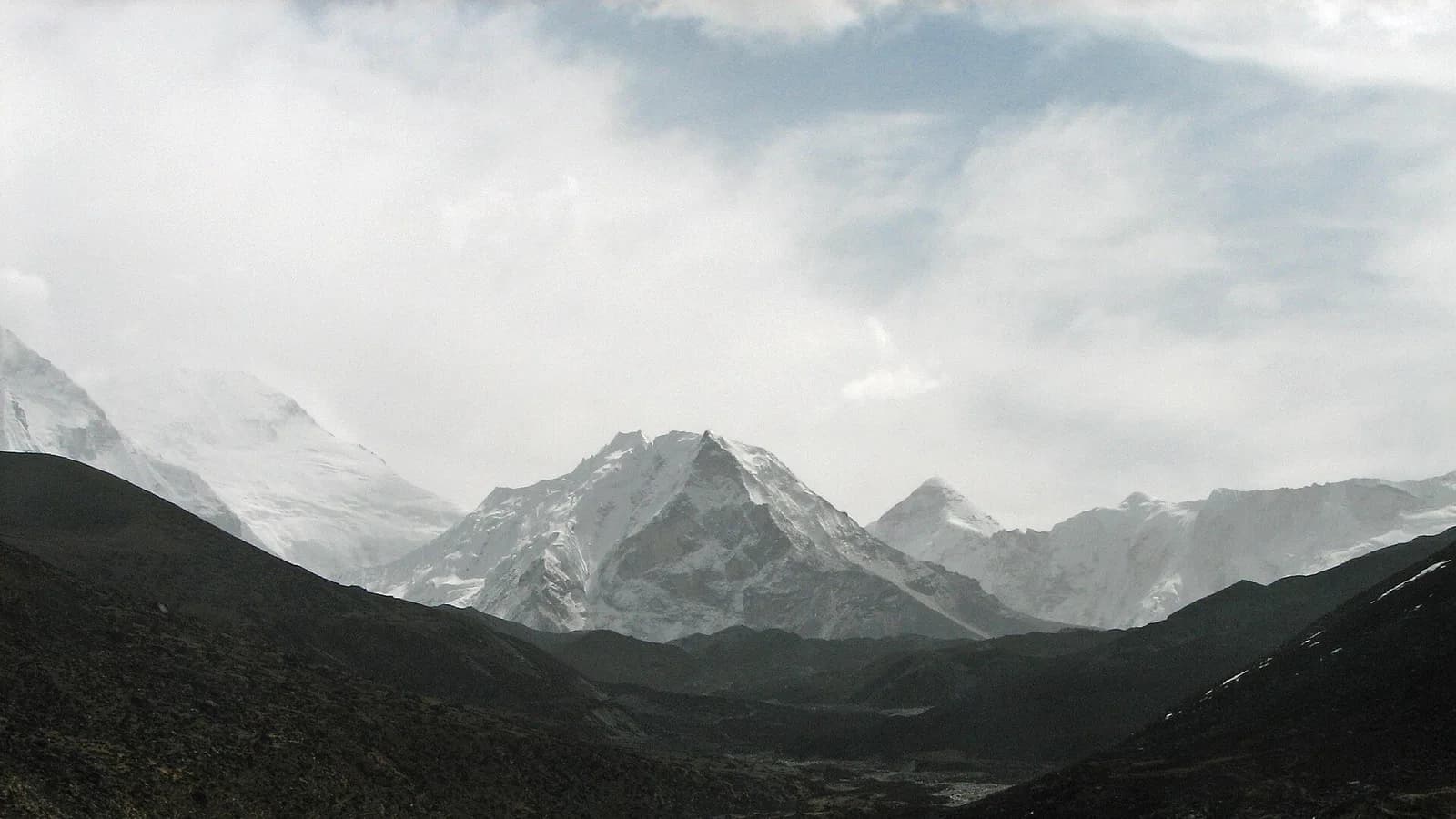
The Island Peak climb (Imja Tse) is one of the most popular ways to turn an Everest-region trek into a genuine Himalayan summit. Rising deep in the Khumbu beneath the south face of Lhotse, Island Peak is commonly given as 6,189 metres and gets its English name because, from the village of Dingboche, it looks like an island marooned in a sea of glacial ice. It is classed as a trekking peak, which keeps the climbing within reach of fit, well-prepared trekkers, yet the glacier, the crevasse ladders and the steep summit headwall make it a real, satisfying mountaineering day. This guide covers the height, the route and that famous headwall, a realistic itinerary, the honest difficulty, the NMA permit and costs, and the best seasons, all stamped to mid-2026.
If you are planning a wider trip, our Everest Base Camp itinerary shares much of Island Peak's approach, and our guides to Mera Peak and the technical Ama Dablam expedition round out the region's classic climbs.
Key takeaways
- Island Peak (Imja Tse) is commonly cited at 6,189 metres, though some references list around 6,160–6,165 metres.
- It is an NMA trekking peak graded around PD+ — basic mountaineering, not advanced technical climbing.
- The crux is a steep snow-and-ice headwall near the top, climbed on fixed ropes with a jumar, plus ladder crossings over crevasses.
- Expect 12 to 16 days door to door; short climbs from Chhukung exist for already-acclimatised trekkers.
- The NMA climbing permit is USD 350 in spring and USD 175 in autumn/winter/summer, effective 1 September 2025 (as of June 2026); the Khumbu trekking permits also apply.
- Guided trips typically cost about USD 2,200–3,500 (or less for short Chhukung climbs) per person (as of June 2026).
The mountain: height and name
Island Peak sits in the Imja valley in the heart of Nepal's Khumbu, within Sagarmatha National Park. Directly to its north, the immense south face of Lhotse rises roughly 2,300 metres higher, which is why you cannot actually see Everest from the summit despite being so close to it — Lhotse blocks the view.
The height most operators quote is 6,189 metres (about 20,305 feet), and you will see this figure across almost all climbing pages. Some reference sources, including Wikipedia, give a slightly lower figure of around 6,160 to 6,165 metres; the small discrepancy comes from different surveys, and either way it is a true 6,000-metre peak. We flag both so you are not thrown when sources disagree.
The name has a nice history. Members of the 1953 British Everest expedition called it Island Peak because, viewed from Dingboche, the mountain appears to float like an island in surrounding ice. Its official Nepali name, Imja Tse, was adopted in 1983, though the older English name stuck. The southwest summit was first reached in 1953 by a party including Tenzing Norgay, Charles Evans, Alfred Gregory and Charles Wylie with Sherpa climbers, as part of that same historic Everest season.
How hard is Island Peak?
Island Peak is a trekking peak, but it is at the more serious end of that category, and you should not picture a simple snow plod. It is usually graded around PD+ in the alpine system: harder than a pure walk-up like the easiest sections of Mera, but well short of a technical climb like Ama Dablam.
The day involves three things that make it real mountaineering:
- Glacier travel across the upper mountain, roped up, with crevasses that are crossed using aluminium ladders laid as bridges.
- A steep headwall of snow and ice below the summit, often cited around 45 degrees and up to roughly 100 metres, climbed on fixed ropes with a jumar (ascender).
- A narrow, exposed summit ridge above the headwall leading to the top.
| Aspect | Island Peak | |---|---| | Technical grade | Around PD+ (alpine) | | Crux | The steep summit headwall on fixed rope | | Notable features | Crevasse ladders; exposed summit ridge | | Skills needed | Crampons, ice axe, jumar, abseil, roped glacier travel | | Good for | A first or early 6,000-metre summit |
None of this requires advanced technique once the ropes and ladders are in place, but it is strenuous at altitude, and the headwall in thin air is where the day is won or lost. Good fitness, calm rope-work and patience matter far more than raw climbing ability. Because altitude is still the underlying risk, read our altitude sickness guide for Nepal treks before you go and keep the acclimatisation days sacred.
The route and a realistic itinerary
Island Peak's approach shares its early days with the classic Everest Base Camp trail before branching up the Imja valley to Chhukung, the small, high settlement that serves as the launch point for the climb. From there the route climbs to Island Peak Base Camp, with some teams using a High Camp around 5,600 metres for a shorter summit day.
| Phase | Stage | Approx. high point | Notes | |---|---|---|---| | 1 | Fly to Lukla, trek to Namche | ~3,440 m | Shared with the EBC trail | | 2 | Acclimatise, continue toward Dingboche | ~4,410 m | Key acclimatisation village | | 3 | Trek to Chhukung | ~4,730 m | The climbing launch point | | 4 | Move to Island Peak Base Camp | ~5,100 m | Below the glacier | | 5 | Summit day (sometimes via High Camp) | ~6,189 m | Pre-dawn start; headwall and ridge | | 6 | Descend and trek out to Lukla | — | Back down the valley |
Most full itineraries run 12 to 16 days from Lukla and back, including acclimatisation. There are also short 3-to-5-day climbs from Chhukung for trekkers who are already acclimatised from a longer trek nearby — efficient, but only safe if your body is genuinely ready for the altitude. At the other end, many climbers combine Island Peak with the Everest Base Camp trek, pushing the trip toward 18 to 19 days and bagging both the base-camp highlight and a summit. On whether to go guided, see our guide-or-no-guide breakdown for the Everest region — for a climb with fixed ropes and crevasse ladders, the answer is firmly yes.
Chhukung and base camp
Chhukung, around 4,730 metres, is a cluster of lodges high in the Imja valley and the natural staging post for the climb. From here you carry up to Island Peak Base Camp at roughly 5,100 metres, where the technical preparation — checking crampons, harness, jumar and abseil device, and practising on a nearby slope — usually happens the day before the summit push. A short training session here is standard with reputable operators and is the moment to get comfortable with the gear if you are new to it.
Permits and the guide rule
Island Peak is a Nepal Mountaineering Association (NMA) trekking peak, so it uses the NMA permit system rather than the expedition-peak royalties. The NMA revised its trekking-peak fees effective 1 September 2025, and those are the rates that apply now.
| Permit / fee | Amount (as of June 2026) | Notes | |---|---|---| | NMA climbing permit (spring) | USD 350 per person | Effective 1 Sep 2025 | | NMA climbing permit (autumn/winter/summer) | USD 175 per person | Lower off-season rate | | Sagarmatha National Park entry | NPR 3,000 | Same as the Everest trek | | Khumbu Pasang Lhamu Rural Municipality | ~NPR 2,000 | Local municipal permit |
As with Mera, be wary of older pages still quoting the pre-September-2025 NMA figures of USD 250 in spring and USD 125 in autumn — they are now out of date. Since 1 April 2023, Nepal has required a licensed guide, arranged through a registered agency, for trekking inside its national park and conservation areas, the Everest region included; for a roped glacier climb this is essential rather than optional. The two trekking permits are the same ones used on the standard Everest route, and our Everest Base Camp permits explainer covers why the old TIMS card is no longer needed in the Khumbu.
What climbing Island Peak costs
Costs depend heavily on how you book and how long the trip is. A full guided Island Peak expedition commonly runs from roughly USD 2,200 to USD 3,500 per person (as of June 2026), covering logistics, guiding and Sherpa support, climbing equipment on the mountain, food and lodging on the trek, and usually the Lukla flights. Short climbs from Chhukung, for trekkers who are already acclimatised, can start considerably lower — around USD 500 to USD 700 per person (as of June 2026) — because they cut out the long approach.
On top of the package, budget for:
- The NMA climbing permit (USD 350 in spring as of June 2026) plus the park and municipality permits.
- Personal climbing gear — crampons, ice axe, harness, jumar, boots, warm layers — bought or hired.
- Travel insurance covering high-altitude climbing and helicopter rescue.
- Domestic flights to and from Lukla, the most weather-exposed link in the chain.
On the trail, the usual Khumbu economics apply — our teahouse food and accommodation guide covers how prices climb with altitude, and you should carry enough rupees from Kathmandu because mountain ATMs are unreliable. And do not economise on travel insurance: a climb above 6,000 metres with crevasses and a steep headwall needs a policy that covers the altitude and the mountaineering, with evacuation. Our guide to trekking insurance with helicopter evacuation explains what a suitable policy must include.
When to climb Island Peak
Island Peak has the same two prime windows as the rest of the Everest region.
- Spring (roughly March to May) is warmer, with the glacier and headwall generally in good condition and the lower trail greening up.
- Autumn (roughly late September to November) brings the crisp, settled, post-monsoon skies and stable weather many climbers prefer for the summit.
Both seasons offer the best chance of safe conditions on the glacier and a clear summit morning, and both reduce the Lukla flight cancellations that can derail a tight schedule. The monsoon (June to August) brings cloud, rain and unstable snow, and deep winter is bitterly cold; neither is a normal climbing window. For a fuller seasonal picture across the country, see our guide to the best time to visit Nepal.
Is it right for you?
Choose Island Peak if you are fit, comfortable with the idea of crampons and fixed ropes, and you want to convert an Everest-region trek into a true 6,000-metre summit. It is harder than a pure trekking peak walk-up and rewards basic mountaineering competence and patient acclimatisation, but it does not demand the advanced technical skill of Ama Dablam. For many climbers it is the perfect bridge — a first real summit, often paired with Everest Base Camp, that opens the door to bigger peaks later. If you want a non-technical high summit instead, compare our Mera Peak guide; if you are ready to step up to steep rock and ice, read our Ama Dablam expedition guide. Whichever you choose, a few Nepali phrases every trekker should know will warm the long evenings in Chhukung.
Sources
- Imja Tse (Island Peak) — Wikipedia
- Permit Fees of Nepal Mountaineering Association (NMA) Peaks — Seven Summit Treks
- Nepal Trekking Peak Permit Fees 2026 update — Himalayan Immersion Treks
- How difficult is it to climb Island Peak? — Kandoo Adventures
- Complete guide to climbing Island Peak (6,189m) — We Seek Travel
- New trekking guide rules (2023) — Much Better Adventures
Frequently asked questions
- How high is Island Peak?
- Island Peak (Imja Tse) is commonly given as 6,189 metres (about 20,305 feet), though some sources, including Wikipedia, list around 6,160 to 6,165 metres. Either way it is a 6,000-metre peak in Nepal's Khumbu region, deep in the Everest area, with Lhotse towering directly above it to the north.
- Why is it called Island Peak?
- Members of the 1953 British Everest expedition named it Island Peak because, seen from the village of Dingboche, it appears to sit like an island in a sea of ice, surrounded by glaciers. Its official Nepali name, Imja Tse, was adopted in 1983, but Island Peak remains the popular name.
- Is Island Peak hard to climb?
- It is a trekking peak, but not a walk-up. Island Peak is usually graded around PD+ in the alpine system. The climb involves glacier travel with crevasses, a steep snow and ice headwall near the top often around 45 degrees, fixed ropes you ascend with a jumar, and ladder crossings over crevasses. You need basic mountaineering skills and good acclimatisation, but no advanced technical climbing.
- What is the headwall on Island Peak?
- The headwall is the crux of the climb: a steep snow-and-ice wall below the summit ridge, often cited around 45 degrees and up to roughly 100 metres, climbed on fixed ropes using a jumar. Above it, a narrow, exposed summit ridge leads to the top. It is strenuous in the thin air but technically straightforward with the fixed ropes in place.
- How many days does Island Peak climbing take?
- A typical Island Peak itinerary runs about 12 to 16 days from Lukla and back, including acclimatisation days. Short three-to-five-day climbs from Chhukung exist for already-acclimatised trekkers, while combining the climb with an Everest Base Camp trek pushes the trip toward 18 to 19 days.
- What permit do I need for Island Peak?
- Island Peak is a Nepal Mountaineering Association trekking peak, so you need an NMA climbing permit — USD 350 per person in spring and USD 175 in autumn, winter and summer under the rates effective 1 September 2025 (as of June 2026). You also need the Sagarmatha National Park entry permit (NPR 3,000) and the Khumbu Pasang Lhamu Rural Municipality permit (around NPR 2,000), plus a licensed guide.
- How much does it cost to climb Island Peak?
- Full guided expeditions commonly run from roughly USD 2,200 to USD 3,500 per person, while short climbs from Chhukung for already-acclimatised trekkers can start lower, around USD 500 to USD 700 (as of June 2026). On top of the package come the NMA permit, park and municipality permits, insurance and gear.
- When is the best time to climb Island Peak?
- Spring (roughly March to May) and autumn (roughly late September to November) are the prime windows, when the weather is most stable and the glacier and summit ridge are in the best condition. The monsoon and deep winter are generally avoided for the climb.
Spotted an error in this post? Tell us or suggest a correction.
Related posts
ABC Trek: A Plain-English Guide to Annapurna Base Camp
The ABC trek (Annapurna Base Camp) explained — the route, how many days it takes, difficulty, the best seasons, and what daily trail life is really like.
Read postAma Dablam Climb: 2026 Expedition Guide (6,812m)
An Ama Dablam climb and expedition guide for 2026 — height, the Southwest Ridge route, camps, fixed ropes, difficulty, permits, cost and the best seasons.
Read postAnnapurna vs Manaslu: Which Trek Should You Choose?
An Annapurna vs Manaslu decision guide for trekkers — compare permits, crowds, difficulty, infrastructure and cost to pick the right Himalayan route.
Read postAsan Bazaar Kathmandu: Old Town Market Guide
A visitor guide to Asan bazaar, Kathmandu's oldest market — its six-road square, Annapurna Temple, what to buy, when to go, and how to get there.
Read postAyurveda Nepal: A Traveller's Guide to Healing
Ayurveda Nepal explained for tourists — the history, the doshas, treatments like Panchakarma and Shirodhara, where to go and how to choose a centre safely.
Read postBest Restaurants Pokhara Lakeside: Where to Eat
The best restaurants in Pokhara Lakeside — lakeside trout, wood-fired pizza, Tibetan momos and healthy cafes, with what to order and rough 2026 prices.
Read post