Everest vs Annapurna Difficulty: An Honest Compare
Everest vs Annapurna difficulty compared by altitude, days, terrain and risk — across base camps, passes and easy treks, so you pick the right trail.
There is no single Everest and no single Annapurna — there is a whole spectrum of hard, and your job is to find your own rung on it.
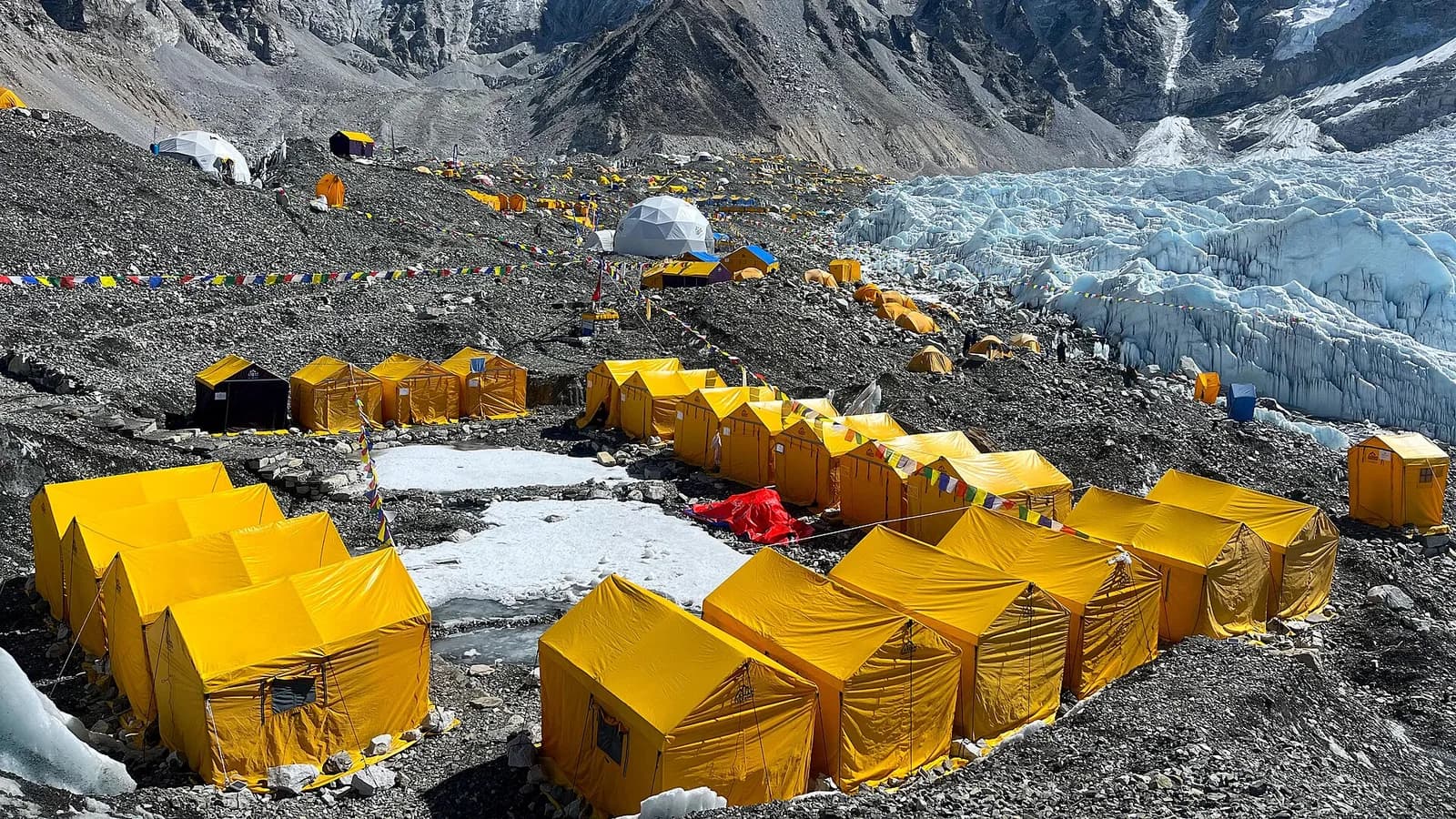
If you are weighing the two most famous trekking regions in Nepal, the real question behind "Everest vs Annapurna difficulty" is rarely which mountain is taller — it is which trail will leave you exhilarated rather than evacuated. And the honest answer is that neither region has a single difficulty. Each one spans a wide ladder of trails, from gentle four-day ridge walks to high passes above 5,400 metres where the air holds half the oxygen of sea level.
This guide compares the two regions on the factors that actually decide how hard a trek feels: maximum altitude, daily walking, total days, terrain underfoot, and objective risk. The goal is to help you match a specific route to your own fitness, experience, and tolerance for thin air — not to crown one region the universal winner.
Key takeaways
- Difficulty is route-specific, not region-specific. The Everest area's flagship trek is higher and longer than Annapurna Base Camp, but the Annapurna Circuit's Thorong La pass (~5,416 m) climbs higher than the standard ABC trek (~4,130 m).
- Everest Base Camp is the higher-altitude default, topping out near 5,545 m at Kala Patthar, with altitude as the central challenge across more days above 4,000 m.
- Annapurna offers the wider difficulty range, from beginner-friendly Poon Hill (~3,210 m, 4–5 days) up to the demanding high-pass Circuit.
- Fitness does not cancel altitude. Ascent rate, acclimatization, and rest days matter far more than raw stamina for staying safe up high.
- Risk is real on both — acute mountain sickness affects a large share of high-altitude trekkers, and the Annapurna Circuit's Thorong La carries documented weather risk.
- For a first big Himalayan trek on limited time, Annapurna usually wins; for the highest, most expedition-like teahouse experience, the Everest region is the draw.
First, stop comparing "Everest" to "Annapurna"
The single most common mistake is treating each region as one trek. It is not.
When most people say Everest, they mean the classic Everest Base Camp (EBC) trek through the Khumbu. But the region also includes harder variants like the Everest Three High Passes loop and gentler options like the lower Everest View trek.
When people say Annapurna, the label covers an even broader spread: the short, beginner-friendly Ghorepani Poon Hill walk; the moderate Annapurna Base Camp sanctuary trek; and the long, high Annapurna Circuit with its Thorong La pass. So a fair difficulty comparison has to name the trails.
If your real decision is specifically EBC against ABC, our dedicated Everest Base Camp vs Annapurna Base Camp guide compares those two head to head on cost, days, scenery, and permits. This article zooms out to the whole difficulty ladder in each region.
The numbers that drive difficulty
Three figures explain most of the difficulty gap between any two treks: how high you go, how long you walk each day, and how many days you spend up high. Here is how the headline routes line up.
| Trek (region) | Max altitude | Typical days | Daily walking | Headline challenge | |---|---|---|---|---| | Poon Hill (Annapurna) | ~3,210 m | 4–5 | ~4–6 hrs | Stone-step climbs, modest altitude | | Mardi Himal (Annapurna) | ~4,500 m | 5–6 | ~5–7 hrs | Steep upper ridge, exposure | | Annapurna Base Camp (Annapurna) | ~4,130 m | 7–12 | ~5–7 hrs | Relentless staircases | | Everest Base Camp (Everest) | ~5,545 m (Kala Patthar) | 12–16 | ~5–7 hrs | Sustained high altitude | | Annapurna Circuit (Annapurna) | ~5,416 m (Thorong La) | ~14 | ~5–8 hrs | One huge high-pass day |
A few patterns jump out. The Everest Base Camp trek climbs the highest of the standard routes and spends the most days at serious altitude, which is why it is generally treated as the harder of the two famous base-camp treks. But notice that the Annapurna Circuit's Thorong La pass (~5,416 m) sits within striking distance of Everest territory and far above Annapurna Base Camp — proof that "Annapurna" is not automatically the easy choice.
Why altitude is the great equalizer
At the elevation of Everest Base Camp (about 5,364 m), the air holds roughly half the oxygen available at sea level, and the same is broadly true at the top of Thorong La. That single fact reshapes everything: simple tasks leave you breathless, sleep is broken, appetite fades, and recovery slows.
Critically, fitness does not immunize you against altitude. Acute mountain sickness (AMS) depends mostly on how fast you ascend, not how strong your legs are. On the Everest trail especially, the trekkers who turn back are often fit people who climbed too quickly or skipped acclimatization, not unfit people who took it slow. Our altitude sickness on Nepal treks guide explains the warning signs and the slow-ascent rules that keep success rates high on both routes.
Terrain: the difficulty you feel in your legs
Altitude is the difficulty you feel in your lungs. Terrain is the difficulty you feel in your knees and thighs — and here the two regions diverge in character.
Annapurna: stairs, forest, and variety
The lower Annapurna trails are famous for their stone staircases. The approach to Annapurna Base Camp climbs and drops endless carved steps through terraced farmland, rhododendron forest, and bamboo, which punishes the legs even though the altitude never reaches Everest's extremes. The trade-off is dense, fast-changing scenery: you pass through several climate zones and traditional Gurung and Magar villages in just a few days.
The full Annapurna Circuit adds a different terrain test — a long, dramatic build-up of altitude over many days, culminating in the single brutal Thorong La day, where trekkers commonly gain hundreds of metres up to the pass and then descend well over a thousand metres on the other side.
Everest: thin air over a long, rugged approach
The Everest Base Camp trail is less about staircases and more about sustained rugged walking at altitude. After the famous flight to Lukla, the route climbs through Namche Bazaar and the Sherpa heartland into an increasingly stark, glaciated, high-alpine world, sleeping as high as Gorak Shep (around 5,170 m). Days average several hours of walking, with the pre-dawn push to Kala Patthar widely described as the hardest single effort of the whole trek. The terrain is not technical, but the combination of cold, altitude, and length makes it relentless. For a deeper look, see our Everest Base Camp trek difficulty breakdown.
Risk and weather: where "hard" becomes "serious"
Difficulty and danger are not the same thing, but at high altitude they overlap. Both regions are walked safely by thousands of trekkers every season, yet both have genuine objective risks worth planning around.
Altitude sickness on both
AMS is the dominant medical issue on high routes. Studies of Everest Base Camp trekkers have reported a wide range of AMS rates depending on the ascent profile and how it was measured — figures cited in the research and trekking literature commonly land in the 25 to 50 percent range, with some studies higher still. The same physiology applies on the Annapurna Circuit's Thorong La crossing. The defence is identical on both: ascend gradually, build in acclimatization days, hydrate, and descend if symptoms worsen.
The Thorong La weather lesson
The Annapurna Circuit carries one well-documented weather risk. In October 2014, an unusually severe snowstorm — linked to the remnants of Cyclone Hudhud — struck the Thorong La area and became Nepal's worst trekking disaster, with at least 43 people killed, including many trekkers. Hundreds were rescued in the days that followed.
The lasting lesson is not that the Circuit is reckless, but that high passes demand humility toward weather. Today most trekkers cross Thorong La in the early morning before conditions deteriorate, watch forecasts closely, carry proper layers, and accept that the pass can be impassable for days. The Everest region has no single equivalent pass-day on the standard EBC route, though its high-pass variants share the same exposure.
A note on commitment and escape
One under-appreciated difference: the Annapurna Circuit and ABC are reachable by road from Pokhara, so retreat and resupply are comparatively straightforward. The Everest trail's reliance on the Lukla flight means weather can strand you at either end, adding a logistical layer to an already long trek. That does not make Everest more physically demanding, but it does make it less forgiving to interrupt.
So which is harder? A straight answer
If you force a single comparison between the two most popular treks — Everest Base Camp versus Annapurna Base Camp — Everest is the harder trek for most people. It climbs more than 1,200 m higher, runs several days longer, and keeps you at altitude long enough for thin air to become the defining experience. Annapurna Base Camp is no pushover, but its lower ceiling and shorter length make it the gentler of the two famous base-camp treks.
Widen the lens, though, and the verdict flips depending on the pairing:
- Everest Base Camp vs Poon Hill — Everest is dramatically harder; Poon Hill is a beginner trek.
- Everest Base Camp vs Annapurna Circuit — much closer; the Circuit's Thorong La day rivals Everest's altitude, and the Circuit is traditionally long, so this is the most genuinely comparable matchup.
- Mardi Himal vs Annapurna Base Camp — similar moderate band, with Mardi feeling steeper and more exposed up top.
In other words, the region label tells you almost nothing. The route is the answer.
Match the trek to yourself
Use this quick framing to find your rung on the ladder.
Choose an easier Annapurna trail (Poon Hill, short ABC) if you:
- Are doing your first Himalayan trek
- Have only 4 to 10 days
- Want to keep altitude modest and avoid a mountain flight
- Prefer dense, varied scenery for the time invested
Choose Everest Base Camp if you:
- Have around two weeks and a real budget
- Specifically want to stand beneath the world's highest mountain
- Are willing to acclimatize slowly and respect serious altitude
- Value the remote, high-alpine, expedition atmosphere
Choose the Annapurna Circuit if you:
- Want a long, classic, high-pass adventure
- Are comfortable with one very big altitude day at Thorong La
- Prefer road access at both ends for flexibility
- Enjoy passing through many distinct landscapes and cultures
Whatever you pick, a few teahouse phrases go a long way with porters and lodge owners on either trail — our Nepali phrases every trekker should know guide covers the essentials. And if you are still torn between specific routes, the Annapurna Circuit vs Annapurna Base Camp and Manaslu Circuit vs Annapurna difficulty comparisons are useful next reads.
The honest bottom line
There is no universal "Everest is harder" or "Annapurna is easier." The Everest region concentrates its difficulty into sustained high altitude over a long, committing journey. The Annapurna region spreads its difficulty across a wide menu — from a relaxed ridge stroll to a 5,400-metre pass that demands the same respect as anything in the Khumbu.
Pick the route that matches the time you actually have and the altitude you are honestly comfortable with. Do that, and either region rewards you. Pick for the postcard instead of the plan, and either region can humble you.
Sources
- Everest Base Camp Trek Difficulty, Route & Preparation — Discovery World Trekking
- Everest Base Camp Trek Difficulty — Nepal Hiking Adventure
- Annapurna Base Camp Trek Difficulty & Elevation — Nepal Hiking Team
- Annapurna Circuit Trek Difficulty — Magical Nepal
- Annapurna Circuit Trekking (Thorong La Pass) — Guide in Himalaya
- Everest Base Camp Trek Altitude Sickness — Magical Nepal
- 2014 Nepal snowstorm disaster — Wikipedia
- Mardi Himal vs Poon Hill, Compared — Haven Holidays Nepal
Frequently asked questions
- Is Everest or Annapurna harder to trek?
- It depends entirely on which route you compare. The classic Everest Base Camp trek is generally harder than Annapurna Base Camp because it climbs higher and spends more days at altitude. But the Annapurna region also includes the Thorong La pass, which at about 5,416 m is higher than any point on the standard ABC trek, so a like-for-like answer requires naming the specific trails.
- Which trek goes to a higher altitude?
- On the standard routes, the Everest Base Camp trek tops out higher at the Kala Patthar viewpoint near 5,545 m, versus about 4,130 m at Annapurna Base Camp. However, the Annapurna Circuit's Thorong La pass reaches roughly 5,416 m, which is close to Everest territory and higher than ABC.
- Is Annapurna good for first-time trekkers?
- Yes, the Annapurna region has some of Nepal's friendliest beginner trails, including Ghorepani Poon Hill at around 3,210 m over four to five days. Annapurna Base Camp is also a common first big trek. The region simply offers a wider range of difficulty than the Everest area does.
- Does fitness alone make these treks easy?
- No. Fitness helps with the long walking days, but it does not protect you from altitude sickness, which depends mainly on how fast you ascend. Many trekkers who turn back are fit people who climbed too quickly or skipped rest days rather than unfit people who paced themselves.
- Which trek has more altitude-sickness risk?
- Sustained high-altitude routes carry more risk, so the Everest Base Camp trek and the Annapurna Circuit's Thorong La crossing are the higher-risk options. Studies of Everest Base Camp trekkers report acute mountain sickness in a wide range, often cited around 25 to 50 percent or higher depending on the study and ascent rate.
- How many days do these treks take?
- Annapurna Base Camp is commonly done in about 7 to 12 days and Everest Base Camp in roughly 12 to 16 days including acclimatization. Shorter Annapurna options like Poon Hill can be done in 4 to 5 days, while the full Annapurna Circuit traditionally runs around two weeks.
- Do I need a guide for either region?
- Treat a licensed guide as the safe default for both. Nepal introduced a rule in 2023 requiring solo trekkers to hire a guide in many protected areas, the Annapurna Conservation Area generally enforces this, and although the Everest region allowed guide-free trekking, checks are tightening, so confirm the current rule before you go.
- Is the Annapurna Circuit dangerous?
- It is a well-trodden teahouse trek, but the high Thorong La pass demands respect for weather and altitude. A sudden October 2014 snowstorm caused Nepal's worst trekking disaster, which is why most trekkers now cross early in the morning, watch forecasts closely, and never push over the pass in bad weather.
- Which region is better for the views relative to effort?
- Both reward the effort, but they differ in character. Annapurna packs dense, varied scenery into fewer days and lower altitudes, while the Everest region trades a longer, higher, more demanding approach for the unique payoff of standing beneath the world's highest mountain.
Related posts
Everest Base Camp vs Annapurna Base Camp: Which to Trek
Everest Base Camp vs Annapurna Base Camp compared — altitude, days, difficulty, cost, permits, scenery, and which Himalayan trek fits you best.
Read postEasy Treks in Nepal: 6 Beginner Routes for 2026
The best easy treks in Nepal for beginners — Poon Hill, Everest View, Langtang and more, with altitudes, days, permits and the 2023 guide rule.
Read postEverest Base Camp Trek Difficulty: How Hard Is It?
An honest look at Everest Base Camp trek difficulty — altitude, daily hours, the up-and-down trail, fitness needed, and why slow beats strong.
Read post