Everest Base Camp Trek Difficulty: How Hard Is It?
An honest look at Everest Base Camp trek difficulty — altitude, daily hours, the up-and-down trail, fitness needed, and why slow beats strong.
It's not a climb and it's not a race — it's a fortnight-long lesson in walking slowly enough to let your blood catch up.
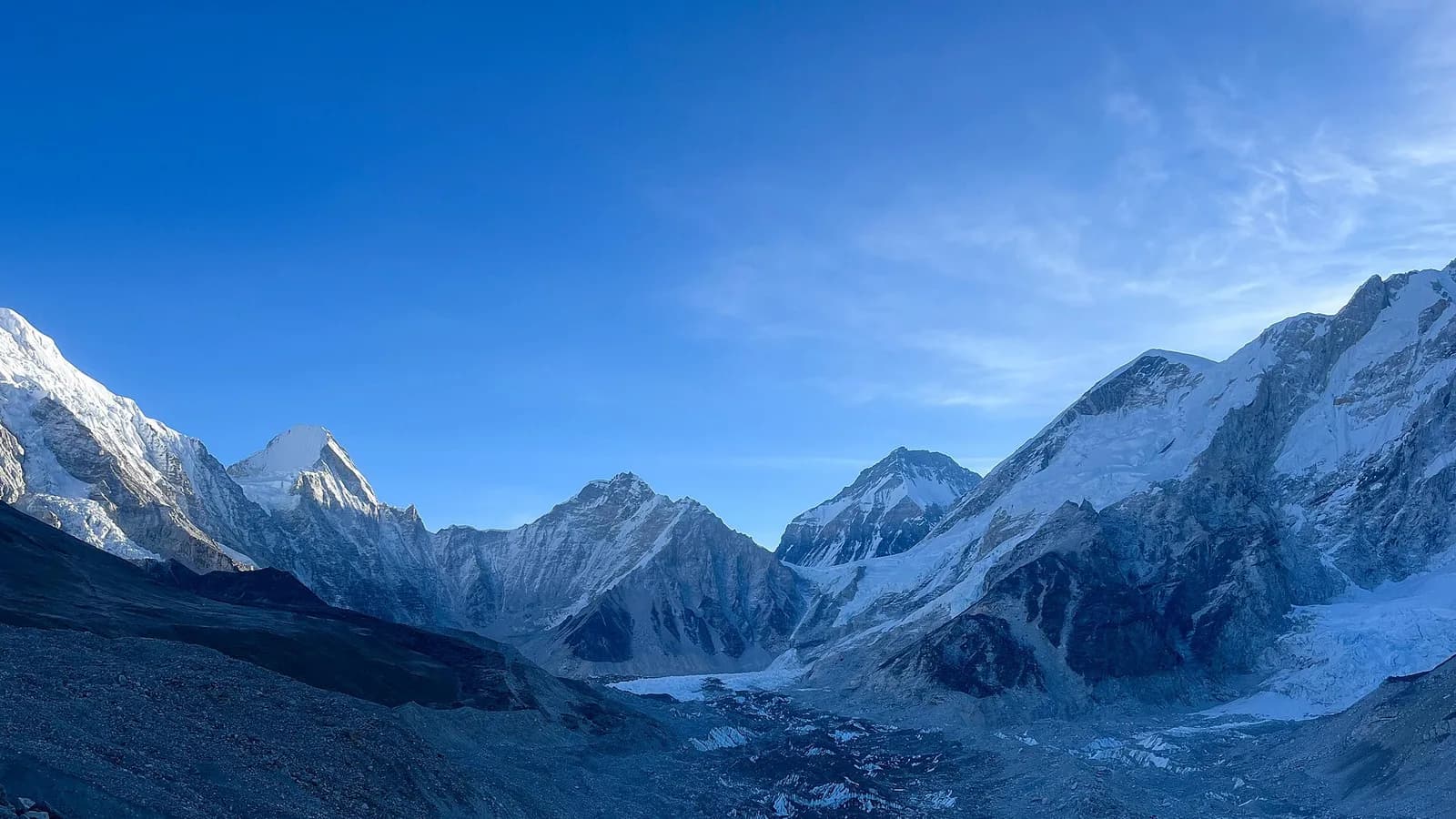
The Everest Base Camp trek difficulty question is the one almost every first-timer asks before booking, and the honest answer is reassuring: this is a long, demanding walk, not a climb. There are no ropes, no crampons, and no mountaineering skill involved. What makes it hard is not the terrain under your boots but the air above your head — by the time you reach Base Camp at around 5,364 m, you are breathing roughly half the oxygen you would at sea level.
This guide breaks the difficulty down into its real parts: the daily walking load, the brutal up-and-down profile, the altitude, the fitness you actually need, and the wild card of the Lukla flight. Figures here are drawn from established trekking and aviation sources (linked at the end). Mountain conditions and logistics shift year to year, so treat everything as a well-grounded starting point and confirm details with a registered operator before you go.
Key takeaways
- The trek is usually graded moderate to challenging — non-technical, but physically and mentally demanding over 10 to 15 days.
- The real difficulty is altitude, not fitness: acute mountain sickness can affect about half of trekkers at some point, regardless of how strong they are.
- Expect to walk roughly 5 to 7 hours a day, with a trail that constantly drops into valleys and climbs back over ridges.
- You need solid everyday fitness, not elite fitness — the benchmark is walking 5 to 7 hours a day for two weeks, built over 8 to 12 weeks of training.
- Slow ascent and the built-in acclimatization days matter far more than raw speed or leg strength.
- The Lukla flight adds uncertainty: a short mountain airstrip prone to weather delays, so always keep buffer days.
How hard is it, in one sentence?
Most reputable operators grade the Everest Base Camp trek as moderate to challenging. That rating is not about difficulty of movement — there is no scrambling or exposure that requires a rope — but about endurance and altitude. You are asking your body to walk for the best part of two weeks, sleep poorly in thin cold air, and keep going while your appetite fades and your legs accumulate fatigue.
Put simply: if you can comfortably walk uphill for several hours, repeated day after day, the physical side is within reach. The question that actually decides who stands at Base Camp is how your body copes with altitude — and that is largely outside your control and only partly predictable. For the wider picture on routes, permits and seasons, see our complete Everest Base Camp trek guide.
The five things that make it hard
1. Altitude — the decisive factor
This is the heart of the matter. At Base Camp the available oxygen is roughly half that at sea level, and the highest point most trekkers stand on, the Kala Patthar viewpoint above Gorak Shep, is higher still. Acute mountain sickness (AMS) is common: sources indicate it affects something like half of all trekkers on the route at some stage.
The uncomfortable truth is that fitness offers little protection. A marathon runner and a casual hiker are both vulnerable, because what drives AMS is how fast you climb, not how strong you are. That is why every sensible itinerary is built around slow ascent. We cover the symptoms, Diamox, and the warning signs that mean descend now in our dedicated guide to altitude sickness in Nepal.
2. The relentless up-and-down trail
The Khumbu trail does not climb in a tidy straight line. You repeatedly drop several hundred metres to cross a river valley, then climb back up to the next ridge, so the cumulative ascent over the whole trek is far greater than the simple difference between Lukla and Base Camp. Across the full out-and-back route, total ascent is frequently cited at well over 8,000 m cumulatively — many times the net height gain.
That sawtooth profile is tiring in a way the map does not show. It is also, paradoxically, part of what keeps the trek safe: the natural climb-high, sleep-low rhythm helps your body acclimatize.
3. Day after day of walking
Individual days are not extreme, but they add up. A typical day means roughly 5 to 7 hours of walking, often covering around 10 to 15 km on rocky, uneven paths. There are gentler days and a couple of harder ones, but there is no real rest beyond the acclimatization stops — you are on your feet, gaining and losing height, almost every day for two weeks.
4. Cold, poor sleep, and fading appetite
High on the mountain it is cold, the air is dry, and sleep is often broken — many trekkers find rest hard above 4,000 m. Appetite frequently drops at altitude just when you most need fuel. None of these are dangerous on their own, but together they erode your reserves and make each day feel harder than the distance suggests.
5. The Lukla flight
The trek begins and ends with a flight to Lukla, home to one of the world's most famously demanding airstrips. The runway is short — about 527 m long with an 11.7 percent gradient — and hemmed in by terrain, with high ground at one end and a steep drop at the other. Because of this, flights operate under visual rules and there is no standard go-around once committed.
Sudden cloud and crosswinds cause frequent delays and cancellations, and during the monsoon visibility problems can ground a large share of flights. This is not difficulty you train for; it is uncertainty you plan around by leaving spare days.
How hard each phase feels
| Phase | Altitude band | What makes it hard | |---|---|---| | Lukla to Namche Bazaar | ~2,860–3,440 m | A long climbing day into Namche; first taste of sustained ascent | | Namche acclimatization | ~3,440 m | Rest day in name only — a climb-high day hike helps you adapt | | Namche to Dingboche | ~3,440–4,410 m | Longer days, noticeably thinner air, colder nights | | Dingboche acclimatization | ~4,410 m | Another active rest day; altitude now clearly felt | | Dingboche to Gorak Shep | ~4,410–5,160 m | The hardest stretch — high, cold, tiring, low oxygen | | Base Camp and Kala Patthar | ~5,360–5,640 m | Short distance, brutal effort; the pre-dawn Kala Patthar climb is the toughest hour |
Altitude bands above reflect commonly cited figures for the classic route and vary slightly by source and by the exact lodges used. For a full stage-by-stage breakdown, see our day-by-day Everest Base Camp itinerary.
The fitness you actually need
The widely used benchmark is simple: can you walk 5 to 7 hours a day, on uneven ground, for roughly two weeks? You do not need to be an athlete. Trekkers from teenagers to people in their seventies reach Base Camp every year. What you need is honest, everyday endurance and legs that can handle long descents without your knees complaining.
A sensible training window
Most guides recommend starting 8 to 12 weeks out, and giving yourself around six months if you are currently sedentary or coming back from injury. The emphasis is on consistency rather than intensity:
- Cardio — long walks, stair-climbing, hiking, running or cycling to build the aerobic engine that uses oxygen efficiently.
- Leg and core strength — to power steep ascents and protect your knees on the long, punishing descents.
- Back-to-back days — practising consecutive long walks, ideally with a loaded pack, so your body learns to recover overnight.
- Mindset — long training walks with a friend build the patience and resolve the trek demands.
One thing training cannot buy you is immunity from altitude. You can arrive supremely fit and still need to climb slowly. Think of fitness as what makes the walking comfortable, and slow acclimatization as what actually gets you to Base Camp.
Beating the altitude: what actually works
Because altitude is the decisive difficulty, this is where your effort pays off most:
- Take the acclimatization days. The stops at Namche Bazaar (~3,440 m) and Dingboche (~4,410 m) exist for a reason — never skip them, even if you feel great.
- Climb high, sleep low. Day hikes above your sleeping altitude help your body adapt; you then descend to sleep.
- Go slow. A steady, unhurried pace is the single most effective tool against AMS.
- Hydrate well and eat, even when appetite fades, and avoid alcohol high on the mountain — it dehydrates and disrupts the restorative sleep you need.
- Listen to your body. A headache with loss of appetite, dizziness, nausea or unusual fatigue can signal AMS, often within 6 to 24 hours of going higher. If symptoms worsen, do not ascend.
- Consider Diamox (acetazolamide) only under medical advice as a preventive aid — it supports acclimatization but is not a substitute for going slowly.
How it compares to other Nepal treks
EBC is one of the higher and longer teahouse treks, but not the most technical. The Annapurna and Manaslu circuits also cross passes above 5,000 m, and some trails are rougher underfoot or more remote. What distinguishes EBC is sustained time at high altitude and the long, repetitive ascent, rather than any single hard obstacle.
If you are weighing your options, our comparisons of Everest Base Camp vs Annapurna Base Camp and the Manaslu vs Annapurna circuit difficulty put the relative challenge in context. Trekkers who want the high mountains without the highest nights often look at gentler alternatives first.
So — can you do it?
For most reasonably fit, reasonably prepared travellers, the answer is yes. The Everest Base Camp trek is hard, but it is hard in a way you can plan for: train your endurance over a couple of months, respect the altitude by climbing slowly and taking every acclimatization day, pack for cold and broken sleep, and build buffer days around the Lukla flight. Do those things, and the difficulty becomes a challenge you manage rather than a wall you hit.
The mountain does not reward the strongest walker. It rewards the most patient one.
Sources
- Everest Base Camp Trek Distance, Length and Elevation — EBC Trek Guide
- Everest Base Camp Difficulty and Altitude Guide — Himalayan Glacier
- Daily distances and height gains on the Everest Base Camp trek — EverTrek
- Everest Base Camp Difficulty: What Makes This Trek Hard? — Ian Taylor Trekking
- Altitude Sickness on the EBC Trek — Himalayan Glacier
- How to Train for Everest Base Camp Trek — Ace the Himalaya
- Everest Base Camp Trek Difficulty — Ace the Himalaya
- Tenzing-Hillary Airport — Wikipedia
Frequently asked questions
- How difficult is the Everest Base Camp trek really?
- It is usually graded moderate to challenging. There is no climbing, no ropes, and no technical skill required, but you walk roughly 5 to 7 hours a day for 10 to 15 days and climb to about 5,364 m, where the air holds only about half the oxygen of sea level. The walking is manageable for most fit people; the altitude is the real test.
- Do I need to be very fit to reach Everest Base Camp?
- You need solid, everyday fitness, not elite fitness. The common benchmark is being able to walk 5 to 7 hours a day on uneven ground for two weeks. Most guides suggest 8 to 12 weeks of cardio and hill training. Crucially, fitness does not protect you from altitude sickness, so a strong walker still has to ascend slowly.
- Can a complete beginner do the Everest Base Camp trek?
- Yes, with preparation. People from teenagers to trekkers in their seventies reach Base Camp every year. If you are sedentary or returning from injury, start training around six months ahead and build up gradually. The trek rewards steady, consistent preparation far more than short bursts of intense exercise.
- What is the hardest part of the Everest Base Camp trek?
- Altitude is the single hardest factor. Acute mountain sickness can affect roughly half of trekkers at some point on the route, regardless of fitness. The other challenges are the relentless up-and-down trail, the cold, thin air on the highest days, and the cumulative tiredness of walking day after day with poor sleep.
- How do I avoid altitude sickness on the EBC trek?
- Ascend slowly, take the built-in acclimatization days at Namche Bazaar and Dingboche, follow the climb-high, sleep-low principle, stay well hydrated, and avoid alcohol high on the mountain. Watch for early signs like headache and loss of appetite, and never keep climbing if symptoms are getting worse. Some trekkers use Diamox under medical advice.
- How many hours a day do you walk on the EBC trek?
- Most days involve roughly 5 to 7 hours of walking, often covering around 10 to 15 km. A few days are shorter, and summit-view days such as the pre-dawn climb up Kala Patthar can feel much harder because of the altitude even when the distance is modest.
- Why is the Lukla flight considered part of the difficulty?
- The trek starts and ends with a flight to Lukla, a short mountain airstrip with a steeply sloping runway hemmed in by terrain. Sudden cloud and crosswinds cause frequent delays and cancellations, especially in the monsoon. It is not something you control, so build in spare days rather than booking tight onward connections.
- Is the Everest Base Camp trek harder than other Nepal treks?
- It is one of the higher and longer teahouse treks, but not the most technically demanding. The Annapurna and Manaslu circuits cross passes above 5,000 m as well, and some routes are rougher underfoot. EBC stands out for sustained time at high altitude and the long, repetitive ascent rather than for any single hard obstacle.
Related posts
How Hard Is the Everest Base Camp Trek? (2026)
How hard is the Everest Base Camp trek? An honest look at altitude, daily distance, training and the Lukla flight — so you know what to expect.
Read postEverest vs Annapurna Difficulty: An Honest Compare
Everest vs Annapurna difficulty compared by altitude, days, terrain and risk — across base camps, passes and easy treks, so you pick the right trail.
Read postIs the Everest Base Camp Trek Safe? An Honest Guide
Is the Everest Base Camp trek safe? A clear look at altitude, the Lukla flight, insurance and the real risks — plus how trekkers stay safe.
Read post