How Hard Is the Everest Base Camp Trek? (2026)
How hard is the Everest Base Camp trek? An honest look at altitude, daily distance, training and the Lukla flight — so you know what to expect.
It is not the climbing that decides who reaches Base Camp — there is none. It is the thin air, and how patiently you walk into it.
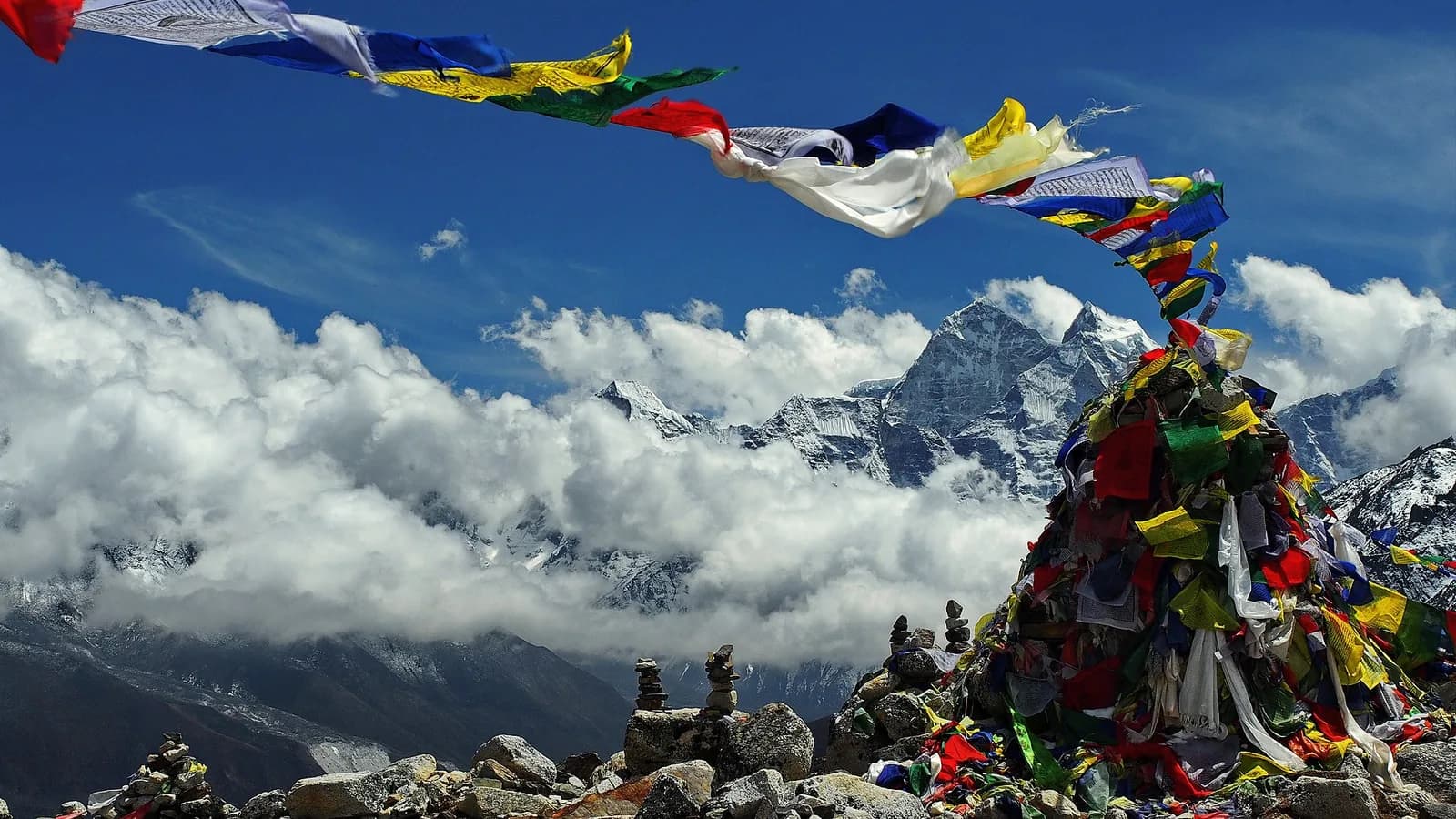
So, how hard is the Everest Base Camp trek really? It is one of the most-asked questions by anyone eyeing a first Himalayan adventure, and the honest answer surprises people: the difficulty has almost nothing to do with technical skill and almost everything to do with thin air, long days, and patience. There is no rope, no ice axe, and no climbing on the way to Everest Base Camp (EBC). What there is, instead, is two weeks of walking that slowly carries you above 5,000 metres, into air with roughly half the oxygen you breathe at sea level. This guide breaks the trek down honestly — the altitude, the daily distance, the fitness you need, and the bits people underestimate — so you can decide whether it is within reach.
Key takeaways
- The Everest Base Camp trek is rated moderate to strenuous, but it involves no technical climbing — the challenge is altitude and endurance, not skill.
- The high point is Kala Patthar (around 5,545–5,644 m); Base Camp sits near 5,364 m, where there is roughly 50% less oxygen than at sea level.
- Expect to walk 5 to 7 hours most days, covering about 130 km round trip from Lukla over roughly 12 trekking days.
- Around 40–50% of trekkers feel some altitude symptoms; acclimatization days and slow ascent matter more than raw fitness.
- 8 to 12 weeks of training — cardio, leg strength, and back-to-back hill walks — is the standard preparation, and beginners complete it regularly.
- The Lukla flight and changeable weather are real logistical hurdles; build in buffer days.
The short answer: moderate to strenuous, but not technical
Across reputable trekking operators, the Everest Base Camp route is consistently described as moderate to strenuous rather than easy or extreme. The reason it lands in that middle band is important. On a purely physical level, the trail is a walking path — well-trodden, marked, and lined with teahouses. You will cross suspension bridges, scramble over rocky moraine, and grind up some genuinely steep sections, but at no point do you need climbing gear or mountaineering experience.
What pushes it toward "strenuous" is the combination of three things at once: sustained daily effort, rough underfoot terrain, and altitude that climbs more than 2,500 m from Lukla to Base Camp. None of those alone would defeat a reasonably fit person. Stacked together over nearly two weeks, they demand respect. If you want a fuller day-by-day picture of how the route unfolds, our Everest Base Camp trek itinerary walks through every stage with elevations.
Altitude is the real difficulty
If there is one thing to understand before you go, it is this: altitude, not distance, is the defining challenge. The trail tops out at Kala Patthar, the rocky viewpoint above Gorak Shep that gives the classic unobstructed view of Everest's summit — a view you cannot actually see from Base Camp itself. Sources place Kala Patthar between about 5,545 m and 5,644 m (roughly 18,200–18,500 ft), which makes it higher than Base Camp.
How thin is the air up there?
At Everest Base Camp (about 5,364 m / 17,598 ft), the available oxygen is roughly 50% of what it is at sea level. Every task — walking, eating, even sleeping — becomes harder, and your pace naturally slows to a crawl. This is normal and expected. The final pre-dawn push up Kala Patthar is widely described as brutal: steep, wind-exposed, and slow, with each step feeling laboured in the rarefied air.
| Key point on the trek | Approx. elevation | Why it matters | | --- | --- | --- | | Lukla (start) | ~2,840 m | Where the trail and the famous flight begin | | Namche Bazaar | ~3,440 m | First major acclimatization stop | | Dingboche | ~4,410 m | Second key acclimatization stop | | Gorak Shep | ~5,170 m | Highest place you sleep | | Everest Base Camp | ~5,364 m | The destination; ~50% sea-level oxygen | | Kala Patthar | ~5,545–5,644 m | Highest point you stand on |
How far do you walk each day?
The full trek covers roughly 130 km (about 80 miles) round trip from Lukla to Base Camp and back, with the one-way distance to EBC around 65 km. Most trekkers complete the classic route in 12 to 14 trekking days, averaging 10 to 15 km per walking day.
In terms of hours, plan for 5 to 7 hours of walking on a typical day. Acclimatization days are lighter, often just 3 to 4 hours of gentle "climb high, sleep low" hiking, while a couple of days are long — the day you reach Base Camp and return to Gorak Shep can run 7 to 8 hours, and the long descent days back toward Namche and Lukla are similar.
Why the hours feel longer than the kilometres suggest
At altitude, distances on paper undersell the effort. Higher up, you cover fewer kilometres but they take longer, because thin air forces frequent rest breaks and a slower rhythm. A 12 km day near Base Camp can feel harder than a 20 km day in the lower valleys. Pacing yourself — and accepting a slow, steady plod — is part of the technique, not a weakness.
Will you get altitude sickness?
Possibly, and being fit does not make you immune. Studies and operator data suggest around 40 to 50 percent of trekkers experience some level of altitude sickness symptoms on the EBC route. Acute Mountain Sickness (AMS) happens when your body cannot adjust quickly enough to reduced oxygen, and it is unrelated to how strong your legs or lungs are at sea level.
Symptoms to watch for
AMS usually begins mild and appears within 6 to 24 hours of reaching a higher elevation. The hallmark sign is a headache, often joined by fatigue, nausea, dizziness, appetite loss, or poor sleep. Mild symptoms are common and manageable; the danger is ignoring them and climbing higher anyway.
How to lower your risk
The single most effective defence is proper acclimatization, which is exactly why the standard itinerary builds in rest days. Reputable guidance points to a few core habits:
- Climb high, sleep low — gain elevation during the day, then descend to sleep lower.
- Take the scheduled acclimatization days, typically one in Namche (3,440 m) and one in Dingboche (4,410 m).
- Hydrate well — drink several litres of water a day, and avoid alcohol.
- Ascend gradually and eat properly even when your appetite drops.
- Never ascend with AMS symptoms; if they worsen overnight or do not improve with rest after 24 hours, descend.
Some trekkers use Diamox (acetazolamide) as a preventive, which research has found can reduce AMS incidence by up to half in people ascending above 3,500 m — but only under medical advice. For a deeper dive on prevention and treatment, see our altitude sickness guide for Nepal trekking.
What fitness do you actually need?
Here is the encouraging part: you do not need to be an athlete. The consensus from operators is that a person with moderate fitness and good health can complete EBC with enough preparation, and even total beginners do it regularly. What matters is putting in the training time.
A realistic training baseline
The widely recommended window is 8 to 12 weeks of focused preparation. Before you start training in earnest, a useful self-check is whether you can comfortably walk 2 to 3 hours on flat ground and climb 20 to 30 flights of stairs without serious distress, with no major heart or knee problems.
| Training element | What it looks like | Why it helps | | --- | --- | --- | | Cardio | 3–4 sessions/week, building to 45–60 min | Endurance for long days | | Strength | Squats, lunges, step-ups, deadlifts | Legs and core for steep ups and downs | | Hiking practice | Back-to-back weekend hikes with a loaded pack | Simulates consecutive trekking days |
The hiking practice is the part people skip and regret. Training with a loaded pack (around 9 kg / 20 lb) on consecutive days teaches your body what multi-day trekking feels like in a way the gym cannot. A strong, calm mindset also goes a long way — much of the trek is mental, especially on the cold, slow, high-altitude mornings.
If you are weighing this trek against gentler options, our comparison of Everest Base Camp vs Annapurna Base Camp can help you judge which suits your fitness and timeframe.
The bits people underestimate
The flight to Lukla
The trek begins with a short flight to Tenzing–Hillary Airport in Lukla, often described as one of the most challenging airports in the world thanks to its short, sloped runway, high altitude, and mountain weather. In practice it is flown daily by experienced crews and the statistical record is far better than its fearsome reputation suggests — but delays and cancellations are genuinely common, because flights mostly run in the calm early-morning hours and changeable weather shuts them down. The practical fix is simple: build buffer days into your plan, especially at the end, so a weather day does not cost you your international flight home. (In peak season the flight sometimes departs from Ramechhap instead of Kathmandu.)
The weather and the cold
The trek is meaningfully easier in the right season. Spring (March to May) and autumn (late September to November) offer the most stable weather and the clearest views, which is exactly why they are the busiest windows. The June to August monsoon brings rain, cloud, and the highest rate of flight cancellations, and midwinter brings deep cold at altitude. Choosing your month well removes a whole layer of difficulty. Our guide to the best time to visit Nepal covers the seasons in more detail.
Basic teahouse comfort
You will not be camping — the route is lined with teahouses offering hot meals (the trekker staple is dal bhat) and a bed. But comfort thins out with the air: rooms get colder and more basic the higher you go, sleep is often poor at altitude, and hot showers and charging may cost extra. None of this is hard, exactly, but the cumulative wear of cold nights and broken sleep adds to the challenge.
So, is it within your reach?
For most reasonably healthy people willing to train, yes. The Everest Base Camp trek is hard in the way a long, patient endurance effort is hard — not in the way a technical mountain climb is hard. If you can commit to a couple of months of training, walk slowly and let your body acclimatize, respect the rest days, and stay flexible about weather, you have a strong chance of standing at Base Camp. The people who turn back are most often those who rushed the ascent or skipped the acclimatization, not those who lacked the fitness.
Go in with realistic expectations, a sensible itinerary, and patience with the altitude, and the difficulty becomes a challenge you can meet rather than a wall. If you are still in the research stage, our broader Nepal trekking overview is a good next step.
Sources
- Everest Base Camp Trek Difficulty, Route & Preparation — Discovery World Trekking
- Everest Base Camp Trek Distance Guide — Ace the Himalaya
- Everest Base Camp Trek Distance, Length and Elevation — EBC Trek Guide
- Altitude Sickness on the EBC Trek — Himalayan Glacier
- How to Avoid Altitude Sickness on the Everest Base Camp Trek — Himalayan Recreation
- Everest Base Camp Trek Training Guide — Alpine Ascents
- What Level of Fitness Is Needed for Everest Base Camp — Sherpa Expedition & Trekking
- Tenzing-Hillary Airport — Wikipedia
- Flying to Lukla, Nepal: What It's Really Like — Earth Trekkers
Frequently asked questions
- How hard is the Everest Base Camp trek overall?
- It is rated moderate to strenuous. There is no climbing, rope work, or technical ground — if you can walk 5 to 7 hours a day on rough trails for nearly two weeks, you can physically manage it. The real difficulty is the altitude, not the path itself.
- Can a beginner with no trekking experience do it?
- Yes, many do. Operators report that first-timers who train with cardio and back-to-back hill walks for 8 to 12 weeks complete it regularly. You do not need mountaineering skills, only steady fitness, healthy knees, and the patience to walk slowly at altitude.
- What is the highest point you reach?
- Kala Patthar, at roughly 5,545 to 5,644 m depending on the source, is the highest point trekkers actually stand on and the best viewpoint of Everest. Base Camp itself sits a little lower near 5,364 m, and you sleep no higher than Gorak Shep at about 5,170 m.
- Will I get altitude sickness even if I am fit?
- You might — fitness does not protect you. Acute mountain sickness depends on how your body adjusts to less oxygen, not your cardio level. Around 40 to 50 percent of trekkers feel some symptoms. Your defences are slow ascent, the acclimatization rest days, hydration, and descending if it worsens.
- How many hours a day will I walk?
- Most days run 5 to 7 hours of walking, with shorter 3 to 4 hour acclimatization days and one or two long days pushing 8 hours, such as the Base Camp day from Lobuche. The total round trip from Lukla is roughly 130 km over about 12 trekking days.
- How dangerous is the flight to Lukla?
- The Lukla airstrip has a short, sloped runway and changeable mountain weather, and it is often called one of the world's most challenging airports. In practice it is flown daily by experienced crews, but delays and cancellations are common — build buffer days into your plan so weather does not strand you.
- What is the hardest single day?
- Most trekkers point to the day you reach Base Camp from Lobuche and return to Gorak Shep, then climb Kala Patthar near dawn — long hours over rocky glacial moraine at the highest altitude of the trip, where every step feels heavy in the thin air.
- When is the trek easiest in terms of weather?
- Spring (March to May) and autumn (late September to November) give the most stable weather and clear mountain views, which is why they are busiest. Avoid the June to August monsoon, when rain, cloud, and flight cancellations peak, and expect deep cold in midwinter.
Related posts
Everest Base Camp Trek Difficulty: How Hard Is It?
An honest look at Everest Base Camp trek difficulty — altitude, daily hours, the up-and-down trail, fitness needed, and why slow beats strong.
Read postEBC Trek by Road: Reach Everest Base Camp Without Flying
How to do the EBC trek by road — driving Kathmandu to Salleri, Phaplu or Surke by jeep, then walking to Everest Base Camp. Routes, costs, days and seasons.
Read postEverest vs Annapurna Difficulty: An Honest Compare
Everest vs Annapurna difficulty compared by altitude, days, terrain and risk — across base camps, passes and easy treks, so you pick the right trail.
Read post