Everest Three High Passes: Pass-Day Survival Guide
A field guide to the Everest Three High Passes — what Kongma La, Cho La and Renjo La pass days really demand, plus fitness, gear and turnaround calls.
The route is famous. The pass days are what actually test you.
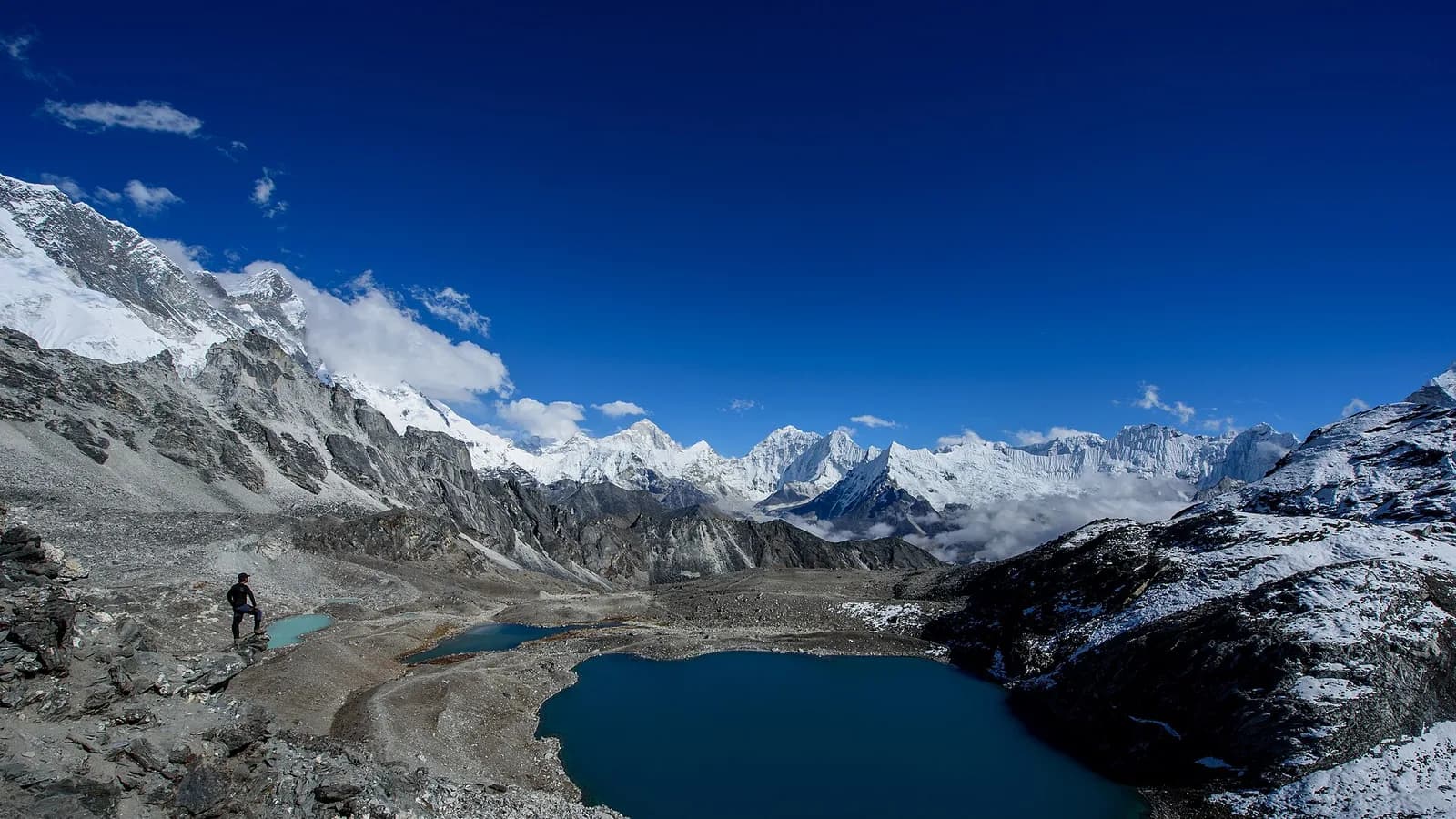
The Everest Three High Passes trek is the Khumbu's signature loop, and our full Everest Three Passes trek guide already walks through the route, the permits, the direction debate and the costs stage by stage. This companion piece zooms in on the part that actually decides whether your trip succeeds: the three big pass days themselves. Crossing Kongma La, Cho La and Renjo La — all above 5,300 metres — is less about logging kilometres and more about timing, traction, pacing and good decisions when the weather turns. Think of this as the pass-day playbook to read alongside the main itinerary, stamped to mid-2026.
Key takeaways
- The three passes are Kongma La (~5,535 m), Cho La (~5,420 m) and Renjo La (~5,340 m); each has a very different character.
- Cho La is the technical crux, with a glacier crossing where microspikes or crampons are usually needed.
- Start early — roughly 4am to 6am — for firm ice, lighter wind and a daylight buffer.
- Anticlockwise (Kongma La first) is the common, better-acclimatised choice; clockwise suits very experienced trekkers.
- The Khumbu is an exception to Nepal's mandatory-guide rule, but a guide is still strongly advised here.
- The most important skill is the turnaround call: waiting out bad weather beats forcing a pass.
The three pass days, one by one
The loop is famous as a whole, but you experience it as three discrete, demanding crossings separated by recovery days. Knowing what each one throws at you helps you pace the whole trip.
| Pass | Approx. altitude | What defines the day | |---|---|---| | Kongma La | ~5,535 m | Highest point; long, rocky, remote; the biggest altitude load | | Cho La | ~5,420 m | Technical crux; glacier crossing, often icy | | Renjo La | ~5,340 m | Most straightforward; finest framed Everest view |
Kongma La: the altitude test
Kongma La is the highest of the three and sits higher than any point on the standard Everest Base Camp route. The challenge here is rarely technical — it is the thin air and the length of the day. Approached anticlockwise from the Chukhung side, it is a long, lonely haul over boulder fields and past a cluster of small frozen tarns near the top, before a knee-testing descent to Lobuche on the main Base Camp trail. Pace yourself deliberately slowly; this is the day your acclimatisation work pays off or catches up with you.
Cho La: the glacier crux
Cho La is the pass most trekkers remember, and the one most worth respecting. The crossing links the Khumbu and Gokyo valleys, and it includes a genuine glacier section that is frequently icy. Reports from guiding companies describe a traverse of roughly 45 minutes across the Cho La glacier, with short ice slopes, the possibility of crevasses, and narrow ground where guides may rope teams across the most exposed sections. Approached from the east (the Dzongla side) it is a more manageable climb; tackled clockwise from the Gokyo side it becomes a steep, slippery rock-and-ice scramble that can unsettle anyone uneasy with heights. This is the day traction aids stop being optional.
Renjo La: the reward
Renjo La is generally the most straightforward crossing of the three, and it saves the best view for last. Crossed late in an anticlockwise loop, when you are best acclimatised, it rewards the climb with one of the finest framed panoramas of Everest on the whole trek as you reach the crest above the Gokyo lakes, before a long descent toward Thame and back down the valley. For the Gokyo half of the picture, our Gokyo Lakes trek guide covers the lakes and Gokyo Ri in detail.
The pass-day timeline that keeps you safe
Across all three passes, the single most repeated piece of advice from Nepal guiding outfits is the same: start early. Most groups leave somewhere between 4am and 6am, headtorch on.
The reasons stack up. Overnight cold leaves the ice on Cho La firm and grippy, where afternoon sun turns it to soft, treacherous slush. Winds on the high crests are usually lightest at dawn and build through the day. And an early departure banks hours of daylight, so a crossing that runs slow — because of snow, a struggling group member, or a navigation pause — does not finish in the dark. A rough rhythm for a pass day looks like this:
| Time | Phase | Why it matters | |---|---|---| | Pre-dawn (4-6am) | Leave the lodge | Firm ice, low wind, full day ahead | | Mid-morning | Reach the pass / glacier | Cross while the surface is still firm | | Around midday | Begin the long descent | Get below the crest before afternoon weather | | Afternoon | Reach the next village | Rest, rehydrate, recover for the next stage |
Build your day around being over the top and descending by early afternoon, not summiting it.
Training and fitness: what the passes actually demand
The Three High Passes is rated challenging to strenuous, and the fitness it asks for is specific. You are not running; you are walking six to nine hours a day on steep, uneven, rocky ground, many days in a row, and then repeating that effort at over 5,000 metres where every step costs more.
- Build endurance, not speed. Long back-to-back days on hills with a loaded pack mirror the trek far better than short, fast sessions.
- Train your legs for descents. The drops off all three passes are long and hard on the knees; downhill training and trekking poles both help.
- Bank high-altitude experience first. This is not a sensible first big trek. Prior time above 4,000 metres tells you how your body handles thin air before you are committed to a glaciated pass.
- Practise with your gear. Know how to fit your microspikes or crampons and walk in them before the Cho La glacier, not on it.
Acclimatisation does the rest, and it is non-negotiable — read our altitude sickness guide for Nepal treks and treat every scheduled rest day as essential.
Gear that earns its place on the passes
The standard Everest kit list applies, but a few items move from "nice to have" to "do not cross without".
- Microspikes or crampons. Essential for the Cho La glacier and useful on snowy stretches of the other two passes.
- Trekking poles. Invaluable on the steep, loose descents off every pass.
- A genuinely warm sleeping bag and windproof shell. The crests are exposed and the nights bitterly cold in even the good seasons.
- Strong sun protection. Glare off snow and ice at altitude is fierce; bring proper sunglasses and high-factor sunscreen.
For the full, weight-conscious version, see our Nepal trekking packing list, then add the traction aids and a margin of extra warmth.
Direction, in one paragraph
The detailed direction debate lives in the main Three Passes guide, but the short version is this: most trekkers go anticlockwise, crossing Kongma La first and Renjo La last, because the early days on the main Everest trail through Namche and Dingboche let you acclimatise gradually before the highest pass. The clockwise route starts with Renjo La and forces a fast, roughly 1,000-metre gain to a high pass early on, demanding strict discipline and extra rest days, so it is best left to very fit, experienced parties. Either way, a good guide will choose the safer sequence for your group and the conditions on the ground.
Guides, permits and the Khumbu exception
Here is a detail that trips up a lot of planning. Since April 2023, Nepal has required a licensed, agency-registered guide on its trekking routes — but the Khumbu (Everest) region is a widely reported exception to that rule, where a local-area permit can still be issued without a TAAN guide. The US Embassy in Nepal and multiple Nepal trekking sources note this carve-out. So as of mid-2026, a guide is not strictly mandatory on the Three High Passes the way it is on, say, the Annapurna or Manaslu circuits.
That said, "not required" is not the same as "not wise". On a loop with three glaciated passes, a guide handles route-finding in poor visibility, manages the Cho La crossing, and makes the hard turnaround calls — and our guide-or-no-guide breakdown for the Everest region leans firmly toward hiring one here.
Permit-wise, nothing special applies to the passes. You carry the same two as any Everest trek:
| Permit | Fee (as of June 2026) | Notes | |---|---|---| | Sagarmatha National Park entry | NPR 3,000 (foreigners) | Conservation and trail upkeep | | Khumbu Pasang Lhamu Rural Municipality | ~NPR 2,000-3,000 (foreigners) | Local services; reported figures vary |
Reported municipality figures vary between sources, so confirm the current rate locally. There is no separate pass permit and no climbing permit for viewpoints such as Gokyo Ri and Kala Patthar — our Everest Base Camp permits explainer covers why the old TIMS card no longer applies in the Khumbu.
The skill that matters most: the turnaround call
Every other section in this guide is about getting ready. This one is about getting it right on the day. The most important judgement on the Three High Passes is knowing when not to cross.
Heavy fresh snow, a whiteout, high wind, or worsening altitude symptoms in anyone in the group are all reasons to wait or turn back. A pass will still be there tomorrow. The most experienced trekkers and guides treat a missed or postponed crossing as an ordinary part of a Himalayan trip — not a failure — and that mindset is exactly what keeps people safe up high. Pair it with a sober look at evacuation cover before you leave: on a route that spends days above 5,000 metres, a helicopter lift can be lifesaving, and our guide to trekking insurance with helicopter evacuation spells out what a suitable policy must include.
Get the timing, the traction and the turnaround right, and the Everest Three High Passes delivers exactly what it promises: the giants of the Khumbu seen from every side, on the finest and toughest teahouse loop in Nepal. A few Nepali phrases every trekker should know will warm up the long lodge evenings between the passes, too.
Sources
- Everest Three Passes Trek (cost and itinerary) — Discovery World Trekking
- Cho La Pass Trek Guide: Glacier Crossing & Route Tips — Best Heritage Tour
- Cho La Pass difficulty and safe crossing tips — Himalayan Masters
- Everest Three Passes Trek clockwise vs anticlockwise — Pristine Nepal
- Three Passes Trek complete overview — TripTins
- New requirements for trekking guides/porters (April 1, 2023) — U.S. Embassy in Nepal
- Nepal Tourism Board — national park entry fees
Frequently asked questions
- Which of the Everest Three High Passes is the hardest?
- Kongma La (around 5,535 metres) is the highest and puts the heaviest load on your lungs, but Cho La (around 5,420 metres) is usually called the most technical because it crosses a glacier that is often icy. Many trekkers find Cho La the scariest day and Kongma La the most exhausting.
- Do I really need crampons or microspikes on Cho La?
- In most conditions, yes. Cho La crosses a glacier with short ice sections, and traction aids plus trekking poles make the crossing far safer. In early spring or after fresh snow the ice can be thick, so most guided groups carry microspikes or crampons and cross early when the surface is firm.
- What time should I start a pass day on the Three High Passes?
- Most groups leave between roughly 4am and 6am. Early starts mean firmer ice on Cho La, lighter winds on the crests, and a buffer of daylight if the crossing takes longer than planned. Afternoons on the high passes tend to bring cloud, wind and softening snow.
- How fit do I need to be for the Everest Three High Passes?
- You should be comfortable walking six to nine hours on steep, rocky ground for many days in a row, then doing it again at over 5,000 metres. Prior high-altitude trekking experience matters more than raw speed, because the passes reward steady pacing and good acclimatisation rather than sprinting.
- Should I do the Three High Passes clockwise or anticlockwise?
- Anticlockwise (Kongma La first, then Cho La, then Renjo La) is the common recommendation because you acclimatise gradually on the main Everest trail before the highest pass. Clockwise starts with Renjo La and gains height fast, so it suits very fit, experienced trekkers, and a good guide will pick the safer order.
- Do I need a guide for the Everest Three High Passes trek?
- The Khumbu is an exception to Nepal's nationwide mandatory-guide rule, so a licensed guide is not strictly required there as of mid-2026. On a route with three glaciated passes, though, a guide is strongly advised for route-finding, safety calls and the Cho La glacier crossing.
- What permits do I need for the Three High Passes?
- The same two as the standard Everest trek: a Sagarmatha National Park entry permit (NPR 3,000 for foreigners, as of June 2026) and the local Khumbu Pasang Lhamu Rural Municipality permit (commonly cited around NPR 2,000 to 3,000, as of June 2026). There is no separate pass permit.
- When is it too dangerous to cross a pass?
- Turn back or wait if you face heavy fresh snow, a whiteout, high wind, or worsening altitude symptoms in anyone in the group. A pass will still be there tomorrow; the safest trekkers treat a missed crossing as a normal part of the trip rather than a failure.
Related posts
Is the Everest Base Camp Trek Safe? An Honest Guide
Is the Everest Base Camp trek safe? A clear look at altitude, the Lukla flight, insurance and the real risks — plus how trekkers stay safe.
Read postAltitude Sickness Nepal: Plan a Trek That Acclimatizes
How to plan a trek that prevents altitude sickness in Nepal — the ascent-rate numbers, rest-day math, and self-checks that keep you on the trail.
Read postEverest Base Camp Trek Difficulty: How Hard Is It?
An honest look at Everest Base Camp trek difficulty — altitude, daily hours, the up-and-down trail, fitness needed, and why slow beats strong.
Read post