Easy Treks in Nepal: 6 Beginner Routes for 2026
The best easy treks in Nepal for beginners — Poon Hill, Everest View, Langtang and more, with altitudes, days, permits and the 2023 guide rule.
An easy trek in Nepal is not a watered-down one — it is a few well-paced days through hill villages to a sunrise that does all the showing off.
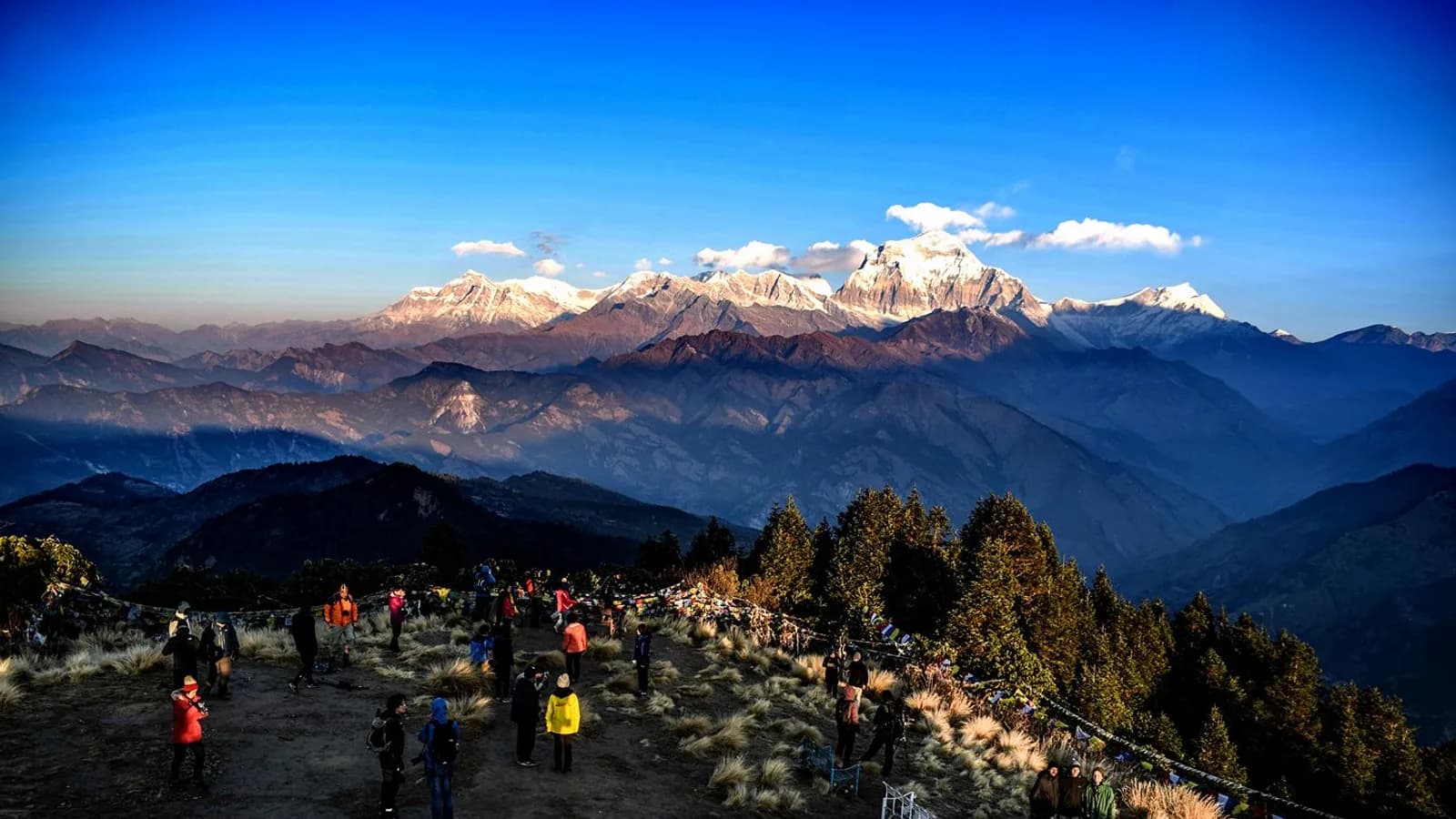
When people picture trekking in Nepal, they often imagine the hardest version of it — thin air at 5,000 metres, glaciers, and ten-hour days. That is one corner of the country. Alongside it runs a whole network of easy treks in Nepal: short, low-altitude trails through hill villages, oak and rhododendron forest, and sunrise viewpoints, where the walking is measured in pleasant hours rather than punishing days. These routes give first-timers a genuine Himalayan trek without the suffering, and they are exactly where most beginners should start.
This guide rounds up six of the best beginner-friendly treks, with their altitudes, typical durations, permits and the practical rules that now apply. None of it is medical advice — confirm your own fitness with a doctor before any trek — and every figure below comes from recent trekking and official Nepali sources, linked at the end.
Key takeaways
- An "easy" trek in Nepal usually means modest altitude, short walking days and teahouse lodging — not a lack of scenery.
- Ghorepani Poon Hill is the classic first trek: four to five days to a famous sunrise at about 3,210 metres.
- The Everest View trek reaches the Khumbu's atmosphere and sees Everest itself without the grind to Base Camp, topping out near the Hotel Everest View at about 3,880 metres.
- Since April 2023, foreign trekkers in Nepal's national parks and conservation areas must walk with a licensed guide arranged through a registered agency.
- Most beginner treks need a park or conservation permit (NPR 3,000 for foreigners, as of June 2026) plus a TIMS card; a registered agency arranges both.
- Trek in autumn (late Sep–Nov) or spring (Mar–May) for the clearest skies and mildest weather.
What makes a trek "easy" in Nepal
Three things separate a gentle Nepal trek from a hard one, and altitude is only one of them.
The first is maximum elevation. Acute mountain sickness becomes more likely the higher you climb and is uncommon below about 2,500 metres, so routes that stay low — or gain height gradually — are inherently kinder. The second is daily walking hours and terrain. Nepal's trails are famously built of stone steps, so it is the relentless up-and-down, not the raw distance, that tires legs; an easy day is roughly four to six hours with breaks. The third is support and logistics. The popular beginner routes are all teahouse treks, meaning you sleep and eat in village lodges rather than carrying camping gear, and a porter and guide turn a daunting trip into a manageable one.
Get those three right — moderate altitude, short days, good support — and a remarkable slice of the Himalaya opens up to people who have never trekked before. For a fuller primer on the basics, see our Nepal trekking overview.
The 6 best easy treks in Nepal
Here is how the main beginner routes compare. Durations are typical trekking days and vary with the operator and your starting point.
| Trek | Region | Typical days | Approx. max altitude | Difficulty | |---|---|---|---|---| | Ghorepani Poon Hill | Annapurna | 4–5 | ~3,210 m | Easy | | Everest View | Khumbu (Everest) | 7–9 | ~3,880 m | Easy–moderate | | Mardi Himal (lower) | Annapurna | 4–5 | up to ~4,500 m at high camp | Moderate | | Langtang Valley | Langtang | 7–10 | ~3,870 m | Moderate | | Tamang Heritage | Langtang | 5–7 | ~3,165 m | Easy–moderate | | Nagarkot–Dhulikhel hills | Kathmandu rim | 1–3 | ~2,100 m | Easy |
Ghorepani Poon Hill — the classic first trek
If there is a default beginner trek in Nepal, this is it. The Poon Hill route runs four to five days through the southern Annapurna foothills, climbing the famous stone staircase to Ulleri, on through forest to Ghorepani, then up in the dark to the Poon Hill viewpoint at about 3,210 metres for a sunrise panorama across the Annapurna range, Dhaulagiri and the fishtail peak of Machhapuchhre. The altitude stays modest, the lodges are comfortable, and there is no technical climbing — just steady walking. Full details are in our Ghorepani Poon Hill trek guide.
Everest View trek — Everest without Base Camp
The Everest View trek is the gentle way into the Khumbu. After flying to Lukla, you walk up to the Sherpa hub of Namche Bazaar and on toward Tengboche, with the option of a short climb to the Hotel Everest View at about 3,880 metres — said to be one of the highest-placed hotels in the world — for a panorama that includes Everest itself. It reaches genuine high-Himalaya scenery without the long, demanding push to Base Camp, which makes it a strong pick for travellers short on time or wary of altitude. See our Everest View trek write-up for the route and timing.
Mardi Himal — easy if you keep it short
Mardi Himal is the quieter ridge trek above Pokhara, with close-up views of Machhapuchhre. It is genuinely beginner-friendly as a short walk to Low or Middle Camp, but the trail keeps climbing to a High Camp and viewpoint that can reach roughly 4,500 metres, where the air thins and the grade steepens. Done as a four to five day route, it stays manageable; pushed to the top, it edges into moderate territory. Our Mardi Himal trek guide explains how to scale it to your fitness.
Langtang Valley — a gentle valley, but not the shortest
Langtang, north of Kathmandu, is often described as the easiest of Nepal's "big" valley treks. It follows a river gorge up to Kyanjin Gompa at about 3,870 metres, with year-round teahouses and no technical sections. It is more gradual than steep, but it is also longer and higher than Poon Hill — usually 7 to 10 days with sustained daily ascent — so it sits at the easy end of moderate rather than truly easy. The valley is also a moving place to visit after the 2015 earthquake; our Langtang trek guide covers the route and its recovery.
Tamang Heritage Trail — villages over altitude
In the same Langtang region, the Tamang Heritage Trail trades high passes for culture, winding through Tamang villages with hot springs and homestays at altitudes around 3,000 to 3,200 metres. It is a lower, quieter alternative that pairs well with Langtang for travellers who care more about village life than summits.
Nagarkot to Dhulikhel — a trek without the flight
You do not even have to leave the Kathmandu Valley rim to walk among the hills. The Nagarkot to Dhulikhel ridge is a one to three day route with sweeping Himalayan views on clear mornings, comfortable lodges and easy road access — no domestic flight or long drive required. It is ideal as a warm-up, a short escape, or an option for those who want a taste of trekking without committing to a multi-day expedition.
Permits and the guide rule
Two pieces of paperwork matter on almost every beginner trek, and one rule changed how trekking works in Nepal.
Entry permits
Each protected area charges an entry fee. The official Nepal Tourism Board rates for foreign nationals are NPR 3,000 each for the Annapurna Conservation Area (ACAP), Langtang National Park and Sagarmatha (Everest) National Park (all as of June 2026). SAARC nationals pay less, and children under 10 are admitted free.
| Area | Foreign nationals | SAARC nationals | |---|---|---| | Annapurna Conservation Area (ACAP) | NPR 3,000 | NPR 1,000 | | Langtang National Park | NPR 3,000 | NPR 1,500 | | Sagarmatha (Everest) National Park | NPR 3,000 | NPR 1,500 |
Source: Nepal Tourism Board park entry fees (as of June 2026). Some areas also levy a separate local rural-municipality fee collected on the trail.
TIMS card
Most trekking regions also require a TIMS (Trekkers' Information Management System) card, which logs who is on the trail and where. It is arranged through a registered agency along with your permit. Carry enough Nepali rupees in cash for the trek itself, since card payment is rare in mountain villages — our notes on Nepal's currency explain how to manage that.
The licensed-guide requirement
Since 1 April 2023, Nepal has required foreign trekkers in its national parks and conservation areas to use a licensed guide or porter-guide hired through a government-registered trekking agency, rather than trekking solo. The US Embassy in Nepal issued a public notice confirming the change. The rule was introduced for safety — so lost, injured or altitude-sick trekkers have professional help on hand — and it applies to the Annapurna and Langtang routes in this guide. For the full picture, including how it plays out in practice, see do I need a guide to trek in Nepal.
Altitude, fitness and safety basics
Even an "easy" trek deserves respect. The single most useful habit is to ascend slowly once you are above about 2,500 metres, drink plenty of water, and tell your guide early if you feel a headache, nausea or unusual fatigue — the textbook signs of altitude sickness. Our altitude sickness guide covers the symptoms and the golden rules in detail.
Fitness-wise, you do not need to be an athlete, but you should be comfortable walking four to six hours a day on uneven stone steps. A few weeks of regular walking and stair practice beforehand pays off. Hiring a porter so you carry only a daypack is the cheapest upgrade to your enjoyment, and on a guided trek your guide manages pacing and lodges. If you are walking with children or older relatives, build in shorter days and rest stops; our senior trekking in Nepal guide has more on gentle pacing.
When to go and what to pack
The two prime seasons are autumn (late September to November) and spring (March to May). Autumn brings crisp, clear post-monsoon skies and the sharpest mountain views; spring is a touch hazier but adds the rhododendron blooms the Annapurna foothills are famous for. The summer monsoon (June to August) leaves trails green but wet, muddy and often cloud-covered, while winter (December to February) is cold and can bring snow to higher viewpoints like Poon Hill. For a month-by-month breakdown, see the best season to trek in Nepal.
Packing for an easy teahouse trek is simpler than for a high expedition, but layers, broken-in boots and trekking poles still make the biggest difference to comfort on the stone steps. Our Nepal trekking packing list covers the essentials without overpacking.
Sources
- Nepal Tourism Board — Park entry fees
- U.S. Embassy in Nepal — New requirements for use of trekking guides/porters (effective 1 April 2023)
- Much Better Adventures — Changes to the rules of trekking in Nepal
- Hotel Everest View — official site (altitude)
- Himalayan Hero — Langtang Valley trek difficulty guide 2026
- Nepal Gateway Trekking — Mardi Himal trek difficulty
Frequently asked questions
- What is the easiest trek in Nepal for a beginner?
- The Ghorepani Poon Hill trek is the usual first choice. It runs four to five days through Annapurna hill villages on a well-supported teahouse trail, tops out around 3,210 metres at the Poon Hill viewpoint, and involves no technical climbing — only a famous stone staircase and a pre-dawn walk to a sunrise panorama.
- How fit do I need to be for an easy trek in Nepal?
- You do not need to be an athlete, but you should be able to walk comfortably for roughly four to six hours a day on uneven stone steps. A few weeks of regular walking and stair practice before the trip makes the daily ups and downs noticeably easier.
- Do I need a guide for easy treks in Nepal?
- Since April 2023 Nepal has required foreign trekkers in its national parks and conservation areas to walk with a licensed guide or porter-guide arranged through a registered agency, rather than solo. This covers Annapurna and Langtang. A guide also handles permits, lodges and navigation.
- How high do easy treks in Nepal go, and is altitude a worry?
- Most beginner routes top out between about 2,000 and 3,900 metres. Acute mountain sickness is uncommon below roughly 2,500 metres, and on higher routes a slow, well-spaced ascent keeps the risk low. Read up on the symptoms before you go and tell your guide if you feel unwell.
- What permits do I need for an easy trek in Nepal?
- It depends on the area. Annapurna treks need the ACAP entry permit, which is NPR 3,000 for foreign nationals (as of June 2026). Langtang and Everest treks need their respective national park permits, also NPR 3,000 for foreigners. Most routes also use a TIMS card, and a registered agency arranges everything.
- When is the best time for easy trekking in Nepal?
- Autumn from late September to November and spring from March to May give the mildest weather and clearest mountain views. Spring also brings rhododendron blooms in the Annapurna foothills. The summer monsoon is green but wet and cloudy, while winter is cold with possible snow at altitude.
- Can I do an easy trek as a teahouse trek instead of camping?
- Yes. All the popular beginner routes are teahouse treks, meaning you sleep and eat in simple village lodges along the way. There is no camping or carrying of tents and stoves, so a hot meal and a bed are waiting at the end of each walking day.
- Are easy treks in Nepal suitable for families and older walkers?
- Many are. Short, low-altitude routes such as Poon Hill, the Everest View trek and the Nagarkot to Dhulikhel hills suit fit families and older travellers, especially with a porter to carry the bags and shorter daily stages built into the plan.
Related posts
Beginner Treks Nepal: 6 Easy Himalayan Trails
The best beginner treks in Nepal — short, low-altitude trails like Poon Hill, Mardi Himal and Langtang, with permits, costs and seasons explained.
Read postEverest Base Camp vs Annapurna Base Camp: Which to Trek
Everest Base Camp vs Annapurna Base Camp compared — altitude, days, difficulty, cost, permits, scenery, and which Himalayan trek fits you best.
Read postEverest vs Annapurna Difficulty: An Honest Compare
Everest vs Annapurna difficulty compared by altitude, days, terrain and risk — across base camps, passes and easy treks, so you pick the right trail.
Read post