Sunauli Border Crossing Nepal: 2026 Guide
How to cross the Sunauli border between India and Nepal in 2026 — visa on arrival, opening hours, scams, and onward transport to Lumbini, Pokhara and Kathmandu.
For overland travellers coming up from India, Sunauli is the front door to Nepal — a dusty, chaotic gate that opens onto the Buddha's birthplace and the road to the mountains.
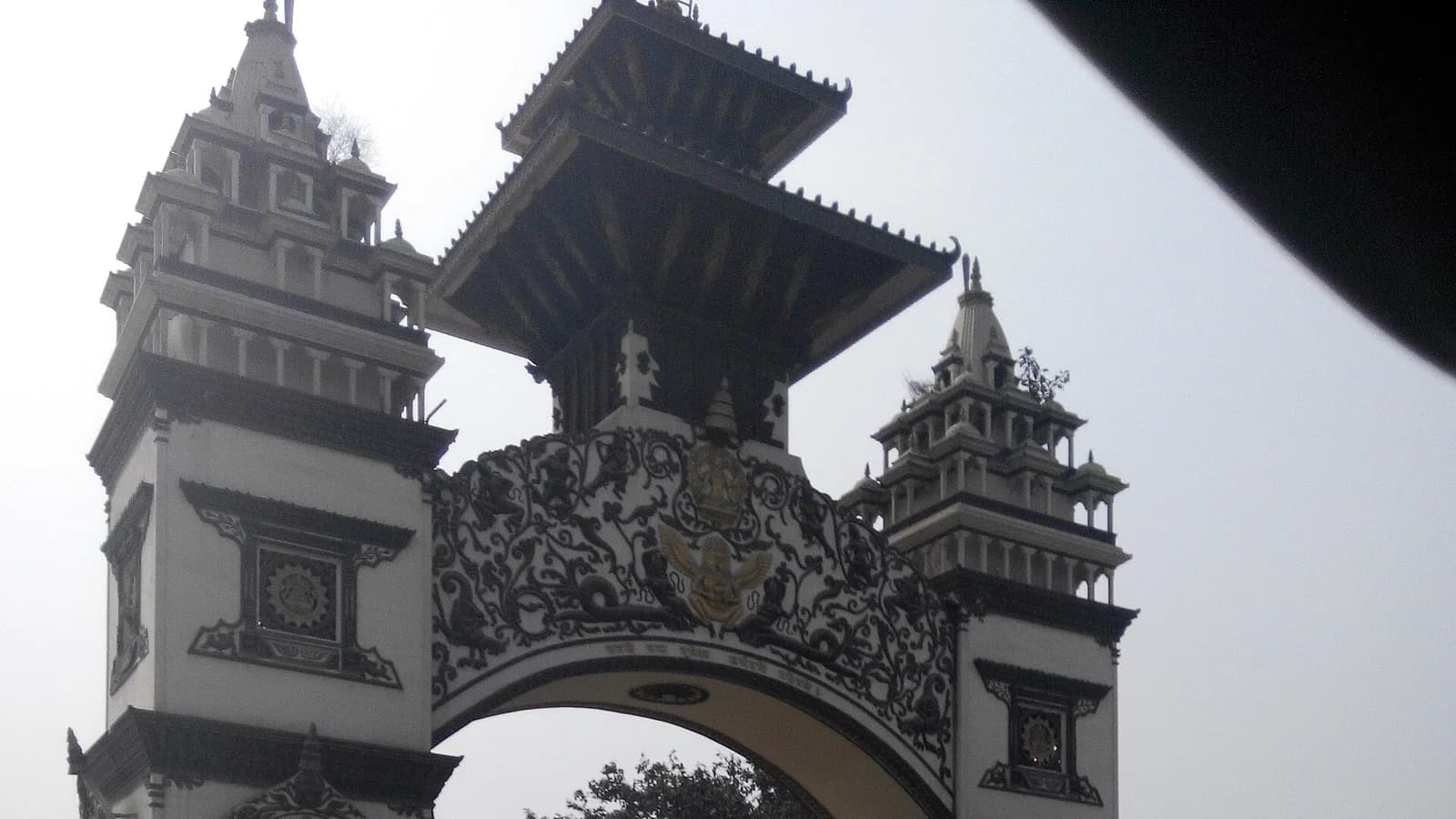
For travellers arriving overland from northern India, the Sunauli border is the busiest and most popular gateway into Nepal. It is the land crossing you reach after the train and bus journey up from Gorakhpur, and it drops you within easy reach of Lumbini, the birthplace of the Buddha, with onward roads to Pokhara and Kathmandu. It is also a hot, crowded, slightly chaotic place that catches first-time visitors off guard. This guide explains exactly how the Sunauli border crossing works in 2026 — the names on each side, visa on arrival, opening hours, the currency rules that trip people up, the common scams, and how to get onward to where you actually want to be.
Everything below is drawn from official immigration information and recent traveller reports, linked at the end. Border procedures, fares and office hours can change, so treat the details as a guide and confirm locally.
Key takeaways
- The crossing has two names: Sunauli (Sonauli) on the Indian side and Belahiya on the Nepali side, just south of Bhairahawa.
- The gate is open 24 hours for foot crossings, but the immigration office keeps shorter hours (commonly reported around 6:00 am to 10:00 pm) — cross in daylight.
- Most foreigners can get a Nepal visa on arrival here for 15, 30 or 90 days; pay the fee in US dollars, not rupees.
- Indian citizens need no visa and may enter on an Indian passport or an approved photo ID.
- Watch for touts and fake visa offices — only use the official immigration buildings.
- Bhairahawa is your transport hub: Lumbini is ~25–28 km away, and long-distance buses head to Pokhara (~5–6 hrs) and Kathmandu (~7–10 hrs).
Two names, one crossing
A lot of the early confusion at this border comes down to naming. The crossing straddles the frontier between the Indian state of Uttar Pradesh and Nepal's Lumbini Province, and each side has its own name.
- Sunauli / Sonauli is the Indian side. You will see both spellings; they refer to the same place.
- Belahiya is the Nepali side, the small border settlement where Nepal's immigration office sits.
- Bhairahawa (officially Siddharthanagar) is the proper town a few kilometres north on the Nepali side. It is where the hotels, bus park and onward transport are concentrated.
In everyday travel talk, people say "the Sunauli border" to mean the whole thing. When you are actually on the ground, remember that you exit India at Sunauli, walk across, and complete Nepali entry formalities at Belahiya before moving on to Bhairahawa.
Nepal and India share an open border under a long-standing bilateral arrangement, which is why the crossing feels informal compared with most international frontiers. That openness is a convenience, but it also means the formalities for non-Indian travellers are easy to miss if you are not paying attention — so do not just drift across without getting stamped.
Getting to the border from India
Most overland travellers reach Sunauli from Gorakhpur, the nearest major Indian railway hub.
- From Gorakhpur, it is roughly a 2 to 3 hour bus or taxi ride to Sunauli.
- The Gorakhpur bus depot sits a short walk from the railway station, and local buses run frequently to the border.
- Shared and private taxis are also available if you would rather not take the local bus.
At Sunauli you complete Indian exit formalities — get your exit stamp on the Indian side — then walk or take a short cycle-rickshaw ride to the actual gate. Indian customs here is famously casual, and you then enter Nepal by walking through the large border gate.
Practical tip: do not skip the Indian exit stamp. Because the border is so relaxed, it is genuinely possible to walk straight through without anyone stopping you — but missing stamps cause real problems later when you try to leave either country.
Nepal visa on arrival at Belahiya
Once you are across, head to the Nepali immigration office at Belahiya to handle entry. For most non-Indian nationalities this means buying a tourist visa on arrival.
What you need
- A passport valid for at least six months with a blank page.
- A recent passport-sized photograph (bring spares; you may also be able to use a photo booth or QR-code online form on site).
- Proof of onward or return travel and accommodation can be requested.
- The visa fee in US dollars.
Tourist visa durations and fees
Nepal's standard tourist visa tiers apply at this crossing. Foreign-national tourist visa fees are set by the Department of Immigration:
| Visa duration | Fee (USD) | Notes | | --- | --- | --- | | 15 days | USD 30 (as of 2026) | Single or multiple entry | | 30 days | USD 50 (as of 2026) | Single or multiple entry | | 90 days | USD 125 (as of 2026) | Single or multiple entry |
Some applicants complete the form by scanning a QR code outside the office and filling it in online, with the completed application arriving by email as a PDF; Wi-Fi is sometimes available if you need it. For the full picture of how visa on arrival works countrywide, see our guide to Nepal visa on arrival in 2026 and the broader Nepal visa requirements overview.
Indian citizens
Nepal does not require a visa for Indian nationals. Indian citizens are given freedom of movement across the open border and may enter on an Indian passport or another approved photo identity document. If you are travelling on an Indian passport, our dedicated guide to the Nepal visa rules for Indian citizens covers the ID details and what to carry.
Opening hours and when to cross
This is one of the most important practical points, because the gate and the office keep different hours.
- The border gate is open 24 hours for people crossing on foot.
- The Nepali immigration and customs office keeps shorter hours, commonly reported as roughly 6:00 am to 10:00 pm.
Because you need an entry stamp — and, for most foreigners, a visa issued at that office — you should plan to cross during daytime office hours. Travellers also widely advise against crossing late at night: security staff on both sides can be unhelpful after hours, and hotels on the Nepali side may be closed, leaving you stuck in a dusty border town with nowhere to stay.
The currency trap: dollars, not rupees
The single most common mistake at Sunauli is arriving without the right cash. Two rules matter.
Pay the visa fee in US dollars. Travellers consistently report that Belahiya immigration prefers USD and that Indian rupees are not accepted for the official visa fee. Euros are often refused as well. Bring clean US dollar notes in roughly the right amount, because you cannot count on getting change or paying by card at this crossing.
Mind your Indian rupee denominations. If you want to spend or exchange leftover Indian cash in Nepal, note that Indian 500 and 200 rupee notes are generally not legal tender in Nepal. Only 100-rupee notes and smaller can be reliably carried and exchanged. So before you cross, break large Indian notes into hundreds, and keep your US dollars set aside specifically for the visa.
Once in Nepal you will want local currency for buses and rickshaws. For exchange rates and ATM tips, see our notes on the Nepalese rupee and using ATMs in Nepal.
Scams and safety at Sunauli
Sunauli has a long-standing reputation as a place where touts work the crowds of tired travellers. None of it is especially dangerous, but it pays to be alert.
- Fake "visa offices." Some operators direct you to an "official" visa office that is really just a travel agency. The only place to get your Nepal visa is the government immigration building. Do not pay anyone outside it.
- Overpriced bus tickets. Touts may push expensive onward tickets. Walk to Bhairahawa's bus park and buy there, or compare prices before committing.
- Pushy money changers. Agree a rate clearly and count your money. Better still, change only what you need at the border and do the rest in Bhairahawa or your destination.
- Rickshaw and taxi fares. Always agree the fare before you get in.
More general advice on these tactics is in our roundups of common Nepal tourist scams in 2026 and broader Nepal travel scams. For an overall sense of conditions, our is Nepal safe for tourists guide is a useful companion.
Onward from the border: where to next
Once you are stamped in, the Nepali side of the crossing is a launchpad rather than a destination. Here is how the main onward legs break down.
To Lumbini
Lumbini, the birthplace of the Buddha, is the obvious first stop for many overland arrivals and one of the main reasons people use this crossing.
- From immigration, take a rickshaw or shared vehicle the short distance to Bhairahawa.
- From Bhairahawa, a local bus or taxi runs the remaining ~25 to 28 km to Lumbini, roughly 30 to 45 minutes.
If Lumbini is your goal, our deeper Lumbini travel guide and the question of whether Lumbini is worth visiting will help you plan the visit itself.
To Pokhara
Pokhara, the lakeside gateway to the Annapurna region, is the closer of the two big tourist cities.
- Reach Bhairahawa, then take a long-distance bus heading north via Butwal.
- The run is commonly around 5 to 6 hours, depending on traffic and road conditions.
To Kathmandu
The capital is the longer haul.
- Buses to Kathmandu run from Bhairahawa, following the East-West (Mahendra) Highway to Narayanghat and then the Prithvi Highway.
- Plan for roughly 275 to 285 km and 7 to 10 hours, sometimes more.
Distances and times at a glance
| From the Sunauli/Belahiya crossing | Approx. distance | Typical time | | --- | --- | --- | | Bhairahawa (transport hub) | A few km | 10–15 min by rickshaw | | Lumbini | ~25–28 km | 30–45 min | | Pokhara (via Butwal) | — | ~5–6 hrs by bus | | Kathmandu (via Narayanghat) | ~275–285 km | ~7–10 hrs by bus |
Because the route to Kathmandu passes through the Chitwan lowlands, many travellers break the journey there for a safari. Our guides to Kathmandu to Lumbini transport and the Kathmandu to Pokhara tourist bus cover the same highway corridor in the opposite direction and are worth a look for fares and comfort.
A simple plan for a smooth crossing
Putting it together, a low-stress crossing looks like this:
- Travel from Gorakhpur to Sunauli by bus or taxi, arriving in daylight.
- Get your Indian exit stamp on the Indian side.
- Walk through the gate and go straight to the Belahiya immigration office.
- Complete the visa form, pay in US dollars, and collect your entry stamp.
- Take a rickshaw to Bhairahawa, then your onward bus to Lumbini, Pokhara or Kathmandu.
Carry your passport, US dollars, a spare photo, and a little Nepali or low-denomination Indian cash, keep an eye on touts, and the Sunauli border becomes exactly what it should be: a quick, if dusty, doorway into Nepal.
Sources
- Nepal Department of Immigration — Entry/Exit Points
- Wikivoyage — Sunauli travel guide
- Border Crossing Hub — Belahiya / Siddharthnagar & Sonauli crossing
- WhirledAway — How to cross the Sonauli border between India and Nepal
- Third Eye Traveller — A Sunauli Border Survival Guide
- Parvez Shaikh — Entering Nepal on Foot via Sunauli-Belahiya
- Happy Irish Wanderers — Foreigners' Guide to Sonauli Border Crossing
- U.S. Department of State — Nepal Travel Advisory
Frequently asked questions
- Where is the Sunauli border and what is it called on each side?
- Sunauli is a land crossing on the India-Nepal frontier in the southern Terai plains. The Indian side is called Sunauli (Sonauli) in Uttar Pradesh, and the Nepali side is the town of Belahiya, just south of Bhairahawa. People often use 'Sunauli' loosely to mean the whole crossing on both sides.
- Is the Sunauli border open 24 hours?
- The physical border gate stays open around the clock for people crossing on foot, but the Nepali immigration and customs office keeps shorter hours, commonly reported as roughly 6:00 am to 10:00 pm. Since you must get an entry stamp and, for most foreigners, a visa, you should aim to cross during daytime office hours rather than late at night.
- Can I get a Nepal visa on arrival at Sunauli?
- Yes. Most foreign nationals can buy a tourist visa on arrival at the Belahiya immigration office for 15, 30 or 90 days. Carry a passport valid at least six months, a passport photo, and the fee in US dollars. Indian citizens do not need a visa to enter Nepal at all.
- What currency do I pay the Nepal visa fee in at the border?
- Pay in US dollars. Travellers consistently report that Belahiya immigration prefers USD and that Indian rupees are not accepted for the official visa fee, and euros are often refused too. Bring clean US dollar notes in the right amount, since change and card payment cannot be relied on at this crossing.
- How do I get from the Sunauli border to Lumbini?
- After clearing immigration on the Nepali side, take a rickshaw or shared vehicle the short hop to Bhairahawa, then a local bus or taxi on to Lumbini. Bhairahawa to Lumbini is roughly 25 to 28 kilometres and around 30 to 45 minutes, and Bhairahawa is the hub for all onward transport.
- How far is Sunauli from Kathmandu and Pokhara?
- By road the crossing is roughly 275 to 285 kilometres from Kathmandu, commonly 7 to 10 hours by bus depending on traffic and conditions. Pokhara is closer, generally around 5 to 6 hours via Butwal. Long-distance buses run from Bhairahawa, a short ride north of the border itself.
- Is the Sunauli border safe, and what scams should I watch for?
- The crossing is busy and generally manageable, but it has a reputation for touts. Common tricks include fake 'visa offices' that are really travel agencies, overpriced bus tickets, and pushy money changers. Only deal with the official immigration buildings, agree fares before you ride, and avoid crossing alone after dark.
- Can I carry Indian rupees into Nepal across Sunauli?
- You can carry low-denomination Indian notes, but high-value notes are restricted. Indian 500 and 200 rupee notes are generally not legal tender in Nepal, so bring 100-rupee notes or smaller if you want to spend or exchange Indian currency, and keep your US dollars separate for the visa fee.
Related posts
Kathmandu to Lumbini: How to Get There (2026)
How to travel Kathmandu to Lumbini in 2026 — tourist bus, flight to Bhairahawa, or private jeep. Honest cost, time, and the final hop to Lumbini.
Read postBuddha Air: A Tourist's Guide to Nepal's Top Airline
A traveller's guide to Buddha Air — routes, ATR fleet, the Everest mountain flight, fares, baggage rules and booking tips for Nepal's largest airline.
Read postBuddha Statue Nepal: A Traveller's Guide to the Best
Where to see the most striking Buddha statue sites in Nepal, from the giant golden trio at Swayambhu to the stone Buddha of Mustang.
Read post