Nepal Travel Scams — A Prevention and Reporting Guide
How to avoid Nepal travel scams before they start: verify agencies, handle money safely, beat evacuation fraud, and report to the Tourist Police.
You can't out-argue a practised scammer on the street. You can make sure they never get the chance.
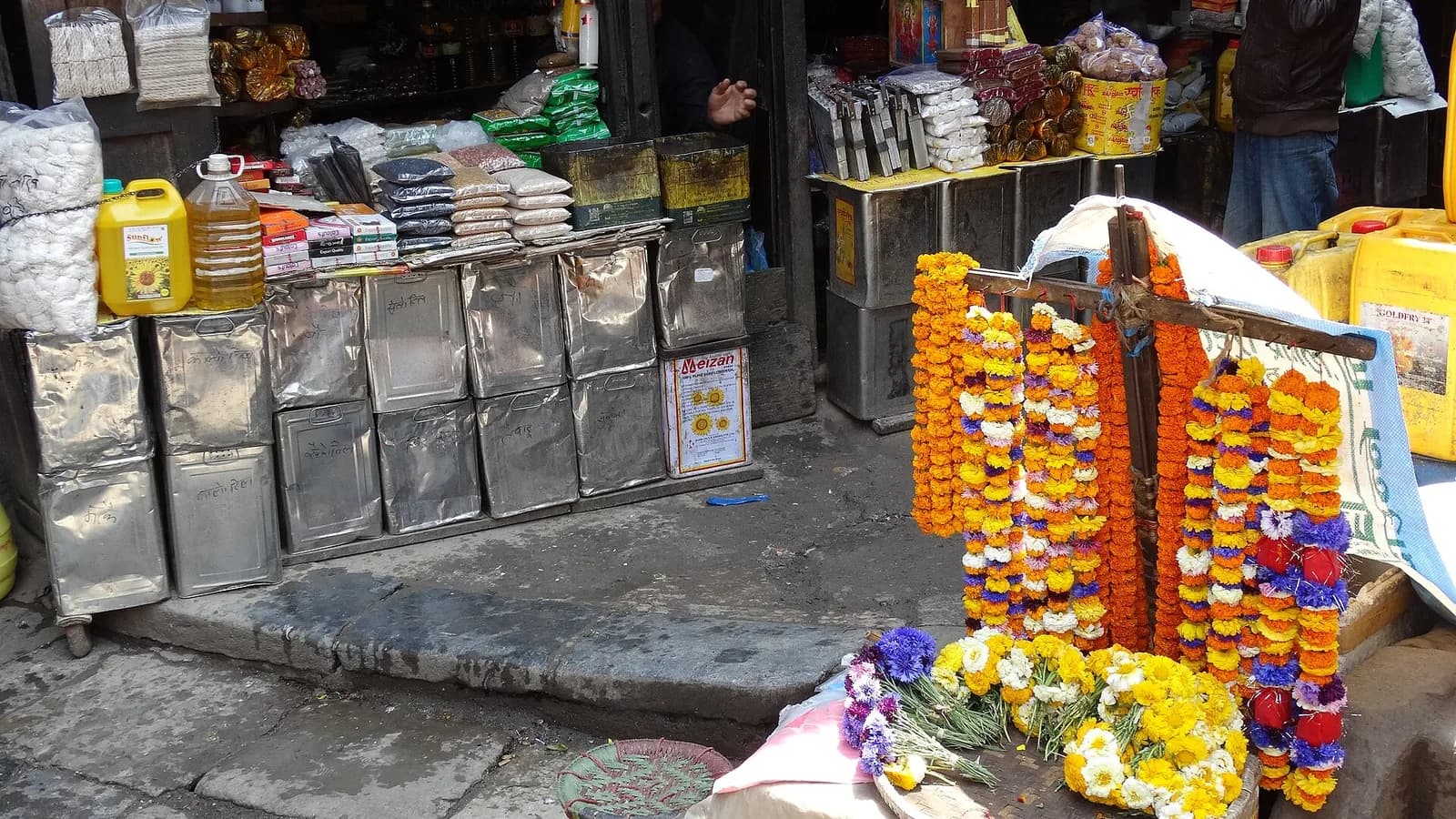
Most visits to Nepal pass without a single problem, and most Nepalis you meet are genuinely helpful. But a small number of practised operators run the same playbook on tired, jet-lagged arrivals, and a few of those Nepal travel scams are expensive. The good news is that almost every one of them fails against simple preparation. This guide is the prevention-and-recovery companion to our seven-scam pattern guide: instead of describing each trick, it shows you how to set up your trip so the tricks never land, and exactly what to do if one slips through.
Key takeaways
- Verify any trekking or tour agency through the Nepal Tourism Board register and TAAN before paying a deposit — registration is checkable in minutes.
- The costliest scam is medical evacuation fraud on trekking routes; the US government advisory and Nepal Police both flag it, and only TAAN-registered rescue operators should be used.
- Handle cash on a fixed routine: small airport exchange, count change in front of people, and use licensed changers and ATMs.
- A few words of Nepali signal you are not a fresh arrival, which is itself a deterrent.
- If something goes wrong, the Tourist Police hotline is 1144 (toll-free) and units exist in every major tourist hub.
- Higher foreigner prices at temples, parks, and remote lodges are usually policy or logistics, not fraud.
Why a prevention mindset beats street arguments
Scammers in tourist areas are good at their job. They control the setting, the timing, and the script, and they count on you being polite, unsure, and in a hurry. Trying to win a curbside negotiation with someone who does this every day is a losing position.
Prevention flips the board. If you have already booked a verified agency, pre-arranged your airport pickup, and know the prepaid-taxi rate, the airport "friend" offering to take you somewhere has nothing to sell. The most effective defence is built before you land, not improvised on the street.
That is why this guide is organised around systems — booking, money, communication, and reporting — rather than around individual tricks.
Verify before you pay: agencies, guides, and permits
The single highest-value habit is verifying anyone you pay a meaningful sum to, especially trekking and tour operators.
Check the registration yourself
A legitimate Nepal trekking agency holds registration with the Department of Tourism and the Nepal Tourism Board (NTB), and reputable ones are members of the Trekking Agencies' Association of Nepal (TAAN).
- Ask for the company's NTB registration number and verify it on the public register at ntb.gov.np.
- Check TAAN membership at taan.org.np.
- A properly registered operator will happily point you to these checks. Reluctance to provide a registration number is itself the red flag.
Know the guide rule so nobody invents a fake one
Since 1 April 2023, foreign trekkers must hire a licensed guide or porter-guide through a registered agency to trek in Nepal's national parks, conservation areas, and restricted areas, and the old "green" independent TIMS card was discontinued. Knowing the real rule protects you twice: you stay legal, and you cannot be upsold a "special permit" that does not exist.
A common low-level scam is someone claiming you need an extra or urgent permit they can arrange for a fee. Official permits are issued through the NTB, the Department of National Parks, and registered agencies — not by a stranger on the street. For the genuine list, see our guides to Nepal trekking permits and the TIMS card.
Get the quote in writing
Before any deposit, get an itemised, written quote: permits with amounts, guide and porter daily rates and tip expectations, exactly which meals and extras are included, and the policy if weather extends the trek. A reputable agency hands this over without being chased. Our guide on choosing a trekking agency covers what a fair quote looks like.
The costliest scam: medical evacuation fraud
If you take only one warning from this page, make it this one. The most damaging Nepal travel scam is not a few hundred rupees on a taxi — it is fraudulent helicopter rescue on trekking routes.
What investigators found
In March 2026, Nepal's Central Investigation Bureau filed charges against 32 people — including operators, guides, rescue coordinators, and some hospital and medical staff — over a scheme that allegedly staged or inflated rescues and billed international insurers. Reporting put the payouts at roughly USD 20 million (as of 2026) across hundreds of questionable rescues between 2022 and 2025, on popular routes including Everest Base Camp, Annapurna, Manaslu, and Langtang. The alleged mechanics included exaggerating symptoms, padding paperwork, and billing one flight as several separate emergencies.
One point matters for fairness: sensational claims circulated that guides were deliberately poisoning trekkers. Nepal's Central Investigation Bureau stated that, as of its investigation, it had found no evidence of poisoning. Treat the verified part — the insurance and paperwork fraud — as the real lesson, and disregard the unverified embellishments.
How to protect yourself
The defence is straightforward and does not require you to diagnose yourself on a mountainside:
- Mild altitude symptoms rarely need a helicopter. Standard first response to mild acute mountain sickness is to stop ascending, rest, and descend a few hundred metres if it does not improve. See our altitude sickness guide.
- Slow the decision down. If a guide or lodge pushes immediate evacuation for mild symptoms, say you want to rest and reassess, and ask them to call your agency first.
- Insist on a registered rescue operator. The US travel advisory specifically recommends using only evacuation agencies registered with TAAN and confirming costs in advance.
- Read your insurance. Buy a policy that genuinely covers high-altitude helicopter evacuation, and keep the insurer's 24-hour line saved. Our trekking insurance guide explains what to look for.
A genuine emergency is real and evacuation can be lifesaving — the goal is not to refuse help, but to make sure the call is driven by your condition, not someone's commission.
Money habits that close off most scams
A handful of cash routines neutralise the everyday overcharging scams without any confrontation.
A simple money routine
| Habit | Why it works | |---|---| | Exchange only a small amount at the airport | Airport rates are the worst of the trip; change just enough for a taxi and meal | | Use licensed changers in Thamel | Compare two or three boards; licensed changers post rates and give receipts | | Count change before pocketing it | Defeats the folded-note short-change trick | | Carry small denominations | Removes the "no change" excuse used to round prices up | | Prefer ATMs for larger sums | Often beats cash exchange even after fees |
For the detail, see our guides to money exchange in Kathmandu and Nepal ATMs.
Taxis without the overcharge
At Tribhuvan International Airport, use the prepaid taxi booth in the arrivals hall: you pay a fixed fare, get a slip, and the driver accepts it without negotiation. Elsewhere, ask the driver to use the meter, and if they refuse, simply walk to the next cab — the price usually drops fast. Our Kathmandu taxi fare guide has typical rates, and the taxi scenario script gives you the exact Nepali phrases.
Street money-changers and "donations"
Two quick rules: never change money with someone who approaches you on the street (it is illegal and usually a swap scam), and remember that genuine monks at working monasteries do not chase tourists for fixed-amount "donations." If a card or bracelet is pressed on you, hand it back and keep walking.
What is NOT a scam
Calling normal pricing a scam leads to needless suspicion and rudeness. A few things that are legitimate:
- Set foreigner entry fees at temples and heritage sites such as Pashupatinath, the Durbar Squares, and Lumbini. Nepalis often enter free; foreigners pay a published fee by policy.
- Higher prices at altitude. A plate of dal bhat costs more at a high camp because everything is carried up by porter or mule. That is logistics, not fraud.
- Tips that are "appreciated, not required." Tipping guides and porters is customary; our tipping guide explains fair amounts.
- General tourist pricing. Paying a bit more than a local at a market is common across the region. Negotiate cheerfully, but it is not a personal attack.
Let language do some of the work
Scams disproportionately target people who look freshly arrived and unsure. A little Nepali changes that read instantly. Even basic greetings in Nepali and a few phrases every trekker should know signal that you are oriented and not a soft target.
Two especially useful situations have ready-made scripts on the site: counting and bargaining with Nepali numbers, and pushing back politely using the scam-defence phrases page. You do not need fluency — you need enough to show you are paying attention.
If a scam happens anyway: how to report it
Even careful travellers occasionally get caught. Nepal has a dedicated Tourist Police unit, and using it is the right move for anything beyond a trivial overcharge.
Who to call
| Service | Number | |---|---| | Tourist Police (toll-free hotline) | 1144 | | Police | 100 | | Ambulance | 102 | | Fire | 101 | | Traffic | 103 |
The Tourist Police operate 24/7 across the Kathmandu Valley and Pokhara, with units in tourist hubs including Thamel, Bhrikutimandap (at the Nepal Tourism Board), the airport, Bouddha, Lukla, and Chitwan. Officers are selected partly for English ability, so they are usually an easier first contact for foreigners than the regular police.
What they can do
The Tourist Police register complaints, carry out preliminary investigation, help recover lost goods and documents, and issue a police report for lost or stolen items — which you will need for an insurance claim. Their stated mission is preventing harassment and crimes against tourists, so reporting also helps them target repeat offenders.
Make the report useful
- Note what, where, and when, plus any vehicle number, shop name, or agency name.
- Keep receipts, booking confirmations, and screenshots of messages.
- For card or ATM issues, contact your bank immediately as well.
- For anything involving your insurance (evacuation, theft, medical), notify the insurer's 24-hour line and get the incident logged.
Always cross-check your own government's latest travel advisory before you go; see our explainer on the Nepal travel advisory and the broader question of whether Nepal is safe for tourists. Solo women travellers may also want the dedicated solo-female safety page.
A practical pre-trip checklist
- Book trekking and tours only with an operator verified on the NTB register and TAAN.
- Save 1144, 100, 102, your embassy line, and your insurer's 24-hour number in your phone.
- Buy insurance that covers high-altitude helicopter evacuation, and read the wording.
- Arrange airport pickup in advance, or plan to use the prepaid taxi booth.
- Exchange a small amount at the airport; use licensed changers and ATMs afterwards.
- Learn a handful of Nepali greetings and numbers before you arrive.
- Keep digital and paper copies of your passport, visa, and permits.
Handled this way, Nepal travel scams shrink from a worry into a footnote. The country rewards travellers who arrive a little prepared — and preparation, far more than suspicion, is what keeps the trip smooth.
Sources
- US Department of State — Nepal Travel Advisory
- Nepal Police — Tourist Police
- Nepal Tourism Board — Tourist Police
- Trekking Agencies' Association of Nepal (TAAN)
- OCCRP — Nepal Police Arrest Six in $20 Million Himalayan "Fake Rescue" Insurance Scam
- Climbing — Nepal helicopter fake-rescue charge sheet: no evidence for poison
- U.S. Embassy in Nepal — New Requirements for Use of Trekking Guides/Porters (April 1, 2023)
- World Nomads — Common Scams and Crimes in Nepal
Frequently asked questions
- Is Nepal safe for tourists despite the scams?
- Yes. Violent crime against tourists is rare and most scams are opportunistic overcharging, not danger. Awareness and a few habits handle almost all of them.
- What is the biggest scam to watch out for in Nepal?
- Medical evacuation fraud on trekking routes is the costliest. Nepal Police charged 32 people in 2026 over fake helicopter rescues that billed insurers around USD 20 million.
- How do I report a scam or theft in Nepal?
- Call the Tourist Police on the toll-free hotline 1144, or visit a Tourist Police unit in Thamel, Bhrikutimandap, the airport, Pokhara, or Lukla. They speak English.
- How can I check if a Nepal trekking agency is legitimate?
- Ask for the company's Nepal Tourism Board registration number and verify it at ntb.gov.np, and check TAAN membership at taan.org.np before paying any deposit.
- Do I really need a licensed guide to trek in Nepal?
- Since April 2023 foreign trekkers in national parks, conservation areas, and restricted areas must hire a licensed guide or porter-guide through a registered agency.
- Are higher prices for foreigners in Nepal a scam?
- Usually not. Many temples and parks charge foreigners a set entry fee by policy, and remote-area prices are higher because supplies are carried in. That is normal, not fraud.
- Should I exchange money at Kathmandu airport?
- Only a small amount. Airport rates are among the worst you will see. Change just enough for a taxi and meal, then use licensed changers in Thamel the next day.
- What emergency numbers should I save before visiting Nepal?
- Tourist Police 1144, Police 100, Ambulance 102, Fire 101, and Traffic 103. Add your embassy's number and your travel insurer's 24-hour line too.
Related posts
Kathmandu Safety: A Practical 2026 Guide for Tourists
Kathmandu safety, explained honestly: crime, traffic, air quality, scams, earthquakes, and the emergency numbers and habits that keep your trip smooth.
Read postNepal Travel Advisory 2026 — What It Means for You
The current Nepal travel advisory by country (US, UK, Canada, Australia), what each level means, and how to read advisories without overreacting.
Read postNepal Tourist Scams in 2026 — Pattern-Recognition for the Seven Common Ones
The taxi overcharge, the helicopter evac scam, the fake monk, the SIM card swap, the trekking-agency switchback, the change short, the airport friend.
Read post