Nirmal Purja: The Nepali Who Climbed 14 Peaks
Who is Nirmal Purja? A factual guide to the Nepali mountaineer 'Nimsdai', his Gurkha past, Project Possible and record 8,000m climbs.
From a village with no flip-flops to the summits of all fourteen 8,000-metre peaks — Nims Purja rewrote what Nepali climbers were thought capable of.
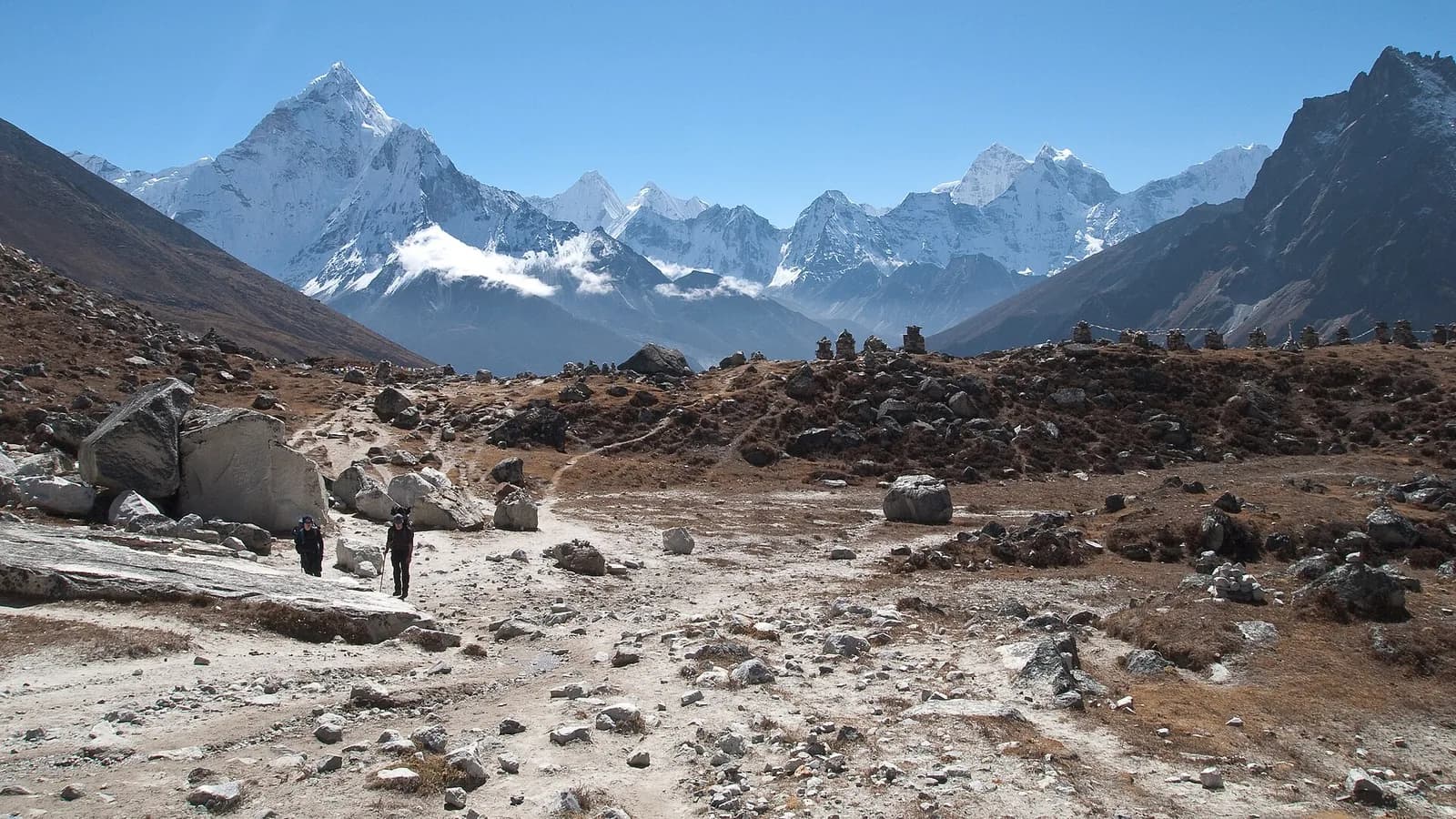
Nirmal Purja — known to most people simply as Nims or Nimsdai — is one of the most talked-about figures in modern Himalayan mountaineering, and one of the most striking success stories to come out of Nepal in recent years. Born in a poor hill village and raised partly in the lowlands, he went on to serve in British special forces and then, in a single astonishing season, climb all fourteen of the world's highest mountains. For travellers drawn to Nepal by the Himalayas and the lure of trekking in Nepal, his story is a useful window into the country's deep mountaineering culture, its Gurkha heritage, and the new generation of Nepali climbers stepping out of the shadows of foreign expeditions.
Key takeaways
- Nirmal Purja is a Nepali-born mountaineer and former UK special forces soldier, widely known as Nims or Nimsdai.
- In 2019 he completed Project Possible, climbing all fourteen 8,000-metre peaks in 6 months and 6 days — a record at the time.
- He was the first Gurkha to join Britain's Special Boat Service, serving roughly 16 years in the military before climbing full-time.
- He was part of the all-Nepali team that made the first winter ascent of K2 on 16 January 2021.
- His viral Everest "traffic jam" photo from May 2019 became a global symbol of overcrowding on the mountain.
From a Myagdi village to the lowlands
Nirmal Purja was born in July 1983 in Dana, a small village in the Myagdi district of western Nepal, in the shadow of Dhaulagiri at roughly 1,600 metres above sea level. According to his own published accounts and his Wikipedia biography, his father was a Gurkha soldier and his mother came from a farming family. The marriage crossed social lines that, at the time, drew disapproval, and the family lived with little money.
When Purja was around four years old, the family moved down to the warmer lowlands near Chitwan, the region many tourists now visit for its jungle safari and one-horned rhinos. He has spoken openly about growing up poor — telling National Geographic that as a child he sometimes did not even own flip-flops. His three older brothers followed their father into the Brigade of Gurkhas, and it was their army earnings that paid for young Nirmal to attend an English-medium boarding school, a decision that would shape everything that came after.
A culture built on the mountains
Purja's roots sit inside a much larger story. Nepal is home to eight of the world's fourteen peaks above 8,000 metres, and mountaineering is woven into national identity. The high-altitude skill of communities like the Sherpa people — explored further in our guide to who the Sherpas are — built the foundation that climbers of every nationality now rely on. Purja, who is of Magar heritage rather than Sherpa, became a symbol of how Nepali climbing talent reaches well beyond any single ethnic group.
A military career, then the mountains
Purja joined the Brigade of Gurkhas in 2003. The Gurkhas are Nepali soldiers who have served in the British Army for more than two centuries, famous worldwide for their toughness — a tradition covered in our pieces on Gurkha soldiers and the khukuri knife they carry.
In 2009 he passed selection for the Special Boat Service (SBS), the Royal Navy's special forces unit, reportedly becoming the first Gurkha ever to do so. Sources describe a military career spanning roughly 16 years in total, divided between his years as a Gurkha and a decade with UK Special Forces. He also studied later in life, earning a postgraduate diploma in security management at Loughborough University in England.
Crucially, Purja came to serious high-altitude climbing relatively late. He did not grow up summiting 8,000ers; he built his mountain career on the discipline, fitness and mental resilience forged in the military — a path very different from climbers raised in the Khumbu.
Project Possible: 14 peaks in a single season
The achievement that made Purja a household name is Project Possible. Between April and October 2019, he set out to climb all fourteen mountains over 8,000 metres — spread across Nepal, Pakistan, China and the wider Himalaya and Karakoram — in a single seven-month push.
He completed the goal in 6 months and 6 days, using supplementary (bottled) oxygen. To put that in perspective, the previous record for climbing all fourteen had stood at close to eight years. The compressed timeline stunned the mountaineering world and forced a rethink of what was physically achievable.
The peaks and the pace
The fourteen 8,000-metre summits Purja climbed during Project Possible are the highest mountains on Earth:
| Peak | Approx. height | Country / range | | --- | --- | --- | | Mount Everest | 8,849 m | Nepal / China | | K2 | 8,611 m | Pakistan / China | | Kangchenjunga | 8,586 m | Nepal / India | | Lhotse | 8,516 m | Nepal / China | | Makalu | 8,485 m | Nepal / China | | Cho Oyu | 8,188 m | Nepal / China | | Dhaulagiri | 8,167 m | Nepal | | Manaslu | 8,163 m | Nepal | | Nanga Parbat | 8,126 m | Pakistan | | Annapurna I | 8,091 m | Nepal | | Gasherbrum I | 8,080 m | Pakistan / China | | Broad Peak | 8,051 m | Pakistan / China | | Gasherbrum II | 8,035 m | Pakistan / China | | Shishapangma | 8,027 m | China |
During the first phase alone, in a single month, Purja climbed Annapurna, Dhaulagiri, Kangchenjunga, Everest, Lhotse and Makalu. In one widely reported 48-hour window he summited Everest, then nearby Lhotse, and then flew to Makalu base camp and topped that peak too. Several of these mountains — including Everest, Manaslu and Annapurna — sit at the heart of Nepal's trekking and climbing tourism.
The viral Everest photograph
It was also during Project Possible that Purja took one of the most famous mountain photographs of the modern era. On 22 May 2019, near the summit of Everest, he photographed a near-continuous line of hundreds of climbers queuing along the narrow summit ridge during a short weather window. The image went viral, appearing on major outlets such as The New York Times and The Washington Post, and became shorthand for the overcrowding and safety concerns of busy Everest seasons — issues we explore in how many people die on Everest and the Everest death zone.
The first winter ascent of K2
If Project Possible made Purja famous, his next headline feat cemented his place in climbing history. On 16 January 2021, a team of ten Nepali mountaineers completed the first-ever winter ascent of K2 — the world's second-highest mountain and, until then, the only 8,000er never climbed in winter.
The team — which included Purja alongside Mingma David Sherpa, Mingma G, Sona Sherpa and others — reportedly paused just below the top so they could step onto the summit together, singing Nepal's national anthem. It was a deliberately collective, distinctly Nepali moment of triumph on a mountain nicknamed the "Savage Mountain." While most of the team used supplementary oxygen, Purja is reported to have made the winter K2 climb without bottled oxygen, a remarkable feat in the brutal cold.
Records, recognition and later challenges
Purja's records have continued to evolve, and it is worth being precise about what still stands:
| Milestone | Detail | | --- | --- | | 14 peaks, fastest (2019) | 6 months 6 days; record at the time | | 14 peaks, fastest (later broken) | Surpassed in 2023 by Kristin Harila and Tenjen Sherpa in 92 days | | First winter K2 | Part of the 10-person Nepali team, 16 January 2021 | | 14 peaks + Seven Summits | Reported in October 2024 as first to do both with and without oxygen |
His 2019 speed record for the fourteen 8,000ers was broken in 2023 by Norwegian climber Kristin Harila and Nepali climber Tenjen (Lama) Sherpa, who summited all fourteen in 92 days. Purja's run nonetheless remains a turning point that showed such compression was possible at all.
In October 2024, Purja was reported to have become the first person to summit both the fourteen 8,000-metre peaks and the Seven Summits each both with and without supplementary oxygen. In 2025 he announced further high-altitude goals, including a self-styled "Hat-Trick" challenge to complete the 14 peaks and Seven Summits a third time, and reported climbing Nanga Parbat in July 2025 as a milestone 8,000er summit. As with any active expedition career, the latest tallies are best checked against his official channels, since records and counts change with each season.
Telling the story to the world
Purja's life reached a wide audience through the Netflix documentary about his fourteen-peak season and his memoir, both of which spread his "nothing is impossible" message far beyond climbing circles. For Nepal, his prominence has been a source of national pride and a reminder that Nepali climbers can lead expeditions, not just support them.
Why his story matters for visitors to Nepal
You do not need to be an elite mountaineer to feel the pull of the peaks Purja made famous. His story is a reminder that the mountains shaping Nepal's identity are the same ones travellers come to see — and that you can experience them safely at your own level:
- Trek, don't summit. Routes like the Everest Base Camp trek and the Annapurna Circuit bring you into the high mountains without technical climbing.
- Respect altitude. Even trekkers face thin air; read our guide to altitude sickness in Nepal before you go.
- Hire local. Nepal's guides and porters are the backbone of every expedition; see do I need a guide to trek in Nepal.
- Learn a few words. A little basic Nepali goes a long way with the mountain communities you will meet.
For curious travellers, learning about figures like Nirmal Purja adds real depth to a Himalayan trip. Behind the postcard peaks is a living culture of climbing — one that, thanks partly to Nims, is increasingly told in Nepali voices.
Sources
- Nirmal Purja — Wikipedia
- Project Possible — Nimsdai official site
- Climber Nirmal Purja Magar summits six of the world's tallest peaks in a month — National Geographic
- Yes, This Photo from Everest Is Real — Outside Online
- K2: Nepalese mountaineers claim historic first winter ascent — PlanetMountain
- Historic first winter ascent of K2 completed by all-Nepali team — Trek & Mountain
- Record-breaking climb / 50th 8,000er summit — Nimsdai official site
Frequently asked questions
- Who is Nirmal Purja?
- Nirmal Purja, widely known as Nims or Nimsdai, is a Nepali-born mountaineer and former British special forces soldier. He is best known for Project Possible, in which he climbed all fourteen of the world's 8,000-metre peaks in just over six months in 2019.
- What is Project Possible?
- Project Possible was Purja's 2019 mission to summit all fourteen 8,000-metre mountains in a single seven-month season. He completed it in six months and six days, using bottled oxygen, far faster than the previous record of nearly eight years.
- Where in Nepal is Nirmal Purja from?
- He was born in July 1983 in Dana, a village in the Myagdi district of western Nepal near Dhaulagiri. His family later moved to the lowland Chitwan area, and his father and brothers all served as Gurkha soldiers.
- Did Nirmal Purja serve in the military?
- Yes. He joined the British Army's Brigade of Gurkhas in 2003 and in 2009 became the first Gurkha to join the Royal Navy's Special Boat Service, an elite UK special forces unit, serving for a total of around sixteen years.
- Was Nirmal Purja part of the first winter ascent of K2?
- Yes. On 16 January 2021 a team of ten Nepali climbers made the first winter ascent of K2, the last 8,000er to be climbed in winter. Purja was on that team and reportedly climbed it without supplementary oxygen.
- Did Nirmal Purja take the famous Everest traffic jam photo?
- Yes. The widely shared 2019 image of a long queue of climbers on Everest's summit ridge was taken by Purja on 22 May 2019 during Project Possible, and it became a symbol of overcrowding on the mountain.
- Is Nirmal Purja the fastest person to climb all 14 peaks?
- He held the record from 2019, but it was broken in 2023 when Kristin Harila and Tenjen Sherpa summited all fourteen 8,000ers in 92 days. Purja's 2019 run remains a landmark in Himalayan climbing history.
- Can tourists climb the mountains Nirmal Purja is famous for?
- The 8,000m giants demand elite experience, but Nepal offers many accessible routes for ordinary visitors, from the Everest Base Camp trek to easier trails. Always go with a licensed guide and proper acclimatisation.
Related posts
Nimsdai: Who Is Nirmal Purja, the 14-Peaks Climber?
Nimsdai (Nirmal Purja) is the Gurkha-turned-mountaineer behind Project Possible. A factual guide to his records, Netflix fame and Nepal legacy.
Read postSanu Sherpa: First to Climb All 14 Peaks Twice
Who is Sanu Sherpa? The Nepali guide who became the first person to summit all 14 eight-thousanders twice — his story, records and what it means.
Read post14 Peaks: Nothing Is Impossible Explained
What 14 Peaks: Nothing Is Impossible gets right about Nimsdai Purja's Project Possible, plus the Nepali grit behind the record.
Read post