Who Are the Sherpas? Common Questions Answered
Who are the Sherpas? Quick, clear answers about Sherpa people, their name, language, religion and link to Everest — common questions explained simply.
Not every Everest guide is a Sherpa, and not every Sherpa is a guide — the name belongs to a people, not a profession.
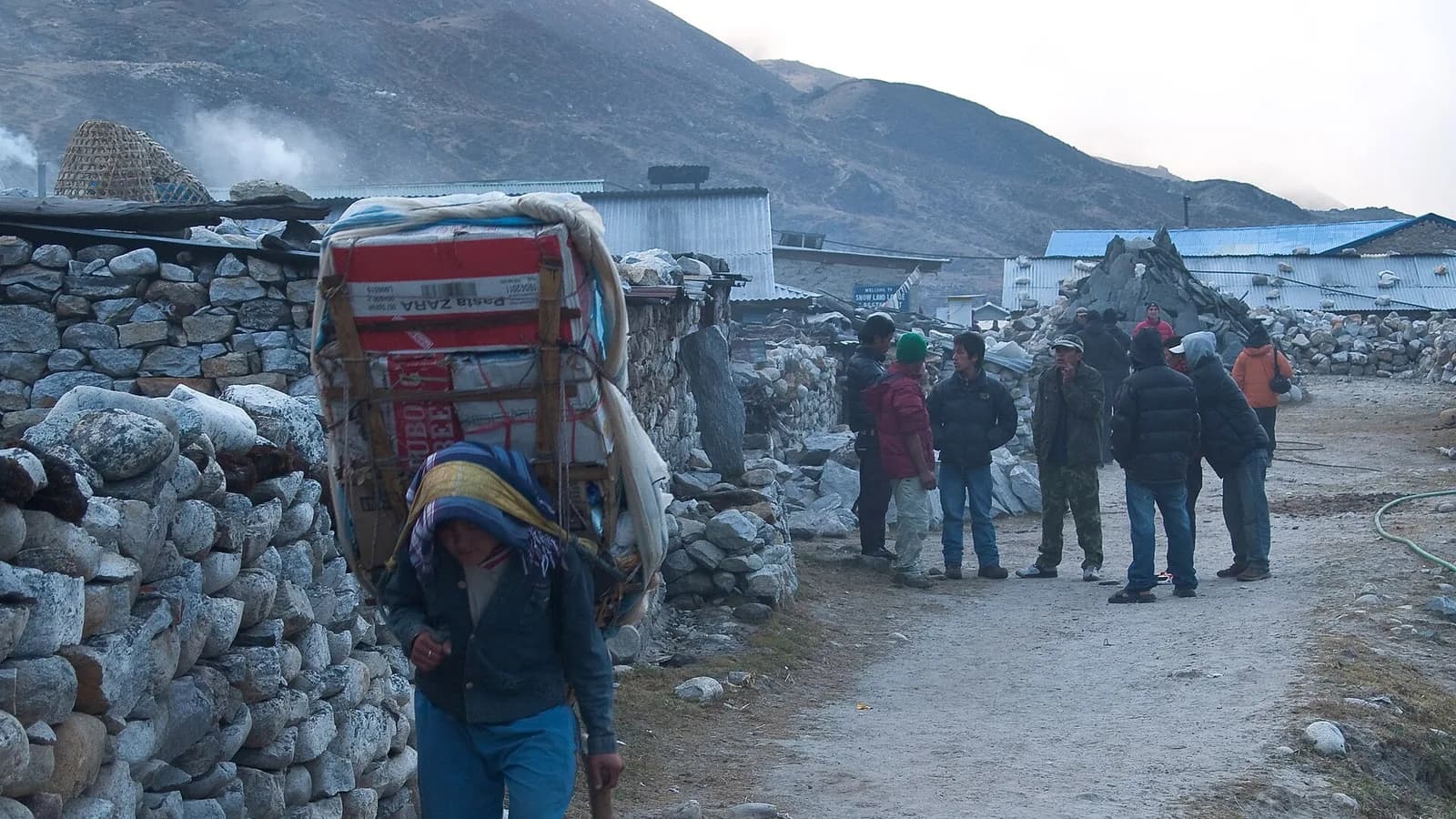
If you have heard the word Sherpa on a wildlife documentary, an Everest news report, or the label of a jacket, you may be wondering: who are the Sherpas, really? This is a short, plain-answers companion to our main guide on the Sherpa people, focused on clearing up the everyday confusions — especially the big one, that "Sherpa" is somehow a job rather than a people. For the full history, religion, and culture, read the main article; this page tackles the questions travellers actually ask.
Key takeaways
- The Sherpas are a Buddhist ethnic group of Tibetan origin living mainly near Everest in eastern Nepal.
- Not all Sherpas are guides, and not all guides are Sherpas — the name is widely misused.
- Around 250,000 Sherpas live in Nepal; many have no link to mountaineering at all.
- They speak the Sherpa language, follow Tibetan Buddhism, and carry rich festival traditions.
- You can meet Sherpa communities respectfully by trekking the Khumbu and staying in their villages.
The single biggest misunderstanding
Let us deal with it head-on: "Sherpa" is the name of a people, not a profession. The confusion is understandable. When mountaineering on Everest began, expeditions hired large numbers of ethnic Sherpas because they lived right at the foot of the mountain and proved exceptionally strong at altitude. Over time, English speakers started using "sherpa" (lower-case) to mean any high-altitude porter or climbing assistant.
But that usage quietly erases an entire culture. A Sherpa is a member of a specific community with its own language, Buddhist faith, dress, and centuries of history — explored in full in our main Sherpa guide. Meanwhile, many of the porters and guides on Nepal's trails belong to other ethnic groups entirely, such as the Rai, Limbu, Tamang, Magar, and Gurung. So calling every trekking worker a "Sherpa" is doubly inaccurate.
So who are they, in one paragraph?
The Sherpa are a Tibetan-descended Buddhist people who migrated from eastern Tibet (the region of Kham) into the high valleys of eastern Nepal several centuries ago. Their name means "people of the east." They are concentrated in the Khumbu and Solu areas of Solukhumbu district, below Mount Everest, and they follow the Nyingma school of Tibetan Buddhism. Nepal's most recent census counts about 250,000 of them.
Quick answers to common questions
Are Sherpas a caste or an ethnic group?
An ethnic group (and Sherpa is also used as a family surname). They are one of Nepal's many distinct peoples, not a rung in the Hindu caste system. Nepal is extraordinarily diverse — our look at the languages of Nepal gives a sense of just how many communities share the country.
Where exactly do they live?
Overwhelmingly in eastern Nepal: the Khumbu (high Everest region), Solu (the greener valleys below), and districts like Taplejung and Sankhuwasabha, plus pockets near the Tibetan border in Dolakha, Sindhupalchok, and Rasuwa. Many now also live in Kathmandu and overseas. Much of their homeland lies inside Sagarmatha National Park.
What is their religion like day to day?
Visibly Buddhist. Sherpa villages are dotted with monasteries (gompas), prayer flags, prayer wheels, and mani stones carved with sacred mantras. The rhythm of life follows a Buddhist calendar of festivals such as Losar (New Year) and the famous masked-dance festival Mani Rimdu. Our guide to prayer flags decodes the colourful banners you will see everywhere in Sherpa country.
Why are they so strong at altitude?
Partly skill and experience — and partly genetics. Generations of living high up have given many Sherpas biological adaptations for thin air, helping them use oxygen efficiently. It is real, but it does not make them immune to altitude sickness, which is why even the strongest climbers respect acclimatisation. Travellers should too; see our altitude sickness guide.
How to actually meet Sherpa people
The best and most respectful way to encounter Sherpa culture is to visit the Khumbu on foot. Treks such as the gentle Everest View trek or the longer route toward base camp pass through living Sherpa villages — Namche Bazaar, Khumjung, Tengboche — where you can stay and eat in family lodges, a style of travel covered in our teahouse trekking guide.
When you do, keep it courteous: walk clockwise around shrines and mani walls, ask before photographing people or monastery interiors, dress modestly, and pay and tip the porters and guides supporting you fairly (see tipping guides and porters). Do that, and you will meet the Sherpa as what they truly are — a generous, deeply rooted mountain people, not a line on an expedition invoice.
Want the full story?
This page is the quick-answer version. For the detailed history, the founding clans, the language, the monasteries, the festivals, and the full mountaineering legacy from Tenzing Norgay onward, head to our complete guide: Sherpa people: who they are, culture & history.
Sources
Frequently asked questions
- Are all Sherpas mountain guides?
- No. Only a minority of Sherpas work in mountaineering. Most are farmers, herders, traders, monks, teachers, shopkeepers and professionals, and large numbers live in Kathmandu or abroad with no connection to climbing at all.
- Is it correct to call any porter a Sherpa?
- Not really. Sherpa is the name of a specific ethnic group, so calling every porter or guide a Sherpa is inaccurate. Many porters on Nepal's trails come from other communities such as Rai, Tamang, Magar or Gurung.
- Are Sherpas Tibetan or Nepali?
- Both, in a sense. Sherpas are citizens of Nepal who are ethnically of Tibetan origin, having migrated from eastern Tibet centuries ago. They keep a Tibetan-rooted language and Buddhist faith while being fully Nepali nationals.
- How many Sherpas are there?
- Nepal's most recent national census counted roughly 250,000 Sherpas in the country, a little over one percent of the population. Smaller communities also live in India, Bhutan, the United States and elsewhere.
- Why do Sherpas have names like Pasang and Dawa?
- Many Sherpa first names come from the day of the week a person was born, such as Nima for Sunday, Dawa for Monday and Pasang for Friday. It reflects how closely Sherpa culture is tied to the Buddhist calendar.
- Do Sherpas and Tibetans speak the same language?
- Not exactly. The Sherpa language is related to Tibetan and shares vocabulary, but a Sherpa speaker and a Lhasa Tibetan speaker generally cannot understand each other. Most Sherpas also speak Nepali and often English.
- What is the most famous Sherpa achievement?
- The best-known is Tenzing Norgay reaching the summit of Mount Everest with Edmund Hillary on 29 May 1953. Sherpa climbers have since been central to almost every major Himalayan expedition.
- How can I respectfully meet Sherpa people?
- Trek through the Khumbu region, stay in family-run teahouses, and visit village monasteries with humility. Walk clockwise around Buddhist shrines, ask before taking photos, and treat guides and porters as the skilled professionals they are.
Related posts
Sherpa People: Who They Are, Culture & History
Who are the Sherpa people? A respectful guide to Sherpa culture, history, Buddhist faith, festivals and their legendary place in Himalayan mountaineering.
Read postApa Sherpa: The Super Sherpa Who Climbed Everest 21 Times
Who is Apa Sherpa? The story of the Super Sherpa who summited Everest 21 times, then turned to education and climate work from his home village of Thame.
Read postNimsdai: Who Is Nirmal Purja, the 14-Peaks Climber?
Nimsdai (Nirmal Purja) is the Gurkha-turned-mountaineer behind Project Possible. A factual guide to his records, Netflix fame and Nepal legacy.
Read post