Sherpa People: Who They Are, Culture & History
Who are the Sherpa people? A respectful guide to Sherpa culture, history, Buddhist faith, festivals and their legendary place in Himalayan mountaineering.
Sherpa means 'people of the east' — a Buddhist mountain community whose name the world now wrongly uses for a job title.
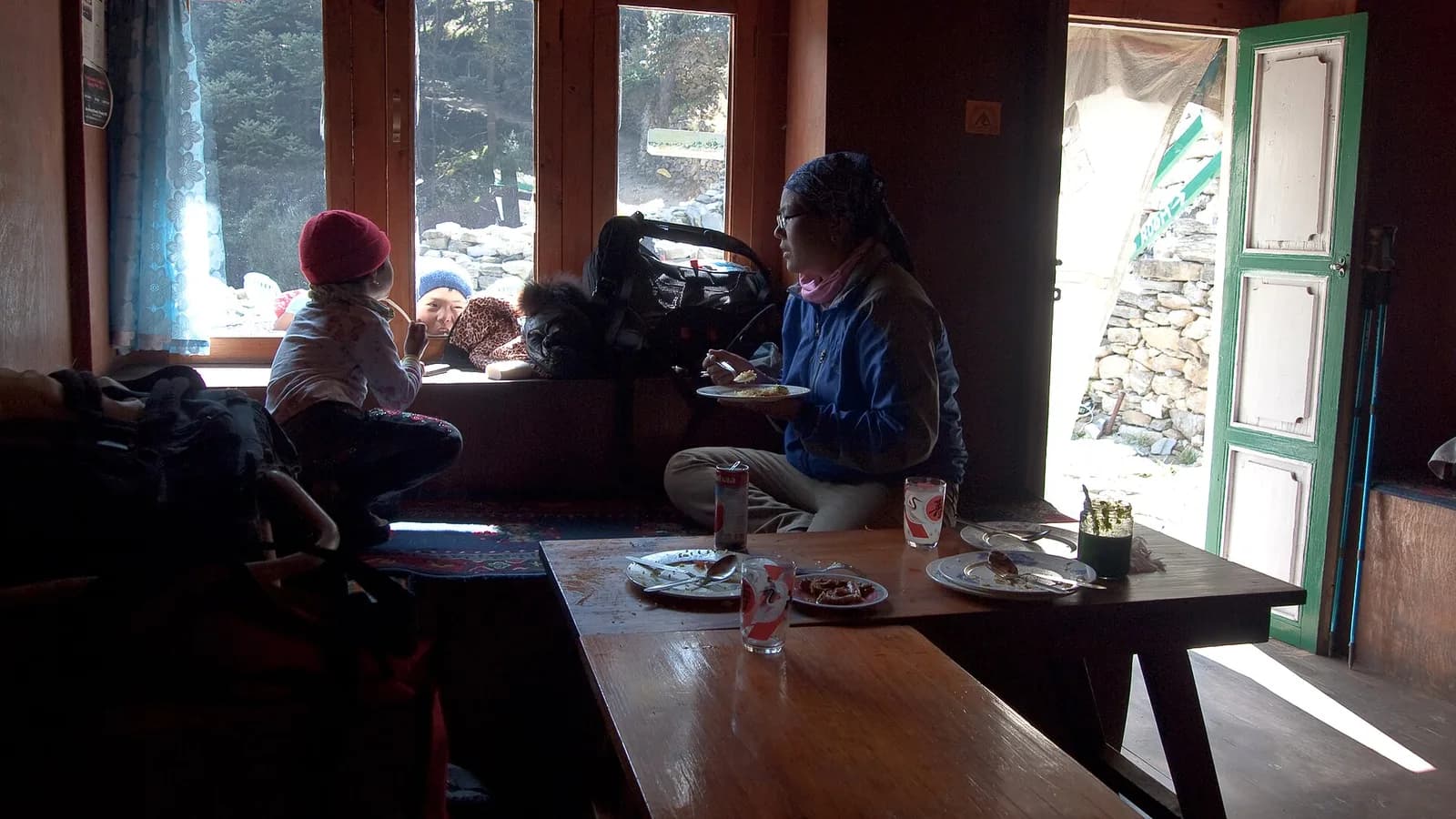
The Sherpa people are one of the most recognised yet most misunderstood communities on earth. Their name is spoken on every Everest expedition and printed on outdoor gear worldwide, but the word has been so thoroughly borrowed that many travellers do not realise the Sherpa are a distinct ethnic group with their own language, Buddhist faith, and centuries of history in the high Himalaya. This guide explains who the Sherpa people really are, where they came from, how they live, and why the world owes them a more accurate name than "the people who carry loads up mountains."
Key takeaways
- Sherpa is a Tibetan-descended ethnic group and surname, not a job title — the name means "people of the east."
- They number around 250,000 in Nepal, concentrated in Solukhumbu and the wider eastern hills near Everest.
- Their faith is Tibetan Buddhism (the Nyingma school), woven through monasteries, prayer flags, and carved stones.
- Generations at altitude gave many Sherpas real physiological adaptations for thin air, including the EPAS1 gene.
- Tenzing Norgay's 1953 Everest summit made the Sherpa a global name — but the people are far more than mountaineers.
Who the Sherpa people are
The Sherpa are a Buddhist people of Tibetan origin who live in the highest inhabited valleys of Nepal, with smaller populations in India, Bhutan, and beyond. The name itself tells their story: it joins the Tibetan words shar ("east") and pa ("people"), giving "people of the east" — a reference to their origins in eastern Tibet, in the region known as Kham.
According to Nepal's most recent national census, there are roughly 250,000 Sherpas in the country, making up a little over one percent of the population. That makes them a relatively small community, yet one with an outsized presence in the world's imagination — largely because their homeland sits at the foot of Mount Everest.
It is worth stating plainly at the outset: "Sherpa" is not a job. In English the word is often used loosely to mean a high-altitude porter or climbing guide, simply because so many of the first people hired for Himalayan expeditions happened to be ethnic Sherpas. Using the name that way flattens an entire people — with their own tongue, religion, dress, and traditions — into a single occupation. The Sherpa are a who, not a what.
Where they came from
Sherpa oral history traces the community back to four founding clans — the Minyakpa, Thimmi, Lama (Sherwa), and Chawa — who migrated out of Kham in eastern Tibet roughly during the 13th and 14th centuries. Crossing the central Tibetan regions of Ü and Tsang, they made their way over the high passes of the Himalaya and settled in the Solukhumbu area of what is now eastern Nepal. Over the centuries those four clans branched into more than twenty sub-groups.
The migration is often linked to religious and political upheaval in Tibet, and the community carried its Nyingma Buddhist faith with it. The high, cold, thin-aired valleys they settled were inhospitable to most — which is precisely why they remained a Sherpa stronghold, and why the culture developed in relative isolation around yak herding, high-altitude trade with Tibet, and potato and barley farming.
Where Sherpas live today
The cultural heartland of the Sherpa people is Solukhumbu district in Koshi Province, eastern Nepal — a name that combines two areas:
| Area | Character | |---|---| | Khumbu | The high region directly below Everest, including Namche Bazaar and Tengboche | | Solu | The lower, greener valleys to the south, with larger farming villages | | Pharak | The middle stretch linking the two along the Dudh Koshi river |
Beyond Solukhumbu, significant Sherpa communities live in Taplejung and Sankhuwasabha in the east, and in Dolakha, Sindhupalchok, and Rasuwa in Bagmati Province closer to the Tibetan border. Many Sherpas have also settled in Kathmandu and emigrated abroad, particularly to the United States, while keeping strong ties to their mountain villages.
The Khumbu falls largely within Sagarmatha National Park, a UNESCO World Heritage Site established in 1976. If you want the geography in detail, our Sagarmatha National Park guide covers the protected landscape the Sherpa call home.
Language and identity
The Sherpa language belongs to the southern branch of the Tibeto-Burman family. It is closely related to Tibetan and shares much vocabulary, but it is a distinct tongue — a Sherpa speaker and a Lhasa Tibetan speaker generally cannot understand each other. Traditionally Sherpa was an unwritten, spoken language, often recorded using Tibetan script when it is written at all.
In practice most Sherpas are multilingual. They speak Sherpa at home, Nepali as the national language of school and government, and — especially in the tourism-heavy Khumbu — often very capable English. This layering of languages mirrors Nepal as a whole; see our overview of the languages of Nepal for the wider picture.
A note on names: many Sherpas carry Sherpa as a surname, and traditional given names are frequently drawn from the day of the week a person was born — Nima (Sunday), Dawa (Monday), Mingma (Tuesday), Lhakpa (Wednesday), Phurba (Thursday), Pasang (Friday), and Pemba (Saturday). It is a small, lovely detail that reflects how deeply the calendar and the cosmos run through Sherpa life.
Religion: Tibetan Buddhism in the mountains
Sherpa life is profoundly shaped by Tibetan Buddhism, and specifically the Nyingma school — the oldest of the four major traditions, founded on the teachings attributed to the eighth-century master Guru Padmasambhava (Guru Rinpoche). The faith blends formal Buddhist practice with older Himalayan beliefs in local mountain deities and protective spirits.
This devotion is visible everywhere in Sherpa country. Trails are lined with mani stones carved with the mantra Om Mani Padme Hum, strings of prayer flags snap in the wind on every pass, and chortens (stupas) and prayer wheels mark the approach to each village. Travellers should always walk clockwise around these sacred structures, keeping them on the right. Our guide to prayer flags explains the colours and meaning you will see fluttering across the Khumbu, and Buddhism in Nepal sets the Sherpa faith in its national context.
The monasteries
At the centre of community life stand the gompas, or monasteries. The most famous is Tengboche Monastery (around 3,860 m), perched on a ridge with a staggering view toward Everest, Lhotse, and Ama Dablam. Other important gompas include Thame, Pangboche — said to be among the oldest in the region — and Chiwong in Solu. These are not museum pieces; they are working religious centres that anchor the ritual calendar.
Festivals and traditions
The Sherpa year is punctuated by vivid Buddhist festivals. Three stand out.
| Festival | When | What it marks | |---|---|---| | Losar | Around February | Sherpa (Tibetan) New Year, with feasting, dancing, and family gatherings | | Dumje | Around July | A multi-day festival for the community's health, prosperity, and protection | | Mani Rimdu | October–November | The best-known festival, staged at Tengboche, Thame, and Chiwong |
Mani Rimdu is the one many trekkers hope to witness. Held over several days at monasteries such as Tengboche, it centres on masked cham dances performed by monks, dramatising the triumph of Buddhism over older, harmful forces. The name itself nods to the Om Mani Padme Hum mantra and to the blessed red pills (rilbu) distributed to participants. It is a window into Sherpa spiritual life that no museum can match.
High-altitude adaptation: why Sherpas thrive in thin air
The Sherpa reputation for strength at altitude is not a myth or mere conditioning — there is real biology behind it. Having lived for many generations at elevations where lowlanders struggle to function, Sherpas (like other Tibetan peoples) carry genetic adaptations to low-oxygen environments.
Research has identified a number of factors, the most discussed being variants of the EPAS1 gene, sometimes nicknamed the "super-athlete" gene, which influences how the body manages haemoglobin and oxygen. Studies suggest Sherpas tend to use oxygen more efficiently at the cellular level and avoid the over-thickening of the blood that afflicts visitors at altitude. Crucially, none of this makes them immune to altitude sickness — it simply gives them an edge. If you are heading high yourself, read our altitude sickness guide before you go.
The mountaineering legacy — and its weight
The Sherpa name became a household word through mountaineering. When expeditions began probing Everest in the early 20th century, Sherpas were hired as porters and high-altitude climbers, and their skill quickly became indispensable. The defining moment came on 29 May 1953, when the Sherpa Tenzing Norgay and New Zealander Edmund Hillary became the first two people confirmed to stand on the summit of Everest.
Since then, Sherpa climbers have been the backbone of nearly every Himalayan expedition — fixing ropes, carrying loads, and breaking trail through the most dangerous terrain on the mountain, including the lethal Khumbu Icefall. This work carries enormous risk, and the community has paid a heavy price in lives lost on Everest. It is the reason the word "sherpa" became shorthand for mountain support work in the first place — and also the reason it matters to remember the people behind the name. For more on the human side of the mountain, see how many people die on Everest.
Visiting Sherpa country respectfully
You do not need to be a mountaineer to experience Sherpa culture. The classic trek to Everest Base Camp and gentler routes like the Everest View trek pass directly through living Sherpa villages — Namche Bazaar, the bustling trade hub; Khumjung with its monastery and school; and Tengboche with its great gompa. Staying and eating in family-run lodges along the way, a tradition explained in our teahouse trekking guide, puts you in direct, respectful contact with Sherpa hospitality.
A few simple courtesies go a long way: walk clockwise around chortens and mani walls, ask before photographing people or monastery interiors, dress modestly, and remember that the porters and guides supporting you are professionals deserving fair pay — our notes on tipping guides and porters cover the etiquette. Above all, treat the word "Sherpa" as the name of a proud people first, and a profession only second.
Sources
Frequently asked questions
- Who are the Sherpa people?
- The Sherpa are a Tibetan-descended Buddhist ethnic group native to the high mountains of eastern Nepal, especially the Khumbu region around Mount Everest. Their name means people of the east, and Nepal's most recent census counted around 250,000 of them.
- Is Sherpa an ethnic group or a job?
- Sherpa is an ethnic group and a family name, not a job. Because so many early Everest guides and porters were ethnic Sherpas, the word drifted into English as a label for any mountaineering worker, but using it that way erases a whole culture, language and history.
- What language do Sherpas speak?
- Sherpas speak Sherpa, a Tibeto-Burman language related to Tibetan but not mutually intelligible with the Lhasa dialect. Almost all Sherpas also speak Nepali, the national language, and many in tourism speak strong English.
- What religion do Sherpa people follow?
- The overwhelming majority of Sherpas follow Tibetan Buddhism, specifically the Nyingma school, the oldest of its four main traditions. Monasteries, prayer flags and carved mani stones are central to daily life in Sherpa villages.
- Where do Sherpas live in Nepal?
- Most Sherpas live in the eastern hills and high valleys, with the largest communities in Solukhumbu district, home to the Khumbu and Solu areas near Everest. Other significant populations live in Taplejung, Sankhuwasabha, Dolakha, Sindhupalchok and Rasuwa.
- Why are Sherpas such good mountaineers?
- Generations of living at very high altitude have given many Sherpas genetic adaptations that help them use oxygen efficiently, including variants of the EPAS1 gene. Combined with deep local knowledge and hard-earned skill, this makes them extraordinary high-altitude climbers.
- Who was Tenzing Norgay?
- Tenzing Norgay was a Sherpa mountaineer who, with New Zealander Edmund Hillary, became one of the first two people confirmed to reach the summit of Mount Everest, on 29 May 1953. He remains the most famous Sherpa in history.
- Can I visit Sherpa villages?
- Yes. Trekking routes through the Khumbu, such as the trail to Everest Base Camp, pass directly through Sherpa villages like Namche Bazaar, Khumjung and Tengboche, where teahouses, monasteries and museums welcome respectful visitors.
Spotted an error in this post? Tell us or suggest a correction.
Related posts
ABC Trek: A Plain-English Guide to Annapurna Base Camp
The ABC trek (Annapurna Base Camp) explained — the route, how many days it takes, difficulty, the best seasons, and what daily trail life is really like.
Read postAma Dablam Climb: 2026 Expedition Guide (6,812m)
An Ama Dablam climb and expedition guide for 2026 — height, the Southwest Ridge route, camps, fixed ropes, difficulty, permits, cost and the best seasons.
Read postAnnapurna vs Manaslu: Which Trek Should You Choose?
An Annapurna vs Manaslu decision guide for trekkers — compare permits, crowds, difficulty, infrastructure and cost to pick the right Himalayan route.
Read postAsan Bazaar Kathmandu: Old Town Market Guide
A visitor guide to Asan bazaar, Kathmandu's oldest market — its six-road square, Annapurna Temple, what to buy, when to go, and how to get there.
Read postAyurveda Nepal: A Traveller's Guide to Healing
Ayurveda Nepal explained for tourists — the history, the doshas, treatments like Panchakarma and Shirodhara, where to go and how to choose a centre safely.
Read postBest Restaurants Pokhara Lakeside: Where to Eat
The best restaurants in Pokhara Lakeside — lakeside trout, wood-fired pizza, Tibetan momos and healthy cafes, with what to order and rough 2026 prices.
Read post