Gurkha Soldiers: History, the Khukuri & Legacy
The history of Gurkha soldiers — from the Anglo-Nepalese War to the British and Indian armies, the khukuri knife, and their famous motto and bravery.
Kaphar hunu bhanda marnu ramro — better to die than live a coward. It is the Gurkha creed in a single line.
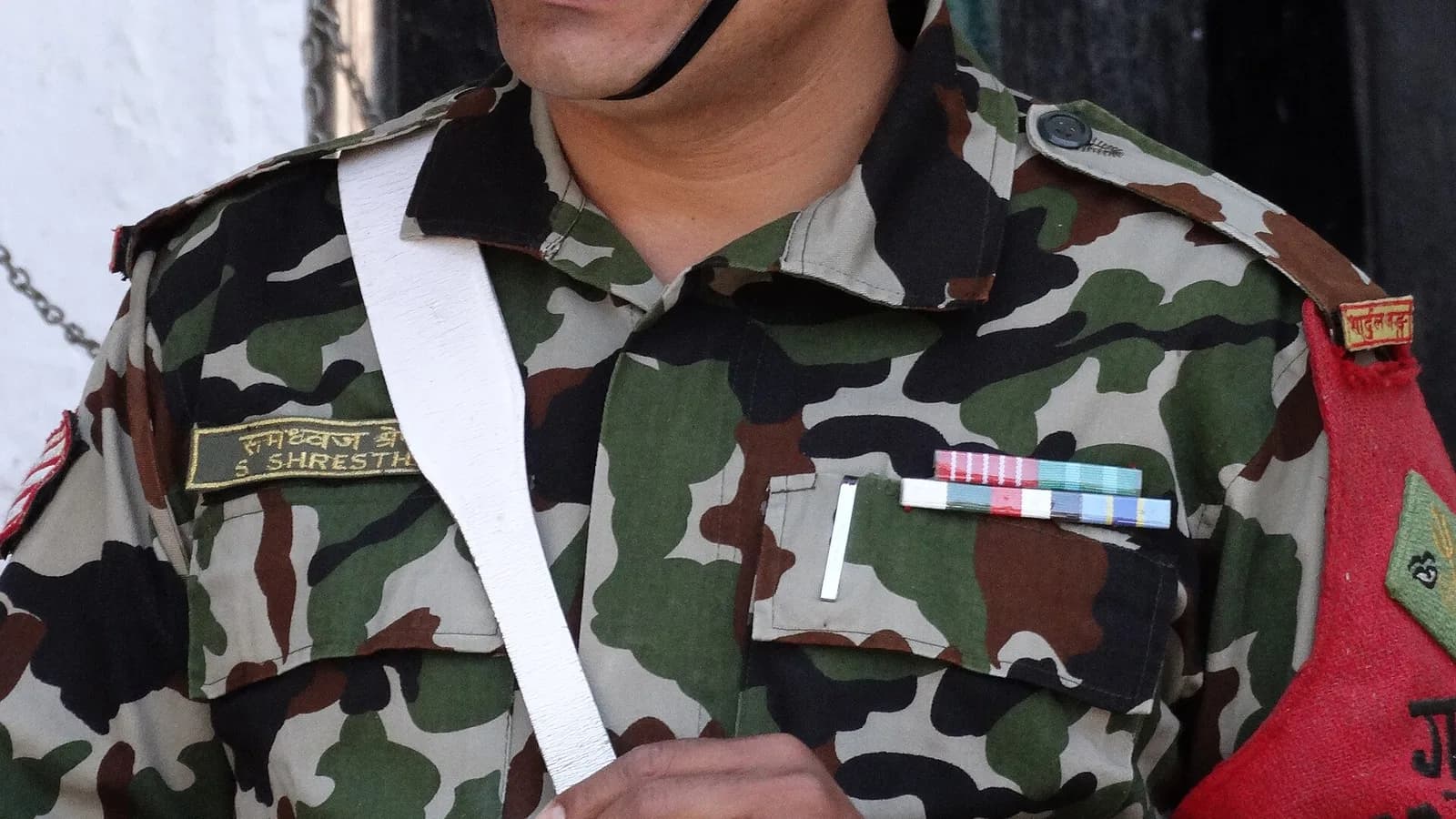
Few soldiers on earth carry a reputation like the Gurkhas. For more than two centuries these fighters from the hills of Nepal have served in the British and Indian armies — and their own — earning a name for courage so formidable that allies and opponents alike have written it into legend. At their side, always, is the curved khukuri knife. This is the story of the Gurkha (Gorkha) soldiers: where the name comes from, how the tradition began, the famous blade and motto, and the legacy that still draws thousands of young Nepalis to one of the world's hardest selection courses.
Key takeaways
- The name Gurkha comes from Gorkha, the Nepali hill kingdom that unified the country in the 18th century.
- British recruitment began after the Anglo-Nepalese War (1814–1816) and the Treaty of Sugauli.
- The khukuri knife is the Gurkha's signature weapon and emblem; the motto is "better to die than be a coward."
- Gurkhas serve in the British, Indian, and Nepalese armies, plus forces in Singapore and Brunei.
- They have earned 26 Victoria Crosses and an unmatched reputation for valour across two World Wars.
What "Gurkha" actually means
A common surprise: "Gurkha" is not the name of an ethnic group. It is a martial identity that takes its name from Gorkha, a small but ambitious hill kingdom in what is now central Nepal. In the 18th century the ruler of Gorkha, King Prithvi Narayan Shah (who reigned roughly 1743–1775), launched the campaign that unified the many small states of the hills into the modern nation of Nepal. The soldiers of that expanding kingdom became known, collectively, as Gorkhas — anglicised to Gurkhas.
The name is often traced further back to the Hindu warrior-saint Guru Gorakhnath, a revered figure whose blessing the Gorkha rulers claimed. One folk etymology even links "Gorkha" to go-raksha, "protector of cows," reflecting the saint's association. Whatever the precise root, the key point is that a Gurkha is defined by martial tradition and origin, not by belonging to one single people. There is also a real town and district called Gorkha in Nepal, with a historic hilltop palace, which travellers can still visit — it appears in our roundup of the best places to visit in Nepal.
How the British connection began
The Gurkha legend on the world stage starts with a war the British very nearly lost. As the expanding Gorkha state pushed against the territory of the British East India Company, the two powers fought the Anglo-Nepalese War from 1814 to 1816.
The British prevailed, but at a cost — and with profound respect for their enemy. The discipline, toughness, and fearlessness of the Nepali hill soldiers made such an impression that the Company began recruiting them even before the war ended. About 5,000 men entered British service in 1815, and the war was concluded by the Treaty of Sugauli (1816), an unequal treaty under which Nepal ceded roughly a third of its territory. One lasting clause allowed the British to recruit Nepali soldiers — and so the Brigade of Gurkhas tradition was born. The very first unit, the Nasiri regiment, eventually became the 1st King George's Own Gurkha Rifles.
Who becomes a Gurkha
Historically, the British recruited Gurkhas from particular hill communities of Nepal, prizing them for their hardiness and reliability. The classic recruiting grounds were the peoples of the central and eastern hills:
| Community | Region of Nepal | |---|---| | Gurung | Central hills (around Pokhara, Lamjung) | | Magar | Central and western hills | | Rai | Eastern hills | | Limbu | Far-eastern hills | | Tamang | Hills around the Kathmandu valley |
For much of the 19th and 20th centuries British policy heavily favoured Gurungs and Magars in particular. Today, recruitment for the British Brigade is open far more broadly to young Nepalis from across the country, though the hill communities remain strongly represented. It is worth noting that being a Gurkha is a profession and a heritage, not an ethnicity — much as we explain about the often-confused term in our guide to the Sherpa people, another Nepali community whose name the world frequently misuses.
The khukuri: more than a knife
No symbol is more bound up with the Gurkha than the khukuri (also spelled kukri) — the knife with the unmistakable forward-curving blade. Every Gurkha soldier traditionally carries one, and it serves as both a fearsome close-quarters weapon and an everyday tool for chopping, clearing, and camp work.
The khukuri originated in the Gorkha kingdom itself, which is partly why blade and soldier are so tightly linked. It has become the emblem of Gurkha units worldwide — crossed khukuris appear on regimental insignia from the British Brigade of Gurkhas to the Gorkha regiments of the Indian Army. The blade carries cultural and even spiritual weight, with features like the small notch (cho) near the handle read as a sacred Hindu symbol. We cover the blade in depth — its parts, how to spot a genuine forged one, and how to fly it home legally — in our dedicated khukuri buying guide, and it features among the most meaningful things in our what to buy in Nepal roundup.
The motto and the reputation
The Gurkha spirit is distilled in a single line of Nepali: "Kaphar hunu bhanda marnu ramro" — "It is better to die than to live like a coward." It is the motto of the Gurkha regiments and, by all accounts, a creed they have lived up to with staggering consistency.
That reputation has been voiced by their own commanders. The Indian field marshal Sam Manekshaw famously said: "If a man says he is not afraid of dying, he is either lying or he is a Gurkha." The respect is universal among those who have fought alongside them — a blend of loyalty, cheerfulness under hardship, and a complete refusal to retreat.
Service across the World Wars
The 20th century turned the Gurkha reputation into history written in blood and valour. Nepal, though never a British colony, sent its sons to fight in vast numbers.
The First World War
During World War I (1914–1918), more than 200,000 Gurkhas served in the British forces. They fought in France, Gallipoli, Mesopotamia, and Palestine, suffering approximately 20,000 casualties and earning almost 2,000 gallantry awards.
The Second World War
The scale grew larger still. A total of 250,280 Gurkhas served across 40 battalions in nearly every theatre of World War II (1939–1945) — from North Africa and Italy to the brutal jungle campaigns of Burma. They earned 2,734 bravery awards and suffered around 32,000 casualties. The courage shown by men like Lachhiman Gurung, who held off a far larger attacking force despite grievous wounds, became the stuff of military legend.
Honours: the Victoria Cross and beyond
The highest testament to Gurkha valour is the tally of the Victoria Cross — Britain's supreme award for gallantry. The VC has been awarded 26 times to Gurkhas or to British officers serving with Gurkha regiments. The first awarded directly to a Nepali Gurkha went to Kulbir Thapa in 1915 during the First World War; the most recent was won by Rambahadur Limbu in 1965 during the confrontation in Borneo. In the Indian Army, Gorkha soldiers have likewise earned the Param Vir Chakra, India's equivalent supreme honour.
The Gurkhas today
The tradition is very much alive. Gurkha soldiers continue to serve in several armies around the world:
| Force | Notes | |---|---| | British Army — Brigade of Gurkhas | Around 4,000 serving soldiers | | Indian Army — Gorkha regiments | Tens of thousands across multiple regiments | | Nepalese Army | Nepal's own national army | | Singapore Police — Gurkha Contingent | A specialist unit formed in 1949 | | Brunei — Gurkha Reserve Unit | Guarding the Sultanate |
Becoming a British Gurkha remains one of the most sought-after and demanding paths a young Nepali can pursue. Selection, run from camps near Pokhara, is regularly described as one of the toughest military recruitment processes in the world. Its centrepiece is the legendary doko race — a steep uphill run carrying a traditional conical basket loaded with around 25 kg of sand, held by a headstrap. From thousands of hopefuls each year, only a few hundred are chosen.
In recent decades the Gurkhas have also won hard-fought recognition off the battlefield: a landmark 2008 UK court ruling and subsequent policy changes in 2009 granted Gurkha veterans with sufficient service the right to settle in Britain — addressing a long-standing injustice in how these soldiers had been treated after service.
A living legend
The Gurkhas are one of Nepal's most powerful exports of identity — fierce in war, gracious in peace, and instantly recognised by the curved blade at their side. Their name reaches back to a hill kingdom and a warrior-saint; their reputation was forged in two centuries of service from the Anglo-Nepalese War to the present day. To understand the Gurkhas is to understand something essential about Nepal itself: a small Himalayan nation whose courage long ago became larger than its borders.
Sources
Frequently asked questions
- Who are the Gurkhas?
- Gurkhas are soldiers recruited from Nepal who serve in the British Army, the Indian Army, the Nepalese Army and other forces. Famous for their bravery and their curved khukuri knife, they take their name from the Nepali hill kingdom of Gorkha.
- Where does the name Gurkha come from?
- The name comes from Gorkha, a small hill kingdom in present-day Nepal that unified the country in the 18th century. It is often linked to the warrior-saint Guru Gorakhnath, whose followers the early Gorkha rulers claimed to be.
- Why do Gurkhas serve in the British Army?
- British recruitment of Gurkhas began after the Anglo-Nepalese War of 1814 to 1816, when British forces were so impressed by their Nepali opponents that they began enlisting them. The Treaty of Sugauli in 1816 formalised the arrangement, and it has continued ever since.
- What is the Gurkha knife called?
- It is called the khukuri, sometimes spelled kukri, a knife with a distinctive forward-curving blade. It is both a practical tool and a weapon, and it is the enduring symbol of the Gurkha soldier worldwide.
- What is the Gurkha motto?
- The best-known Gurkha motto is Kaphar hunu bhanda marnu ramro, which translates as it is better to die than to live like a coward. It captures the courage for which Gurkha regiments are renowned.
- Which ethnic groups become Gurkhas?
- Gurkhas have traditionally been recruited from Nepal's hill communities, especially the Gurung, Magar, Rai and Limbu peoples, with Tamang and others also represented. Recruitment today is open more broadly across Nepal.
- How many Victoria Crosses have Gurkhas won?
- The Victoria Cross, Britain's highest award for valour, has been awarded 26 times to Gurkhas or to British officers serving with Gurkha regiments. The first to a Nepali Gurkha went to Kulbir Thapa in 1915.
- How hard is it to become a British Gurkha?
- Extremely hard. Selection in Nepal is considered one of the toughest military recruitment processes in the world, including a punishing uphill run carrying a heavy doko basket of sand. Only a few hundred are chosen from thousands of applicants each year.
Spotted an error in this post? Tell us or suggest a correction.
Related posts
ABC Trek: A Plain-English Guide to Annapurna Base Camp
The ABC trek (Annapurna Base Camp) explained — the route, how many days it takes, difficulty, the best seasons, and what daily trail life is really like.
Read postAma Dablam Climb: 2026 Expedition Guide (6,812m)
An Ama Dablam climb and expedition guide for 2026 — height, the Southwest Ridge route, camps, fixed ropes, difficulty, permits, cost and the best seasons.
Read postAnnapurna vs Manaslu: Which Trek Should You Choose?
An Annapurna vs Manaslu decision guide for trekkers — compare permits, crowds, difficulty, infrastructure and cost to pick the right Himalayan route.
Read postAsan Bazaar Kathmandu: Old Town Market Guide
A visitor guide to Asan bazaar, Kathmandu's oldest market — its six-road square, Annapurna Temple, what to buy, when to go, and how to get there.
Read postAyurveda Nepal: A Traveller's Guide to Healing
Ayurveda Nepal explained for tourists — the history, the doshas, treatments like Panchakarma and Shirodhara, where to go and how to choose a centre safely.
Read postBest Restaurants Pokhara Lakeside: Where to Eat
The best restaurants in Pokhara Lakeside — lakeside trout, wood-fired pizza, Tibetan momos and healthy cafes, with what to order and rough 2026 prices.
Read post