Makalu Base Camp Trek: Into the Wild Barun Valley
A practical guide to the remote Makalu Base Camp trek in far-eastern Nepal — the Barun Valley route, high passes, permits, best season, and how to get there.
Days of walking, two big passes, and the world's fifth-highest mountain almost entirely to yourself.
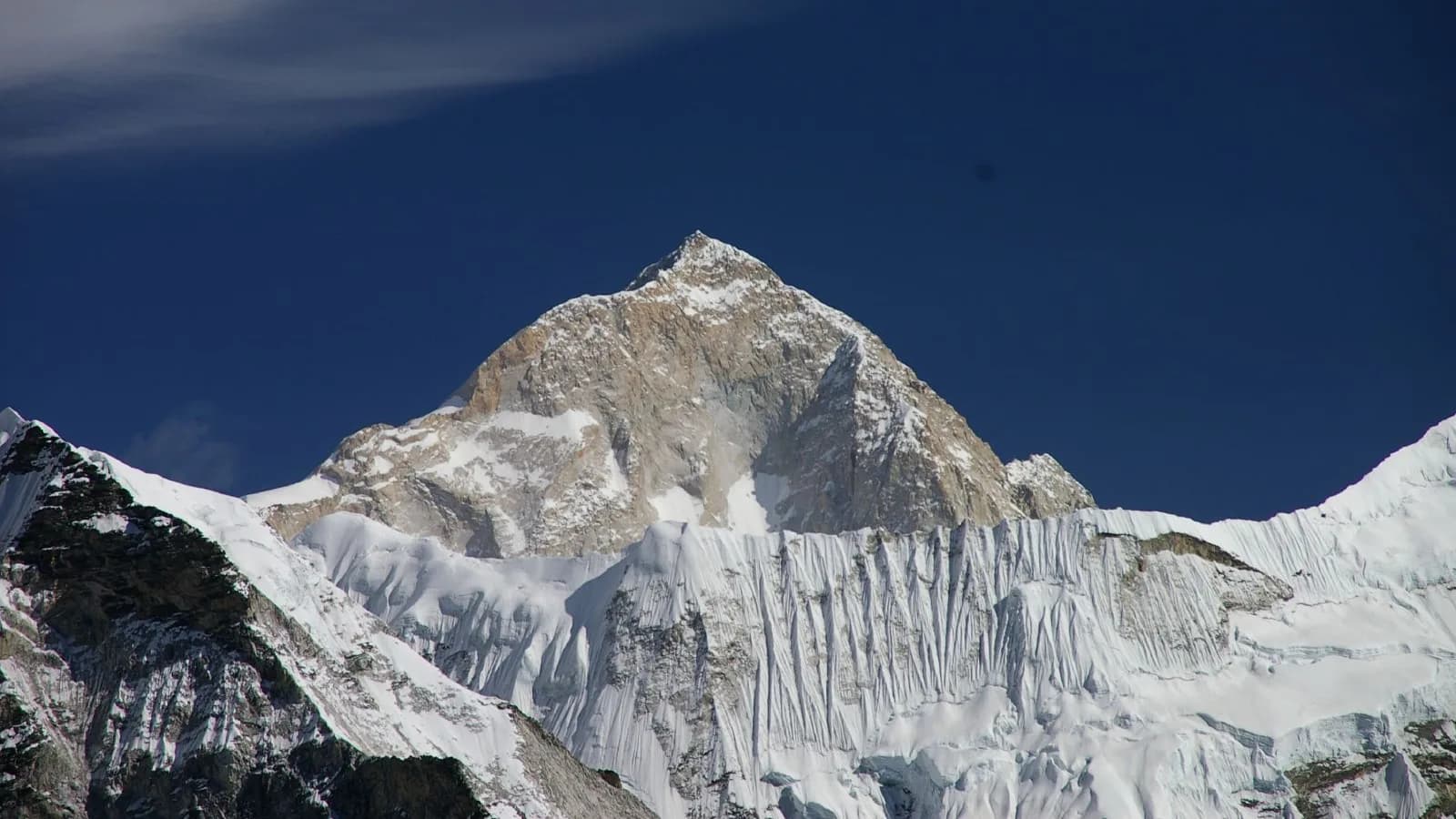
The Makalu Base Camp trek leads to the foot of Makalu (8,485m), the world's fifth-highest mountain, deep in the Barun Valley of Makalu Barun National Park in far-eastern Nepal. It is one of the country's great wilderness walks: long, demanding, and gloriously empty. While thousands of trekkers queue along the Everest and Annapurna trails each season, you can spend days in the Barun and meet barely a soul. That solitude is the whole point — and the reason this trek asks more of you than most.
This guide covers the route and rough itinerary, the difficulty and fitness you will need, the best season, the permits and rules, the wildlife and scenery, and how to actually get there.
Key takeaways
- Makalu (8,485m) is the world's fifth-highest mountain, and the trek reaches its base camp at roughly 4,870m in the Barun Valley.
- This is a remote, strenuous, multi-week trek — plan on about 18 to 22 days including travel, with two passes (Shipton La and Keke La) on the way in.
- It is not a comfort teahouse circuit like Everest Base Camp: lodges are basic and sparse, menus are short, and some sections still suit camping.
- You need a Makalu Barun National Park entry permit plus a trekker information card — but it is not a restricted area, so no special restricted-area permit.
- Access is via a flight to Tumlingtar then a jeep to Num; you can also come overland.
- Best in autumn (Oct–Nov) or spring (Apr–May); the region rewards strong fitness, prior trekking experience, and careful acclimatisation.
The route and a rough itinerary
The trek threads up the Arun and Barun river systems, climbing from steamy subtropical foothills to a glacier-walled high valley. A typical flow looks like this:
- Fly Kathmandu to Tumlingtar (~518m) and drive by jeep through Khandbari to Num (~1,560m), the usual trailhead.
- Num to Seduwa (~1,500m) — a steep drop to the Arun river and a climb back up the far side to the national-park gateway village.
- Seduwa to Tashigaon (~2,100m) — the last permanent village before the high country.
- Tashigaon to Khongma Danda (~3,500m) — a big climbing day onto the ridge; most itineraries build in an acclimatisation day here.
- Cross Shipton La and Keke La down to Dobate / Mumbuk (~3,500m) — the two-pass day, often the toughest of the approach, on rough and sometimes snowy ground.
- Up the Barun Valley through Yangle Kharka and Langmale Kharka (~4,400m) to Makalu Base Camp (~4,870m).
- Explore base camp — side walks toward the Barun Glacier and viewpoints above 5,000m for the full Makalu amphitheatre, with Everest and Lhotse often visible.
- Retrace your steps back down the valley and out to Num, then drive and fly home.
There is no loop and no shortcut: you walk in and walk out the same way. That out-and-back rhythm, plus weather buffer days, is why the trek eats the better part of three weeks. For how this compares to other long wilderness routes, see our guides to the Manaslu Circuit and the Tsum Valley.
Difficulty and fitness: take this one seriously
Makalu Base Camp is firmly a strenuous trek and not a sensible first big walk. The difficulty stacks up from several directions:
- Altitude. You sleep above 4,800m at base camp and climb higher on day walks, with a steep altitude profile that demands disciplined acclimatisation.
- The passes. Crossing Shipton La and Keke La in a single day involves a long stretch of rough, exposed ground that can hold snow well into the season.
- Long days. Six to eight hours of walking is normal, with big ascents and descents — including the brutal drop-and-climb between Num and Seduwa right at the start.
- Remoteness. Help is far away. There are no roads up the Barun, evacuation is slow and weather-dependent, and resupply is minimal.
Prior multi-day, high-altitude trekking experience is strongly recommended. Build real hill fitness before you go, and read our altitude sickness guide so you can recognise and act on early symptoms — in a valley this isolated, that knowledge genuinely matters. Comprehensive travel insurance that explicitly covers high-altitude trekking and helicopter evacuation is essential here, not optional.
When to go: best season
Two windows stand out, for the usual Himalayan reasons:
| Season | Conditions | Verdict | | --- | --- | --- | | Autumn (Oct–Nov) | Clear, stable skies; cold but settled up high | Best | | Spring (Apr–May) | Rhododendrons in bloom; generally clear, warming | Excellent | | Winter (Dec–Feb) | Bitter cold at base camp; passes often snowbound | Hard / risky | | Monsoon (Jun–Sep) | Cloud, rain, mud, leeches in the forest | Avoid |
Late October into November tends to give the most dependable mountain views, while spring trades a little clarity for colour in the lower forests. Avoid the monsoon, when the lowland approach turns to mud and the high views vanish. For the bigger picture across the country, see our overview of the best season to trek in Nepal.
Permits and rules
The permit situation for Makalu is refreshingly simple compared with restricted regions like Manaslu or Kanchenjunga — but you still need the paperwork in order.
- Makalu Barun National Park entry permit. The headline foreigner fee is NPR 3,000 per person (SAARC nationals and Nepali citizens pay reduced rates, and young children are typically free). It is valid for your whole stay inside the park.
- Trekker information card. A trekker information card (the TIMS-style card) is required for the region; carry it alongside your park permit.
Crucially, Makalu Barun is not a restricted area. That means there is no separate restricted-area permit, no mandatory minimum group size imposed by the permit itself, and the rules are lighter than on Manaslu or Upper Mustang. Permits can be arranged in Kathmandu, and there are park checkpoints near Num and Seduwa where they are checked.
Fees and card requirements do change, so confirm the current numbers before you travel rather than relying on any single figure. Our broader trekking permits overview explains how Nepal's permit system fits together. And while the lighter rules mean a guide is not strictly forced on you by the permit, a strong local guide is a serious safety asset in terrain this remote — weigh that up using our piece on whether you need a guide to trek in Nepal.
Why it is not an EBC-style teahouse trek
It is worth saying plainly: this is not a comfortable lodge-to-lodge circuit. Basic teahouses and lodges do now exist along much of the route, but they are simpler, more widely spaced, and less reliable than what you find on the Everest or Annapurna trails. Menus revolve around dal bhat, noodles, and a few staples; hot showers and charging are intermittent or absent up high; and on the most remote stretches near base camp many groups still carry tents and food. If you want to understand the comfort gap, our explainer on teahouse trekking in Nepal sets the baseline — then mentally downgrade it for the Barun.
Wildlife and scenery
The trek is a vertical transect through one of the richest protected areas in the Himalaya. In a few days you climb from subtropical foothills through dense rhododendron, oak, and fir forest into alpine meadow and finally raw glacier country. Makalu Barun National Park shelters extraordinary biodiversity, and lucky trekkers may glimpse signs of red pandas, musk deer, Himalayan tahr, and the elusive snow leopard, alongside abundant birdlife and, in spring, hillsides ablaze with rhododendron.
The scenic payoff at the top is immense. The upper Barun is a vast amphitheatre of ice and rock, with the colossal south face of Makalu towering overhead and Everest and Lhotse often visible from the higher viewpoints. Because so few people make it here, the sense of standing in a genuinely wild place — earned over many hard days — is something the busier trails simply cannot match. If untrammelled scenery is what you are after, you may also enjoy the quieter eastern viewpoints of the Pikey Peak trek.
How to get there
Getting to the trailhead is part of the adventure, and the remoteness starts the moment you leave Kathmandu.
- Fly Kathmandu to Tumlingtar. The flight takes roughly 35 to 45 minutes, with daily services on the main domestic carriers to Tumlingtar Airport in eastern Nepal. As with all Nepali mountain flights, weather can cause delays, so build in buffer days.
- Drive Tumlingtar to Num. A jeep ride of several hours climbs through Khandbari and the surrounding hills to Num (~1,560m), the usual starting point. Road improvements in recent years have shortened what used to be a multi-day walk-in.
- Start walking. From Num the trail drops to the Arun and climbs to Seduwa to enter the national park.
If you would rather skip the flight, you can reach Tumlingtar overland by long bus or jeep from Kathmandu, though it is a tiring journey of many hours. Either way, the distance from the capital — far-eastern Nepal, a long way from anywhere — is exactly why the Barun stays so quiet.
A few practical tips before you commit
A handful of well-chosen Nepali phrases go a long way in villages where English is rare; our trekking phrases guide covers the essentials. Carry enough cash in Nepali rupees for the whole trek, since there are no ATMs once you leave the lowlands. Pack for genuine cold and self-sufficiency: a four-season sleeping bag, a warm down layer, sturdy broken-in boots, trekking poles for the passes, water treatment, and a thorough personal first-aid kit. And browse our wider trekking hub for more on planning a trip like this.
Is the Makalu Base Camp trek right for you?
Choose Makalu if you are a fit, experienced trekker who wants real remoteness, a dramatic high valley, and the world's fifth-highest mountain almost to yourself — and who can commit two-plus weeks and accept basic facilities and a semi-wilderness style. If you want big mountains with more comfort, easier logistics, and reliable lodges, a route like the Langtang trek or Annapurna Base Camp will suit you better. But for those willing to earn it, few treks in Nepal feel as wild, as quiet, or as rewarding as the long walk up the Barun.
Sources
Frequently asked questions
- How many days is the Makalu Base Camp trek?
- Most itineraries run about 18 to 22 days door to door, including flights and drives at each end. The walking portion is roughly 10 to 14 days out and back along the Barun Valley. The long approach, the acclimatisation days, and the lack of shortcuts mean this is a multi-week commitment, not a quick week away.
- How high is Makalu Base Camp?
- Makalu Base Camp sits at roughly 4,870m, with viewpoints and side walks reaching above 5,000m. Makalu itself is 8,485m, the world's fifth-highest mountain. You also cross two passes on the way in — Shipton La and Keke La — both roughly 4,100 to 4,200m depending on the exact saddle, so there is a lot of up and down before you even reach the high valley.
- Is the Makalu Base Camp trek a teahouse trek like EBC?
- Not really. Basic teahouses and lodges now exist along the route, but they are far simpler, more spread out, and less reliable than on the Everest or Annapurna trails. Menus are short, power is intermittent, and on the highest stretches many groups still carry tents and supplies. Treat it as a semi-wilderness trek, not a comfort circuit.
- What permits do I need for the Makalu Base Camp trek?
- You need a Makalu Barun National Park entry permit (the headline fee for foreigners is NPR 3,000 per person; SAARC nationals pay less and Nepali citizens least of all). You also need a trekker information card. Makalu Barun is not a restricted area, so there is no separate restricted-area permit, but always confirm the current fees and card rules before you travel.
- When is the best time to do the Makalu Base Camp trek?
- Autumn (October to November) and spring (April to May) are the two reliable windows. Autumn brings the clearest, most stable skies; spring adds rhododendron blooms in the lower forests. Winter is bitterly cold and the high passes can be snowbound, and the summer monsoon brings cloud, rain, mud, and leeches lower down.
- How do I get to the Makalu trailhead?
- Fly from Kathmandu to Tumlingtar (about 35 to 45 minutes on daily flights), then drive several hours by jeep through Khandbari to Num, the usual trailhead at around 1,560m. From Num the walking begins. You can also reach Tumlingtar overland by long bus or jeep from Kathmandu if you prefer to skip the flight.
Spotted an error in this post? Tell us or suggest a correction.
Related posts
Kanchenjunga Base Camp Trek: Nepal's Wild Far East
A guide to the remote Kanchenjunga Base Camp trek — Pangpema and Oktang base camps, restricted-area permits, Limbu and Sherpa culture, and how to plan it.
Read postGanesh Himal Ruby Valley Trek: The Quiet Valley Between Langtang and Manaslu
A practical guide to the Ganesh Himal Ruby Valley trek: route, duration, difficulty, best season, community homestays and permits in Dhading and Rasuwa.
Read postLimi Valley Trek: Nepal's Last Tibetan Corner Beyond the Karnali
A practical guide to the Limi Valley trek in remote Humla — route, the Nyalu La pass (~4,990m), duration, difficulty, best season and restricted-area permits.
Read post