Kanchenjunga Base Camp Trek: Nepal's Wild Far East
A guide to the remote Kanchenjunga Base Camp trek — Pangpema and Oktang base camps, restricted-area permits, Limbu and Sherpa culture, and how to plan it.
The world's third-highest mountain, and almost nobody on the trail.
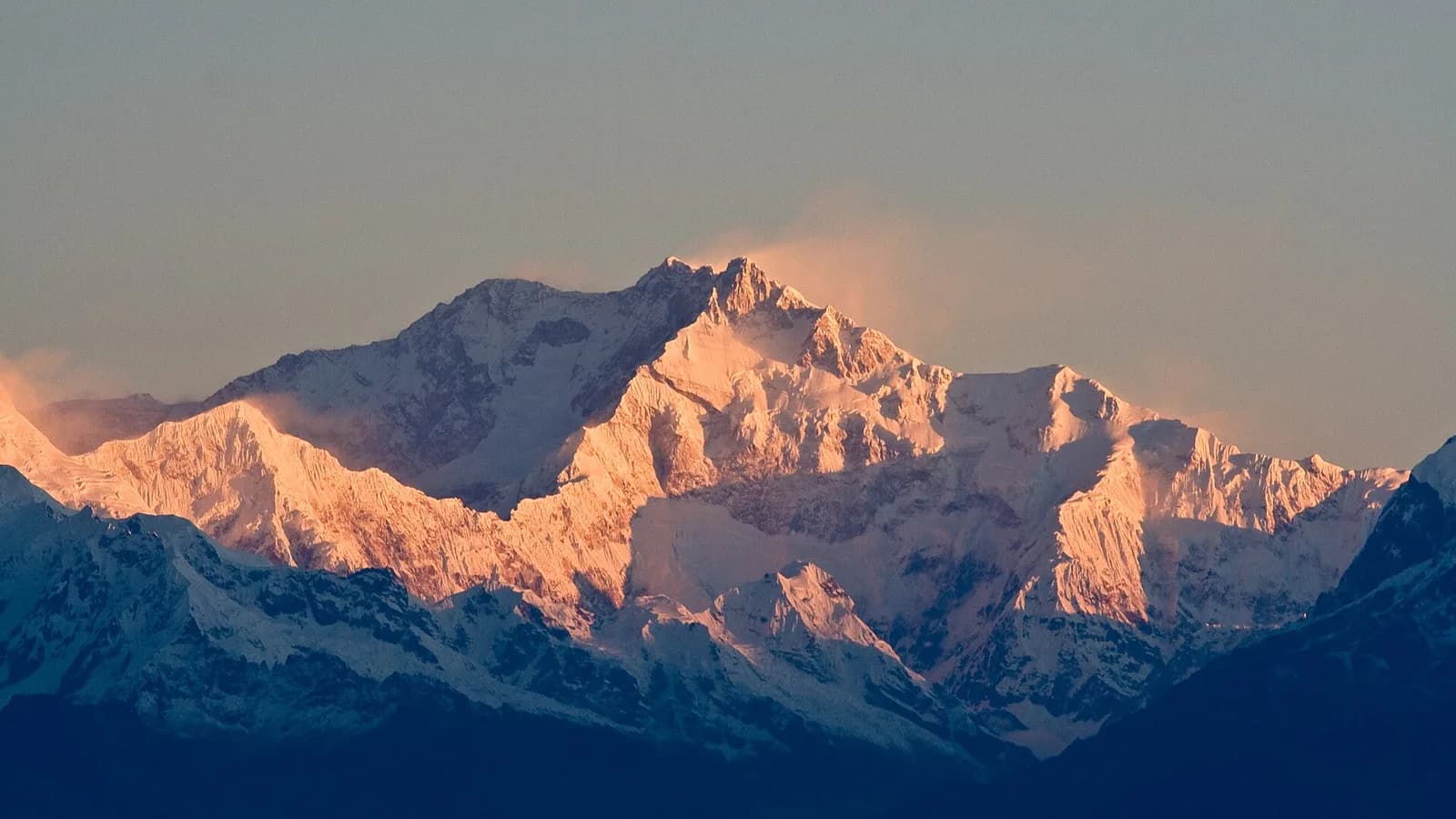
The Kanchenjunga Base Camp trek takes you to the foot of the world's third-highest mountain, in a corner of far-eastern Nepal so remote that you can walk for days and barely meet another foreign trekker. Mount Kanchenjunga (8,586m) straddles the border with India's Sikkim, and the surrounding Kanchenjunga Conservation Area is a designated restricted zone — which is exactly why it has stayed so wild. This is not a trek you slot into a week off; it is a multi-week expedition into one of the last genuinely untrammelled trekking regions in the Himalaya.
This guide explains the two base camps, the permits and rules that govern the area, how to get there, how hard it is, and what makes the journey worth the effort.
Key takeaways
- Kanchenjunga (8,586m) is the world's third-highest mountain, and the trek visits its base camps in Nepal's remote far east.
- There are two base camps: Pangpema (north, ~5,143m) and Oktang (south, ~4,780m); the full circuit links both over the Sele La passes.
- This is a restricted area — solo trekkers are now allowed (the two-trekker minimum was lifted in March 2026), but you still need a licensed guide and a registered agency.
- Two permits are required: KRAP (USD 20/week) and KCAP (NPR 2,000), both as of June 2026.
- Access is via a flight to Bhadrapur then a long jeep to Taplejung — the remoteness is the whole point.
- It is a strenuous, multi-week trek for experienced, well-acclimatised walkers, best in autumn or spring.
Two base camps, one giant mountain
Unlike Everest or Annapurna, Kanchenjunga has two distinct base-camp destinations on opposite sides of the massif:
| Base camp | Side | Approx. altitude | Character | | --- | --- | --- | --- | | Pangpema | North | ~5,143m | The classic, dramatic north face; reached via a long day from Lhonak | | Oktang | South | ~4,780m | A vast southern amphitheatre of ice and rock |
You can visit just one side as an out-and-back, or link both into the Kanchenjunga Circuit, crossing the high Sele La passes between the northern Ghunsa valley and the southern Tseram valley. The circuit is the fuller experience but adds days, altitude and difficulty. The north side at Pangpema is widely regarded as the single most spectacular viewpoint of the trek.
How long it takes
Itineraries vary a lot depending on how much you want to see and how cautious your acclimatisation schedule is. As a rough guide:
- One base camp (north or south): around 16 days on the trail.
- Full circuit (both base camps): roughly 18 to 22 days on the trail.
- Plus travel: add days at each end for the flight to Bhadrapur and the long jeep transfer.
There is no way to make Kanchenjunga short. The approach march alone — walking up from the lowlands through forest and villages before you ever see the high peaks — eats several days. That slow build is part of its character and helps you acclimatise.
The restricted-area rules
Because Kanchenjunga shares borders with India and Tibet, the entire conservation area is a restricted zone, and Nepal enforces specific rules:
- Solo trekkers now allowed. Nepal lifted the two-trekker minimum in March 2026, so you can trek alone — but only with a licensed guide booked through an agency.
- Licensed guide required. You must trek with a government-registered guide throughout.
- Registered agency required. The restricted-area permit can only be arranged through a registered Nepali trekking agency — you cannot buy it as an independent walk-in.
These rules are similar to other restricted regions such as Upper Mustang; if you have read our Upper Mustang trek permit guide, the framework will feel familiar. For more on Nepal's broader guide requirements and how they apply across the country, our piece on whether you need a guide for Everest Base Camp gives useful context — though note that Kanchenjunga's restricted status makes a guide non-negotiable, unlike Everest.
Permits and costs
Two separate permits are required for Kanchenjunga (as of June 2026):
- Kanchenjunga Restricted Area Permit (KRAP): USD 20 per person per week for the first four weeks (rising to USD 25/week beyond that). SAARC nationals pay a reduced rate.
- Kanchenjunga Conservation Area Permit (KCAP): NPR 2,000 per person, with no time limit — it covers your whole stay inside the conservation area.
Your agency arranges the KRAP; the KCAP is the conservation-area entry fee. Carry printed copies, as connectivity is poor and checkpoints verify paper permits. Budget separately for the flights, jeep, guide, porters, food and lodging — Kanchenjunga is one of the pricier treks in Nepal once the long logistics are factored in. For the wider trip, see our Nepal travel budget guide.
Getting there
The journey to the trailhead is an adventure in itself:
- Fly Kathmandu to Bhadrapur — about 45 minutes, with daily flights on the main domestic carriers.
- Jeep from Bhadrapur to Taplejung — roughly 7 to 8 hours up into the hills to the district town and onward road head.
There are also less frequent flights to Suketar, the small airstrip near Taplejung, but schedules are limited and weather-dependent, so most trekkers use Bhadrapur. The sheer distance from Kathmandu — far-eastern Nepal, almost at the Indian border — is a big part of why the trail stays empty.
The people and the path
One of the quiet joys of Kanchenjunga is its cultural variety. The lower trail winds through Limbu and Rai farming villages, while higher up you reach Sherpa and Tibetan-influenced settlements. The standout is Ghunsa, a Sherpa village that serves as the regional hub: it has a few shops, the Kanchenjunga Conservation Area headquarters, and is the natural place for an acclimatisation day before pushing higher.
Above Ghunsa the landscape turns alpine — glacier-fed rivers, moraine and the great icefalls of the Kanchenjunga glaciers. The toughest single day is usually the Lhonak-to-Pangpema round trip: an 8-to-10-hour push over loose, icy moraine in thin air to reach the north base camp and back.
How hard is it, really?
Kanchenjunga is firmly a strenuous trek, and not a first big trek. The difficulty comes from a combination of factors:
- Altitude: you cross above 5,000m at the north base camp, and the circuit adds high passes around the Sele La.
- Length: sustained walking over two-plus weeks tests stamina.
- Remoteness: facilities are basic and help is far away if something goes wrong.
- Terrain: loose moraine and exposed sections on the highest days.
Prior high-altitude experience is strongly recommended, and acclimatisation discipline matters more here than almost anywhere, because evacuation is slow and complicated. Read our altitude sickness guide before you go and learn to act on early symptoms. For a sense of where Kanchenjunga sits among Nepal's harder routes, the Manaslu Circuit vs Annapurna difficulty comparison is a useful yardstick — Kanchenjunga is more remote and logistically demanding than either.
Insurance and safety
Given the altitude and isolation, comprehensive travel insurance that explicitly covers high-altitude trekking and helicopter evacuation is essential, not optional. In a region this remote, a serious problem can mean a long wait for rescue. Our guide to trekking insurance and helicopter evacuation explains what to check in a policy before you commit to a trek like this.
When to go
| Season | Conditions | Verdict | | --- | --- | --- | | Autumn (Oct–Nov) | Clear skies, stable weather, cold nights up high | Best | | Spring (Apr–May) | Rhododendrons in bloom, generally clear, warming | Excellent | | Winter (Dec–Feb) | Severe cold at base camps, snowbound passes | Not recommended | | Monsoon (Jun–Sep) | Cloud, rain, leeches in the forest | Avoid |
Autumn and spring are the only sensible windows. For how the seasons play out across the whole country, see the best time to visit Nepal.
What to pack
Kanchenjunga demands serious, self-reliant kit because resupply is limited:
- A four-season sleeping bag and a warm down jacket — base-camp nights are bitter.
- Sturdy, broken-in boots and trekking poles for long moraine days.
- A comprehensive personal first-aid kit, since pharmacies are non-existent up high.
- Plenty of cash in Nepali rupees; there are no ATMs once you leave the lowlands.
- Water treatment, a power bank and warm layers for camp.
The full Nepal trekking packing list covers the essentials in detail; for Kanchenjunga, lean toward the warmer, more self-sufficient end of every recommendation.
Guides, porters and etiquette
Your guide is mandatory and, on a trek this committing, genuinely your safety net. Porters carry the loads that make the long days survivable. Treat both well — fair wages, fair loads, and a respectful manner go a long way in a region where hospitality is part of the culture. Our guide to tipping trekking guides and porters explains what to budget and how to handle it.
Is Kanchenjunga right for you?
Choose Kanchenjunga if you are an experienced trekker who wants genuine remoteness, two spectacular base camps, and rich cultural variety, and who can commit two-plus weeks and accept basic facilities. If you want big mountains with more comfort, shorter time, and easier logistics, the Everest or Annapurna regions are a better fit. But for those who want the Himalaya at its wildest — and the world's third-highest mountain nearly to themselves — few treks deliver like this one.
Sources
- Destination Himalaya Treks — Permits Required for Kanchenjunga Trek (2026)
- Mountain Mart Treks — Kanchenjunga Base Camp Trek Complete Guide 2026/27
- Magical Nepal — How to Reach Taplejung from Kathmandu
- Nepal Tourism Board — Kanchenjunga Conservation Area
- Adventure Alternative — Kanchenjunga Base Camp Trek
- Himalaya Trip — Kanchenjunga Trek Itinerary, Map and Cost 2026
Frequently asked questions
- How many days is the Kanchenjunga Base Camp trek?
- Plan on roughly 16 to 22 days on the trail, plus travel days at each end. Visiting just the north base camp at Pangpema or just the south at Oktang sits at the shorter end, while the full circuit linking both over the Sele La passes takes about 18 to 22 days. The long approach and acclimatisation needs make it a multi-week commitment either way.
- How high are the Kanchenjunga base camps?
- The north base camp, Pangpema, is the higher of the two at about 5,143m, while the south base camp, Oktang, sits at roughly 4,780m. Both look directly onto the Kanchenjunga massif. The north side is generally considered the more dramatic viewpoint, but reaching it involves a long, thin-air day from Lhonak.
- What permits do I need for Kanchenjunga?
- You need two: the Kanchenjunga Restricted Area Permit (KRAP) at USD 20 per person per week for the first four weeks, and the Kanchenjunga Conservation Area Permit (KCAP) at NPR 2,000 per person (both as of June 2026). Permits must be arranged through a registered Nepali trekking agency, not bought solo.
- Can I trek Kanchenjunga solo?
- Yes, solo trekkers are now allowed — Nepal removed the two-trekker minimum for restricted areas in March 2026. You still must trek with a licensed guide arranged through a government-registered agency; you cannot do it as an independent walk-in. The guide-and-agency rule reflects the region's sensitive border location and its remoteness.
- How hard is the Kanchenjunga trek?
- It is strenuous and best suited to experienced trekkers. You face long days, big altitude gains above 5,000m, remote terrain with basic facilities, and a tough push from Lhonak to Pangpema over loose moraine. Good fitness, prior high-altitude experience and proper acclimatisation are strongly recommended.
- How do I get to the Kanchenjunga trailhead?
- Most people fly from Kathmandu to Bhadrapur in the far east (about 45 minutes, daily flights), then take a long jeep ride of roughly 7 to 8 hours up to Taplejung and on to the road head. There are also less frequent flights to Suketar near Taplejung. The long overland leg is part of why the region stays so quiet.
- When is the best time to trek Kanchenjunga?
- Autumn (October to November) and spring (April to May) are the prime windows for clear skies and stable weather. Spring brings rhododendron blooms in the lower forests. Winter is severe at the base camps and the high passes can be snowbound, while the summer monsoon brings cloud, rain and leeches lower down.
- Are there teahouses on the Kanchenjunga trek?
- Yes, basic teahouses and homestays exist in the villages along the route, including the main hub of Ghunsa. They are simpler and more spread out than on the Everest or Annapurna trails, with limited menus and intermittent power. Some agencies carry tents and supplies for the highest, most remote stretches.
Spotted an error in this post? Tell us or suggest a correction.
Related posts
ABC Trek: A Plain-English Guide to Annapurna Base Camp
The ABC trek (Annapurna Base Camp) explained — the route, how many days it takes, difficulty, the best seasons, and what daily trail life is really like.
Read postAma Dablam Climb: 2026 Expedition Guide (6,812m)
An Ama Dablam climb and expedition guide for 2026 — height, the Southwest Ridge route, camps, fixed ropes, difficulty, permits, cost and the best seasons.
Read postAnnapurna vs Manaslu: Which Trek Should You Choose?
An Annapurna vs Manaslu decision guide for trekkers — compare permits, crowds, difficulty, infrastructure and cost to pick the right Himalayan route.
Read postAsan Bazaar Kathmandu: Old Town Market Guide
A visitor guide to Asan bazaar, Kathmandu's oldest market — its six-road square, Annapurna Temple, what to buy, when to go, and how to get there.
Read postAyurveda Nepal: A Traveller's Guide to Healing
Ayurveda Nepal explained for tourists — the history, the doshas, treatments like Panchakarma and Shirodhara, where to go and how to choose a centre safely.
Read postBest Restaurants Pokhara Lakeside: Where to Eat
The best restaurants in Pokhara Lakeside — lakeside trout, wood-fired pizza, Tibetan momos and healthy cafes, with what to order and rough 2026 prices.
Read post