Thamel Shopping: A Tourist's Buyer's Guide (2026)
A practical Thamel shopping guide — what to buy, how to bargain, spotting fake pashmina, export rules, and avoiding the classic Thamel rip-offs.
A few hundred metres of lanes where you can outfit a Himalayan trek, buy a singing bowl, and haggle for a pashmina — all before lunch.
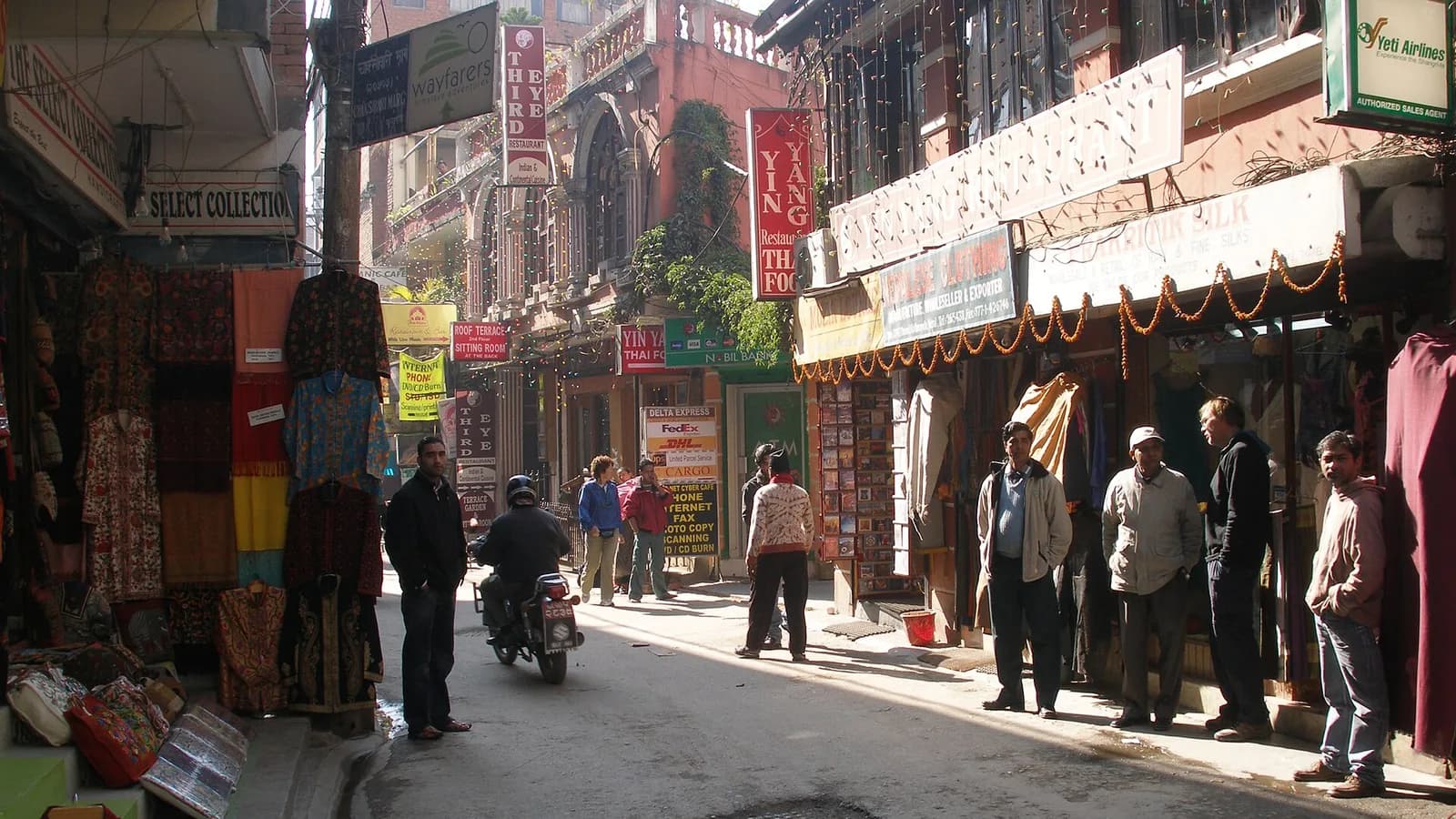
Thamel shopping is, for many visitors, their first real taste of Nepal: a few hundred metres of lanes where prayer-flag bunting hangs overhead and almost every shopfront wants your attention. It is where trekkers gear up, where souvenir hunters fill a suitcase, and where a relaxed afternoon can quietly turn into an expensive one. This guide is the practical companion to our wider Thamel neighbourhood guide: it focuses purely on buying — what is genuinely worth purchasing, how to bargain without stress, how to spot the common fakes, and the export rules that can trip people up at the airport.
The district packs an enormous range into a small footprint. You can compare down jackets, finger a stack of pashminas, listen to a singing bowl and price a khukuri within a single block. The flip side is that quality and price swing wildly between neighbouring shops, and the area is firmly tourist-priced. A little preparation turns Thamel from a place you get fleeced into one of the more rewarding shopping streets in South Asia.
Key takeaways
- Thamel is Nepal's densest tourist shopping district, strongest on trekking gear, pashmina, singing bowls, thangkas, Lokta paper and khukuris.
- Bargaining is normal in souvenir and gear shops; compare a few shops, counter low, and be willing to walk away.
- Many "pashminas" are synthetic blends — look for genuine cashmere and the Chyangra Pashmina trademark, and be wary of bargain prices.
- Branded outdoor gear is a mix of genuine and copies; use authorised stores if authenticity matters.
- Antiques and sacred objects (broadly over 100 years old) need Department of Archaeology clearance to export, and some are banned.
- Carry rupees in small notes, shop in the morning for calmer haggling, and watch for motorbikes in the "pedestrian" lanes.
What to buy in Thamel
Thamel's strength is breadth. A few categories stand out as things travellers consistently come to Nepal for, and most are well represented here.
Trekking and outdoor gear
For anyone heading to the mountains, Thamel is one of the best-stocked gear bazaars anywhere. The range runs from cheap, locally made basics to genuine branded equipment, often at prices below what you would pay in Europe, North America or Australia. You will see windows full of North Face, Marmot, Columbia and Rab logos — some genuine, much of it copied.
A sensible approach: buy cheap, low-risk items (liner gloves, hats, basic fleeces, duffel bags) without worrying much about brand, and be choosier with the pieces your comfort depends on, such as a down jacket or sleeping bag. Renting is also widely available for big-ticket items like down jackets and four-season sleeping bags, which suits short trips. For what to look for and pack, see our trek packing guide.
Pashmina shawls
Pashmina is the signature soft-good of Kathmandu. True pashmina is a fine cashmere from the Himalayan Chyangra goat; a common and durable choice is a cashmere-silk blend, often quoted as a 70/30 mix, which drapes well and resists wear. The catch is that a large share of "pashmina" sold cheaply in Thamel is viscose or acrylic. Genuine cashmere is unmistakably warmer and lighter, costs more, and authentic pieces may carry a Chyangra Pashmina trademark label. Our pashmina buying guide goes deeper on fibre tests and price ranges.
Singing bowls, thangkas and crafts
Metal singing bowls — struck or rimmed with a wooden striker to produce a sustained tone — are a Thamel staple, ranging from machine-made tourist bowls to heavier handmade pieces. Thangkas, the detailed scroll paintings of Buddhist and Hindu deities and mandalas on cotton or silk, range from quick decorative work to intricate, time-consuming pieces priced accordingly. Both reward visiting a couple of specialist shops rather than buying from the first stall. See our notes on singing bowls and thangka painting.
Lokta paper, jewellery and khukuris
Other reliably good buys include Lokta paper notebooks, journals and cards, handmade from the bark of the Daphne shrub; Tibetan-style jewellery featuring turquoise and coral; and the khukuri, the curved Nepali knife associated with the Gurkhas. For a broader rundown of what is worth packing home, our guide to the best things to buy in Nepal and the Nepal souvenirs overview cover the full spread.
| Item | Typical use | What to check | | --- | --- | --- | | Pashmina shawl | Warm, light scarf or wrap | Fibre content; Chyangra label; price plausibility | | Trekking gear | Mountain clothing and kit | Genuine vs copy; stitching, zips, labels | | Singing bowl | Sound, meditation, decor | Handmade vs machine; tone; weight | | Thangka | Wall art, religious art | Detail and time invested; age claims | | Lokta paper goods | Journals, cards, gifts | Handmade texture; finish | | Khukuri | Souvenir or working blade | New vs antique; airline and checked-bag rules |
How to bargain without stress
In most Thamel souvenir and gear shops, the first price is an opening bid, not a fixed figure. Haggling is expected and, done with a smile, it is part of the experience rather than a confrontation.
A few habits make it painless:
- Scout first. Check two or three shops selling the same kind of item before you commit, so you know the real range. Prices for souvenirs are often quoted at roughly double what a seller will actually accept.
- Counter low, settle middle. Countering at around half the opening price and meeting somewhere in between is a common rhythm.
- Stay friendly and be ready to walk. A relaxed manner and a willingness to leave are your best leverage; sellers frequently call you back with a better number.
- Bundle. Buying several items from one shop gives you room to ask for a combined discount.
Knowing a handful of numbers in Nepali helps you follow the back-and-forth and signals you have done your homework — our guide to Nepali numbers for bargaining is a quick primer. Note that supermarkets, pharmacies and official brand stores are generally fixed-price; haggling there is out of place.
Spotting fakes and avoiding rip-offs
Thamel is not dangerous to shop in, but it is built to part casual buyers from their money. The recurring issues are predictable once you know them.
Pashmina that is not pashmina
The most common letdown is a synthetic shawl sold as genuine cashmere. Be sceptical of prices that seem too good, buy from a dedicated pashmina retailer rather than a general souvenir stall, and ask directly about fibre content. A widely cited at-home test is to burn a single thread: real animal fibre smells like burnt hair or horn, while synthetics smell like melting plastic — useful to know, even if you cannot do it in the shop.
Branded gear that is copied
Logos are easy to print. A meaningful share of "North Face" and similar items in Thamel are copies, which is fine if that is what you intend to buy, but not if you are paying genuine-gear prices. For authenticity, use authorised brand stores and inspect stitching, zip quality and labels. Treat steep discounts on flagship items with caution.
Commission and tout traps
Two soft scams are worth flagging. First, street touts may offer "free" trekking or tour information and steer you toward an agency that pays them a commission. Second, some guides and taxi drivers will route you to thangka, pashmina or jewellery shops where they earn a cut, with the markup quietly passed on to you. Neither is sinister, but both inflate prices. Shop where you choose, on your own schedule. Our Nepal tourist scams guide covers the wider picture.
Export rules: what you can take home
Most Thamel purchases — new shawls, craft items, gear, machine-made singing bowls, fresh thangkas — leave Nepal without issue. The exceptions concern cultural heritage and blades, and getting them wrong can mean confiscation at the airport.
Antiques and sacred objects
Items judged to be antiques or sacred cultural objects, broadly those more than 100 years old, require clearance from Nepal's Department of Archaeology before they can be exported, and some categories — including certain sacred images, old thangkas and manuscripts — are prohibited outright. Crucially, this applies even to something you bought legally in a shop: without the right certificate, a genuinely old piece can be seized at Tribhuvan International Airport on departure. If a seller claims an item is "very old," that is a reason to slow down and ask about paperwork, not a selling point to act on.
Khukuris and other blades
A new souvenir khukuri is normally fine to take home, but it is a knife: it must travel in checked baggage, never in your carry-on, and you should confirm your airline's and destination country's rules before flying. Antique khukuris may fall under the same cultural-export controls as other old objects.
A practical shopping plan
A little structure keeps a Thamel session enjoyable rather than exhausting.
- Go in the morning for thinner crowds, fewer touts and shopkeepers in a fresh, negotiable mood.
- Decide your list first — gear versus gifts — so you are not swept along by every shopfront.
- Carry rupees in small and medium notes; many small shops prefer cash, while larger stores take cards, sometimes with a surcharge. There are plenty of ATMs and licensed money changers in and around Thamel if you run low — see our ATM withdrawal guide.
- Compare beyond Thamel for value. The old-city markets around Ason and Indra Chowk, a short walk south, are where locals shop and can be cheaper for some crafts; pairing a Thamel price with one other source is a reliable sanity check.
- Mind the lanes. Several core stretches of Thamel are designated pedestrian-priority, but enforcement is loose and motorbikes still thread through, so keep an eye out while you browse.
Treated this way, Thamel rewards the patient shopper. Buy what you came for, accept that haggling is part of the deal, verify the few things that matter — fibre, authenticity, age — and you will leave with a bag full of things you actually want, at prices you can feel good about.
Sources
- Guide to Thamel, Kathmandu — The Longest Way Home
- Best Things to Buy in Nepal: Pashmina, Thangkas, Singing Bowls — The Longest Way Home
- Shopping in Kathmandu — What to Buy & Where — Tusk Travel
- No-vehicle rule enforced in Thamel — The Kathmandu Post
- Thamel declared no-go zone for vehicles — The Himalayan Times
- How to Avoid Scams & Overpricing as a Tourist in Nepal — Holy Himalaya Eco Trek
- How to recognise pure or fake cashmere: live from Kathmandu — Princesse Moghole
- Nepal Airport Prohibited Items — Pride Nepal Travel & Tours
- Department of Archaeology, Nepal
Frequently asked questions
- What is Thamel best for shopping?
- Thamel is Kathmandu's densest shopping district for tourists, strongest on trekking and outdoor gear, pashmina shawls, singing bowls, thangka paintings, Lokta paper goods, khukuri knives, and general souvenirs. Prices and quality vary hugely from shop to shop, so it pays to compare before you buy.
- Is bargaining expected in Thamel?
- Yes, in most souvenir and gear shops haggling is normal and expected. A common approach is to counter at roughly half the first price and settle somewhere in the middle. Check two or three shops first so you know the real range, stay friendly, and be ready to walk away. Fixed-price brand stores and supermarkets are the exception.
- How do I tell real pashmina from fake?
- Many cheap Thamel pashminas are viscose or acrylic blends sold as the real thing. Genuine cashmere is warmer, lighter and pricier, and authentic pieces may carry a Chyangra Pashmina trademark label. Be sceptical of very low prices, buy from a dedicated pashmina shop, and ask exactly what the fibre content is before paying.
- Can I buy genuine North Face and other brands in Thamel?
- Some shops sell genuine branded outdoor gear, often below Western retail prices, but a large share of branded-looking items are copies. If you want the real thing, use an authorised brand store, check stitching, zips and labels, and treat heavily discounted big-name jackets with caution. Copies can still work fine for one trek if you know that is what you are buying.
- Is it legal to take a khukuri knife home on the plane?
- A new souvenir khukuri is generally fine to export, but it is a blade, so it must go in checked luggage and never your carry-on. Rules also depend on your destination country and airline, so check those before you fly. Genuinely antique khukuris may fall under cultural-export controls.
- Are there export restrictions on thangkas and antiques?
- Yes. Items judged to be antiques or sacred cultural objects, broadly those over 100 years old, need clearance from Nepal's Department of Archaeology before export and some are banned outright. New, tourist-grade thangkas and crafts are normally fine, but without the right paperwork genuinely old pieces can be seized at the airport.
- When is the best time of day to shop in Thamel?
- Mornings are calmer, with fewer crowds and touts and shopkeepers fresh for negotiation. Late afternoon and evening are livelier but busier. Whatever the hour, the core lanes are pedestrian-priority rather than fully car-free, so stay alert for motorbikes squeezing through.
- Should I shop only in Thamel or look elsewhere too?
- Thamel is convenient and has the widest selection, but it is also the most tourist-priced area. For some crafts the nearby old-city markets around Ason and Indra Chowk, or specialist and fair-trade outlets, can offer better value or quality. Comparing a Thamel price against one other area is a good habit.
- How much cash should I carry for shopping in Thamel?
- Carry enough rupees for the day in small and medium notes, since many small shops prefer cash and card machines are not universal. Larger stores often take cards, sometimes adding a surcharge. There are plenty of ATMs and licensed money changers nearby, so you do not need to carry everything at once.
Related posts
Best Things to Buy in Nepal: A Smart Shopper's Guide
The best things to buy in Nepal and how to buy them well — fair-trade artisans, value-for-luggage picks, a shopping-day plan, and tips that respect makers.
Read postBuy Khukuri Nepal: Where to Shop for a Real One
Where to buy a khukuri in Nepal — Thamel shops, the eastern forging towns, ethical sourcing, and how to shop without getting a cast fake.
Read postKhukuri Buying Guide: The Gurkha Knife & Flying It Home
How to buy a real khukuri (Gurkha knife) in Nepal — spot a forged blade, understand the parts, and fly it home legally in checked baggage.
Read post