Tibetan Singing Bowls Nepal: Real vs Fake Buying Guide
How to buy real Tibetan singing bowls in Nepal — hand-hammered vs machine-made, the seven-metals truth, fair prices, and where to shop in Kathmandu.
They are barely Tibetan, the 'seven metals' are often a story, and the best ones are hammered by hand in Patan.
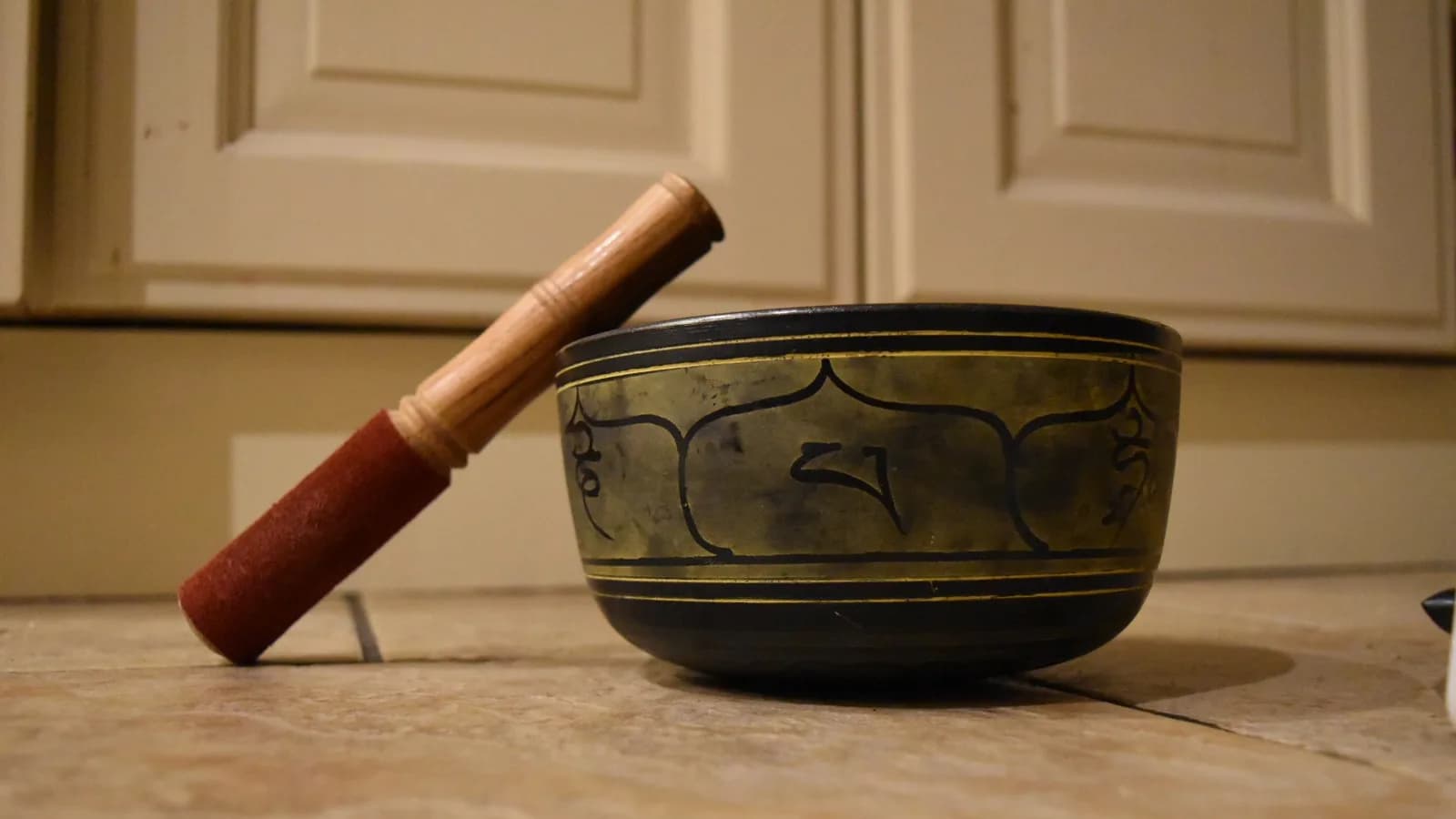
A Tibetan singing bowl is one of Nepal's most evocative souvenirs — a metal bowl that, struck or stroked, releases a long, layered hum that fills a room. It is also one of the most misunderstood. The name is mostly marketing, the famous "seven metals" are often a story, and the gap between a hand-hammered bowl and a machine-spun one is enormous. This guide explains how to buy a real singing bowl in Nepal: where they actually come from, how to tell hand-made from machine-made, what to pay, and where to shop.
This is a deeper dive on one item from our broader what to buy in Nepal guide. Prices below are rough 2024-2025 figures from Nepal-based and specialist sellers (sources at the end); they shift with size, alloy, and exchange rates, so use them to calibrate rather than as a fixed tariff.
Key takeaways
- Despite the name, most "Tibetan" singing bowls are made in Nepal, and the tradition traces to the Himalayan region, not Tibet.
- The modern practice of using bowls for "singing" and sound healing is recent — it only really surfaces from the 1970s.
- Hand-hammered bowls show asymmetry, hammer marks, and a complex tone; machine-made bowls are uniform with a short, flat ring.
- The "seven metals" claim is often symbolic — many bowls are mostly bell metal (copper-and-tin bronze).
- Buy where you can play the bowl yourself; be wary of dozens of identical bowls, prices under ~US$30, and "magical healing" sales talk.
The "Tibetan" misnomer
Start with the name, because it shapes everything else. Despite "Tibetan" being printed on half the bowls in Thamel, most evidence suggests singing bowls originated in the Himalayan region of Nepal and northern India, not Tibet. A practical clue: several of the metals associated with the bowls are not found in Tibet, so the bowls could not have been forged there in the first place. The "Tibetan" label largely took hold because it sounded more exotic — and therefore more valuable — to Western buyers, even though the bowls themselves were and are made in Nepal.
There is a second surprise. The idea of a bowl that sings — played for meditation and sound healing — is surprisingly modern. Sound bowls first appear in the written record around 1972, when American musicians released an album built on them; historical accounts of Tibetan healing from the early 1900s make no mention of bowls used this way. In Nepal, the more likely story is that metal bowls used by the Newar community as everyday household vessels — for eating and storing food — were gradually noticed for their resonance and reframed as instruments.
None of this makes a good bowl less beautiful or less worth buying. But it does mean you should buy the object and its sound, not the romantic backstory — and not pay a premium just for the word "Tibetan."
What singing bowls are made of
Traditionally, bowls were said to be forged from seven metals, each corresponding to a celestial body in old cosmology — gold for the sun, silver for the moon, and so on, sometimes tied to the body's energy centres. It is a genuinely lovely idea, and the most revered alloys do carry names like panchaloha (five metals) and saptaloha (seven metals), blending copper, tin, zinc, iron, and small amounts of silver and gold.
The reality is more grounded. Research suggests that not all "seven-metal" bowls actually contain every metal in meaningful amounts. Many modern or budget bowls are mostly bell metal — a bronze of largely copper and tin — with only small or symbolic inclusions of the rest. That is not a scandal; bell metal makes excellent, resonant bowls. But it does mean the "seven metals, one per planet" pitch is often more poetry than chemistry. For an expensive bowl marketed on its alloy, a serious seller should be able to show documentation; for a modest souvenir, judge it by hand and ear.
Hand-hammered vs machine-made
This is the single most important distinction, and the one that separates a NPR-rack trinket from a real instrument.
A genuine hand-hammered bowl is forged from start to finish by people: raw metal is melted in small crucibles, poured, then shaped and hammered over days — each strike refining the grain and the harmonics. A machine-made bowl is cast or spun on a lathe and may be given a few cosmetic hammer dimples to imitate the real thing, but it lacks the tonal depth.
Here is how to tell them apart in the shop:
| Tell | Hand-hammered | Machine-made | |---|---|---| | Surface | Visible hammer marks of varying depth | Smooth and uniform, or shallow fake dimples | | Symmetry | Slightly irregular, no two identical | Perfectly even and identical | | Thickness | Subtle variation around the wall | Consistent throughout | | Tone | Complex, layered, long-sustaining | Short, simpler, can sound flat | | Stock | Each bowl subtly different | 50+ identical bowls in one size |
The "fifty identical bowls" test is especially useful: authentic hand bowls vary because of human rhythm, hammer angle, and the heat of forging, so a wall of clones is a strong sign of mass production.
How to test the sound
A singing bowl is bought with the ears as much as the eyes. Ask to play any bowl before buying.
- Strike test. Tap the bowl gently with a padded mallet. You want a clear primary note with layered harmonics that rings on, not a short flat clunk that dies quickly.
- Rim test. Run the mallet slowly around the outside rim. The sound should build smoothly into a continuous hum without wavering or distorting. A bowl that stutters or buzzes is poorly made or cracked.
- Trust your body. The right bowl is partly personal — a tone you find soothing. If two bowls are similar quality, buy the one whose sound you prefer.
How to play it (so you can test properly)
To strike, just tap and let it ring. To make it sing, hold the mallet like a pen and move it steadily around the rim, keeping even pressure and a constant angle — move your whole arm around the bowl rather than flicking your wrist. Let the hum grow gradually; rushing makes it rattle. Wooden mallets favour higher tones, leather-wrapped ones bring out lower notes.
Types and sizes
You do not need to memorise the catalogue, but two traditional shapes come up constantly:
| Type | Shape | Sound | |---|---|---| | Thadobati | Straight vertical sides, flat bottom | Steady, long-lasting, often higher | | Jambati | Large, deep, rounded | Low, resonant bass notes |
As a rule of thumb, smaller, lighter bowls sound higher, while larger, heavier bowls sound lower. A small thadobati is easy to pack and gives a bright, clear tone; a big jambati delivers that deep, room-filling bass but is heavy luggage. Pick for the sound you want and the suitcase space you have.
What a singing bowl costs
Price tracks two things above all: the hours of hand-hammering and the alloy. A bowl that took a few hours and uses low-grade brass is a different product from one that took dozens of hours of hand-work with a certified multi-metal alloy and careful tone testing.
As a rough guide (as of 2025), a small genuine bowl can start fairly modestly, but a good hand-hammered, multi-metal bowl commonly lands in the US$80-200 range — widely considered the sweet spot of quality and value — with large, fine, or antique bowls climbing well beyond. On the other end, treat a bowl priced under about US$30 as almost certainly machine-made.
Watch for these red flags: extremely low prices, vague "Tibet-style" descriptions, dozens of identical bowls, and especially grand claims of "magical healing powers" attached to a high price. Because so much of this is bought in bargaining markets, knowing the numbers genuinely helps — our Nepali numbers and bargaining guide gives you the phrases to settle on a fair figure, and the broader Nepal tourist scams guide covers the "antique" and overpricing tricks you are most likely to meet.
Where to buy in Kathmandu
You have two routes, and the difference is quality versus convenience.
Thamel is the most convenient place to browse — bowls in every shop window, easy to compare quickly. Quality is genuinely mixed here, and bargaining is expected, so lean hard on the hand-made-versus-machine tests above.
For the better bowls, head to Patan. The artisan shops around Patan Durbar Square, and the metalworking workshops of Patan and Bhaktapur, are where much of the real hand-hammering happens, and reputable bowls there often come documented with batch details or an artisan's mark. Patan is a short trip across the river and a rewarding day out in its own right — see our Patan (Lalitpur) guide. The key rule wherever you go: buy where you can hold and play the bowl yourself, and where the seller can talk credibly about how it was made.
If you are based centrally and want the markets within walking distance, our where to stay in Kathmandu guide covers the best neighbourhoods.
The bottom line
Buy a singing bowl with clear eyes and open ears. Let go of the "Tibetan" mystique and the seven-planets sales pitch, and judge the bowl on what it is: a hand-hammered Himalayan vessel with a tone you love. Look for hammer marks and gentle asymmetry, play it before you pay, expect to spend real money for genuine hand-work, and shop where you can test freely — ideally among the metalworkers of Patan. Do that, and you will carry home not a mass-produced souvenir but an instrument whose hum still settles a room years later.
Sources
- Guide to Buying Genuine Tibetan Singing Bowls — Healing Sounds
- Tibetan Singing Bowls: Where Did They Really Come From? — Tricycle
- History of Tibetan Singing Bowls: From Nepal to the World — Aparmita
- Singing Bowl Price in Nepal: Complete Guide 2025 — Swodeshi
- Different Types of Singing Bowls: Shapes & Styles — Bells of Bliss
- The Complete Guide to Singing Bowl Mallets and Strikers — Shanti Bowl
Frequently asked questions
- Are Tibetan singing bowls actually from Tibet?
- Mostly no. Despite the name, the great majority sold today are made in Nepal, and most evidence points to the Himalayan region of Nepal and northern India rather than Tibet as their home. The label Tibetan became a marketing term because it sounded more exotic and valuable to buyers.
- How do I tell a hand-hammered bowl from a machine-made one?
- Look for slight asymmetry, visible hammer marks of varying depth, and small differences in thickness — signs of human work. A machine-made bowl is perfectly smooth and uniform, and if a shop has fifty identical bowls in the same size and tone, they are almost certainly mass-produced. Listen too: a good hand bowl gives a complex, long-lasting tone with layered overtones.
- What does seven metals really mean?
- Traditionally bowls were said to blend seven metals, each linked to a planet in old cosmology. In reality many bowls labelled seven-metal are mostly bell metal — a bronze of copper and tin — with only small or symbolic traces of the others. It is a lovely story, but do not pay a big premium for the claim alone unless the seller can back it up.
- How much should a real singing bowl cost in Nepal?
- Price tracks the hours of hand-hammering and the alloy. A small genuine bowl can start modestly, but a well-made hand-hammered piece often sits in the rough US$80 to 200 range, and large or antique bowls climb well beyond. Treat very cheap bowls under about US$30 as machine-made, and be sceptical of magical-healing claims attached to high prices.
- How do you play a singing bowl?
- Two ways. Strike it gently with a padded mallet for an immediate bell-like tone, or run the mallet slowly and steadily around the outside rim to build a continuous singing hum. Keep even pressure and a constant angle, moving your arm rather than just your wrist, and let the sound grow gradually.
- What are the main types of singing bowls?
- Two common traditional shapes are the thadobati, with straight vertical sides and a flat base that give steady, lasting tones, and the larger, deeper jambati, which produces low resonant bass notes. Smaller bowls tend to sound higher, larger and heavier bowls lower.
- Where is the best place to buy a singing bowl in Kathmandu?
- Thamel is the most convenient for browsing, but the artisan shops around Patan Durbar Square, and the workshops of Patan and Bhaktapur, are better for genuine hand-hammered bowls. Buy where you can hold and play the bowl yourself and the seller can talk credibly about how it was made.
- What are the red flags of a fake or low-quality bowl?
- Extremely low prices, dozens of identical bowls, vague 'Tibet-style' descriptions, a thin uniform wall with no hammer marks, a short flat tone that wavers, and grand promises of magical healing powers. None of these on its own is proof, but together they point to a mass-produced piece.
Spotted an error in this post? Tell us or suggest a correction.
Related posts
ABC Trek: A Plain-English Guide to Annapurna Base Camp
The ABC trek (Annapurna Base Camp) explained — the route, how many days it takes, difficulty, the best seasons, and what daily trail life is really like.
Read postAma Dablam Climb: 2026 Expedition Guide (6,812m)
An Ama Dablam climb and expedition guide for 2026 — height, the Southwest Ridge route, camps, fixed ropes, difficulty, permits, cost and the best seasons.
Read postAnnapurna vs Manaslu: Which Trek Should You Choose?
An Annapurna vs Manaslu decision guide for trekkers — compare permits, crowds, difficulty, infrastructure and cost to pick the right Himalayan route.
Read postAsan Bazaar Kathmandu: Old Town Market Guide
A visitor guide to Asan bazaar, Kathmandu's oldest market — its six-road square, Annapurna Temple, what to buy, when to go, and how to get there.
Read postAyurveda Nepal: A Traveller's Guide to Healing
Ayurveda Nepal explained for tourists — the history, the doshas, treatments like Panchakarma and Shirodhara, where to go and how to choose a centre safely.
Read postBest Restaurants Pokhara Lakeside: Where to Eat
The best restaurants in Pokhara Lakeside — lakeside trout, wood-fired pizza, Tibetan momos and healthy cafes, with what to order and rough 2026 prices.
Read post