Thangka Painting: Buying a Real One in Nepal (2026 Guide)
A buyer's guide to thangka painting in Nepal — how to tell a hand-painted thangka from a print, what to pay, and the 100-year antique export rule.
A real thangka is months of one person's life, drawn by candlelight to rules a thousand years old. A printed one is an afternoon at a copy machine. The hard part is telling them apart in a shop.
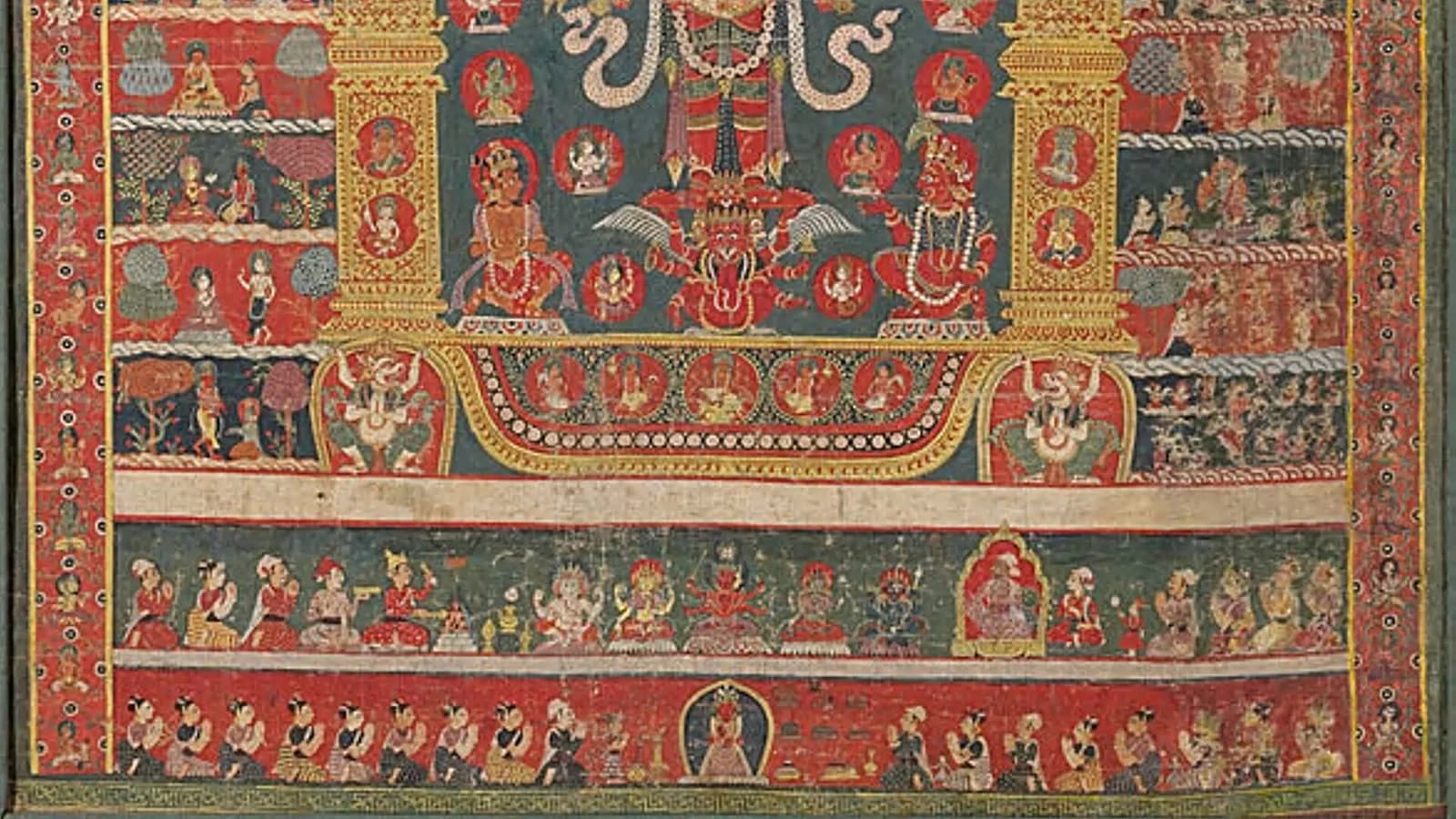
A thangka painting is one of the most rewarding things you can carry home from Nepal — and one of the easiest to get wrong. Done properly, it is a Buddhist or Hindu deity rendered on cloth in ground-mineral colour and real gold, the work of a single artist who sat with it for months under strict iconographic rules. Done cheaply, it is a poster run off a machine and aged with tea. The two can hang side by side on the same Thamel wall at prices that differ by a factor of a hundred, and the shop will happily call both "hand-painted." This guide is about seeing the difference, paying a fair price, and getting your purchase through the airport legally.
This deepens the thangka section of our broader guide to what to buy in Nepal; here we go properly into authenticity, price, and the rules that matter.
Key takeaways
- A genuine thangka is hand-painted on cloth with mineral pigments and gold, and takes a trained artist months — which is why it is never cheap.
- The biggest tell of a fake is price plus speed: anything "hand-painted" sold cheaply or finished in days is a print.
- Nepal's own tradition is paubha, the Newar painting style that helped inspire the Tibetan thangka — and arguably the more interesting buy.
- Genuine antiques over ~100 years old cannot be exported without a Department of Archaeology certificate; buy modern reproductions instead.
- Buy where you can see the workshop or meet the painter, get written confirmation it is modern, and keep the receipt.
What a thangka actually is
The word covers a scroll painting, usually framed in a brocade silk border, depicting a deity, a mandala, the Wheel of Life, or a teaching scene. It is not decoration in origin — it is a support for meditation and ritual, a kind of visual scripture you read with the eyes and the mind. The figure's proportions, gestures (mudras), colours and attributes are not the artist's free choice; they follow iconometric rules laid down over centuries, so that a deity is recognisably itself in Lhasa, Leh or Kathmandu.
That fixed grammar is the first thing to understand as a buyer. The artistry lies in the line, the shading, the fineness of the gold work and the faces — not in invention. A skilled painter is judged the way a classical musician is: by how beautifully they render a known form.
Thangka and paubha — Nepal's own tradition
Here is the detail most souvenir stalls skip. The Kathmandu Valley has its own, older painted-scroll tradition called paubha, made by the Newar community and in particular by the hereditary Chitrakar painter families. The name traces to a Sanskrit phrase meaning, roughly, "lord of the painted cloth." Newar artists were so admired across the Himalaya that they carried their craft to Tibet and China — the legendary 13th-century master Araniko led a team of Nepali artists to the Yuan court — and it was this Newar painting that helped seed the Tibetan thangka in the first place.
In practice you will see both forms sold in Nepal, often under the single word "thangka." A few rough distinctions help:
| | Paubha (Newar) | Tibetan-style thangka | |---|---|---| | Origin | Kathmandu Valley, Newar Chitrakars | Tibetan plateau (inspired by Newar art) | | Typical composition | Dense, architectural, packed border scenes | Often a central deity in open space | | Subjects | Buddhist and Hindu deities | Mainly Vajrayana Buddhist | | Where it shines | Patan, Bhaktapur | Boudhanath and Tibetan studios |
If you want something distinctly Nepali rather than pan-Himalayan, a good paubha is the connoisseur's choice. To understand the Newar craft world it comes from, our Patan (Lalitpur) guide is the place to start.
How a real one is made
Knowing the process is the fastest route to spotting a fake, because every shortcut a copyist takes shows up against the real method.
- The canvas. Cotton cloth is stretched on a wooden frame and primed with a gesso of animal glue and fine white clay (kaolin), then burnished smooth with a stone until it takes ink without bleeding.
- The drawing. The composition is set out in charcoal and ink to the iconometric grid — the deity's proportions measured out, not eyeballed.
- The colour. Pigments are ground from minerals and a few organics: lapis lazuli or azurite for blue, malachite for green, cinnabar for red, saffron and indigo for others, bound with glue. These are the same materials that keep medieval thangkas luminous today.
- The gold. Real gold, applied as paint or fine leaf for halos, jewellery and fine outline, then sometimes burnished or tooled so it catches the light.
- The face. Painted last, often by the most senior artist — the "opening of the eyes" is the culminating moment.
- The mounting. Sewn into a brocade silk frame with a dust-cover, ready to be rolled and unrolled.
A medium piece of moderate complexity — call it 40 by 60 centimetres — takes a qualified painter three to six months. Elaborate mandalas run to a year or more. Hold that fact in your head; it is the single best lie-detector in the shop.
How to tell a real thangka from a fake
You do not need to be an art historian. You need a light source, a phone camera, and a few minutes.
Look at the surface
- Brushwork. Tilt the painting under a lamp or daylight. Genuine work has fine raised lines and tiny human irregularities; a print is dead flat. Put your phone camera in macro mode and look for a regular dot pattern — that is a giveaway of inkjet printing.
- The gold. Real gold has a warm, slightly uneven glow that shifts as you move. Printed or bronze-powder "gold" is cold, uniform, and often slightly green or brassy.
- The canvas. Held to the light, real cotton shows slightly irregular fibres. Synthetic backing looks too even, and feels thin or slippery rather than substantial.
Look at the colour and the price
- Colour depth. Mineral pigment has a deep, layered quality. Chemical-dye copies look garishly bright and flat, and will fade and crack with time.
- Price and speed together. This is the decisive test. A real hand-painted thangka represents months of skilled labour and cannot sell for a few dollars. If something is "hand-painted" and cheap, or the seller says it was finished this week, it is a print. Reputable galleries openly place genuine pieces in the US$1,000–15,000 band and higher for fine work (as of 2025); modest student and workshop thangkas sit well below that but are still clearly more than poster money.
Ask the right questions
Ask what pigments were used, who painted it, and how long it took. A genuine seller answers easily and will often take you to the studio. Vagueness, deflection, or a story that the cheap piece is somehow also a months-long original is your cue to walk. Watching artists at work in a thangka school — common around the Valley — is both a lovely hour and the surest authenticity check there is.
What you'll pay, and where to buy
Price tracks four things: size, detail, real gold, and stone pigments. A small, simple, modern thangka is an affordable keepsake; a large, gold-rich, museum-grade paubha is a serious purchase. Because exact figures move with the market and the exchange rate, treat any number — including the gallery band above — as a way to calibrate, not a fixed tariff.
For where to go:
- Patan (Lalitpur) — the historic centre of Newar painting and metal craft, best for paubha and fine work.
- Boudhanath — Tibetan studios around the great stupa; combine it with a visit using our Boudhanath visitor guide.
- Bhaktapur — workshops alongside the city's potters and mask-carvers; see our Bhaktapur day-trip guide.
- Thamel — convenient and full of choice, but quality is mixed; apply the tests above rigorously.
In the bargaining markets, opening prices are inflated and haggling is expected — a little Nepali goes a long way, as our Nepali numbers and bargaining guide shows. At a serious gallery for a genuine piece, hard haggling is less appropriate; you are paying for months of a person's work.
The export rule you must know
This is where casual buyers occasionally get caught. Under Nepal's heritage legislation, sacred images, paintings and manuscripts more than about 100 years old are national treasures and cannot legally leave the country without an export clearance certificate from the Department of Archaeology (Ram Shah Path, Kathmandu). The Nepal Tourism Board states the rule plainly and advises visitors not to buy such items at all, because they belong to Nepal's heritage.
For the ordinary traveller the practical takeaways are simple:
- Buy modern. A new, well-made thangka or paubha has no export problem.
- Be sceptical of "antique." Because new work is sometimes aged and sold as old, a piece described as a genuine antique is both legally fraught and frequently untrue.
- Keep proof. Hold on to your receipt and, for any valuable piece, ask the seller for a short written note confirming it is a modern reproduction. That single line of paper saves a great deal of trouble at the airport.
Avoiding the classic art-and-antique cons is a skill in itself; our Nepal tourist scams guide covers the "rare old thangka" routine among others.
Living with a thangka
Once home, treat it the way it was meant to be treated. Keep it out of direct sun and damp, which fade pigment and warp cloth. If you ever roll it, roll painted-side out around a tube to avoid cracking the paint. A consecrated thangka may carry seed-syllable mantras on the reverse and was, in its tradition, treated as a sacred object — hanging it respectfully rather than on the floor is the small courtesy that matches its making. None of this requires you to be Buddhist; it simply honours the months of work and the meaning behind it.
The bottom line
Buy a thangka with your eyes open and it becomes the best kind of souvenir — a genuine piece of living Himalayan tradition that means more every year. Remember the core tests: real work is months of labour, never cheap, never instant; mineral colour and warm gold beat flat ink and brassy sheen; and antiques can't fly home while modern pieces can. Choose a studio where you can meet the maker, lean toward a Newar paubha if you want something truly Nepali, keep your receipt, and you will carry home an heirloom rather than a printout. For the wider craft landscape it sits within, circle back to our what to buy in Nepal guide and base yourself near the workshops with our where to stay in Kathmandu guide.
Sources
- Authentic vs. fake thangka — Regong Arts
- Nepal thangka painting prices, 2025 market guide — Authentic Thangka
- Paubha: Nepal's sacred painting tradition — The Art Life Gallery
- Sacred paintings, thangkas and paubhas of Nepal — Asia InCH
- Custom formalities (antique export rule) — Nepal Tourism Board
- Department of Archaeology (Nepal) — overview
Frequently asked questions
- How can I tell a real hand-painted thangka from a print?
- Tilt it under a light and look closely. A hand-painted thangka shows fine raised brush lines, tiny irregularities, and gold that glints warm as you change the angle. A print is flat and uniform, with dots visible under a phone macro lens and a cold, even sheen where the gold should be. Real canvas has slightly uneven cotton fibres; printed cloth looks machine-perfect.
- How much does a genuine thangka cost in Nepal?
- It depends entirely on size, detail, and whether real gold and stone pigments were used. Specialist galleries quote a wide band — roughly US$1,000 up to US$15,000 and beyond for fine collector pieces (as of 2025) — while small student or workshop thangkas cost far less. Anything sold as hand-painted for a few dollars is a print. Treat very low prices as the clearest warning sign of all.
- What is the difference between a thangka and a paubha?
- Paubha is the older Newar painting tradition of the Kathmandu Valley, painted by Chitrakar artist families; thangka is the Tibetan scroll form it helped inspire. In Nepal you will find both, and many shops use thangka loosely for either. Paubha tends to be denser and more architectural; Tibetan-style thangka often centres a single deity in open space.
- Can I take an antique thangka out of Nepal?
- Not freely. Under Nepal's heritage law, sacred images, paintings and manuscripts more than about 100 years old are national treasures and cannot be exported without clearance from the Department of Archaeology in Kathmandu. The tourist board openly advises visitors not to buy such items. Modern thangkas are fine to carry home.
- How long does a thangka take to paint?
- A medium thangka of moderate detail, around 40 by 60 centimetres, typically takes a trained painter three to six months. Very intricate mandalas or large commissions can run to a year or more. That timescale is exactly why a genuine piece is never cheap and never finished in days.
- What should a thangka be painted on, and with what?
- Traditionally cotton cloth stretched and primed with a gesso of glue and white clay, then burnished smooth with a stone. Colours come from ground minerals — lapis lazuli for blue, malachite for green, cinnabar for red — plus real gold for highlights. These mineral pigments are why old thangkas keep their depth for centuries.
- Where is the best place to buy a thangka in Kathmandu?
- Patan is the historic heart of Newar painting and metalwork, and several thangka schools around the Kathmandu Valley let you watch artists at work. Boudhanath and Bhaktapur also have reputable studios. Buy where you can meet the painter or see the workshop, ask for a written note that the piece is a modern reproduction, and keep your receipt.
- Is it disrespectful for a non-Buddhist to buy a thangka?
- No. Thangkas are made partly for sale and support whole communities of artists. Buying one thoughtfully — and displaying it with some care rather than, say, on a bathroom floor — is welcomed. If a piece has been ritually consecrated it may carry mantras on the back, which is simply something to treat with respect.
Spotted an error in this post? Tell us or suggest a correction.
Related posts
ABC Trek: A Plain-English Guide to Annapurna Base Camp
The ABC trek (Annapurna Base Camp) explained — the route, how many days it takes, difficulty, the best seasons, and what daily trail life is really like.
Read postAma Dablam Climb: 2026 Expedition Guide (6,812m)
An Ama Dablam climb and expedition guide for 2026 — height, the Southwest Ridge route, camps, fixed ropes, difficulty, permits, cost and the best seasons.
Read postAnnapurna vs Manaslu: Which Trek Should You Choose?
An Annapurna vs Manaslu decision guide for trekkers — compare permits, crowds, difficulty, infrastructure and cost to pick the right Himalayan route.
Read postAsan Bazaar Kathmandu: Old Town Market Guide
A visitor guide to Asan bazaar, Kathmandu's oldest market — its six-road square, Annapurna Temple, what to buy, when to go, and how to get there.
Read postAyurveda Nepal: A Traveller's Guide to Healing
Ayurveda Nepal explained for tourists — the history, the doshas, treatments like Panchakarma and Shirodhara, where to go and how to choose a centre safely.
Read postBest Restaurants Pokhara Lakeside: Where to Eat
The best restaurants in Pokhara Lakeside — lakeside trout, wood-fired pizza, Tibetan momos and healthy cafes, with what to order and rough 2026 prices.
Read post